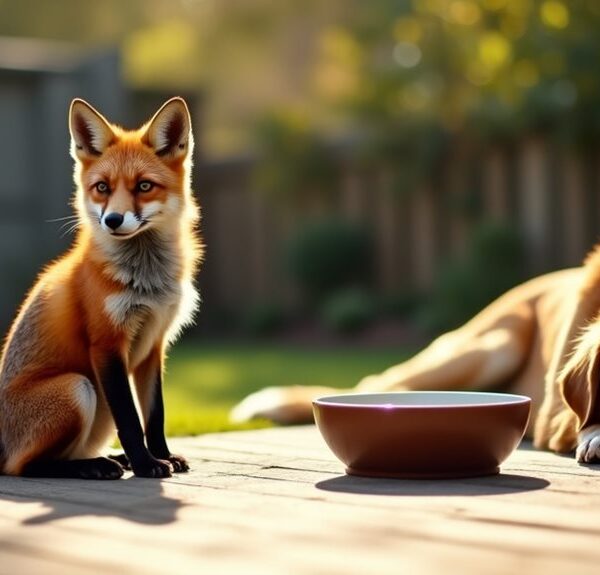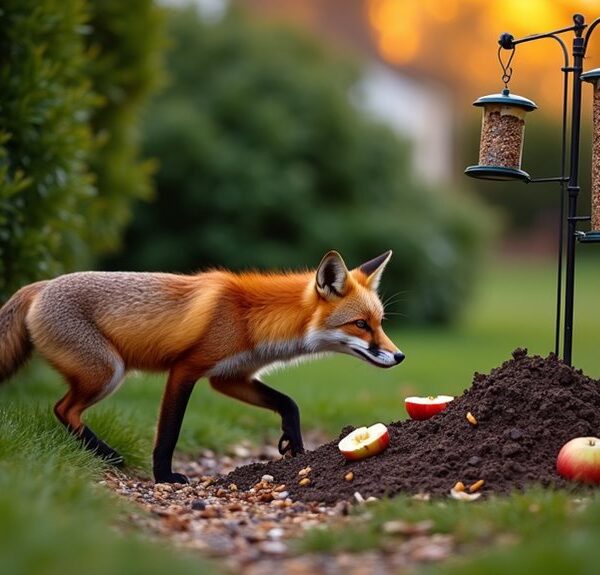
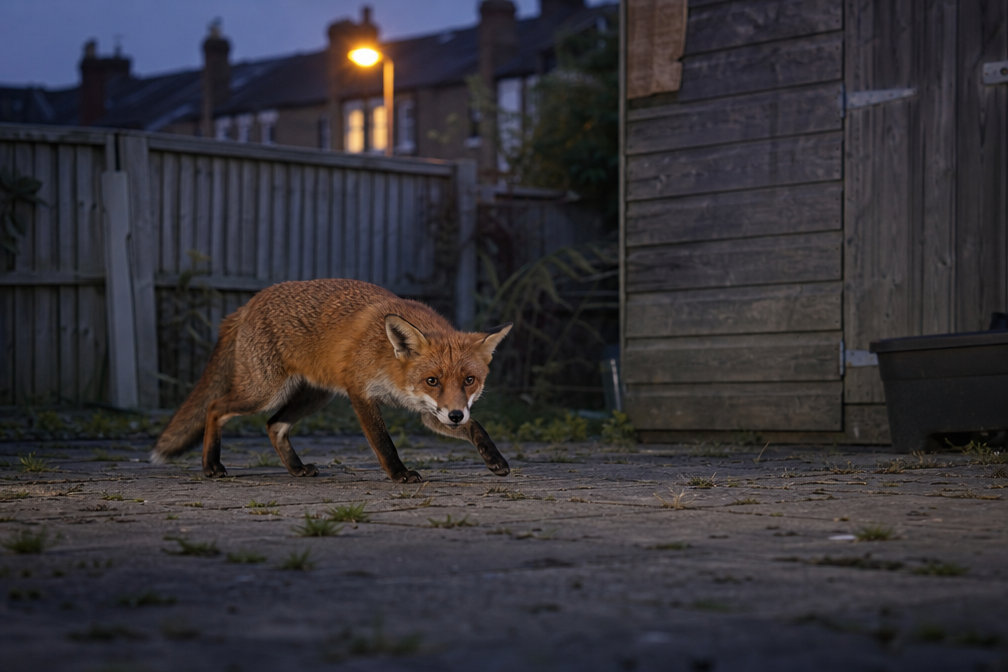
A red fox pauses mid-stride in a London garden, one paw suspended, amber eyes locked on a distant sound. For three full seconds it holds perfectly still, then vanishes into shadow with a flick of its white-tipped tail. This moment of calculated stillness followed by explosive action captures the essence of vulpine behaviour: a personality built on wariness, adaptability, and split-second decision-making. Understanding fox personality traits explained through observation reveals animals far more complex than folklore’s “sly trickster” suggests.
Foxes have earned their reputation as clever, adaptable survivors not through myth but through measurable behaviours observed across their red fox range from Arctic tundra to city centres. Their personalities reflect evolutionary pressures that shaped a medium-sized predator capable of thriving in nearly every terrestrial habitat on Earth.
Key Takeaways
- Foxes display cautious curiosity: They balance wariness with investigative behaviour, especially evident in how urban foxes navigate human environments
- Individual personality variation is significant: Not all foxes behave identically; boldness, sociability, and problem-solving approaches vary between individuals
- Adaptability defines vulpine behaviour: From den sites to diet, foxes modify their behaviour based on environmental pressures and available resources
- Seasonal personality shifts occur: Behaviour changes dramatically during mating season, kit-rearing periods, and winter survival challenges
- Intelligence manifests in observable ways: Foxes demonstrate memory, learning, tool use, and social cognition that rivals many larger carnivores
The Core Fox Personality Traits Explained Through Field Observation
Wariness and Vigilance: The Foundation of Fox Behaviour
The most consistent personality trait across fox species is heightened vigilance. Researchers tracking foxes in both rural and urban settings note that even habituated individuals maintain what biologists call “flight distance”, the buffer zone that triggers escape behaviour.
This wariness manifests in specific, observable ways:
- Constant environmental scanning: Foxes pause every few steps to look, listen, and scent-check their surroundings
- Escape route awareness: They rarely venture far from cover and consistently position themselves with multiple exit options
- Nocturnal habits: Most fox activity occurs during twilight and darkness, reducing encounters with larger predators and humans
- Selective boldness: Individual foxes may become comfortable with specific humans or locations while remaining wary of novel situations
The degree of wariness varies significantly. Urban foxes in cities like London or Tokyo often tolerate closer human proximity than their countryside cousins, yet they never fully abandon their cautious nature. This flexibility demonstrates the species’ remarkable adaptability, a core personality trait that has enabled their global success.
Curiosity and Investigative Behaviour
Balancing their wariness is an equally strong curiosity. Foxes are neophilic, attracted to novel objects and situations, which drives both their adaptability and their reputation for mischief.
This investigative personality trait appears in:
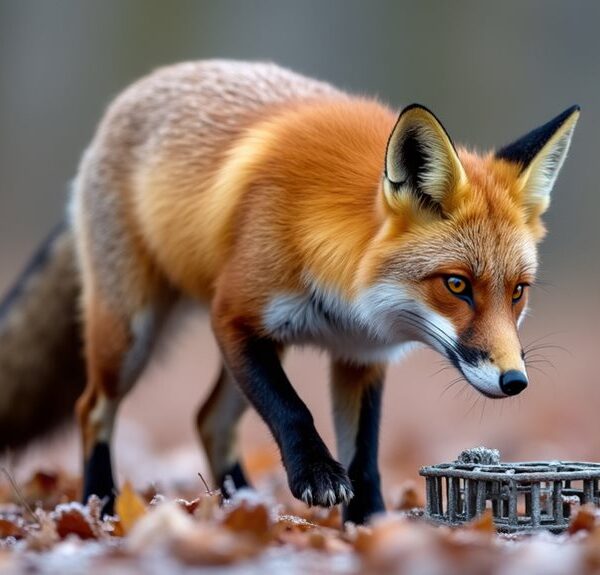
Object manipulation: Foxes regularly interact with unfamiliar items, testing them with paws and mouth. This behaviour explains why foxes steal shoes and other human objects, not from malice but from genuine curiosity about novel items in their territory.
Cache experimentation: Foxes don’t simply bury food; they test different cache locations, depths, and concealment methods, suggesting they evaluate and learn from outcomes.
Social observation: Foxes watch other animals, including humans, and modify their behaviour based on observed consequences. Urban foxes learn bin-opening techniques by watching successful individuals.
Play behaviour: Both kits and adults engage in play that serves no immediate survival function, suggesting curiosity-driven exploration for its own sake.
This curiosity-wariness balance creates what researchers call “bold-shy” personality axes. Some individuals lean toward bolder investigation, while others remain more cautious, personality differences that persist throughout their lifespan.
Solitary Yet Social: The Paradox of Fox Relationships
Foxes are often described as solitary, but this oversimplifies their social personality. Red foxes form complex social structures that vary by habitat quality and population density.
Family groups: During breeding season and kit-rearing, foxes form tight family units. A mated pair may be joined by non-breeding “helper” vixens, often daughters from previous litters, who assist with kit care. This cooperation reveals a capacity for social bonding and coordinated behaviour.
Territory maintenance: Foxes mark and defend territories using scent posts, vocalisations, and direct confrontation when necessary. This territorial behaviour requires social cognition, recognizing individuals, remembering past encounters, and assessing threat levels.
Communication complexity: Fox vocalisations include over 20 distinct calls, from the haunting scream of mating season to the contact calls between mother and kits. This vocal repertoire indicates sophisticated social communication.
Seasonal sociability: Outside breeding season, adult foxes typically forage alone but maintain awareness of nearby family members. They’re not antisocial but rather independently social, capable of cooperation when beneficial while maintaining self-sufficiency.
The fox family structure demonstrates personality traits that include loyalty to mates (many pairs bond for multiple seasons), tolerance of related individuals, and strategic cooperation when raising young.
How Fox Personality Traits Explained Reveal Intelligence and Problem-Solving
Cognitive Abilities in Wild Contexts
Fox intelligence manifests not in laboratory tests but in survival strategies that require planning, memory, and innovation.
Spatial memory: Foxes remember thousands of cache locations across their territory, retrieving food weeks or months after burial. This requires cognitive mapping abilities comparable to corvids and primates.
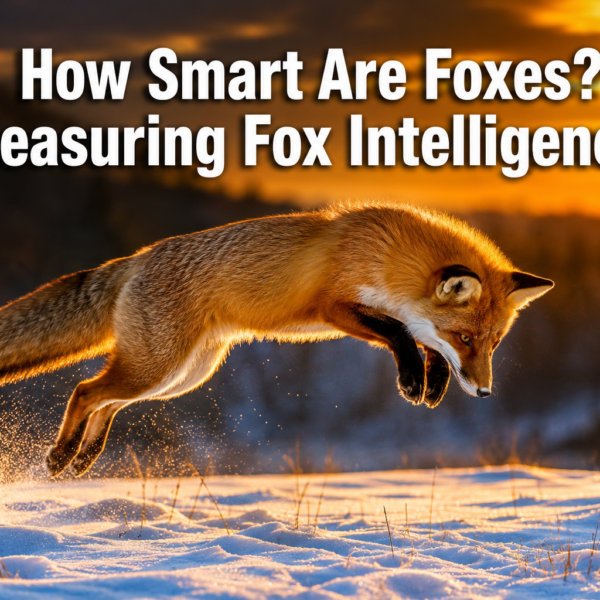
Hunting innovation: The iconic “mousing leap”, where foxes pinpoint prey under snow using hearing, then pounce in a precise parabolic arc, demonstrates sensory integration and motor planning. Foxes adjust their technique based on snow depth, prey type, and terrain.
Tool use observations: While rare, researchers have documented foxes using objects to achieve goals, pushing items to create steps, using sticks to trigger mechanisms, and manipulating human-made devices to access food.
Social learning: Young foxes learn hunting techniques and territory navigation from parents through observation and guided practice. This cultural transmission of knowledge indicates teaching behaviour, a cognitively demanding trait.
Risk assessment: Foxes evaluate danger with nuance. They distinguish between humans who pose threats and those who don’t, between dogs on leashes and those running free, between moving vehicles and parked ones. This discrimination requires ongoing assessment and memory.
Personality Differences Between Individuals
Not all foxes behave identically. Long-term studies reveal consistent individual differences, what biologists recognize as animal personality.
Bold vs. cautious individuals: Some foxes consistently approach novel situations more readily, while others hang back. These differences remain stable over time and influence survival strategies.
Sociability variation: Within family groups, some individuals are more tolerant of close contact, while others maintain greater personal space even with relatives.
Problem-solving styles: When faced with obstacles, some foxes persist with trial-and-error, while others observe first or seek alternative routes. These cognitive styles reflect personality differences in impulsivity and patience.
Aggression thresholds: Foxes vary in how quickly they escalate to aggressive behaviour when threatened or competing for resources. Some individuals are more confrontational, while others consistently choose avoidance.
These personality differences have fitness consequences. In urban environments, bolder foxes may access more food but face greater injury risk. In rural areas, cautious individuals may survive longer but reproduce less successfully. Natural selection maintains this personality diversity because different traits succeed under different conditions.
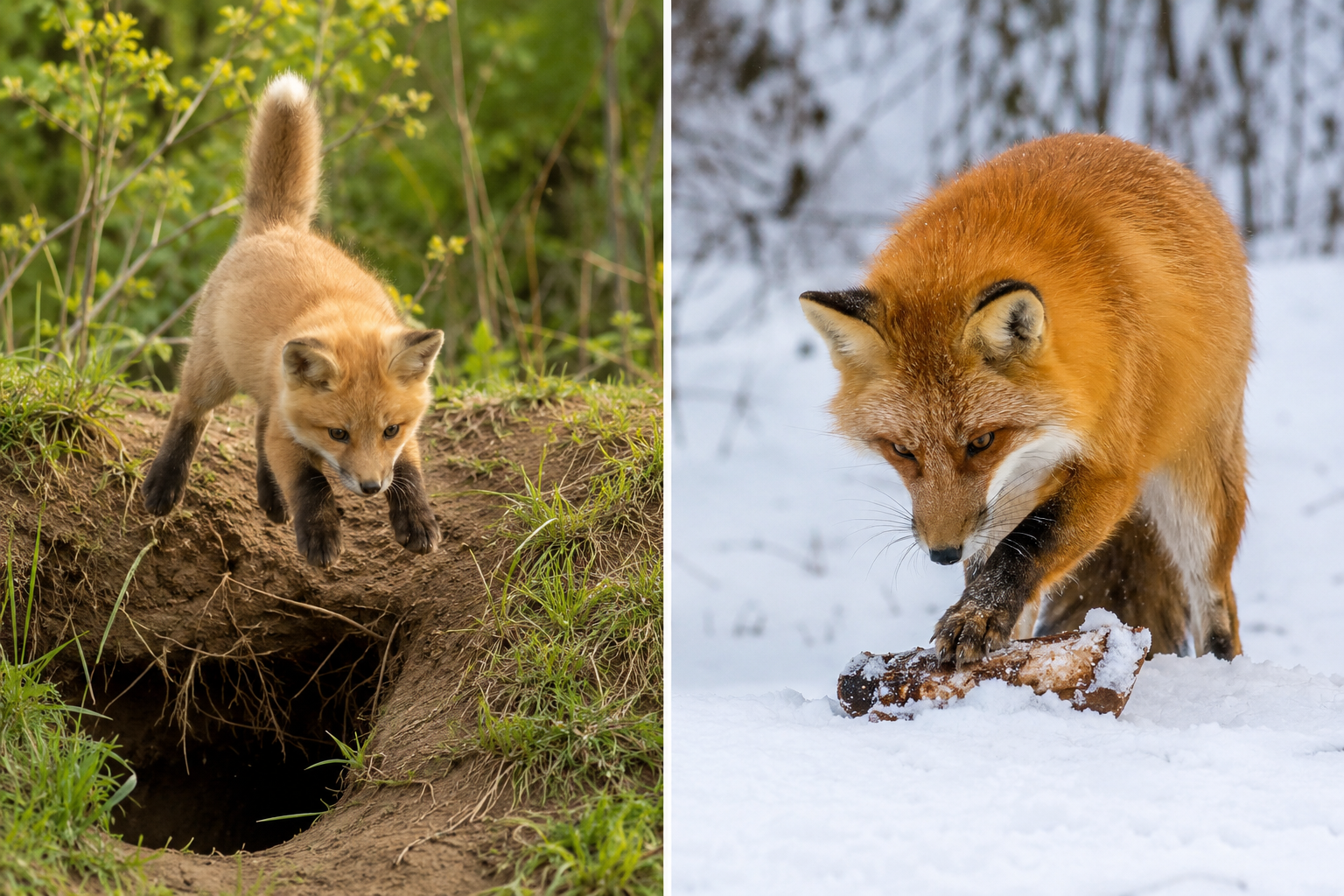
Seasonal Changes in Fox Personality Traits Explained
Mating Season Transformations
During mating season (typically December through February in northern latitudes), fox behaviour undergoes dramatic shifts:
Increased vocalization: The eerie screams and barks that characterize fox mating season represent a temporary personality shift toward more conspicuous, risk-taking behaviour. Normally secretive animals become vocal advertisers.
Territorial aggression: Both males and females become more confrontational, defending territories and mates with increased intensity. Injuries from intraspecific fighting peak during this period.
Reduced wariness: Mating-driven foxes take risks they’d normally avoid, crossing open areas, approaching human structures, and engaging in extended chases that leave them vulnerable to predators and vehicles.
Pair bonding behaviours: Mated pairs engage in mutual grooming, synchronized travel, and coordinated den site preparation, social behaviours largely absent outside breeding season.
Parental Personality: The Shift to Caregiving
When kits arrive (typically March through May), adult fox personality shifts again:
Heightened protectiveness: Parent foxes become more defensive of den sites, sometimes exhibiting aggressive behaviour toward animals they’d normally avoid.
Increased hunting effort: Adults hunt more intensively and for longer periods to provision growing kits, demonstrating goal-directed persistence.
Teaching behaviours: Parents bring live prey to older kits, allowing them to practice hunting, a cognitively demanding form of instruction.
Tolerance expansion: Normally solitary adults tolerate close contact with kits and helper vixens, demonstrating flexible social boundaries.
As kits mature and disperse (typically by autumn), adult behaviour gradually returns to the more solitary, cautious baseline, though pair bonds often persist.
Fox Personality Traits Explained Across Different Species
Red Fox: The Adaptable Generalist
The red fox (Vulpes vulpes) exemplifies personality flexibility. Their global range and habitat diversity reflect behavioural plasticity:
- Urban adaptation: City-dwelling red foxes modify activity patterns, diet, and social tolerance
- Dietary opportunism: They shift between hunting, scavenging, and even fruit-eating based on availability
- Den site flexibility: Red foxes use everything from traditional earthen dens to spaces under sheds and in drainage systems
Arctic Fox: Personality Under Extreme Pressure
Arctic foxes (Vulpes lagopus) display personality traits shaped by harsh environments:
- Bold scavenging: They follow polar bears to scavenge kills, demonstrating risk-taking for high-reward resources
- Cache intensity: Arctic foxes create extensive food caches during abundance periods, showing future-oriented planning
- Social flexibility: They form larger groups than red foxes when resources concentrate, indicating adaptable social strategies
Fennec Fox: Social Desert Specialists
Fennec foxes (Vulpes zerda) are among the most social fox species:
- Family cohesion: Multiple generations may share den complexes
- Cooperative breeding: Extended family members assist with kit care more consistently than in other species
- Playfulness: Fennecs engage in more frequent play behaviour, suggesting different personality baselines
These species differences remind us that “fox personality” isn’t monolithic, evolutionary pressures shape distinct behavioural profiles across the 22+ fox species worldwide.
Understanding Fox Personality in Human Contexts
Why Fox Personality Matters for Coexistence
Understanding fox personality traits explained through science helps humans coexist more successfully with these adaptable neighbours:
Predicting behaviour: Knowing that foxes are cautious but curious helps explain why they investigate gardens but flee when approached directly.
Reducing conflict: Recognizing that foxes rarely pose danger to people but may defend den sites helps prevent misunderstandings during kit-rearing season.
Managing expectations: Understanding that foxes are wild animals with individual personalities, not potential pets, prevents inappropriate interactions. Even hand-raised foxes retain wild instincts that make them unsuitable as pets.
Appreciating complexity: Moving beyond “sly fox” stereotypes to recognize genuine cognitive abilities and emotional lives fosters respect for these animals as sentient beings worthy of ethical consideration.
The Question of Domestication and Personality
The famous Russian fox domestication experiment demonstrates that fox personality is partly heritable. By selecting for tameness over 60+ years, researchers produced foxes with dog-like friendliness, floppy ears, and curled tails, physical changes linked to personality shifts.
However, these domesticated foxes remain distinct from wild foxes and still retain many vulpine traits. The experiment reveals that while fox personality can be modified through selective breeding, the core behavioural architecture reflects millions of years of evolution as wild predators.
Wild foxes occasionally display friendly behaviour toward humans, but this represents individual variation and habituation, not domestication. Approaching or feeding wild foxes can create dangerous situations for both species.
Observing Fox Personality Traits in the Field
What to Look For
Wildlife enthusiasts and photographers can observe fox personality traits by watching for:
Body language cues:
- Tail position (raised indicates confidence, tucked suggests fear)
- Ear orientation (forward = alert, flattened = defensive)
- Posture (low and tense = cautious, relaxed = comfortable)
Behavioural sequences:
- Pause-scan-move patterns during foraging
- Cache creation and checking routines
- Social interactions at territory boundaries
Individual recognition:
- Unique markings, scars, or gait patterns
- Consistent territory use
- Repeating behavioural preferences
Seasonal changes:
- Increased activity during mating season
- Den site attendance during kit-rearing
- Dispersal movements of young foxes in autumn
Ethical Observation Practices
Observing fox personality requires respect for their wild nature:
- Maintain distance: Use binoculars or telephoto lenses rather than approaching
- Avoid feeding: Artificial food sources alter natural behaviour and create dependency
- Respect den sites: Never disturb active dens, especially during kit-rearing
- Minimize disturbance: Limit observation sessions and avoid habituating foxes to human presence
- Consider disease risks: Maintain awareness of rabies and other diseases that affect fox populations
FAQ: Common Questions About Fox Personality Traits Explained
Are foxes friendly to humans?
Foxes are not naturally friendly toward humans in the way domestic dogs are. They’re wild animals with inherent wariness. Some individuals, especially urban foxes, become habituated and tolerate human presence, but this tolerance shouldn’t be confused with friendliness or trust. Foxes that appear “friendly” may be sick, food-conditioned, or simply less fearful, none of which makes interaction safe or appropriate.
Do foxes have different personalities like dogs?
Yes, foxes display consistent individual differences in boldness, sociability, curiosity, and problem-solving approaches, traits that constitute animal personality. However, the range and expression of these personalities differ from dogs due to foxes’ evolutionary history as wild predators rather than domesticated companions. While foxes and dogs share ancestry, their behavioural profiles have diverged significantly.
Why do foxes seem so clever?
Fox intelligence reflects evolutionary pressures on a medium-sized predator that must outwit prey, avoid larger predators, and adapt to changing environments. Their reputation for cleverness stems from observable behaviours: complex hunting strategies, extensive spatial memory, problem-solving abilities, and remarkable adaptability. These cognitive traits are survival necessities, not personality quirks.
Do foxes show affection to each other?
Within family groups, foxes display behaviours that suggest emotional bonds: mutual grooming, synchronized resting, coordinated hunting, and extended parental care. Mated pairs often maintain bonds across multiple breeding seasons. While we should avoid anthropomorphizing, these behaviours indicate social attachment and cooperation that go beyond mere reproductive necessity.
How can you tell if a fox is scared or aggressive?
Scared foxes typically flatten their ears, lower their body, tuck their tail, and attempt to flee or hide. They may emit high-pitched screams or barks. Aggressive foxes display different signals: ears forward, tail raised or bushy, direct staring, teeth baring, and growling. They may approach rather than retreat. Understanding these signals helps interpret fox behaviour and avoid escalating encounters.
Do baby foxes have different personalities than adults?
Fox kits are generally bolder and more playful than adults, with less developed wariness, a pattern common in young mammals. However, individual personality differences appear early, with some kits consistently more cautious or exploratory than siblings. As foxes mature, they typically become more cautious, but core personality traits often persist from kithood through adulthood.
Conclusion: Appreciating the Complexity of Fox Personality Traits Explained
Fox personality emerges from the intersection of evolutionary adaptation, individual variation, and environmental context. These animals are neither the cunning villains of folklore nor the cute, cuddly creatures of popular media. They’re complex, intelligent predators with rich behavioural repertoires shaped by millions of years of natural selection.
Understanding fox personality traits explained through scientific observation rather than cultural stereotype reveals animals worthy of genuine fascination. Their wariness reflects hard-won survival wisdom. Their curiosity drives the adaptability that has made them one of the world’s most successful carnivores. Their social flexibility allows them to thrive in environments from wilderness to city centre.
Next steps for fox enthusiasts:
- Observe locally: Spend time watching foxes in your area, noting individual differences and seasonal changes
- Support research: Citizen science projects tracking urban fox populations need volunteer observers
- Practice coexistence: Implement fox-friendly practices that allow these animals to thrive without conflict
- Share knowledge: Help others understand fox behaviour to reduce fear-based persecution
- Respect wildness: Appreciate foxes as the wild animals they are, maintaining appropriate boundaries
The more we understand about fox personality, its flexibility, complexity, and individual variation, the better equipped we become to share landscapes with these remarkable animals. In 2026, as human development continues expanding into wildlife habitat, this understanding becomes not just fascinating but essential for ethical coexistence.