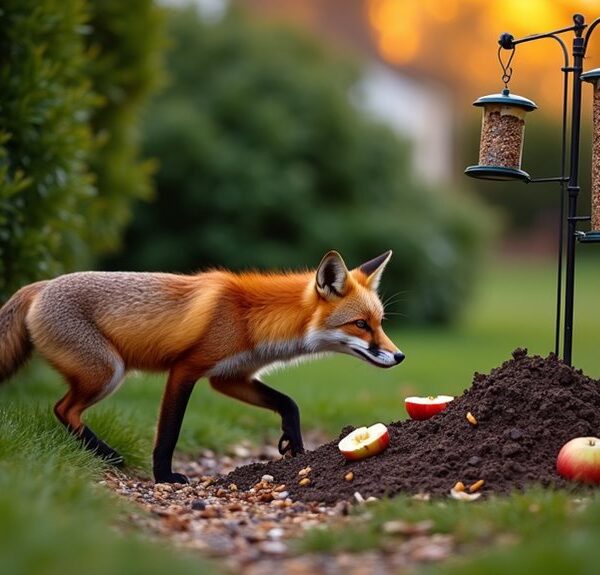

A red fox can dig under a fence in under three minutes. That single statistic explains why so many gardeners wake to find their carefully tended vegetable patches excavated, their compost bins raided, and their lawns dotted with fresh digging sites. Yet these same vulpine visitors are simply following instincts honed over millennia, hunting, caching food, and seeking shelter. Learning how to keep foxes out of garden spaces doesn’t require warfare against wildlife; it demands understanding fox behaviour and working with their natural patterns rather than against them.
The challenge facing gardeners in 2026 isn’t whether foxes belong in our neighbourhoods, urban foxes have established themselves across cities and suburbs worldwide, but how to create boundaries that respect both cultivated spaces and wild animals. This guide explores proven, humane methods grounded in actual vulpine behaviour, not folklore or guesswork.
Key Takeaways
- Foxes are attracted to gardens primarily by food sources, including accessible compost, fallen fruit, pet food, and small prey like rodents, eliminating these attractants is the foundation of any deterrent strategy
- Physical barriers work best when they address fox digging and climbing abilities: fences must extend 30-45 cm underground and stand at least 1.8 meters tall with outward-angled tops
- Humane deterrents leverage foxes’ keen senses: motion-activated devices, scent repellents, and habitat modification create uncomfortable environments without causing harm
- Timing matters significantly: implementing deterrents before mating season (December-February) and when kits are mobile (April-June) prevents den establishment in garden spaces
- Consistency and multiple methods yield better results than single-solution approaches, foxes adapt quickly, so layered strategies maintain effectiveness
Understanding Why Foxes Visit Gardens
Before exploring how to keep foxes out of garden areas, recognizing what draws them in provides crucial context. Red foxes, the species most commonly encountered across Europe, North America, and increasingly Australia, are opportunistic omnivores with remarkable adaptability. Their nocturnal habits mean most garden visits occur between dusk and dawn, when their exceptional night vision gives them advantage over human observers.
Primary Attractants
Food sources top the list of fox attractants. Gardens offer diverse dining options:
- 🦴 Compost bins containing meat scraps, dairy, or cooked food
- 🍎 Fallen fruit from apple, pear, or plum trees
- 🐾 Pet food left outdoors overnight
- 🐭 Rodent populations attracted to bird feeders or stored grain
- 🥚 Accessible chicken coops or rabbit hutches
- 🗑️ Unsecured rubbish bins with food waste
Shelter opportunities rank second. Foxes seek den sites particularly during mating season (December through February in most of their red fox range) and when raising kits (April through June). Garden sheds with gaps underneath, dense shrubbery, woodpiles, and spaces beneath decking provide ideal denning locations, quiet, protected, and close to food sources.
Water access matters more than many gardeners realize. Ponds, water features, and even pet water bowls attract foxes, especially during dry periods.
Seasonal Behaviour Patterns
Fox activity in gardens follows predictable seasonal rhythms. Understanding these patterns helps time deterrent efforts for maximum effectiveness:
Winter (December-February): Mating season brings increased vocalisations,the distinctive screams and barks that startle suburban residents. Foxes establish territories and seek den sites. This is the critical window for preventing den establishment.
Spring (March-June): Vixens (female foxes) give birth to kits in March or April. Gardens with established dens see heightened activity as parents hunt to feed growing young. Baby foxes begin exploring outside the den by late April, often appearing in gardens during daylight hours.
Summer (July-September): Juvenile foxes disperse to find their own territories. Garden visits may increase as young foxes explore new areas. This period offers opportunity to secure gardens before autumn.
Autumn (October-November): Foxes cache food in preparation for winter, leading to increased digging behaviour. They also seek shelter as temperatures drop.
How to Keep Foxes Out of Garden Spaces: Physical Barriers

The most reliable long-term solution for how to keep foxes out of garden areas involves properly designed physical barriers. Foxes possess impressive athletic abilities, they can jump over 1.8-meter fences, squeeze through gaps as small as 10 cm, and dig rapidly through soft soil. Effective barriers must address all three capabilities.
Fox-Proof Fencing Specifications
A truly fox-proof fence requires specific design elements:
Height: Minimum 1.8 meters (6 feet) above ground. Foxes can scale shorter barriers, especially when motivated by food or den sites.
Underground extension: Bury fencing 30-45 cm (12-18 inches) below ground level, or bend the bottom 30 cm outward at a 90-degree angle and bury it just below the surface. Foxes dig at fence lines; this underground barrier stops them.
Top design: Add a 30-45 cm outward-facing overhang at the top, angled at 45 degrees. Foxes climbing the fence cannot navigate this overhang. Alternatively, install roller bars that spin when touched.
Mesh size: Use wire mesh or chain link with openings no larger than 7.5 cm (3 inches). Chicken wire is too flimsy; foxes can tear through it.
Material durability: Choose galvanized steel or heavy-gauge welded wire. Avoid materials that rust or weaken quickly.
For detailed product recommendations, see our guide to the best fox-proof garden fences.
Securing Vulnerable Access Points
Even excellent fencing fails if gaps exist. Conduct a thorough perimeter inspection:
- Gate gaps: Install brush strips or rubber seals along gate bottoms
- Fence corners: Reinforce with additional posts and mesh overlap
- Utility entry points: Seal gaps around pipes, cables, or conduits with steel wool and expanding foam
- Beneath sheds and decking: Install wire mesh barriers or dig-proof skirting
Protecting Specific Garden Features
Vegetable patches: Low fencing (60-90 cm) with buried skirts protects vegetables from digging. Foxes rarely jump into enclosed spaces where escape routes aren’t obvious.
Chicken coops: Require fortress-level security. Use hardware cloth (not chicken wire), bury mesh 45 cm deep, install secure locks (foxes can manipulate simple latches), and ensure the roof is fully enclosed. Many gardeners underestimate fox persistence around poultry.
Ponds: Cover with sturdy netting or install low fencing around the perimeter. Foxes occasionally hunt fish or frogs and may damage pond liners while digging nearby.
Compost bins: Use enclosed bins with secure lids rather than open heaps. If using traditional bins, line the base and lower sides with wire mesh.
Humane Deterrents: How to Keep Foxes Out of Garden Without Barriers

Physical barriers aren’t always practical or desirable. Fortunately, several humane deterrent methods exploit fox sensory capabilities and behavioural patterns to make gardens less appealing without causing harm.
Motion-Activated Devices
Ultrasonic deterrents emit high-frequency sounds uncomfortable for foxes but largely inaudible to humans. Effectiveness varies, some foxes habituate to the sound, while others avoid treated areas consistently. Position devices at fox entry points and adjust sensitivity to avoid triggering on small animals like hedgehogs.
Motion-activated sprinklers startle foxes with sudden water bursts. These prove highly effective because foxes dislike unexpected experiences. The Scarecrow and similar models detect movement via infrared sensors and release a three-second spray. Drawbacks include water waste and potential false triggers from cats or other wildlife.
Light deterrents use bright LED flashes triggered by motion. Foxes prefer darkness for hunting and feel exposed under sudden illumination. Solar-powered models require no wiring and work well along fence lines or near known entry points.
Scent-Based Repellents
Foxes navigate their world largely through scent. Their olfactory capabilities far exceed human perception, making scent deterrents potentially effective, though results vary by individual fox and environmental conditions.
Commercial repellents typically contain predator urine (often from larger canids) or capsaicin-based formulas. Apply along boundaries, near den sites, and around specific features you want to protect. Reapply after rain and every 2-3 weeks during dry periods. Products like Scoot and Get Off My Garden receive mixed reviews; some gardeners report excellent results while others see no change in fox behaviour.
Natural deterrents include:
- Citrus peels: Scatter fresh orange or lemon peels around garden perimeters
- Garlic solution: Crush garlic cloves in water, strain, and spray on affected areas
- Chilli pepper spray: Mix cayenne pepper with water and dish soap; spray on plants and soil (avoid edible crops near harvest)
- Human scent: Male urine around the perimeter (applied discreetly) can signal human territory
Important caveat: Scent deterrents wash away in rain and degrade in sunlight. They require consistent reapplication and work best as part of a multi-method approach.
Habitat Modification
Making your garden less hospitable to foxes addresses the root cause of visits rather than merely creating obstacles.
Remove food sources:
- Secure compost bins with locks or latches
- Clean up fallen fruit promptly
- Feed pets indoors or remove bowls immediately after feeding
- Use squirrel-proof bird feeders and clean up spilled seed daily
- Store rubbish in fox-proof bins with secure lids
- Never deliberately feed foxes (this habituates them to human spaces)
Eliminate shelter opportunities:
- Clear dense undergrowth and brambles where foxes might den
- Block access beneath sheds, decking, and outbuildings with wire mesh or concrete blocks
- Remove or secure woodpiles and building materials
- Trim vegetation to eliminate hiding spots near boundaries
- Keep grass mowed short (foxes prefer cover when moving through open areas)
Reduce water access:
- Bring pet water bowls indoors overnight
- Cover ponds with netting
- Fix leaking outdoor taps
- Drain or cover water features when not in use
These modifications make gardens less attractive to foxes while benefiting overall garden health and reducing pest populations that might otherwise draw vulpine attention.
Understanding Fox Intelligence
Foxes possess remarkable problem-solving abilities and adapt quickly to deterrents. This intelligence means no single method remains effective indefinitely. Successful long-term fox management requires rotating deterrents, combining multiple approaches, and maintaining consistency. A fox that learns a motion-activated sprinkler only operates in one location will simply use a different entry point.
Timing Your Deterrent Strategy
When you implement deterrents significantly impacts success rates. Understanding fox life cycles helps time interventions for maximum effectiveness.
Critical Prevention Windows
Before mating season (November-December): Establish deterrents before foxes begin seeking den sites. Once a vixen selects a location and gives birth, removing her becomes ethically complicated and legally restricted in many jurisdictions.
Early spring (March-April): If you discover a den with kits, wait until the young are mobile and the family vacates naturally (typically by late June or early July), then immediately secure the site to prevent reoccupation. Disturbing an active den may cause the vixen to move kits, but she’ll likely relocate them elsewhere in your garden if alternative sites exist.
Post-dispersal (August-September): After juvenile foxes leave their birth territories, secure your garden before new foxes claim it. This window offers opportunity to establish barriers before autumn caching behaviour begins.
What to Avoid
Never block an active den while kits are present. This may trap young foxes underground, causing suffering and death. In many regions, disturbing active dens violates wildlife protection laws.
Don’t use harmful methods like poison, snares, or leg-hold traps. Beyond being inhumane, these approaches are illegal in most jurisdictions and pose serious risks to pets, children, and non-target wildlife. For ethical alternatives, see our guide to humane fox traps.
Avoid sudden, aggressive confrontation. While foxes rarely pose danger to humans, understanding their behaviour helps prevent unnecessary conflict. A fox that feels cornered may defend itself.
Living Alongside Urban Foxes
The question of how to keep foxes out of garden spaces exists within a larger context: how urban foxes thrive in cities and suburbs. Fox populations in urban areas have grown substantially over the past several decades. In London, Bristol, and other UK cities, fox density rivals or exceeds rural populations. Similar patterns appear in North American cities, Australian suburbs, and European urban centres.
This reality means complete fox elimination from residential areas is neither practical nor, from a naturalist’s perspective, desirable. Foxes provide ecosystem services, they control rodent populations, consume carrion, and disperse seeds. The goal isn’t eradicating foxes but establishing boundaries that allow both gardens and wildlife to flourish.
Coexistence Strategies
Set realistic expectations: Even with excellent deterrents, occasional fox visits may occur. Focus on preventing den establishment and protecting specific vulnerable features rather than achieving absolute fox-free status.
Educate neighbours: Fox deterrence works best when entire neighbourhoods participate. A single property offering easy food access will attract foxes that then explore surrounding gardens. Share information about securing bins, removing food sources, and humane deterrent methods.
Appreciate fox benefits: Before implementing deterrents, consider whether fox presence actually causes problems. A fox passing through your garden nightly but causing no damage might not require intervention. Many gardeners find observing fox behaviour fascinating once initial concerns about damage are addressed.
Document and adjust: Keep notes on fox activity patterns, which deterrents you’ve tried, and results. This record helps identify what works for your specific situation and provides valuable information if you need to consult wildlife management professionals.
When to Seek Professional Help
Contact wildlife management professionals if:
- Foxes establish a den in a truly problematic location (under your house foundation, for example)
- A fox displays unusual behaviour suggesting illness (see common diseases in foxes)
- Repeated deterrent efforts fail and damage continues
- You need humane removal during a critical time window
Reputable wildlife controllers use exclusion methods and humane deterrents rather than lethal approaches. Verify credentials and methods before hiring any service.
Addressing Common Fox Behaviours in Gardens
Understanding specific vulpine behaviour patterns helps target deterrent efforts effectively.
Digging and Caching
Foxes dig for multiple reasons: hunting invertebrates and rodents, creating den sites, and caching surplus food. The small holes (5-10 cm diameter) scattered across lawns typically result from hunting behaviour, foxes excavating beetle larvae, earthworms, or voles. Larger excavations near fence lines or under structures suggest denning attempts.
Solutions:
- Remove food sources that attract prey animals
- Fill holes promptly and tamp soil firmly
- Place wire mesh just below the soil surface in repeatedly dug areas
- Apply scent deterrents around digging sites
Fouling and Scent Marking
Fox faeces (scat) often appear in prominent locations, on raised surfaces, lawn centres, or pathways. This behaviour marks territory boundaries. Fox scat is typically dark, twisted, and often contains visible fur, bone fragments, or berry seeds. The distinctive musky odour comes from scent glands.
Solutions:
- Remove scat promptly (wear gloves; wash hands thoroughly)
- Clean the area with enzymatic cleaner to eliminate scent markers
- Place physical barriers over repeatedly marked spots
- Apply scent deterrents to discourage remarking
Vocalisations
The screaming sounds foxes make during mating season alarm many people unfamiliar with fox vocalisations. These calls serve communication purposes, advertising territory, attracting mates, and maintaining contact between individuals. While unsettling, they’re temporary (primarily January-February) and don’t indicate aggression toward humans.
Solutions:
- Understand that vocalisations are seasonal and temporary
- Close windows during peak calling hours (typically 10 PM to 3 AM)
- Use white noise machines if calls disturb sleep
- Avoid attempting to silence foxes (ineffective and potentially harmful)
Interactions with Pets
Foxes and domestic pets generally coexist peacefully, though concerns arise regarding small pets and outdoor cats. Foxes rarely threaten dogs, even small breeds, and typically avoid confrontation. Cats and foxes often ignore each other, though territorial disputes occasionally occur.
Precautions:
- Supervise small pets (under 5 kg) outdoors, especially at dawn and dusk
- Bring pet food indoors immediately after feeding
- Ensure rabbits and guinea pigs have secure, fox-proof housing
- Keep cats indoors at night during fox mating season if conflicts occur
FAQ: How to Keep Foxes Out of Garden
How do I know if foxes are visiting my garden?
Look for distinctive signs: twisted, dark scat containing fur or seeds often left in prominent locations; paw prints showing four toe pads and claw marks in a diamond pattern; small digging holes across lawns; disturbed compost or rubbish bins; and vocalisations (screams, barks) during winter months. You might also notice musky scent near den sites or regular pathways.
Will removing one fox solve my garden problem?
No. Fox territories overlap, and removing one individual simply creates a vacancy that another fox will fill within days or weeks. This phenomenon, called the “vacuum effect,” means removal-based approaches fail long-term. Addressing attractants and implementing barriers provides lasting solutions regardless of which individual foxes occupy the area.
Are commercial fox repellents worth the cost?
Results vary significantly. Some gardeners report excellent success with products like Scoot or ultrasonic devices, while others see no effect. Foxes are individuals with varying sensitivities and habituation rates. Repellents work best as part of multi-method strategies combined with habitat modification and physical barriers. Start with less expensive options (scent deterrents, motion-activated sprinklers) before investing in costly systems.
Can I relocate a fox family from my garden?
In most jurisdictions, relocating foxes is illegal without proper permits and often proves inhumane, relocated foxes face territorial conflicts with resident foxes, lack knowledge of local food sources, and experience high mortality rates. If foxes den in your garden, wait until kits are mobile (late June/early July), then secure the site after the family naturally vacates. Consult local wildlife authorities for legal guidance.
Do foxes pose disease risks to my family or pets?
Foxes can carry diseases including mange, toxoplasmosis, and rarely rabies (in regions where rabies exists). However, transmission risk remains low with basic precautions: never handle foxes or their scat without gloves, ensure pets have current vaccinations, wash hands after gardening, and seek medical attention if bitten. Foxes generally avoid human contact and pose minimal direct health risk.
What’s the most effective single method for keeping foxes out?
Proper fencing provides the most reliable long-term solution. A well-designed barrier (1.8m tall, buried 30-45cm deep, with outward-angled top) physically prevents access regardless of fox behaviour or habituation. However, fencing requires significant investment. For most gardeners, combining habitat modification (removing food sources and shelter) with motion-activated deterrents and scent repellents offers the best balance of effectiveness, cost, and practicality.
Conclusion
Learning how to keep foxes out of garden spaces successfully requires understanding that foxes aren’t invaders but wild animals following natural instincts in increasingly human-dominated landscapes. The most effective approaches work with fox behaviour rather than against it, eliminating attractants, creating physical barriers, and using humane deterrents that make gardens less appealing without causing harm.
The foundation of any successful strategy involves removing food sources: securing compost bins, cleaning up fallen fruit, bringing pet food indoors, and maintaining fox-proof rubbish storage. Combined with habitat modification, clearing dense undergrowth, blocking access beneath structures, and eliminating water sources, these steps address why foxes visit in the first place.
For gardens requiring stronger protection, properly designed fencing provides reliable long-term exclusion. Supplement physical barriers with motion-activated devices, scent deterrents, and consistent monitoring. Remember that fox intelligence means no single method remains effective indefinitely; successful management requires rotating approaches and maintaining vigilance.
Most importantly, time interventions strategically. Establish deterrents before mating season, never disturb active dens with dependent kits, and secure sites immediately after families vacate naturally. This timing respects fox welfare while protecting garden spaces.
As urban fox populations continue adapting to human environments, coexistence becomes increasingly necessary. The goal isn’t eliminating these remarkable animals but creating boundaries that allow both cultivated gardens and wild foxes to thrive. With patience, proper techniques, and realistic expectations, gardeners can protect their spaces while appreciating the vulpine neighbours sharing their landscape.
Next steps: Conduct a thorough garden assessment identifying current attractants and vulnerable access points. Prioritize removing food sources and shelter opportunities this week. Research fencing options or motion-activated deterrents appropriate for your budget and garden layout. Document fox activity patterns to target interventions effectively. And perhaps most importantly, observe these fascinating animals with curiosity, understanding their behaviour transforms them from pests into wild neighbours worthy of respectful coexistence.