
Foxes play fascinating roles in legends worldwide, appearing as clever tricksters, spiritual guides, and shapeshifters. You’ll find Japan’s nine-tailed kitsune gaining wisdom with each tail, while Europe celebrates Reynard’s cunning intelligence. Native American traditions portray foxes as both creators and tricksters, and Chinese mythology features the dual-natured huli jing. These small yet fearless creatures have captured human imagination across cultures, embodying contradictions that reflect our own. The deeper you explore, the more these mysterious creatures reveal.
The Nine-Tailed Kitsune: Japan’s Shapeshifting Fox Spirits

Contrary to popular belief, Japan’s legendary nine-tailed kitsune isn’t a shapeshifting fox with mystical powers.
Traditional Japanese folklore’s kitsune differs dramatically from its popular portrayal in modern entertainment media.
You’ve probably seen these fox spirits portrayed in anime and games, but they’re actually modern inventions with no basis in traditional Japanese folklore. The kitsune symbolism you’re familiar with—nine tails representing wisdom and supernatural abilities—was created for entertainment purposes in the late 20th century.
When you explore authentic Japanese mythology, you’ll find no mention of foxes transforming into beautiful women or granting wishes.
The fox spirit concept was borrowed from neighboring cultures but heavily modified for contemporary audiences.
Next time you encounter a nine-tailed fox character, remember you’re enjoying creative fiction rather than ancient legend.
Isn’t it fascinating how modern media shapes our understanding of cultural symbols?
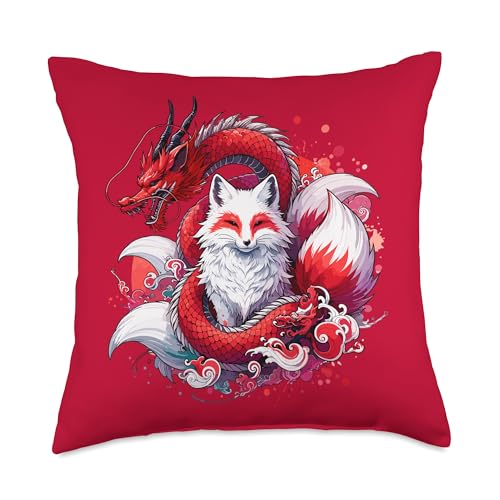
Dive into the mythical world of Japanese anime art with our captivating Nine-tailed Fox Kitsune Dragon design! Experience the allure of ancient folklore and vibrant colors in every stroke. Perfect for fans of Japanese culture and anime enthusiasts alike!


Japanese Mythological Creature design. Funny Japanese ancient lore Fox for anyone who loves Japanese folklore and foxes. Features the Ancient Japan Mythical creature Kitsune with cherry blossom flowers. Official GoshWow merchandise.
Reynard the Fox: Medieval Europe’s Cunning Trickster
While Japanese fox mythology has been heavily reimagined in modern media, European folklore presents us with a genuine historical trickster whose tales have endured for centuries.
You’ll find Reynard the Fox at the heart of medieval fables across France, Germany, and the Netherlands, outwitting nobles and peasants alike with his silver tongue.
Reynard’s stories aren’t just entertaining—they’re clever satires of medieval society. You’ve probably encountered this cunning character without realizing it! His adventures influenced everything from Chaucer’s works to Disney’s Robin Hood.
Fox symbolism in these tales represents both intelligence and deceit. Unlike the spiritual kitsune, Reynard is thoroughly earthly, using his wits to survive.
When you plunge into these medieval fables, you’re actually exploring sophisticated social commentary disguised as simple animal tales.
Native American Fox Mythology: Wisdom Across Tribal Traditions

Unlike the European Reynard, fox figures in Native American mythology vary dramatically across tribal traditions, reflecting the diverse cultural environment of indigenous North America.
You’ll find the fox appearing as both a helper and a hindrance, embodying the trickster archetype that’s common across many tribes.
In some traditions, you might encounter Fox as a creator who helped shape the world, while in others, he’s a clever being who outwits enemies through cunning rather than strength.
This cultural symbolism speaks to how Native peoples observed and interpreted fox behavior in their natural surroundings.
Unlike coyote stories that often focus on foolishness, fox tales typically celebrate intelligence and resourcefulness.
When you explore these stories, you’re connecting with ancient wisdom that Native communities have passed down for countless generations.
The Huli Jing: China’s Seductive and Protective Fox Deities
Moving from the wisdom-filled fox tales of Native America, we encounter an equally fascinating but markedly different fox figure in Chinese mythology. The huli jing, China’s enigmatic fox spirits, have captivated imaginations for centuries with their complex nature.
You’ll find that huli jing symbolism embodies duality – these fox deities can be both benevolent guardians and dangerous tricksters. They’re often portrayed as shapeshifters who can take human form, particularly beautiful women who seduce unwary men.
The fox deity origins trace back to ancient Chinese folklore, where they’re believed to cultivate spiritual energy as they age, growing additional tails until they reach nine – the pinnacle of their power.
Unlike their Western counterparts, you might notice that huli jing aren’t simply villains; they’re nuanced beings who can bring both fortune and misfortune, depending on how you interact with them.
Cross-Cultural Patterns: Why Foxes Dominate Global Folklore

Throughout history, foxes have emerged as one of the most universally important animals in mythology across continents. You’ll find fox symbolism in virtually every ancient civilization, from Japan’s kitsune spirits to Native American trickster tales.
Why? Their unique behaviors caught our ancestors’ attention—they’re clever, adaptable, and mysteriously nocturnal.
The fox’s cultural significance transcends geographical boundaries because they embody contradictions we all recognize. They’re small but fearless, wild yet familiar, and they thrive alongside human settlements without becoming domesticated.
Foxes exist at the perfect intersection of worlds—wild enough to remain mysterious, familiar enough to captivate our imagination.
When you examine global fox myths, you’ll notice shared patterns: they’re shape-shifters, wisdom-keepers, and boundary-crossers between worlds. These consistent portrayals suggest our ancestors saw something profoundly meaningful in these russet creatures that silently maneuver between civilization and wilderness. Moreover, the fox’s role as a spiritual guide during uncertain moments further highlights its importance in cultures worldwide.
Final Thoughts
You’ve now traveled through a thousand lifetimes of fox tales that span every corner of our world. From Japan’s magical nine-tailed kitsune to Europe’s clever Reynard, these creatures aren’t just animals—they’re mirrors of humanity’s deepest fears and desires. What’s truly mind-blowing is how cultures that never connected somehow created strikingly similar fox legends. Perhaps these cunning creatures, padding softly between our reality and the mystical unknown, understand us better than we’ll ever understand ourselves.