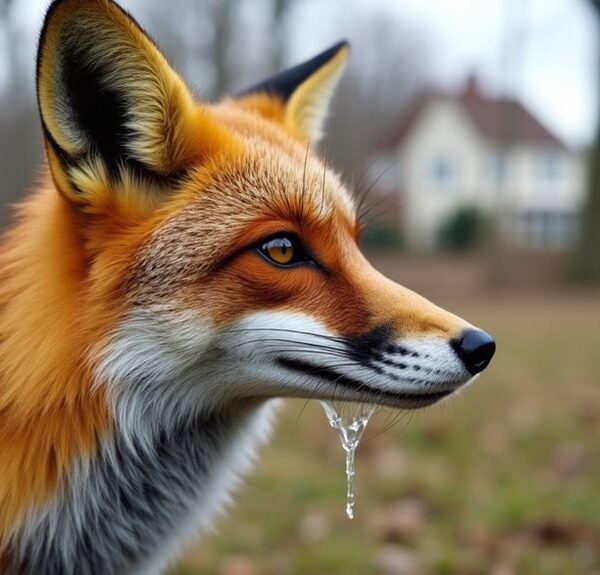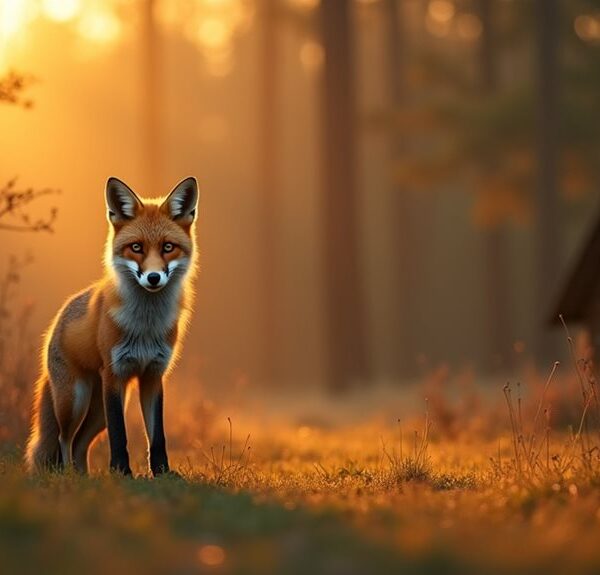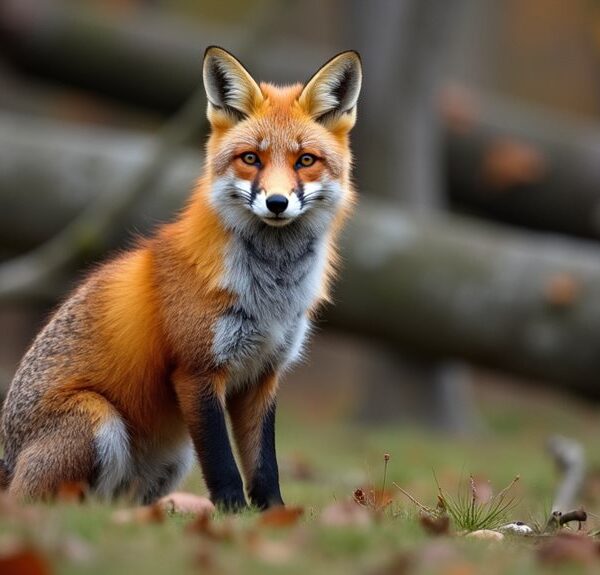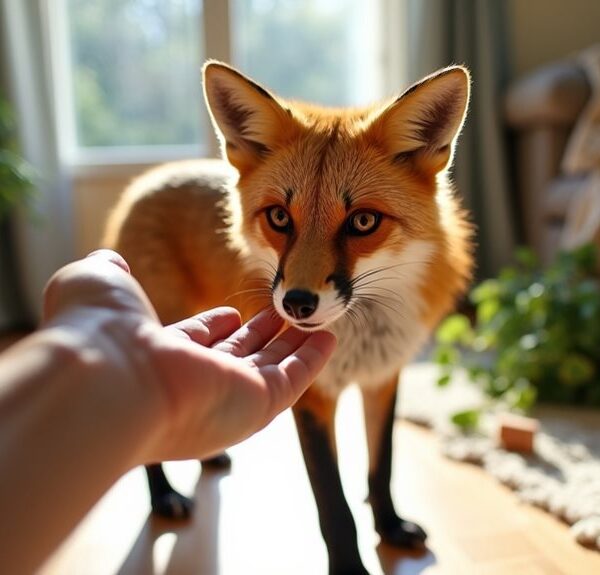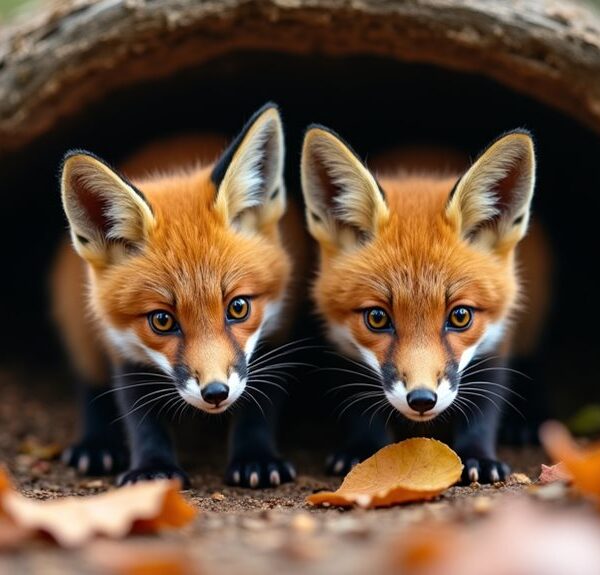

Urban foxes have masterfully adapted to city life by shifting their diets to include human food waste (45% of their meals!) and adjusting their behaviors. You’ll notice they’re active between midnight and 4 AM, maintaining smaller territories than their rural cousins. They’ve gotten creative with den locations—under sheds or in overgrown bushes—and even developed genetic changes like shorter snouts to thrive alongside humans. Understanding these adaptations helps create peaceful coexistence in our shared urban spaces.
Contents
The Remarkable Diet Adaptations of City-Dwelling Foxes

While wandering through city streets, you’ve probably noticed those clever red foxes scavenging in places you’d least expect them. These adaptable creatures have developed impressive diet diversity, shifting from their rural cousins’ menu of small mammals and birds to whatever urban environments offer.
Urban foxes are nature’s ultimate opportunists, reshaping wilderness habits to thrive among our sidewalks and skyscrapers.
You’ll spot them using fascinating scavenging techniques around restaurant dumpsters, public parks, and even your backyard. They’ll eat discarded fast food, raid garbage bins, and snack on fallen fruit from neighborhood trees.
Unlike country foxes, city dwellers don’t turn their noses up at processed foods! Urban foxes are known to derive about 45% of their diet from human food waste, showcasing their remarkable adaptability to urban life.
What’s remarkable is how they’ve learned to time their foraging around human schedules, appearing when you’re least likely to disturb them. Their adaptability explains why they’re thriving in concrete jungles worldwide.


Compact Travel Umbrella Size: Folds to 11.5 inches with only 0.9 lbs weight! Ultra-portable windproof umbrella fits backpacks, purses, glove compartments, and carry-ons effortlessly. Includes storage sleeve for travel-ready convenience

Urban Fox Behavior: Night Prowlers and Territory Shifts
These resourceful foxes don’t just adapt their diets to city life—they’ve completely transformed their behavior patterns too.
You’ll notice their nocturnal habits have intensified in urban environments, with most fox activity happening between midnight and 4 AM when human disturbances are minimal. They’re smart enough to avoid you during your busy hours!
Unlike their rural cousins who maintain vast territories, city foxes squeeze into much smaller spaces, often just a few blocks wide.
They’re constantly adjusting their boundaries based on food availability and human activity. You might spot their territorial markings—small scrapes or scent deposits—along garden walls or fence lines.
They’re fundamentally drawing invisible maps across your neighborhood, creating a complex network of fox highways and boundaries that most humans never notice. This remarkable adaptation allows them to thrive while navigating the urban landscape’s unique human-modified environments.
From Dens to Decks: How Foxes Create Urban Homes

When searching for urban sanctuaries, foxes display remarkable ingenuity in transforming everyday spaces into cozy homes.
You’ll find these clever creatures practicing selective den selection under garden sheds, within overgrown bushes, or beneath your backyard deck. Their urban nesting habits showcase their adaptability—they’ll repurpose abandoned structures and create burrows in unexpected places throughout your neighborhood.
What’s fascinating is how foxes transform these spaces with minimal resources.
They’ll drag soft materials like leaves, grass, and even discarded fabrics to line their dens, creating comfortable nurseries for their kits.
They’re not afraid to move in close to humans either! That family of foxes might be raising their young just feet away from where you grill summer burgers, quietly coexisting in the shared environment of our modern cities. This close proximity highlights their role as urban cleanup crew by helping to manage local rodent populations.
The Science Behind Fox Evolution in Metropolitan Areas
As urban environments have transformed over decades, fox populations have undergone remarkable genetic adaptations to thrive alongside humans. You’ll notice these clever creatures aren’t just surviving—they’re evolving! Recent studies show urban foxes have developed shorter snouts and smaller brains than their rural cousins, a fascinating example of urban adaptation in action.
When you spot a city fox darting between buildings, you’re witnessing genetic divergence happening in real time. Their metabolisms have shifted to process human food scraps, and they’ve even evolved to tolerate higher noise levels and artificial lighting. Urban foxes’ effective foraging techniques allow them to efficiently gather food from parks and residential areas.
Their paws have adapted to concrete instead of soft earth, and they’ve become bolder around humans while maintaining just enough wariness to stay safe. Nature’s resilience is truly on display in your neighborhood!
Coexistence Strategies: Managing Human-Fox Interactions

Living alongside urban foxes requires thoughtful strategies that benefit both humans and wildlife in our shared spaces.
You’ll find that most human interaction with foxes happens unexpectedly, often when you’re taking out trash or enjoying your garden at dusk.
To minimize conflicts, secure your garbage bins with bungee cords and don’t leave pet food outside overnight.
Remember, conflict resolution begins with understanding that foxes aren’t looking for trouble—they’re simply adapting to our environment. In fact, these urban foxes demonstrate flexible diets that help them thrive in cities.
If you spot a fox in your yard, clap your hands firmly or spray a hose nearby (not directly at them) to encourage them to move along.
Final Thoughts
As you’ve walked alongside these resilient urban foxes, you’ve seen how they dance the delicate ballet between wilderness and cityscape. They’ve adapted their diets, shifted behaviors, and created homes in our concrete jungle. Their evolution teaches us that coexistence isn’t just possible—it’s happening right outside your window. By understanding these clever creatures, you’re taking the first step toward a harmonious shared environment where both humans and foxes can thrive.