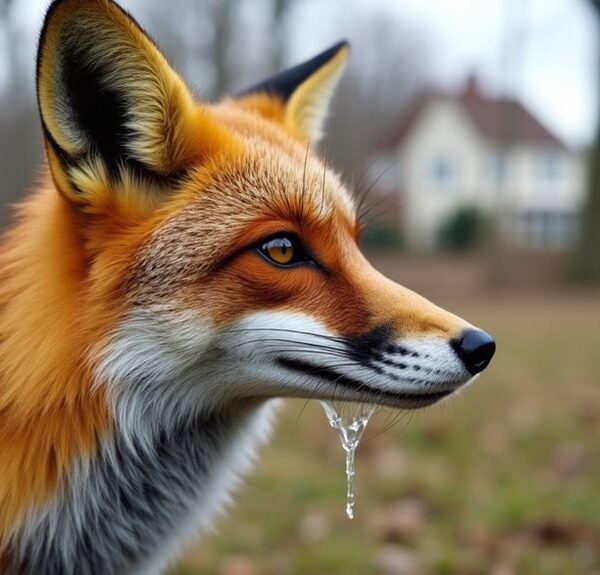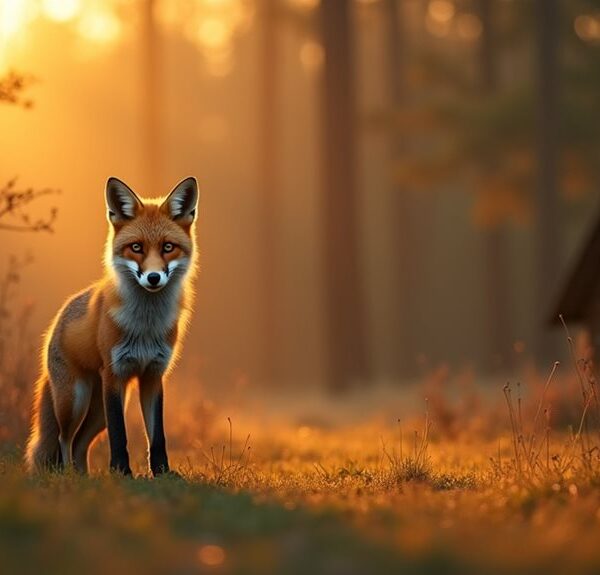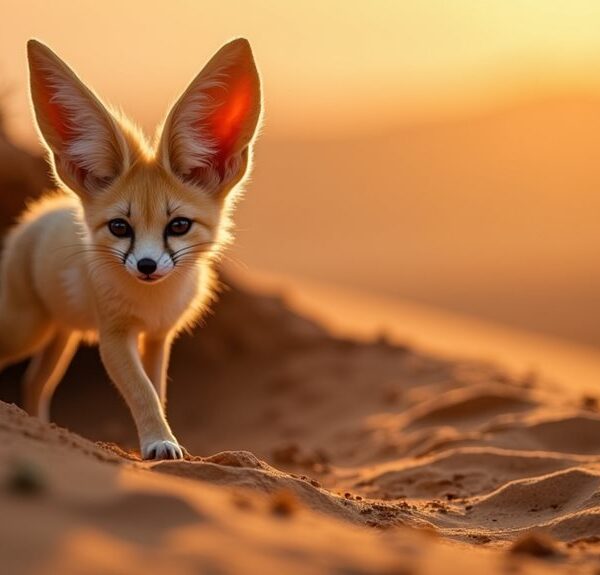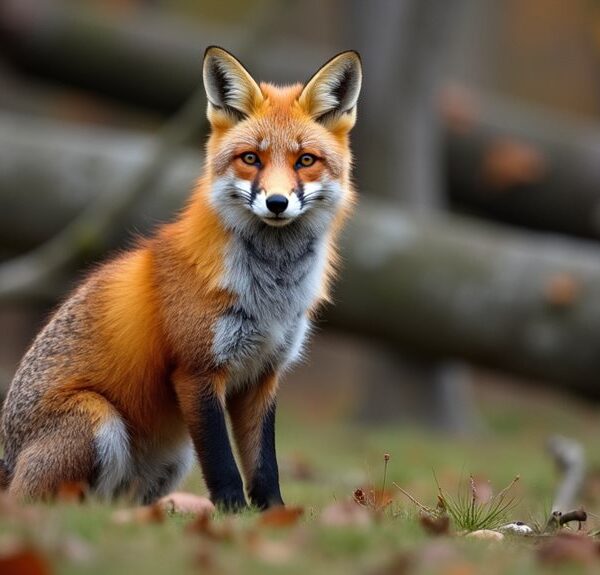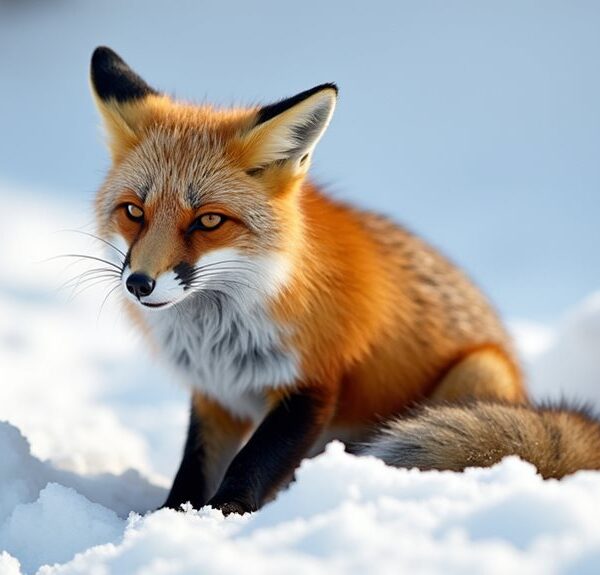
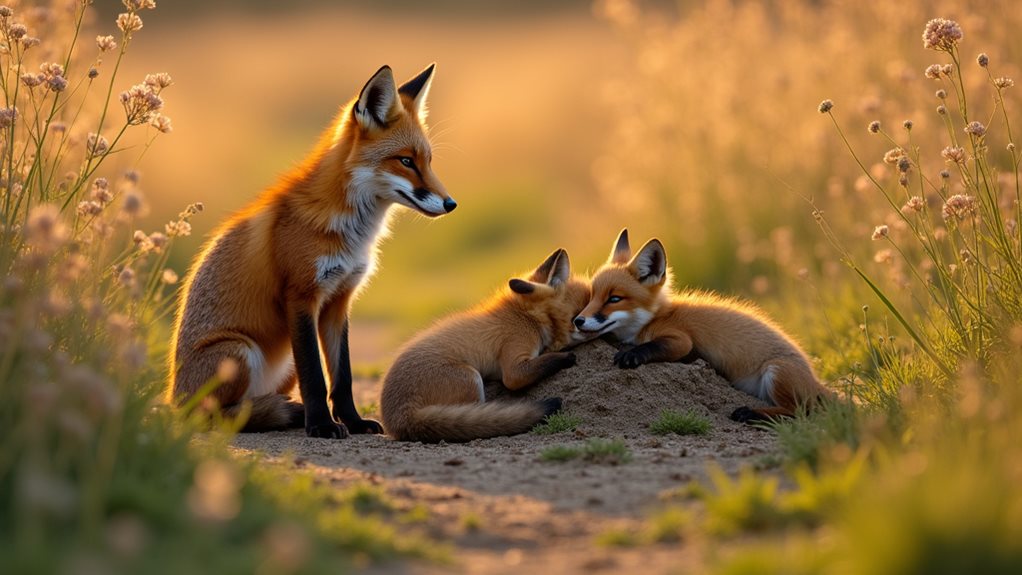
Fox families center around an alpha breeding pair, with mom and dad sharing distinct roles. You’ll find the mother teaching essential hunting skills while the father protects territory. They communicate through 20+ vocal calls, body language, and scent marking to maintain their social order. Different fox species adapt their family structures based on habitat—from tight-knit desert clans to smaller arctic family units. Their remarkable social flexibility explains how these clever creatures thrive across diverse environments.
Contents
- 1 The Social Structure of Red Fox Families
- 2 Beyond Red Foxes: Social Variations Across Fox Species
- 3 Seasonal Changes in Fox Social Behavior
- 4 Communication Methods Within Fox Communities
- 5 Territory Establishment and Defense Mechanisms
- 6 Parental Roles and Offspring Development
- 7 The Alpha Pair: Leadership in Fox Hierarchies
- 8 Urban Foxes: Adaptation of Social Structures
- 9 Hunting Strategies: Solitary vs. Collaborative Techniques
- 10 Final Thoughts
The Social Structure of Red Fox Families

When you watch red foxes in the wild, you’ll notice they’re not the solitary creatures many people assume them to be. They actually maintain complex fox family dynamics centered around a breeding pair—the alpha male and female—who form the foundation of their social unit.
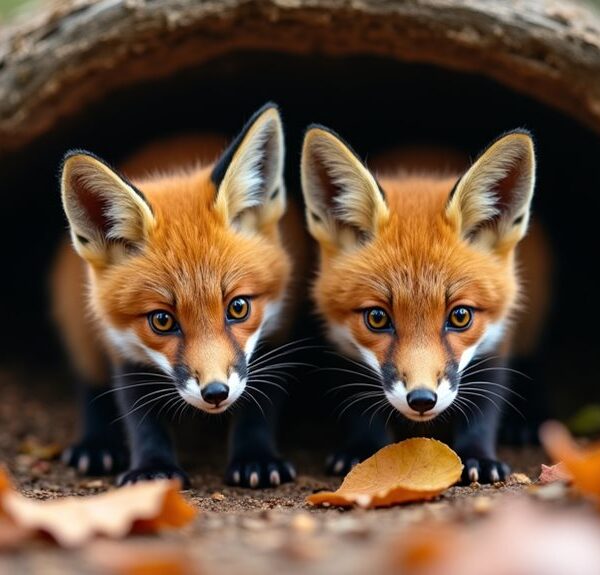
You’ll find that during spring and summer, these families include adorable kits being raised by both parents in underground dens.
The social bonding between family members involves playful interactions, grooming, and cooperative hunting lessons. Mom teaches hunting skills while dad protects the territory. Their social hierarchy plays a critical role in maintaining order and ensuring the family’s success in their environment.


ADORNED WITH CHALA PAL CHARACTER DESIGN - Features beautifully crafted Chala Pal Character design with detailed stitching and embellishments

Beyond Red Foxes: Social Variations Across Fox Species
You might be surprised to learn that desert fox clans operate quite differently from the tight-knit arctic fox communities that band together during harsh winter months. Gray foxes, meanwhile, establish unique relationship patterns that reflect their more solitary, tree-climbing lifestyle compared to their ground-dwelling cousins. Interestingly, social dynamics within fox family structures can greatly influence how these different species interact and compete for resources.
Desert Fox Clans
Unlike their northern cousins, desert foxes have developed fascinating social structures perfectly adapted to harsh arid environments.
You’ll find these remarkable creatures organizing into tight-knit family groups that share hunting territories and den sites, maximizing their survival chances through sophisticated clan dynamics.
When you observe desert adaptations in action, you’ll notice how these foxes hunt primarily at night to avoid scorching temperatures, conserving precious body water.
Their clan structure often includes multiple adults caring for young, a cooperative approach that’s rare among canids but crucial in resource-scarce deserts.
What’s particularly striking is how clan members communicate through an intricate system of vocalizations and scent marking, creating invisible boundaries that other clans respect.
Their social intelligence proves that even in Earth’s harshest places, adaptation comes through cooperation. Additionally, these desert foxes engage in communal burrowing to enhance family bonding and safety in their challenging environment.
Arctic Fox Communities
Although we often picture foxes as solitary creatures, Arctic foxes break this stereotype with their remarkable community structures.
You’ll find these resilient animals living in small family groups, especially during the harsh winter months when their arctic fox adaptations shine brightest. Their thick white coats aren’t the only survival tool—they’ve developed social foraging techniques that help them thrive in the unforgiving tundra.
When you observe Arctic foxes hunting, you’ll notice they often work in pairs or small groups, taking turns digging through snow to uncover hidden prey. This teamwork isn’t just practical; it strengthens their social bonds too.
During breeding season, both parents care for the kits, with extended family members sometimes pitching in. It’s as if they’ve figured out that in the Arctic’s extreme conditions, community matters just as much as their physical adaptations. As they face habitat challenges, their cooperative behavior becomes increasingly critical for survival.
Gray Fox Relationships
While Arctic foxes showcase remarkable teamwork in the frozen tundra, their gray fox cousins tell an equally fascinating social story in forests and woodlands across North America.
You’ll find gray fox mating is primarily monogamous, with pairs often staying together for multiple seasons. Unlike their Arctic relatives, gray foxes maintain smaller family units and defend their territory fiercely against intruders.
- They’re the only canid species in North America that can climb trees, which influences their social dynamics and escape strategies.
- A typical gray fox territory spans about 1-2 square miles in suitable habitat.
- Parents share hunting duties and pup-rearing responsibilities equally.
- During non-breeding seasons, you might spot them in small family groups rather than larger communities. Additionally, their diverse dietary habits contribute to the ecological balance by regulating populations of small mammals and dispersing seeds.
Seasonal Changes in Fox Social Behavior
As the seasons shift throughout the year, fox families undergo remarkable transformations in their social dynamics.
You’ll notice that during mating season, typically in winter, foxes that normally maintain solitary territories suddenly become more social. Pairs form strong bonds, and their interactions become more frequent and affectionate.
When food scarcity hits in late winter, you might observe foxes becoming more competitive with each other. They’ll defend their hunting grounds more aggressively, even against family members. This heightened competition is influenced by territorial disputes that arise when resources are limited.
It’s quite the balancing act!
Communication Methods Within Fox Communities

Beneath the surface of their mysterious woodland lives, foxes employ an intricate language system you’d never expect from these seemingly quiet creatures.
Foxes speak a silent language in their shadowy forest world, communicating through whispers we rarely hear.
You’ll notice their vocal communication includes an impressive repertoire of over 20 different calls, from sharp barks to eerie screams that pierce the night. Their body language speaks volumes too, with subtle ear positions and tail movements conveying complex emotions.
- A fox’s distinctive “wow-wow-wow” bark warns others of potential danger
- During courtship, foxes use soft, melodic trills to attract mates
- Cubs communicate with high-pitched whines when they’re hungry or cold
- Dominant foxes raise their tails higher, while submissive ones lower theirs
Interestingly, foxes also rely on scent marking to establish territory and communicate their presence to others in their community.
You’ll find that fox conversations aren’t so different from your own family discussions—just with more tail wagging and less talking!
Territory Establishment and Defense Mechanisms
Despite their seemingly carefree nature, foxes take territory matters incredibly seriously. You’ll notice their dedication to territory marking throughout their habitat, using scent glands and urine to create invisible but powerful boundaries that other foxes can detect from impressive distances.
When it comes to defense strategies, you’re witnessing complex behaviors that have evolved over thousands of years. Foxes don’t just mark—they actively patrol their borders, especially during breeding season when resources are critical.
If you’ve ever spotted a fox barking sharply or standing tall with raised tail, you’re seeing their warning system in action. This behavior is not only a display of confidence but also a way to signal their territorial aggression to any potential intruders.
It’s fascinating how these clever creatures balance energy expenditure, often avoiding direct confrontation when possible but fiercely defending their core areas where dens and primary food sources exist.
Parental Roles and Offspring Development

You’ll notice distinct roles when fox parents raise their young, with mothers teaching vital hunting skills through practical demonstrations and playful exercises. Fathers, meanwhile, focus on guarding the family’s territory, often patrolling boundaries and warning off potential threats with their distinctive barks. Together, these complementary parenting approaches guarantee their cubs develop the full range of skills needed for survival in the wild. Additionally, both parents engage in disciplinary roles, teaching important behavioral lessons that further prepare their kits for life outside the den.
Maternal Hunting Lessons
Fox mothers leap into action when it’s time to teach their kits the crucial art of hunting.
You’ll notice how these clever mothers demonstrate proper techniques through patient maternal teaching, markedly improving their young’s future hunting success. They’ll guide their kits through increasingly challenging scenarios, gradually building their confidence and skills.
- Mom first brings live prey back to the den, letting kits practice pouncing and capturing.
- She’ll demonstrate proper stalking techniques, showing how to use their surroundings for cover.
- You’ll see her teaching patience, showing kits how to wait motionlessly before striking.
- As kits improve, she’ll take them on guided hunts, letting them try while she supervises.
This educational period creates a strong bond between mother and offspring while guaranteeing their survival in the wild. The success of these hunting lessons is vital in ensuring the offspring’s development along the shy-bold continuum, as it shapes their future interactions with both prey and potential threats.
Paternal Territory Guardianship
Male foxes take on essential protective duties when it comes to securing their family’s domain. You’ll often find the father fox patrolling boundaries at dawn and dusk, marking trees and rocks with his scent to warn potential intruders.
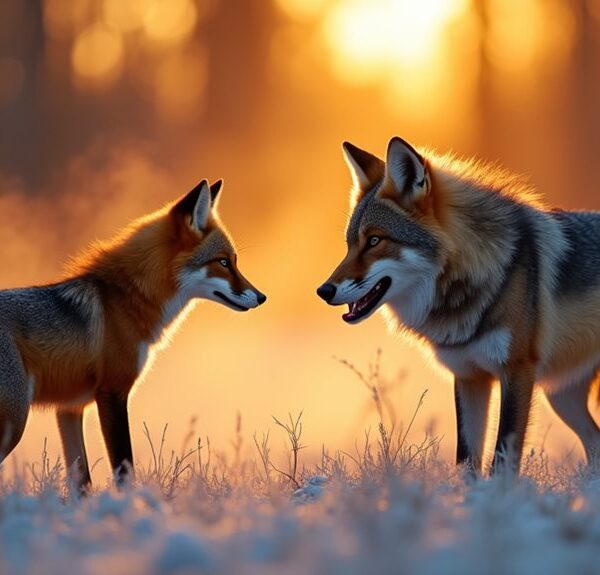
These dedicated dads don’t shy away from territorial disputes, facing off against competing foxes with impressive displays of dominance rather than physical fights whenever possible.
The guardian roles extend beyond simple boundary maintenance. A father fox will create diversionary trails leading away from the den if he senses danger nearby.
He’ll also teach his older cubs the art of territory defense through demonstration, showing them how to properly mark boundaries and recognize foreign scents.
This careful paternal guidance guarantees the next generation will master the complex social rules that govern fox communities.
The Alpha Pair: Leadership in Fox Hierarchies
While most people assume wolves have the most developed pack structure among canids, the social hierarchy of fox families reveals fascinating complexities that often go unnoticed.
You’ll discover that the alpha role in fox communities isn’t always what you’d expect! Unlike wolf packs, fox leadership dynamics often revolve around a breeding pair that shares responsibilities rather than a dominant individual.
- The alpha pair typically consists of a monogamous couple who mate for several seasons.
- Female foxes (vixens) often make critical decisions about den locations and kit rearing.
- Males establish territory boundaries but defer to females on family matters.
- During food scarcity, alpha pairs maintain priority access to resources, guaranteeing survival.
You’ll find fox families balance cooperation and hierarchy beautifully, adapting their social structure to environmental challenges.
Urban Foxes: Adaptation of Social Structures
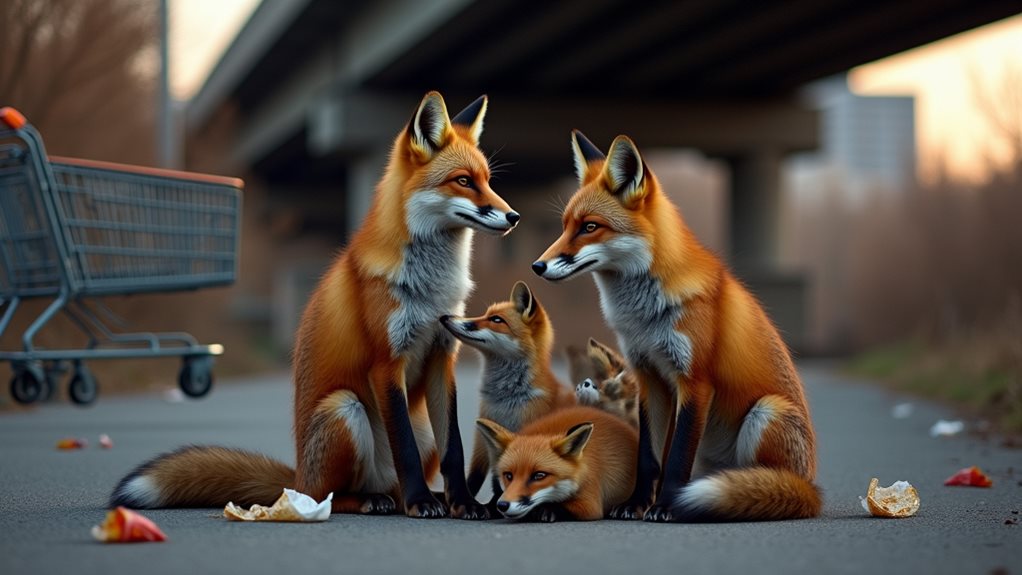
As cities continue to expand into natural habitats, clever fox families have dramatically transformed their traditional social structures to thrive in urban environments.
You’ll notice these resourceful creatures have developed remarkable urban adaptability, shifting from their typical territorial patterns to more flexible arrangements that maximize survival opportunities.
Unlike their rural cousins, city foxes often form smaller family units and display unique social foraging behaviors.
Urban foxes adapt with compact family structures and collaborative foraging strategies unlike their countryside relatives.
You might spot them working in loose groups to exploit food sources like dumpsters or gardens.
They’ve learned to adjust their activities to human schedules, becoming more nocturnal to avoid confrontation.
Their communication has evolved too—they’re using softer calls in cities to remain discreet while maintaining family bonds.
These fascinating adaptations show how wildlife can reinvent their social dynamics when faced with new challenges.
Hunting Strategies: Solitary vs. Collaborative Techniques
The impressive urban adaptations foxes display extend beyond their living arrangements to their hunting techniques, which vary dramatically depending on their environment and prey availability.
You’ll notice that while most fox species prefer solitary hunting, some fascinating exceptions exist when conditions demand teamwork.
- Red foxes typically hunt alone, using their remarkable hearing to detect mice moving beneath snow or soil.
- In resource-rich environments, you might spot family members hunting in loose proximity without true collaboration.
- Arctic foxes occasionally employ collaborative techniques when tackling larger prey like seabirds.
- During winter scarcity, you’ll sometimes witness fox pairs working together—one distracting prey while the other attacks.
This balance between independence and occasional teamwork showcases foxes’ remarkable adaptability, letting them thrive in diverse habitats from wilderness to your neighborhood park.
Final Thoughts
You’ve now witnessed the rich tapestry of fox family life, from complex hierarchies to adaptive behaviors across urban and wild environments. Whether they’re hunting alone or working as a team, foxes have pulled the wool over our eyes for years with their intelligence and social flexibility. Next time you spot a fox in your neighborhood or countryside, you’ll understand there’s much more to these fascinating creatures than meets the eye.