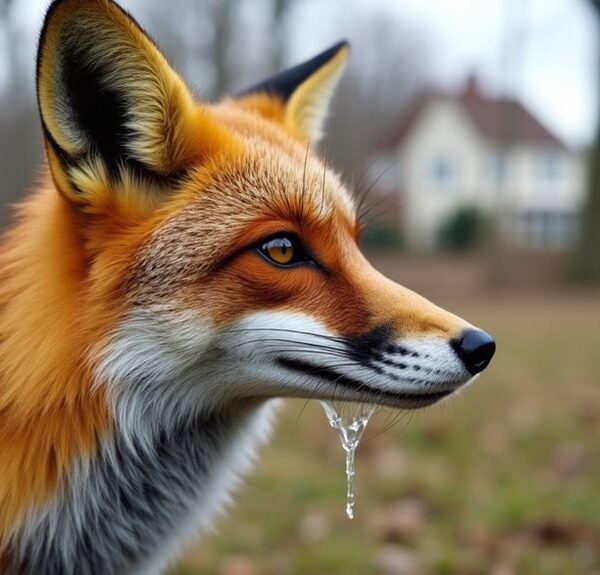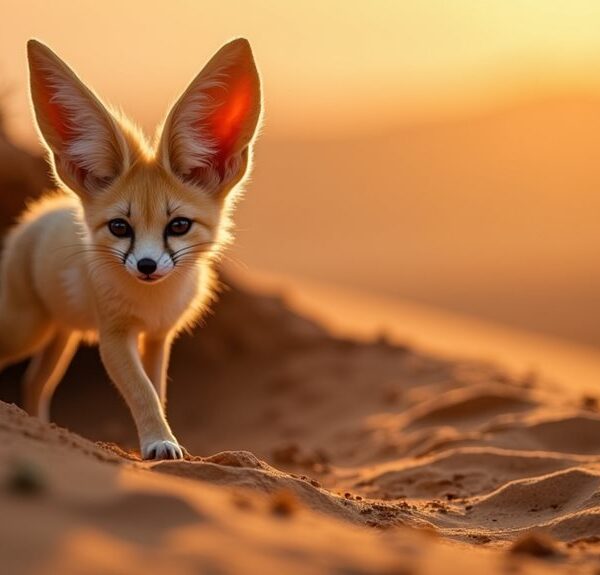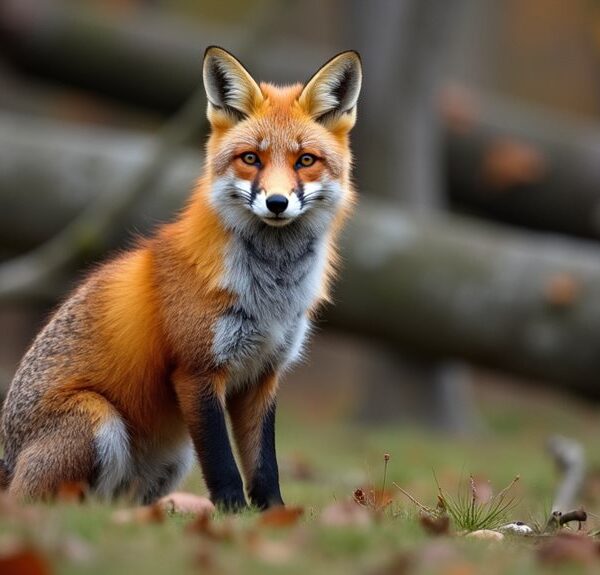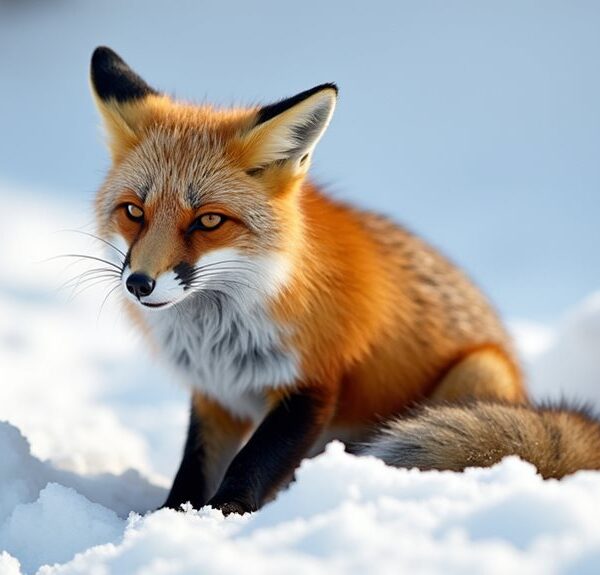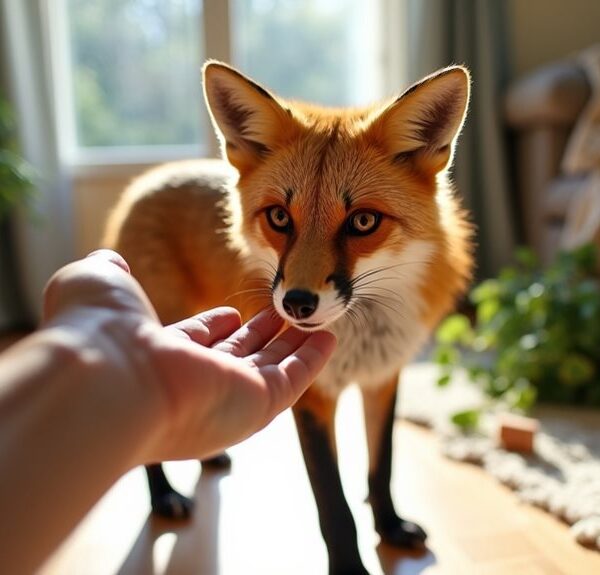
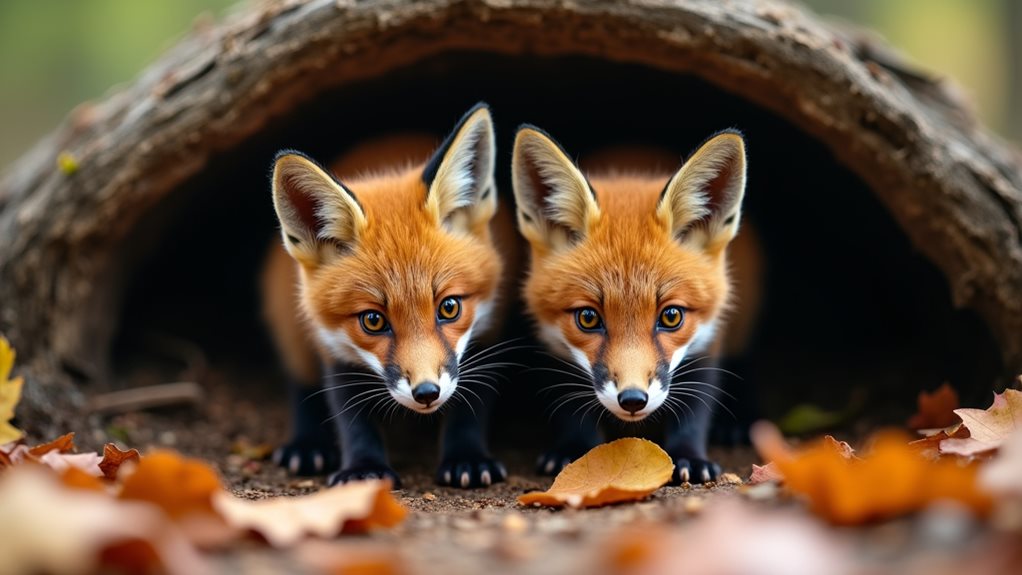
Baby foxes, called kits, are born blind and deaf with chocolate-brown fur that changes color as they mature. You’ll find them in family groups called “skulks” where both parents care for litters of 4-5 kits. They communicate through high-pitched whines and learn hunting skills through playful interactions with siblings. Kits stay with parents for about seven months before seeking independence, with older siblings often helping care for younger ones. These fascinating creatures have much more to reveal about their development.
Contents
- 1 What Are Baby Foxes Called? Terminology and Basic Facts
- 2 Fox Breeding Season and Gestation Period
- 3 Birth and Early Development Stages of Kits
- 4 Physical Characteristics of Newborn Fox Kits
- 5 Den Selection and Nursery Preparation by Parent Foxes
- 6 Diet and Feeding Habits of Growing Fox Kits
- 7 Parental Care and Family Dynamics in Fox Communities
- 8 Playful Behaviors and Social Learning Among Young Foxes
- 9 Common Threats and Survival Challenges for Fox Kits
- 10 When and How Young Foxes Become Independent
- 11 Final Thoughts
What Are Baby Foxes Called? Terminology and Basic Facts
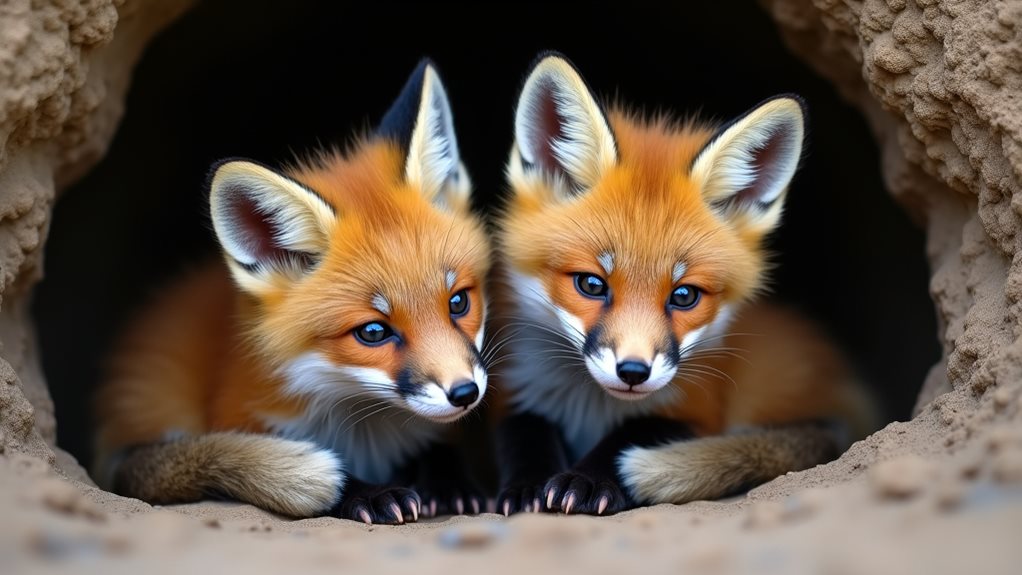
The word “kit” might sound like it belongs in a craft store, but it’s actually the correct term for a baby fox. These adorable little furballs stay with their parents for about seven months, learning vital kit behavior that helps them survive in the wild.
You’ll notice that kits are incredibly playful—this isn’t just cute, it’s critical practice for hunting skills they’ll need later.
Fox communication starts early, with kits making high-pitched whines to call their mothers. As they grow, they’ll learn the full range of fox vocalizations, from barks to screams.
Did you know a family of foxes is called a “skulk” or “leash”? While most litters contain 4-5 kits, some can have up to 12 little ones tumbling around their den! Strong social bonds enhance cooperation in parenting and improve their survival chances in the wild.


This plush is approx. 4.5" x 7" x 7.5" in size

Bundle Description: Message seller for bundle pricing., Subject: Sticker, Style: Sticker
Fox Breeding Season and Gestation Period
When winter shifts to early spring, fox breeding season begins in earnest, typically starting in January and extending through March in most regions. During this time, you’ll notice distinctive mating behaviors as male foxes compete for female attention through vocalizations and territorial displays.
The seasonal patterns of fox reproduction are fascinating to observe. After successful mating, the female fox’s gestation period lasts approximately 52 days. That’s less than two months before a litter of kits arrives! Cubs are often born blind and covered in dark chocolate-brown fur, highlighting their need for close maternal care soon after birth.
You might be surprised to learn that a vixen can delay implantation of fertilized eggs if conditions aren’t favorable, a remarkable adaptation that guarantees kits are born when food is abundant.
Most foxes produce just one litter annually, with females returning to fertility the following winter.
Birth and Early Development Stages of Kits
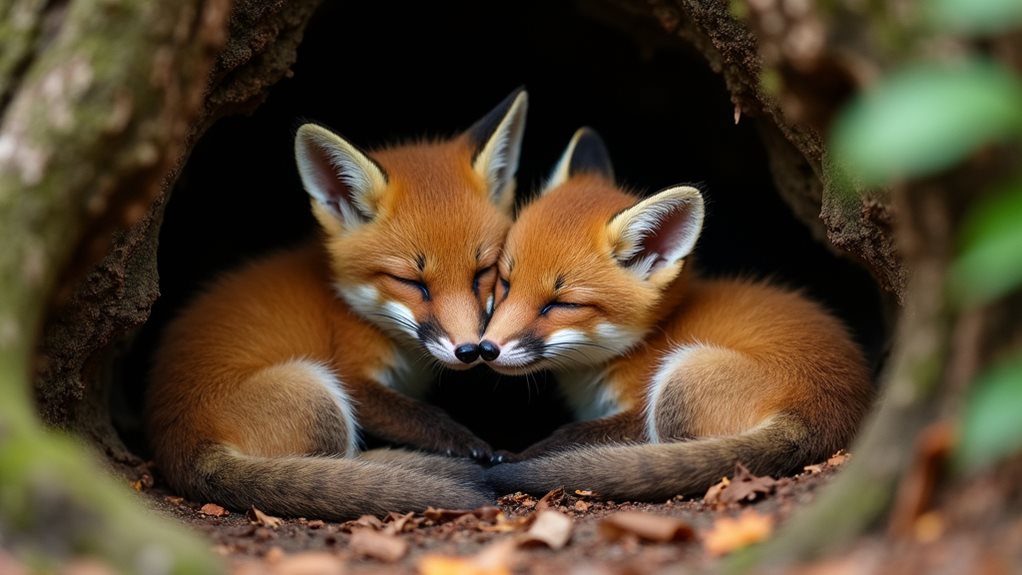
When you first meet newborn fox kits, you’ll notice they’re incredibly tiny, weighing just 100-120 grams with bodies that fit comfortably in your palm.
Their development happens at an astonishing pace, with eyes opening after 10-14 days and their characteristic red-orange fur beginning to replace their initial dark gray coat by three weeks.
You’ll witness remarkable changes as these little ones evolve from helpless newborns to playful, curious kits ready to explore outside their den by the six-week mark. During this period, the maternal care provided by their vixen is crucial for their survival and development.
Birth Weight and Size
Newborn fox kits arrive into the world weighing a mere 100-120 grams (about 3.5-4.2 ounces), making them no heavier than a small apple.
You’ll find notable birth weight and size variation between different fox species, with red fox kits typically being larger than fennec fox babies.
These tiny creatures are born blind and deaf, with short, fine fur that doesn’t yet display their species’ characteristic markings.
When you first see newborn kits, you might be surprised by how small and vulnerable they appear.
Their bodies measure just 4-6 inches in length, excluding their not-yet-bushy tails.
Despite their diminutive size, these resilient little mammals grow quickly, doubling their weight within the first week of life.
Nature has designed them to develop rapidly, a necessity for survival in the wild. As they grow, they rely on their mother for protective behavior, which is crucial to their survival during the early weeks.
Newborn Development Timeline
Fox kits experience six remarkable developmental stages during their first weeks of life.
You’ll notice that these tiny creatures begin as helpless, blind newborns with closed ear canals and limited mobility. By week two, their eyes begin to open, revealing a stunning blue color that will eventually change to amber or brown.
Between weeks three and four, significant developmental milestones emerge as kits start exploring outside the den under watchful parental supervision.
Their newborn behaviors evolve rapidly—at five weeks, they’re actively playing with siblings, developing essential hunting skills through mock battles and pouncing games.
Physical Characteristics of Newborn Fox Kits
Tiny and helpless, baby fox kits enter the world weighing just 100-120 grams—about as much as a small apple. They’re born blind and deaf, with dark, velvety fur that doesn’t yet show the distinctive kit coloration they’ll develop later.
You’ll notice their fur changes dramatically in the first few weeks, gradually taking on the reddish-brown or gray tones typical of their species.
Physical adaptations help these vulnerable newborns survive their early days:
- Short, rounded ears that will grow longer and more pointed as they mature
- Specialized milk teeth designed specifically for nursing from their mother
- Extra body fat that provides insulation against cold temperatures
Their tiny paws and button noses might make you melt, but these features serve essential survival purposes as the kits develop into independent foxes.
Den Selection and Nursery Preparation by Parent Foxes
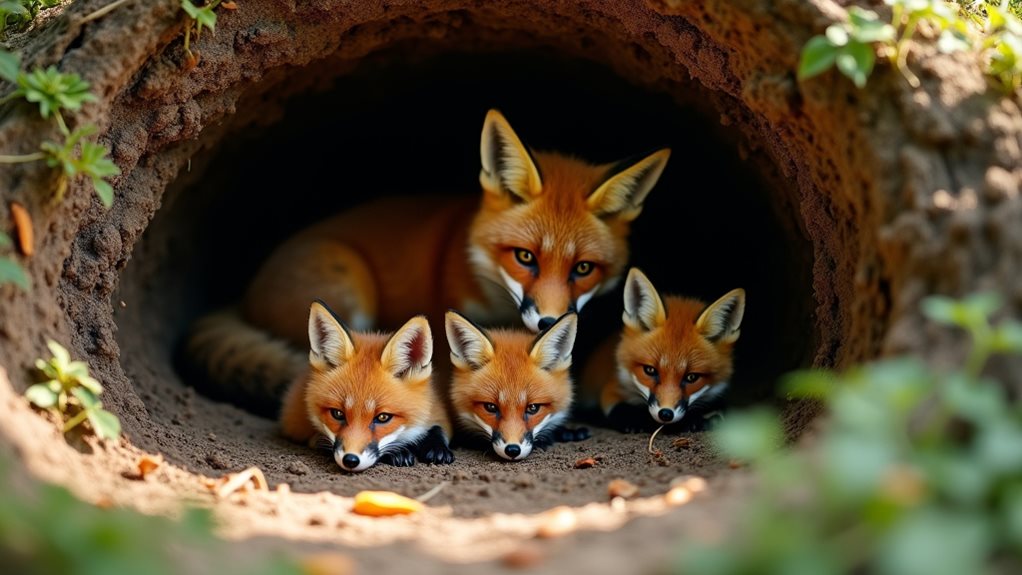
Weeks before their kits arrive, parent foxes commence on a meticulous search for the perfect den location, prioritizing both safety and convenience. You’ll find that foxes often choose raised areas with good drainage to prevent flooding during spring rains. They’re incredibly resourceful, sometimes taking over abandoned badger burrows or creating dens under sheds and porches in suburban areas. Once they’ve selected the ideal den location, the parents gather soft nesting materials like grass, leaves, and fur to create a cozy nursery. The mother, called a vixen, will spend extra time arranging these materials into a comfortable bed where her kits will spend their first weeks of life. This careful preparation guarantees their vulnerable offspring have the best possible start in the wild world. The choice of den location also reflects their adaptation to preferred den sites, ensuring safety from predators and harsh weather conditions.
Diet and Feeding Habits of Growing Fox Kits
During the first few weeks of life, growing fox kits rely entirely on their mother’s milk for nourishment, feeding every four hours to fuel their rapid development.
As they grow, you’ll notice their shift to solid foods around week four, when parents begin bringing back small prey items for kit feeding.
Fox kits develop dietary preferences quickly, and their natural menu expands to include:
- Small rodents like mice and voles, which provide crucial protein
- Insects and earthworms that offer easy-to-digest nutrients for growing kits
- Seasonal berries and fruits that supplement their diet with necessary vitamins
It’s important to recognize that red foxes also enjoy berries and fruits, which are significant sources of energy and nutrients, especially in autumn.
You’ll find it fascinating how quickly these fluffy youngsters learn to hunt!
Parental Care and Family Dynamics in Fox Communities
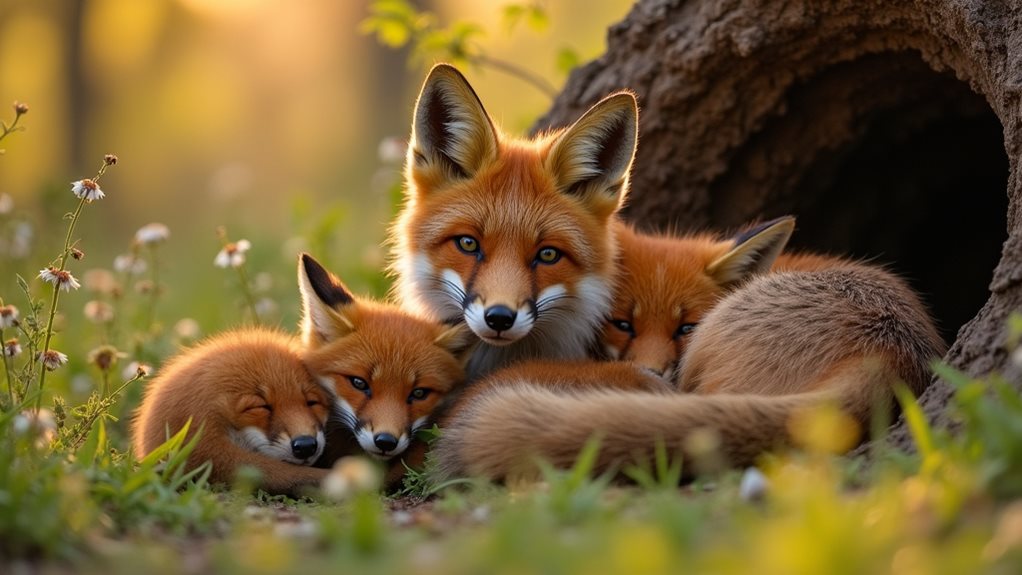
Beyond their eating habits, fox kits benefit from an intricate family support system that shapes their early development.
You’ll notice distinct parental roles within fox families, with both mom and dad actively participating in childcare. The mother fox provides warmth and nursing during the first weeks, while the father hunts and protects the den from potential threats.
Fox family structure typically revolves around a monogamous pair and their offspring, creating a tight-knit unit that works together for survival.
Older siblings sometimes stick around as “helpers,” babysitting younger kits and teaching them vital hunting skills. This cooperative approach guarantees that even playful youngsters learn significant survival tactics.
In addition, early social interactions and play behavior among kits are crucial for establishing social hierarchies, ensuring they develop vital skills for their future lives.
When you observe fox families in the wild, you’re witnessing a remarkable social system that’s evolved to give these adorable kits their best chance at success.
Playful Behaviors and Social Learning Among Young Foxes
Pouncing, wrestling, and chasing one another are staples of fox kit development, creating the foundation for essential life skills.
The playful dance of fox kits isn’t just adorable—it’s nature’s training ground for survival in the wild.
These playful interactions serve as training for hunting, defense, and social bonding that they’ll need as adults. You’ll notice that kits engage in social exploration with their siblings almost constantly during their waking hours.
Fox kits learn through play in three primary ways:
- Mock hunting – practicing pounces and stalking techniques
- Rough-and-tumble wrestling – establishing hierarchy and building strength
- Hide-and-seek games – developing stealth and spatial awareness
Watching these furry bundles tumble across meadows, you’re witnessing nature’s classroom in action. Their seemingly carefree antics actually represent significant learning experiences that prepare them for the challenges of adult fox life. Additionally, these playful behaviors build crucial social bonds within the family, which help kits thrive as they grow.
Common Threats and Survival Challenges for Fox Kits
Despite their adorable appearance, fox kits face numerous threats in the wild, including predators like coyotes, eagles, and larger mammals that see them as easy prey.
You’ll find that human activities, such as habitat destruction and road development, create considerable challenges for these young foxes trying to maneuver their first months of life.
Fox kits are also vulnerable to diseases like mange, distemper, and rabies, which can spread quickly through fox families and dramatically reduce survival rates in the wild. Furthermore, healthy foxes typically avoid humans, but urban environments can increase their encounters with threats.
Predators and Natural Enemies
While fox kits are undeniably adorable, they face numerous threats in the wild that greatly impact their survival rates. Predators pose the greatest danger, with eagles, coyotes, and larger carnivores constantly on the hunt for these vulnerable youngsters.
You’ll find their survival depends heavily on predator avoidance techniques and natural camouflage that their parents teach them.
These little ones must overcome:
- Aerial attacks from owls and hawks, who can spot movement from high above
- Ground predators like wolves and bears, who won’t hesitate to raid fox dens
- Domestic dogs, who may chase and kill kits that venture too close to human settlements
Their reddish-brown fur helps them blend into forest floors, giving them a fighting chance against the many creatures that see them as an easy meal. Additionally, their adaptability is crucial, as urban foxes often encounter new challenges in urban environments, adjusting their behavior to survive.
Human-Wildlife Conflict Issues
Beyond natural predators, fox kits face considerable challenges from human activities that directly impact their survival rates. Urban encroachment has dramatically reduced safe denning sites for fox families, forcing them into potentially dangerous locations closer to roads and human dwellings.
You mightn’t realize that a new housing development can displace multiple fox families with nowhere to go. Habitat loss remains the most important human-related threat to these adorable youngsters.
When we clear forests or convert grasslands to farmland, we’re effectively eliminating their parents’ hunting grounds. This can lead to malnourished kits who don’t develop properly.
Additionally, curious fox kits often encounter dangers like pesticides, rodent poisons, and vehicle traffic. While these bushy-tailed babies are remarkably adaptable, our expanding footprint makes their path to adulthood increasingly challenging.
Disease and Mortality
Fox kits face numerous health challenges that greatly impact their survival rates during their vulnerable first months of life.
Kit diseases can spread quickly through litters, with mortality rates reaching up to 60% in the wild before they reach adulthood. You’ll find that these young foxes are particularly susceptible to common threats that can dramatically shorten their lives.
The three most notable health challenges for fox kits include:
- Sarcoptic mange, caused by parasitic mites that create severe skin irritation and can be fatal if untreated.
- Canine distemper virus, which attacks multiple body systems and has an extremely high mortality rate.
- Internal parasites like roundworms that compete for nutrients, often leaving kits weakened and vulnerable to other diseases.
When and How Young Foxes Become Independent
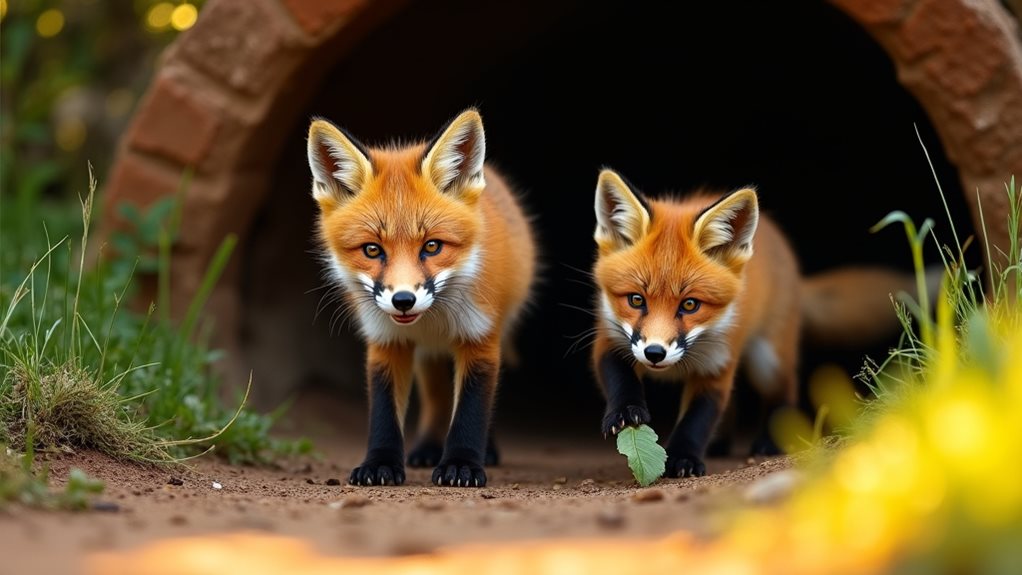
As young fox kits grow and develop their skills, they’ll naturally begin the path toward independence around 4-5 months of age.
This independence timeline varies slightly between different fox species, but you’ll typically notice kits venturing farther from the den by mid-summer.
Parents gradually teach their young crucial survival skills through play and demonstration.
You might spot kits practicing pouncing, hunting small insects, or digging—all vital abilities they’ll need when they strike out on their own.
By late summer or early fall, these young foxes will have mastered finding food and avoiding predators.
Most kits will disperse from their family group before winter arrives, with some traveling several miles to establish their own territories.
It’s a bittersweet but necessary shift as these once-dependent babies become self-sufficient adults ready to continue the cycle.
Final Thoughts
As you’ve seen, fox kits transform from helpless bundles to independent hunters in just months. Their expedition, like a delicate dance between vulnerability and growing strength, reminds us of nature’s perfect timing. When you spot those bright eyes peering from a den or witness their playful tumbles, you’re glimpsing something truly special—a fleeting chapter in the wild tapestry of life that’s been unfolding, unchanged, for thousands of years.