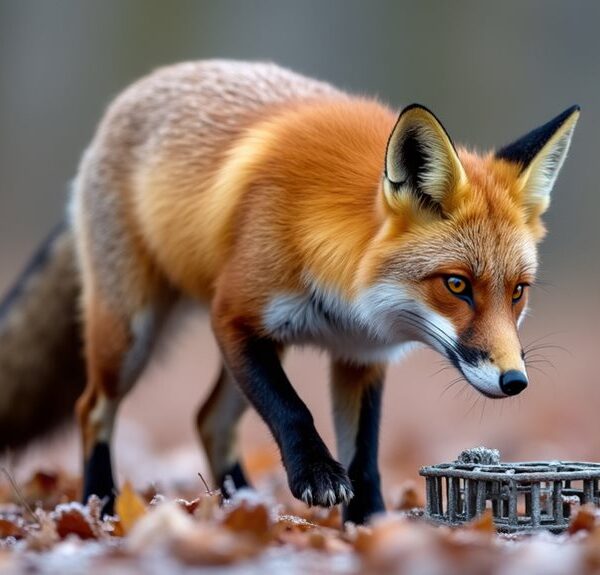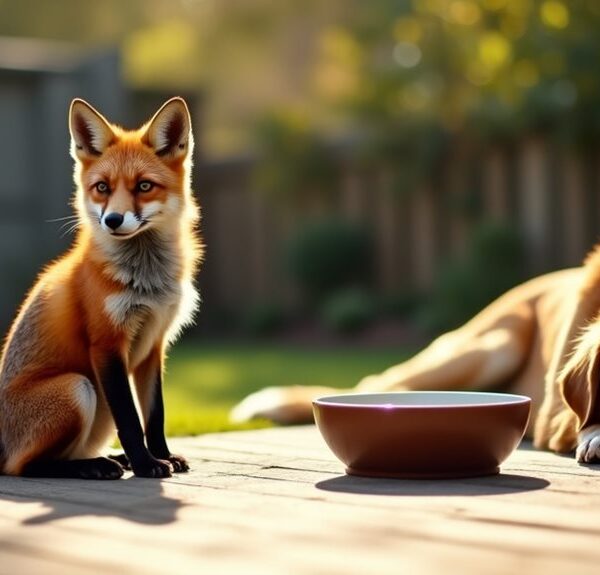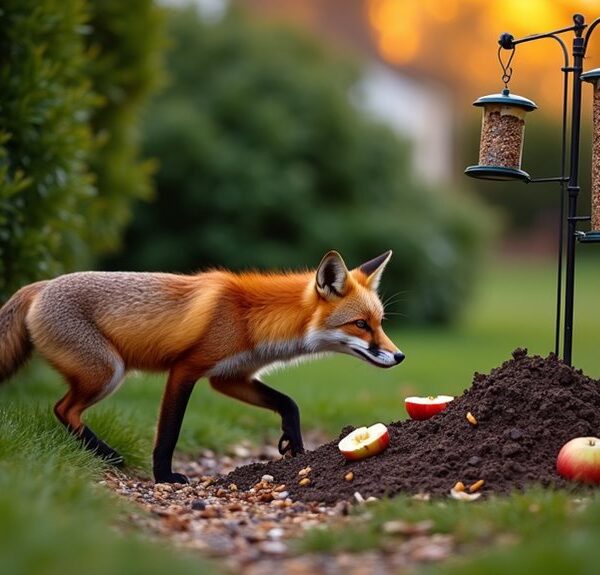

A wildlife rehabilitator in Surrey documented something remarkable in 2024: a hand-raised red fox named Rusty would gently mouth her fingers each morning, not breaking skin, but applying just enough pressure to be felt. When she stopped the interaction, he’d whine and nudge her hand back toward his muzzle. The question that followed her viral video was immediate: do foxes bite to show affection, or was this something else entirely? The answer reveals a complex communication system that blurs the line between canid instinct and genuine social bonding.
Understanding whether foxes bite to show affection requires looking beyond our domestic dog comparisons. While foxes share ancestry with dogs, their social structures, communication methods, and relationship-building behaviours evolved along distinctly different paths. What appears as a “bite” may actually be a sophisticated form of tactile communication, one that serves multiple purposes in vulpine behaviour, from establishing hierarchy to reinforcing pair bonds during mating season.
Key Takeaways
- Gentle mouthing in foxes serves multiple social functions, including bonding, play, and hierarchy establishment, not purely affection as humans understand it
- Context matters critically: the same biting behaviour can signal affection between bonded foxes or aggression toward strangers, depending on body language and vocalisations
- Wild versus captive foxes display different bite behaviours; hand-raised foxes may develop dog-like mouthing habits that wild foxes rarely exhibit
- Safety first: even “affectionate” fox bites carry disease risks and should never be encouraged in wild or urban foxes
- Species variation exists, red fox range behaviours differ from arctic, fennec, and other fox species in social bonding displays
The Science Behind Fox Biting Behaviour
Canid Communication Through Mouth Contact
Foxes belong to the Canidae family, which includes wolves, dogs, and jackals, all species that use their mouths as primary tools for interaction. However, foxes diverged from the wolf-dog lineage approximately 12 million years ago, developing more solitary hunting strategies and less pack-oriented social structures. This evolutionary path shaped how they use biting in social contexts.
Research from the University of Bristol’s wildlife behaviour unit shows that red foxes employ at least seven distinct types of mouth contact during social interactions:
- Scruff gripping (parent to kit)
- Play biting (between kits and juveniles)
- Muzzle wrestling (during courtship)
- Inhibited bites (hierarchy establishment)
- Grooming nibbles (pair bonding)
- Food transfer bites (regurgitation prompting)
- Defensive bites (threat response)
Only the first five could reasonably be interpreted as “affectionate” in the sense that they strengthen social bonds rather than inflict harm or establish dominance through pain.
Bite Inhibition: The Key to Affectionate Mouthing
Bite inhibition,the learned ability to control jaw pressure, is crucial to understanding whether foxes bite to show affection. Domestic dogs develop strong bite inhibition through puppy play and maternal correction. Foxes develop similar skills, but with important differences.
Fox kits begin practicing bite inhibition at approximately three weeks old, when their milk teeth emerge. Mother foxes will yelp, withdraw, or gently pin kits who bite too hard during nursing or play. By eight weeks, most kits have learned to modulate pressure effectively. This skill becomes essential during the mating season, when paired foxes engage in elaborate courtship rituals that include muzzle biting and neck gripping without injury.
Field observations from urban foxes in London and Bristol reveal that bonded pairs frequently engage in gentle mouthing during greeting ceremonies, particularly after periods of separation during nocturnal hunting. The behaviour appears functionally similar to social grooming in primates: it reinforces pair bonds and reduces stress hormones.
Do Foxes Bite to Show Affection? Interpreting the Evidence
What “Affection” Means in Vulpine Terms
Before answering whether foxes bite to show affection, we must define what affection means for a largely solitary carnivore. Unlike pack animals such as wolves, most fox species, particularly red foxes, maintain loose social structures outside of mating season and kit-rearing periods.
Affection in foxes likely manifests as:
- Tolerance of close proximity (foxes typically maintain 2-3 meter spacing with non-family members)
- Voluntary social engagement beyond reproductive necessity
- Stress-reducing behaviours like allogrooming and play
- Resource sharing (rare but documented between bonded pairs)
- Defensive behaviour protecting family members
When foxes engage in gentle mouthing with these contexts present, the behaviour serves bonding functions analogous to what we’d call affection. However, attributing human emotional states to wildlife remains scientifically problematic, we can observe the behaviour and its social function without claiming to know the fox’s subjective experience.
Documented Cases of Affectionate Fox Biting
Several well-documented scenarios provide evidence that foxes do bite to show affection, within the limitations of that term:
Parent-Kit Interactions: Mother foxes routinely carry kits by the scruff, a behaviour requiring precise bite control. As kits mature, mothers transition to gentler mouthing during play and grooming. This behaviour clearly serves bonding functions and reduces kit stress, as measured by cortisol levels in research settings. Baby foxes respond to this contact with contentment vocalisations, soft chirps and purrs distinct from distress calls.
Mated Pair Bonding: Red foxes form monogamous pairs that often last multiple seasons. During courtship and throughout pair bonding, foxes engage in mutual muzzle biting, neck nibbling, and gentle jaw wrestling. These behaviours peak during mating season (December through February in most of the red fox range) but continue year-round in established pairs. The behaviour correlates with increased oxytocin, the same “bonding hormone” that facilitates human attachment.
Sibling Play: Fox kits engage in extensive play fighting that includes biting, pinning, and chasing. While this behaviour serves important developmental functions, teaching hunting skills and establishing hierarchy, it also appears to provide enjoyment and strengthen sibling bonds. Kits who are prevented from play-biting show increased stress behaviours and reduced social competence as adults.
Captive Fox Behaviour: Hand-raised foxes, particularly those from the Russian domestication experiment begun in 1959, display dog-like affection behaviours including gentle mouthing of trusted humans. These foxes have been selectively bred for tameness over 60+ generations, suggesting that the capacity for affectionate biting exists in fox genetics but is normally suppressed by wild behavioural patterns. For more on this topic, see our article on whether foxes make good pets.
When Fox Biting Is NOT Affectionate
⚠️ Critical distinction: Many fox bites that appear gentle are actually warning behaviours or stress responses, not affection. Key indicators that a fox bite is NOT affectionate include:
- Flattened ears (indicates fear or aggression)
- Piloerection (raised fur along spine and tail)
- Growling or hissing vocalisations
- Rapid, hard bites rather than sustained gentle pressure
- Avoidance behaviour before or after the bite
- Lack of prior relationship (wild foxes don’t show affection to strangers)
Wild foxes may bite humans for several non-affectionate reasons: rabies infection (causing abnormal behaviour), defensive response to perceived threats, food aggression when fed by humans, or maternal protection near den sites. Understanding whether red foxes are dangerous requires recognizing these warning signs.
Species Differences: Do All Foxes Bite to Show Affection?
Red Foxes and Social Biting
Red foxes (Vulpes vulpes) are the most studied fox species and show the most documented affectionate biting behaviours. Their relatively flexible social structure, ranging from solitary to small family groups, creates more opportunities for bonding behaviours than strictly solitary species exhibit.
Red foxes in urban environments show particularly interesting variations. Urban foxes in cities like London and Tokyo have adapted to higher population densities, leading to increased social tolerance and more frequent non-aggressive interactions. Some researchers hypothesize this environmental pressure is selecting for more social fox populations, potentially increasing affectionate behaviours including gentle mouthing.
Arctic Foxes and Pair Bonding
Arctic foxes (Vulpes lagopus) form strong monogamous pairs that cooperate extensively in kit-rearing. These pairs engage in mutual grooming and gentle mouthing behaviours throughout their partnership. The harsh Arctic environment makes cooperation essential for survival, potentially strengthening the evolutionary advantage of bonding behaviours.
Fennec Foxes and Social Complexity
Fennec foxes (Vulpes zerda), the smallest fox species, live in larger social groups than most fox species, sometimes forming communities of up to 10 individuals. This increased sociality correlates with more elaborate bonding behaviours, including extensive mutual grooming and play-biting among group members. Their social structure more closely resembles that of social canids like African wild dogs than typical fox behaviour.
Kit Foxes and Solitary Tendencies
Kit foxes, native to western North American deserts, show more solitary tendencies than red foxes. While mated pairs cooperate during breeding season, they display fewer bonding behaviours overall. Affectionate biting appears limited primarily to mother-kit interactions and brief courtship periods.
The Role of Domestication and Habituation
The Russian Fox Experiment
The Novosibirsk domestication experiment provides the clearest evidence that foxes possess genetic capacity for dog-like affection, including gentle mouthing of humans. Researcher Dmitry Belyaev began selectively breeding silver foxes (a red fox colour morph) in 1959, choosing only the tamest individuals each generation.
By the sixth generation, some foxes sought human contact, wagged their tails, and gently mouthed human hands, behaviours never seen in wild foxes. By generation 20, these behaviours were standard. Genetic analysis revealed that selection for tameness inadvertently selected for neoteny (retention of juvenile traits) and altered serotonin and cortisol regulation, the same neurochemical changes that facilitate bonding in domestic dogs.
This research demonstrates that foxes can develop affectionate biting behaviours when evolutionary pressure favours human bonding, but these behaviours remain absent in wild populations.
Hand-Raised Wildlife: A Cautionary Tale
Wildlife rehabilitators occasionally raise orphaned fox kits, and some of these foxes develop attachment behaviours toward their human caregivers, including gentle mouthing. However, this habituation creates serious problems:
🦊 Habituated foxes lose fear of humans, making them vulnerable to vehicle strikes, poisoning, and shooting
🦊 They cannot be released into wild populations, as they lack appropriate wariness
🦊 They may approach strangers expecting friendly interaction, leading to conflict
🦊 Disease transmission risk increases with close human contact
Professional rehabilitators minimize human contact specifically to prevent these bonding behaviours from developing. The goal is always to maintain the fox’s wild nature, including its natural wariness of humans.
Safety Considerations: Why You Should Never Encourage Fox Biting
Disease Transmission Risks
Even gentle, “affectionate” fox bites carry significant health risks:
Rabies: Foxes are rabies vectors in many regions. The virus transmits through saliva, meaning even a non-breaking bite from an infected fox can transmit the disease if saliva contacts mucous membranes or existing wounds. Foxes and rabies remain a serious concern in North America and Europe.
Bacterial infections: Fox mouths harbour numerous bacteria including Pasteurella, Capnocytophaga, and Staphylococcus species. These can cause serious infections even from minor bites.
Parasites: Foxes carry various parasites including Echinococcus multilocularis (a tapeworm that causes alveolar echinococcosis in humans), which can be transmitted through contact with fox saliva or feces.
Other diseases: Foxes can carry leptospirosis, toxoplasmosis, and various other zoonotic diseases. For more information, see our article on common diseases in foxes.
Legal and Ethical Considerations
In most jurisdictions, feeding or encouraging contact with wild foxes is illegal. These laws exist because:
- Habituation endangers both foxes and humans
- Fed foxes lose natural foraging behaviours
- Artificial food sources alter population dynamics
- Close contact increases disease transmission
- Habituated foxes may become aggressive when food expectations aren’t met
Even in areas where fox feeding isn’t explicitly illegal, wildlife agencies strongly discourage the practice. The ethical principle of wildlife observation is minimal interference,observe and appreciate without altering natural behaviours.
Proper Fox Observation Protocol
If you encounter foxes and want to observe their natural behaviours:
✅ Maintain distance: Stay at least 10-15 feet away
✅ Never feed: Provide no food or attractants
✅ Observe quietly: Minimize noise and sudden movements
✅ Respect den sites: Stay well away from dens, especially during kit-rearing season (March-July)
✅ Use telephoto lenses: Photograph from distance rather than approaching
✅ Report sick foxes: Contact wildlife authorities if you observe foxes with abnormal behaviour
For those interested in documenting fox behaviour, our guide on how scientists track urban foxes provides ethical observation methods.
Reading Fox Body Language: Affection Versus Aggression
Understanding whether a fox’s biting behaviour is affectionate or aggressive requires reading the complete behavioural context:
Signs of Relaxed, Affiliative Behaviour
When foxes engage in affectionate interactions, they display:
- Soft, relaxed facial expression (slightly open mouth, no teeth showing)
- Forward or neutral ear position (not flattened)
- Loose, flowing body movements (not stiff or frozen)
- Tail position neutral or gently wagging (not tucked or bristled)
- Soft vocalisations (chirps, whines, or silence, not growls)
- Approach and retreat patterns (playful engagement, not sustained aggression)
- Mutual engagement (both animals participating willingly)
Signs of Stress, Fear, or Aggression
Aggressive or defensive biting shows distinctly different body language:
- Bared teeth and wrinkled muzzle (clear threat display)
- Flattened ears (pinned back against head)
- Stiff, frozen posture or crouched defensive position
- Piloerection (fur standing up, especially along spine and tail)
- Aggressive vocalisations (growling, hissing, screaming)
- Direct, hard stare (predatory or threat assessment)
- Rapid, snapping bites (not sustained gentle pressure)
For more on fox communication, see our article on why foxes scream at night, which covers the full range of vulpine vocalisations.
Comparing Fox Affection to Other Canids
Foxes Versus Domestic Dogs
Dogs have been selectively bred for 15,000+ years to bond with humans, developing exaggerated affection behaviours including gentle mouthing, licking, and sustained physical contact. These behaviours are neotenic,they resemble puppy behaviours retained into adulthood.
Foxes lack this breeding history. Wild foxes show affection primarily to family members and mates, not to humans or strangers. The affectionate behaviours they do display are more subtle and context-dependent than dog behaviours. For more on this relationship, see what is the relationship between red foxes and dogs.
Foxes Versus Wolves
Wolves are highly social pack animals with complex hierarchies and extensive bonding behaviours. Wolf packs engage in frequent physical contact, including muzzle biting, body rubbing, and cooperative play. These behaviours reinforce pack cohesion essential for cooperative hunting.
Foxes, being more solitary, show these behaviours less frequently and primarily within mated pairs or parent-offspring relationships. The evolutionary pressures that shaped wolf sociality simply don’t apply to most fox species.
Foxes Versus Coyotes
Coyotes occupy an interesting middle ground, more social than foxes but less pack-oriented than wolves. Coyote pairs show bonding behaviours similar to foxes, including mutual grooming and gentle mouthing. However, coyotes form larger family groups more frequently than foxes, leading to more elaborate social behaviours. Our article on foxes versus coyotes explores these differences in detail.
What This Means for Fox Enthusiasts
Appreciating Fox Behaviour Without Interference
The question “do foxes bite to show affection?” reveals our human desire to connect with wildlife. The answer, yes, foxes do use gentle biting as a bonding behaviour within their social groups, should deepen our appreciation for their complex social lives without encouraging inappropriate interaction.
The most ethical way to appreciate fox affection is through observation at a distance. Wildlife photographers and naturalists report that patient, non-intrusive observation reveals remarkable behaviours: paired foxes grooming each other at den sites, kits play-fighting while parents watch, and the elaborate greeting ceremonies that occur when mates reunite after hunting.
Supporting Fox Conservation
Understanding fox behaviour, including their bonding mechanisms, supports conservation efforts by:
- Countering negative stereotypes: Recognizing foxes as complex, social animals challenges harmful myths about them being purely destructive pests
- Informing management decisions: Understanding fox social structures helps wildlife managers make ethical decisions about population control
- Promoting coexistence: Knowledge about fox behaviour helps urban and rural residents coexist peacefully with fox populations
- Inspiring protection: Appreciation for fox intelligence and social complexity motivates habitat protection
For those interested in fox conservation, understanding how foxes master adaptation across diverse environments is essential.
Educational Opportunities
Parents and educators can use fox behaviour as a teaching tool for children, demonstrating:
- Biodiversity: The 12+ fox species show remarkable adaptations to different environments
- Animal communication: Foxes use vocalisations, body language, and tactile signals to communicate
- Ecology: Foxes play important roles as mesopredators in many ecosystems
- Ethics: Proper wildlife observation teaches respect for animal autonomy
Our article on foxes in school science topics provides age-appropriate educational resources.
FAQ
Do foxes bite their owners affectionately?
Foxes should not be kept as pets in most situations, but hand-raised foxes from domestication programs may develop dog-like affectionate mouthing behaviours toward trusted caregivers. Wild foxes do not show affection to humans and any biting should be considered defensive or aggressive.
How can you tell if a fox bite is playful or aggressive?
Playful bites involve gentle, sustained pressure with relaxed body language, forward ears, and soft vocalisations. Aggressive bites are rapid, hard, and accompanied by defensive postures, flattened ears, growling, and attempts to escape or create distance.
Do fox kits bite their mothers affectionately?
Fox kits engage in play-biting with their mothers as part of normal development. Mothers tolerate this behaviour and use it to teach bite inhibition. This interaction serves bonding functions and helps kits develop social skills, though whether it constitutes “affection” as humans understand it remains debatable.
Is it safe to let a fox bite you gently?
No. Even gentle fox bites carry disease transmission risks including rabies, bacterial infections, and parasites. Wild foxes should never be encouraged to make physical contact with humans, and even captive foxes require careful handling by trained professionals.
Do urban foxes show more affection than wild foxes?
Urban foxes show increased tolerance of human presence due to habituation, but this is not affection. They may appear bolder or less fearful, but they remain wild animals. Any biting behaviour from urban foxes should be discouraged, as it indicates problematic habituation.
What should I do if a fox tries to bite me?
Back away slowly without turning your back, make yourself appear larger, and make loud noises. Do not run. If bitten, wash the wound immediately with soap and water and seek medical attention. Report the incident to local wildlife authorities, as the fox may need to be tested for rabies.
Conclusion
So, do foxes bite to show affection? The evidence suggests that yes, foxes do use gentle mouthing and controlled biting as bonding behaviours,but only within their social groups and under specific contexts. Mother foxes mouth their kits, mated pairs engage in mutual muzzle biting during courtship and bonding, and siblings play-bite during development. These behaviours serve important social functions analogous to what we might call affection.
However, this understanding should never translate into encouraging physical contact with wild or urban foxes. The disease risks, legal implications, and ethical concerns far outweigh any perceived benefit. Wild foxes do not show affection to humans, and any biting behaviour from a wild fox indicates either defensive aggression or problematic habituation.
For wildlife enthusiasts, the appropriate response to learning about fox affection is increased appreciation at a respectful distance. Use telephoto lenses to photograph fox families at den sites during spring and early summer. Listen for the complex vocalisations that accompany fox social interactions during mating season. Support conservation efforts that protect fox habitats and promote coexistence.
Understanding vulpine behaviour, including how foxes bite to show affection within their own social structures, enriches our appreciation for these remarkable animals while reinforcing the importance of maintaining appropriate boundaries between human and wildlife worlds. The most meaningful connection we can have with foxes is one of informed respect, not physical contact.
Next steps for fox enthusiasts:
- Learn to identify fox tracks and signs in your area
- Support local wildlife organizations working on fox conservation
- Practice ethical wildlife photography techniques that minimize disturbance
- Educate others about proper fox observation protocols
- Report sick or abnormally behaving foxes to wildlife authorities