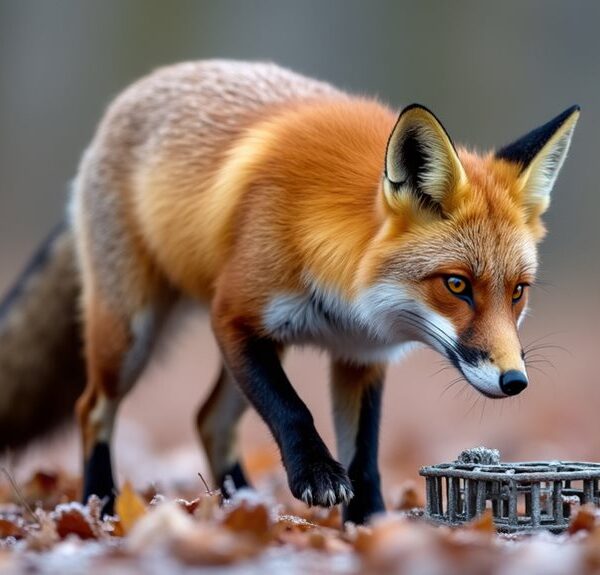
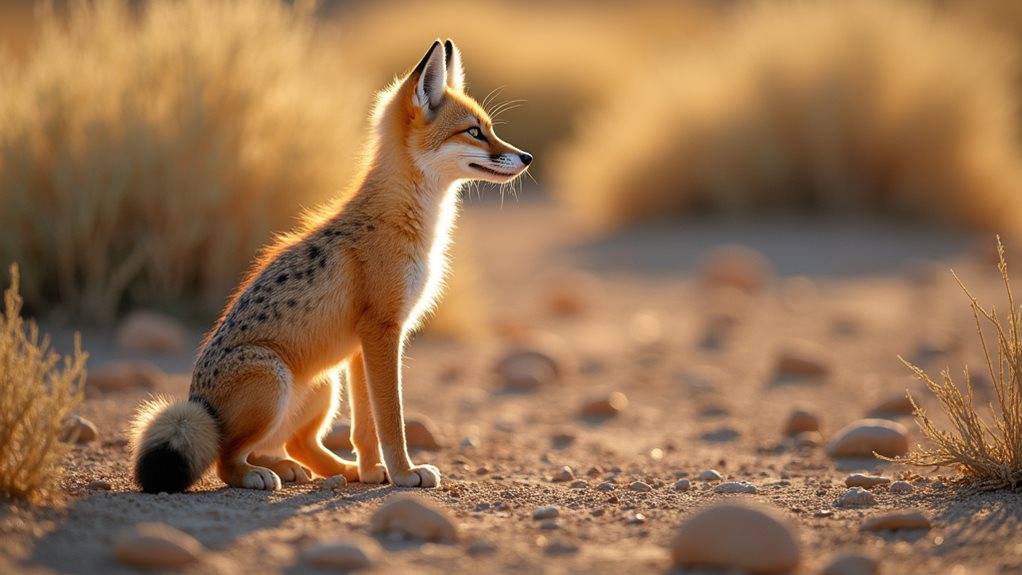
Kit foxes are small, sandy-colored predators perfectly adapted to western deserts. You’ll notice their oversized ears that cool them down and pinpoint prey in the darkness, while specialized foot pads protect them from scorching sand. These nocturnal hunters conserve water by extracting moisture from their prey, rarely needing to drink. They live in family units with complex den systems and monogamous relationships. Discover how these tiny hunters cleverly survive harsh conditions while facing increasing environmental threats.
Physical Adaptations for Desert Survival
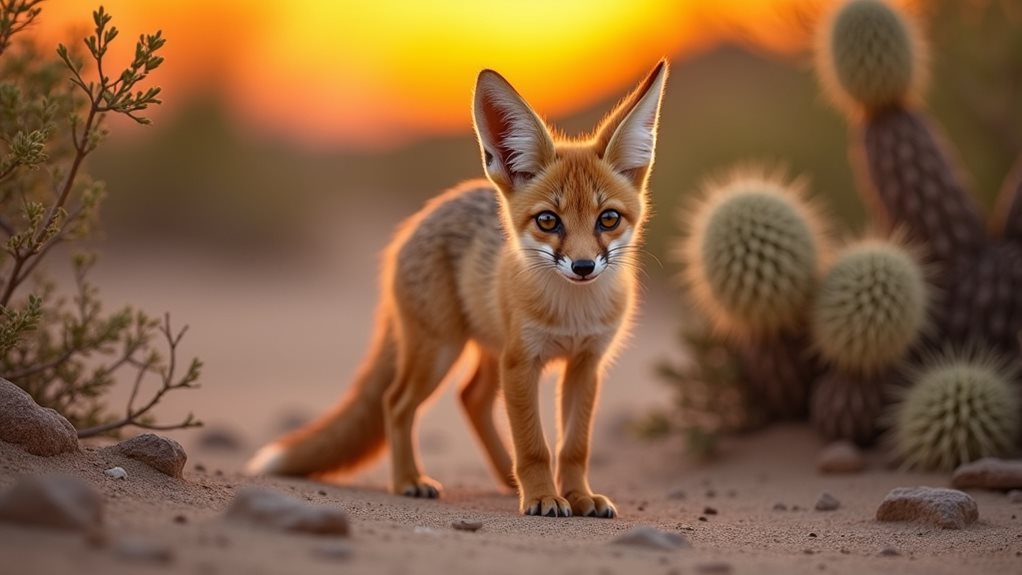
While surviving in the desert’s harsh conditions would challenge most creatures, kit foxes have evolved remarkable physical traits that make them masters of arid environments.
You’ll notice their sandy-colored fur, a perfect camouflage technique that helps them blend into their desert surroundings and stay hidden from predators.
Their large ears aren’t just adorable—they’re essential for heat regulation! These oversized ears act like natural radiators, dispersing body heat and keeping them cool when temperatures soar.
You’ll also find they’ve specialized foot pads that protect their paws from scorching sand while muffling their footsteps during hunts.
At night, when you’d be reaching for a jacket, kit foxes are most active, taking advantage of cooler temperatures. Like fennec foxes, they also utilize burrow systems to maintain a comfortable environment while escaping the desert’s extreme temperatures.
They’ve mastered desert living through these clever adaptations, turning challenging conditions into their home advantage.

Professionally Tanned

Ethically Sourced Fur – Made from Nordic farm-raised fox fur (100% traceable, certified humane). No wild animals harmed.

1: 9X12inch per piece,Material: 80% Acrylic & 20% Polyester,3pcs in Head card packaging .
Habitat Range and Territory Dynamics
You’ll be amazed at how kit foxes have mastered desert living, creating extensive networks of dens across their territorial range.
These resourceful hunters establish multiple burrows throughout their territory, giving them quick escape routes from predators and shelter from extreme temperatures.
Their complex den systems aren’t just homes but strategic outposts that help them control hunting grounds and raise their young in harsh desert environments.
Desert Adaptations Thrive
Despite their small size, kit foxes have mastered the art of desert survival across a surprisingly vast range. You’ll find these resourceful creatures thriving in some of North America’s harshest environments, where temperatures swing dramatically between scorching days and frigid nights.
Their large ears aren’t just adorable—they’re sophisticated cooling systems that disperse heat efficiently.
Kit foxes have developed remarkable relationships with desert flora, often establishing dens near vegetation that provides both shade and attracts prey.
With climate impact intensifying across their habitat, you’ll notice these adaptable hunters shifting their activity patterns seasonally. They’ll hunt primarily at night during summer months, but you might spot them during dawn hours in winter when temperatures are more forgiving.
Their water-efficient kidneys mean they can survive with minimal drinking water.
Territorial Den Networks
Kit foxes establish intricate networks of dens throughout their desert territories, creating a fascinating underground community that spans across the arid terrain. You’ll find these clever mammals maintain up to twenty dens within their range, strategically switching locations every few days to avoid predators.
Territory establishment begins when a pair bonds, selecting a prime area with multiple escape routes and nearby hunting grounds. They’ll use scent marking and vocalizations for den communication, alerting neighbors of their boundaries.
Unlike other canids, kit foxes aren’t aggressive defenders—they’ll often share overlapping territories peacefully.
Their primary dens feature multiple entrances and complex chambers, while auxiliary dens offer quick refuge during hunting expeditions. This brilliant adaptation guarantees they’re never far from shelter in their harsh environment, where safety underground means survival above.
Hunting Techniques in Arid Environments
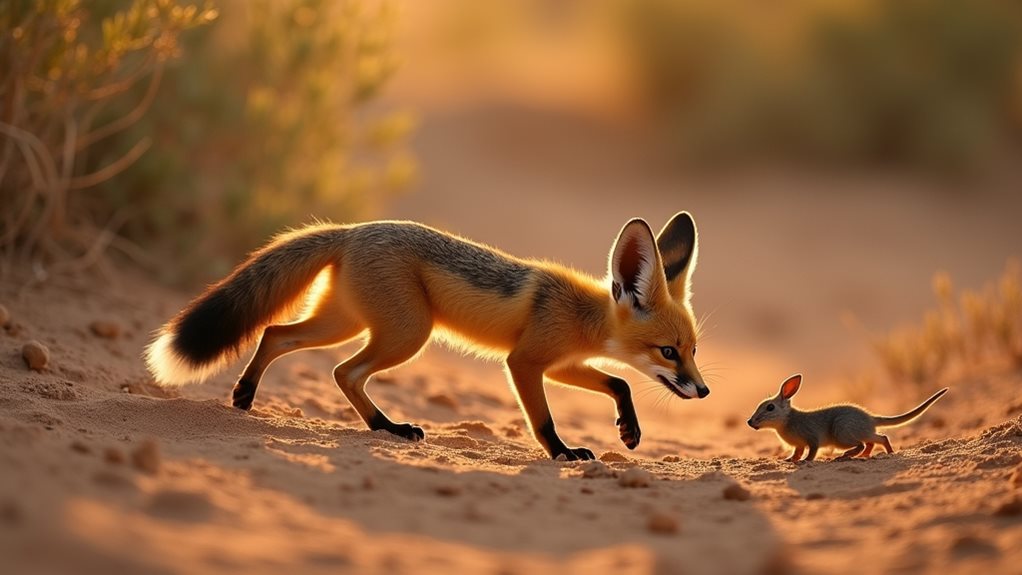
When darkness falls across the desert, these tiny predators emerge with remarkable hunting strategies perfectly adapted to their harsh surroundings.
You’ll find kit foxes stalking silently across sand and scrub, their oversized ears rotating like satellite dishes to detect the faintest rustle of prey. These cunning hunters rely on stealth and patience rather than speed or strength.
Their prey interactions reveal a fascinating balance of opportunism and precision. Unlike their larger cousins, kit foxes don’t chase prey over long distances.
Instead, they’ve mastered the pounce-and-grab technique, conserving precious energy in the unforgiving desert heat. They’ll happily munch on insects, rodents, and even the occasional fruit when times get tough.
Their adaptable diet and hunting approach show just how clever these pint-sized predators really are!
Diet and Water Conservation Strategies
You’ll be amazed how kit foxes satisfy their water needs almost entirely through their prey selection, rarely drinking free water in their harsh desert homes.
Their specialized metabolism extracts moisture from rodents, insects, and small birds, fundamentally drinking their dinner instead of searching for scarce water sources.
When you’re watching the desert terrain at night, you might spot these efficient hunters at their peak activity, using minimal energy to capture maximum nutrition, a crucial adaptation for surviving in one of Earth’s most unforgiving environments.
Desert Prey Selection
Unlike many desert animals that struggle to find sustenance, kit foxes have evolved remarkable strategies for hunting and obtaining water in harsh arid environments.
You’ll find these clever hunters targeting a wide prey diversity, from kangaroo rats and rabbits to insects and even the occasional bird. They’re opportunistic feeders, adapting their diet to whatever’s available in their desert home.
When it comes to hunting competition, kit foxes don’t back down easily. Though they share their habitat with coyotes and larger predators, they’ve carved out their niche by hunting at different times and in different ways.
Their exceptional hearing lets them detect prey moving underground, giving them an edge that larger competitors don’t have. They’ll even scavenge when necessary, making them true desert survival specialists in the American Southwest.
Metabolic Water Sources
Kit foxes’ survival in harsh desert environments extends beyond their hunting prowess to remarkable water conservation abilities. You’ll be amazed at how these clever canids rarely need to drink water directly! Their bodies utilize specialized metabolic pathways that extract moisture from the prey they consume.
When you examine their hydration strategies, you’ll notice they obtain nearly all their water requirements from the tissue fluids of rodents, rabbits, and insects they hunt. Their kidneys produce highly concentrated urine, conserving precious water that would otherwise be lost.
They’ll also seek out moisture-rich foods during the driest seasons, instinctively adjusting their diets to maintain hydration. Unlike other desert mammals, kit foxes don’t store water in their bodies but instead have evolved efficient systems that maximize every drop they consume.
Nocturnal Hunting Efficiency
As darkness falls across the desert terrain, these nimble predators emerge to showcase their remarkable nocturnal hunting prowess. You’ll be amazed by how kit foxes use their specialized nocturnal vision to detect the slightest movements in near-total darkness.
Their large ears aren’t just adorable—they’re sophisticated sound-locating instruments that can pinpoint a mouse rustling nearly 100 feet away!
Their hunting strategies have evolved perfectly for desert survival. Unlike daytime hunters who waste energy in the scorching heat, kit foxes conserve precious water by hunting during cool nights.
They’ll patiently stalk prey, freeze in position when detected, and then pounce with surprising accuracy. It’s like watching tiny ninjas in action! This nighttime efficiency isn’t just impressive—it’s crucial for their survival in one of North America’s harshest environments.
Social Structure and Family Life
These desert dwellers live in tight-knit family units that form the backbone of kit fox society. You’ll notice strong pack cohesion when observing these animals, with parents and offspring working together to survive harsh desert conditions. They maintain their bonds through social grooming, taking turns cleaning each other’s fur while strengthening their familial connections.
Kit foxes aren’t loners by nature—they’re truly family-oriented creatures. During breeding season, a monogamous pair will produce 3-5 pups, which stay with their parents for several months learning crucial survival skills.
It’s touching to watch how dedicated the parents are, taking turns watching the young while others hunt. The family’s den becomes a hub of activity, with multiple entrances offering safety and comfort as they face the desert’s challenges together.
Breeding and Kit Development
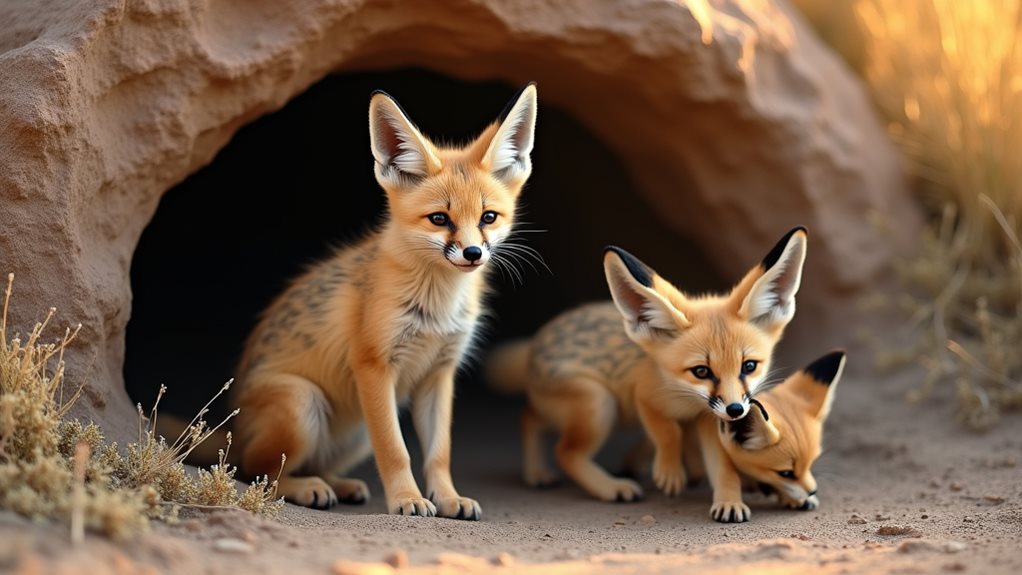
When winter’s chill begins to fade, breeding season arrives for the desert’s tiny hunters.
You’ll find kit foxes pairing up between December and February, when their breeding strategies kick into high gear. These devoted parents typically produce 3-5 pups per litter, though you might occasionally spot a family with as many as seven kits!
Winter romance blossoms among desert foxes, with devoted pairs welcoming their adorable litters of curious kits.
Kit development happens quickly in these remarkable creatures. The pups are born blind and helpless, weighing just a few ounces, but don’t be fooled by their fragile appearance.
Within four weeks, they’re already exploring outside their den, their curious eyes taking in the desert world. By autumn, you’ll hardly recognize those once-tiny balls of fur as they reach nearly adult size.
The young foxes disperse to establish their own territories, continuing the cycle that’s helped these adaptable hunters thrive for generations.
Threats to Kit Fox Populations
Despite their remarkable adaptability, kit foxes face numerous threats in today’s changing world.
You’ll find these tiny hunters struggling against habitat destruction as urban development pushes into their desert homes. Farmland expansion and road construction fragment their territories, making it harder for them to find food and mates.
Climate change poses another serious challenge. As temperatures rise and rainfall patterns shift, you’re seeing these foxes deal with unpredictable food supplies and water scarcity.
Their prey—mice, rabbits, and insects—become less abundant during extended droughts, forcing kit foxes to venture into dangerous areas in search of meals.
If you’ve ever spotted these resilient creatures, you’re witnessing a species that’s fighting against mounting odds to survive in environments that grow more challenging with each passing year.
Conservation Efforts and Success Stories
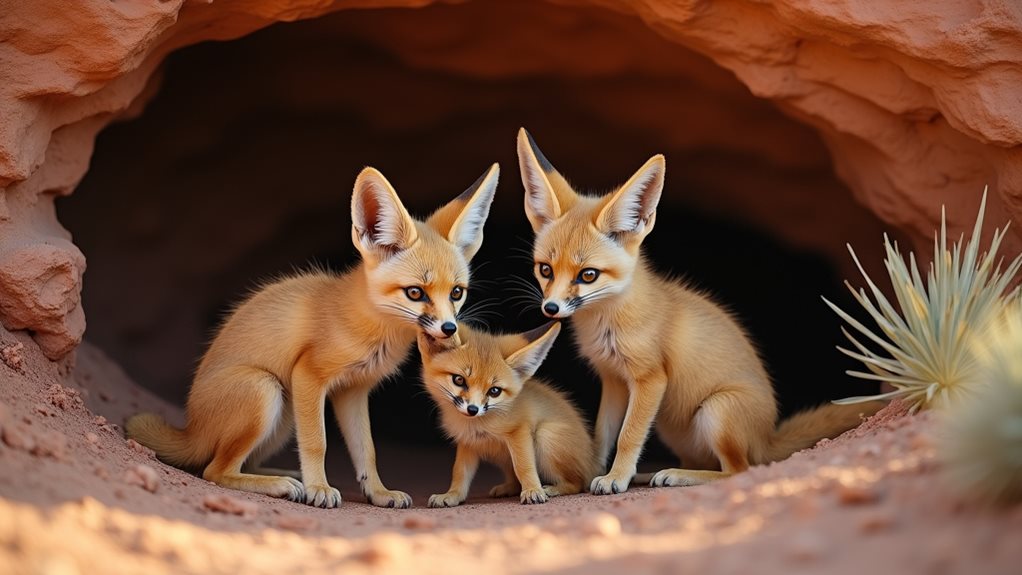
Fortunately, dedicated conservation efforts have begun turning the tide for kit fox populations across North America.
You’ll be happy to know that scientists, communities, and wildlife agencies are working together to implement effective conservation strategies that protect these adorable desert dwellers.
Here’s how these initiatives are making a difference:
- Land trusts have purchased over 50,000 acres of critical kit fox habitat in the San Joaquin Valley, creating protected corridors for movement.
- Urban planning now includes “fox-friendly” development practices that maintain habitat connectivity.
- Community education programs have reduced illegal trapping by 65% in key regions.
Habitat preservation remains the cornerstone of recovery efforts.
When you visit the American Southwest, you’re witnessing these conservation success stories unfold—proof that when we commit to protecting wildlife, positive change follows.
Final Thoughts
As you’ve seen, kit foxes aren’t just surviving in harsh deserts—they’re thriving through remarkable adaptations. You can’t help but admire how these tiny hunters exemplify that “good things come in small packages.” Their future depends on your awareness and conservation support. Next time you’re in the American West, remember these resilient creatures adapting, hunting, and raising families beneath the stars, beating the odds in one of nature’s toughest environments.