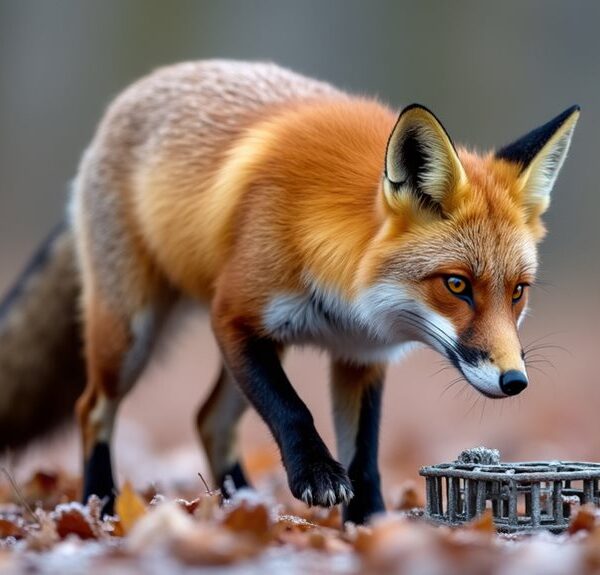
Coyotes typically win territory battles against foxes due to their larger size—they’re nearly twice as tall and four times heavier. You’ll find foxes adapting rather than confronting, using their agility and stealth to carve out niches on the edges of coyote territories. They’ve evolved different hunting strategies: foxes target smaller prey while coyotes hunt larger animals, reducing direct competition. In urban areas, foxes excel in residential spaces while coyotes claim park edges. The full story reveals nature’s fascinating compromise.
The Evolutionary Arms Race Between Foxes and Coyotes
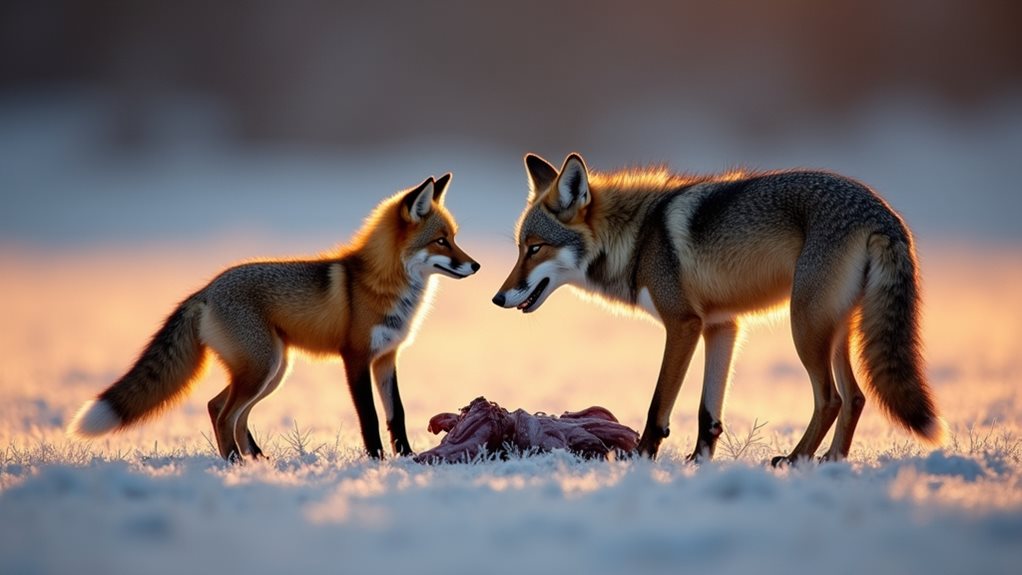
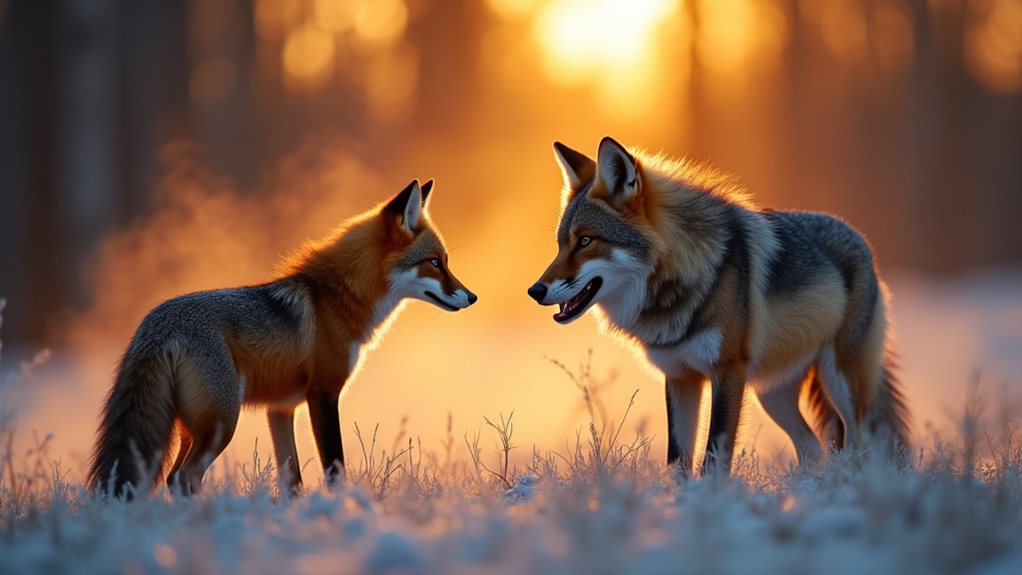
While many people think foxes and coyotes are locked in an evolutionary battle, this common belief isn’t actually supported by science. These two canid species have developed different evolutionary adaptations that allow them to coexist rather than directly compete. You’ll notice that foxes are smaller and more agile, specializing in catching smaller prey like rodents and rabbits. Coyotes, on the other hand, hunt larger animals and have a more varied diet. This natural specialization reduces resource competition between them. When you’re hiking and spot a fox darting through underbrush while coyotes roam open fields, you’re witnessing the result of thousands of years of divergent evolution. They’ve carved out separate ecological niches, making their relationship less of a battle and more of a peaceful coexistence. Notably, species like the red fox have shown remarkable adaptability, further illustrating the unique roles each canid plays in their respective environments.

Premium Masking Scent: Helps cover human odor in the field, increasing your chances of staying undetected.

FIELD-READY, HEAD TO TOE – This Trophy Hunter kit pairs Dead Down Wind Field Spray with a 16oz refill, three Pac-It concentrate refills, camo face paint, hunting soap, and SPF 30 lip balm, all packed into one box for a full day outdoors

TINK’S RED FOX-P COVER SCENT: An important part of any hunter’s tool kit. The aroma won't be out of place, as it is naturally occurring in most whitetail woods.
Size Matters: Physical Differences and Their Territorial Impact
Size truly creates the most substantial difference between foxes and coyotes, influencing everything from hunting styles to territorial boundaries.
You’ll notice coyotes stand nearly twice as tall as foxes, with weights typically three to four times greater. This size advantage gives coyotes dominance in territory dynamics, allowing them to claim and defend larger areas.
When these animals cross paths, it’s rarely a fair fight. Foxes, being smaller but smarter, have adapted by becoming more secretive and developing keen senses to avoid confrontation.
They’ll often establish territories on the fringes of coyote domains, using their smaller size to access dens and hiding spots that bulkier coyotes can’t reach. This behavior is reminiscent of how the Red Fox thrives in urban areas despite coyote presence.
It’s like watching nature’s version of David and Goliath—except in this case, David usually runs rather than fights!
Territorial Behaviors and Communication Methods
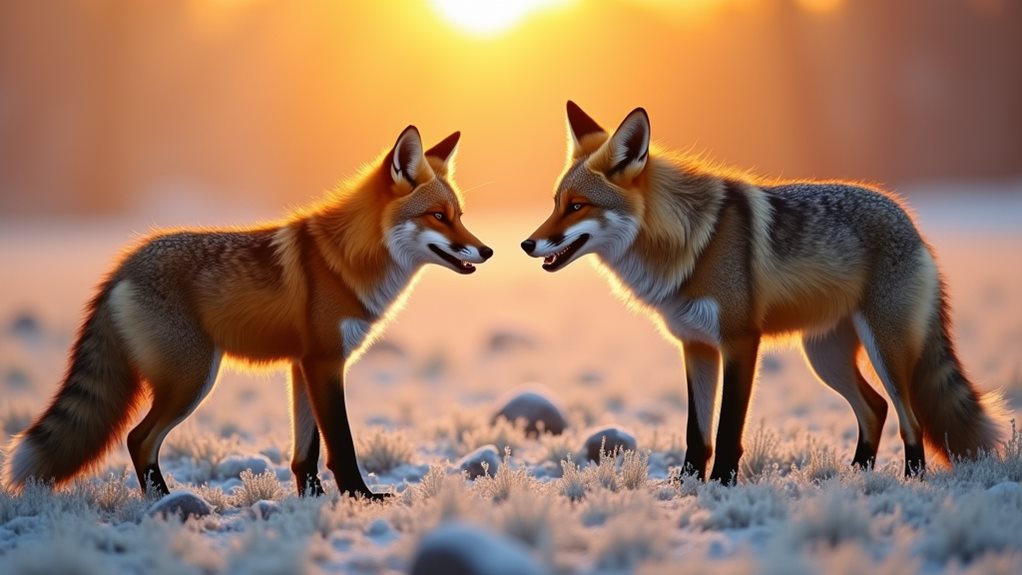
When you’re walking in wild areas, you’ll notice both foxes and coyotes communicate through elaborate scent marking, using urine and feces to draw invisible territorial lines.
You might occasionally spot them engaged in visual displays, where they’ll raise tails, arch backs, or position their ears to signal dominance without physical confrontation.
Their vocal communications—from the fox’s sharp barks to the coyote’s iconic howls—aren’t just beautiful wilderness sounds but critical territory claims that tell rivals, “This land is taken.” Additionally, urban foxes exhibit remarkable adaptability in their social structures and communication methods, which can influence their interactions with other species.
Marking and Scent Communication
Coyotes, being more dominant, use similar scent marking techniques but with greater intensity. They’ll often place their marks on raised objects for maximum visibility and impact. It’s like they’re posting a “No Trespassing” sign that can be detected from farther away. This invisible communication helps both species avoid unnecessary confrontations, conserving energy for hunting and raising their young instead of fighting over territory. Moreover, scent marking serves as a critical tool for establishing social hierarchy and resource access among fox populations.
Visual Territory Displays
Unlike their scent-based messages, both foxes and coyotes rely on distinct visual displays to communicate territorial boundaries.
You’ll notice these clever canids use body language that’s both subtle and dramatic depending on the situation. Their visual displays complement their territory marking strategies, creating a thorough communication system that keeps intruders away.
- A fox will stand tall with ears forward and tail raised when patrolling its territory borders.
- Coyotes perform elaborate “boundary dances” where they prance along territory edges.
- Both species use strategic defecation in highly visible locations, combining scent and visual markers.
- You’ll spot foxes engaging in mock fights at territory boundaries to reinforce their claims.
- Coyotes will sometimes work in pairs, with one animal performing visual displays while the other watches for reactions.
Vocal Dominance Signals
Both foxes and coyotes rely on sophisticated vocal signals to assert dominance and declare territorial ownership.
You’ll notice that coyotes use their iconic howls and yips as primary vocal communication methods, creating complex messages that establish dominance hierarchies within their packs and warn outsiders to stay away. Their howls can carry for miles, effectively marking large territories without physical presence.
Foxes, meanwhile, employ a diverse vocal repertoire including their distinctive screams and barks. They’re typically more subtle in their dominance displays, using short, sharp vocalizations during direct confrontations. When you’re hiking at dusk, that eerie scream you hear isn’t someone in danger—it’s likely just a fox letting its neighbors know whose territory they’re entering! Scent marking also plays a crucial role in reinforcing their claims to territory.
Urban Adaptation: How Human Development Shapes the Conflict

As humans expand their footprint across terrains, foxes and coyotes have been forced to adapt to our concrete jungles in fascinating ways.
Urban wildlife populations have evolved different strategies to survive amid habitat fragmentation caused by our developments.
- Foxes thrive in residential areas, using their smaller size to hide in backyard spaces you mightn’t even notice.
- Coyotes prefer park edges and greenbelts where they can hunt at dawn and dusk.
- Both species adjust their diets—you’ll find coyotes eating everything from rodents to discarded fast food.
- Territory conflicts intensify when green spaces shrink, pushing these animals into closer contact.
- Your neighborhood design matters—cul-de-sacs and subdivisions with natural barriers create unique territorial boundaries between these competitors.
- Understanding the behavioral dynamics of both species can provide insights into their interactions and territorial disputes in urban landscapes.
Hunting Strategies and Prey Competition
When foxes and coyotes cross paths in the wild, they’re engaged in a silent but intense competition for limited food resources.
You’ll notice their hunting techniques differ dramatically – foxes rely on stealth and pouncing, while coyotes often employ pack strategies for larger prey.
Their prey preferences rarely overlap completely, which helps reduce direct competition.
Foxes typically target smaller mammals like mice and voles, using their keen hearing to detect movement beneath snow or soil.
Coyotes, being larger and more versatile, hunt rabbits, rodents, and occasionally deer fawns.
You might spot a fox mousing in a field, jumping high and diving headfirst into snow to catch hidden prey – a technique coyotes don’t use.
This specialization allows these clever canids to coexist, though coyotes usually dominate when resources become scarce. Their unique foot structure, with four toes on their hind legs, aids foxes in making agile pounces while hunting smaller prey.
Seasonal Shifts in Territory Boundaries
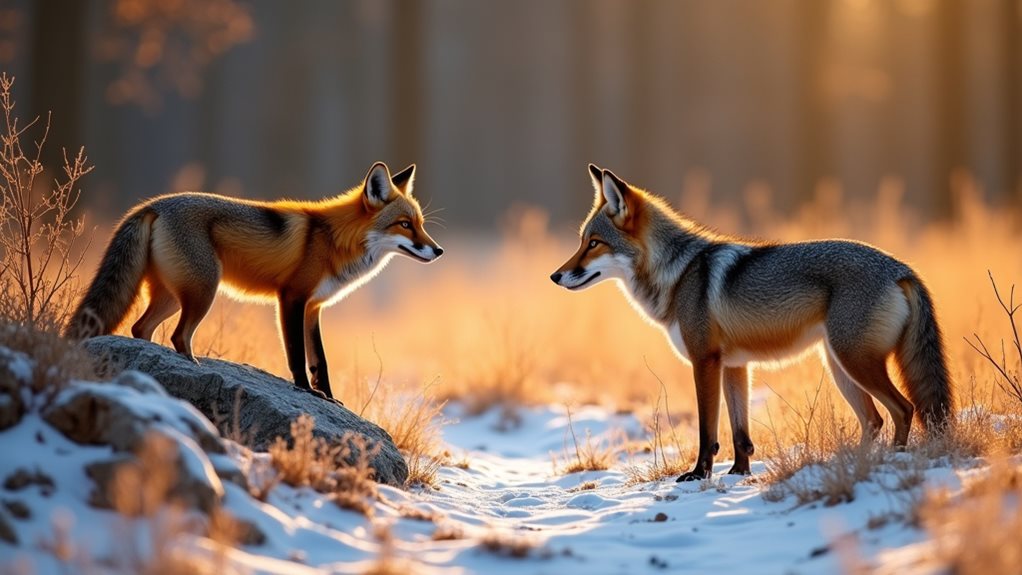
The boundaries between fox and coyote territories shift dramatically with the changing seasons, creating a dynamic map of wilderness ownership.
You’ll notice these crafty canids adjust their range based on food availability and breeding needs.
During seasonal migration, you might spot coyotes expanding their territory while foxes retreat to more protective areas.
Coyotes boldly claim new frontiers during migrations, while foxes strategically withdraw to safer havens.
Habitat fluctuations directly influence where you’ll find these animals throughout the year.
- Winter forces both species to concentrate where prey is accessible despite snow
- Spring brings territorial displays as breeding pairs establish nursery areas
- Summer allows foxes to reclaim some lost ground when coyote pups require attention
- Fall harvest season creates temporary resource hotspots both species contest
- Extreme weather events can reset boundaries almost overnight
Additionally, urbanization and changes in habitat availability due to climate change can further complicate territory dynamics.
Coexistence Tactics: How Foxes Avoid Coyote Confrontation
Despite being smaller competitors in the canid world, foxes have developed remarkable strategies to survive alongside their larger, more aggressive cousins.
You’ll notice these clever creatures employ stealthy movements, often traveling close to cover and using the shadows to their advantage. They’re masters of timing, too—choosing to hunt when coyotes are less active.
Food caching plays a vital role in their survival strategy. When you observe foxes burying their findings, they’re not merely saving for later; they’re reducing the time they need to spend hunting in exposed areas.
They’ll quickly stash extra food in multiple locations, minimizing the chance of a confrontation. Their dietary flexibility allows them to adapt when resources are limited and helps them evade competition.
Their adaptability is their greatest strength—they’re not trying to win the territory battle, simply outsmart their way through it!
Ecological Impact of Coyote Dominance on Local Ecosystems
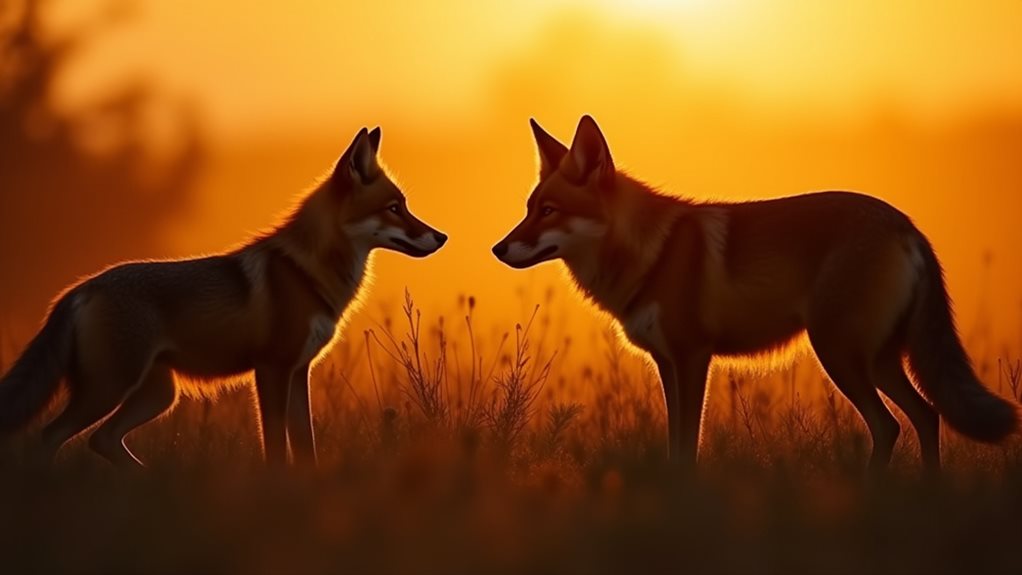
As coyotes establish their dominance in an area, you’ll see dramatic ripple effects throughout the entire ecosystem. When coyote population dynamics shift toward greater numbers, smaller predators often disappear from the terrain.
You’re witnessing nature’s complex balancing act in real-time!
- Fox habitat preferences change dramatically, pushing red foxes into more urban environments
- Rodent populations explode in areas where foxes have retreated
- Bird nesting success decreases due to increased coyote predation
- Plant diversity changes as seed-dispersing animals alter their behaviors
- Competing predators like bobcats may see their hunting territories compressed
- The increased competition from dominant predators like coyotes can further pressure vulnerable species such as the Arctic fox.
You’ll notice these changes happen gradually but persistently.
The fascinating thing about predator relationships is how they shape everything around them—from the smallest mouse to the tallest tree in the forest.
Conservation efforts for foxes and coyotes present a challenging balancing act when these species share the same territories.
You’ll find that habitat fragmentation has dramatically altered how these canids interact, often forcing them into closer proximity than nature intended. When you’re designing conservation strategies, you need to take into account both species’ needs rather than focusing on just one.
Some creative approaches include creating habitat corridors that allow foxes to establish safe zones away from coyote territories.
You might be surprised to learn that protecting both species often requires different approaches in urban versus rural settings. By understanding their complex relationship, you’re better equipped to support conservation efforts that maintain healthy populations of both animals despite their competitive nature.
After all, both foxes and coyotes play crucial roles in keeping ecosystems balanced.
Final Thoughts
In nature’s tug-of-war, you’re witnessing a dance as old as time. While coyotes often claim the spotlight with their size advantage, foxes slip through the cracks like ghosts in the night, adapting rather than confronting. They’re not merely surviving—they’re rewriting the rules. As you explore your local wilderness, remember: these crafty neighbors aren’t simply fighting for space; they’re teaching us how flexibility sometimes trumps strength in life’s territorial battles.