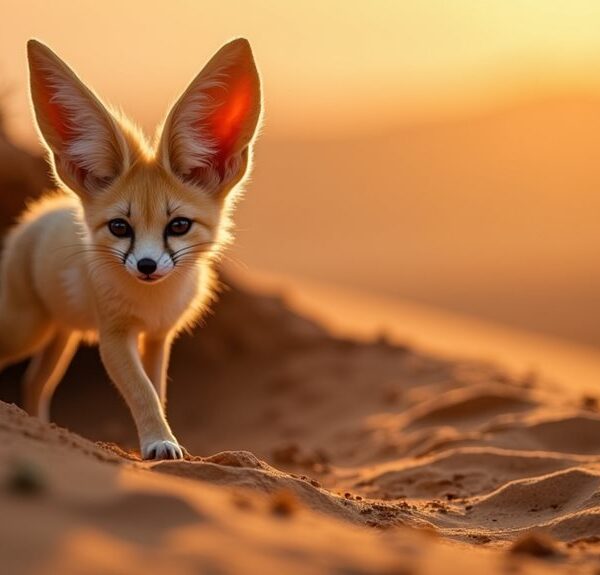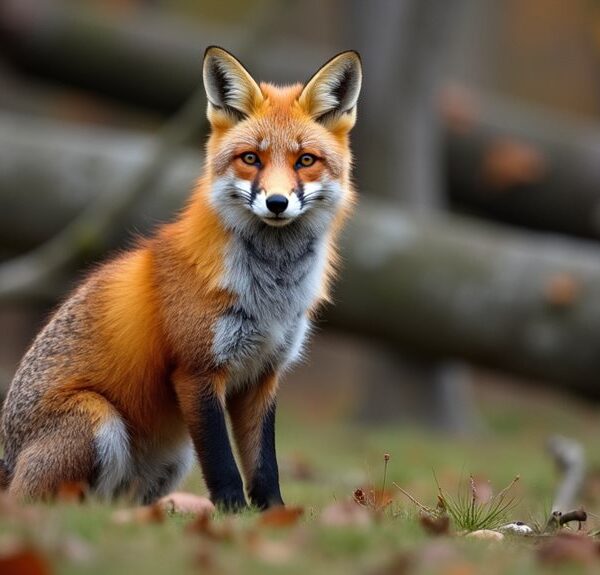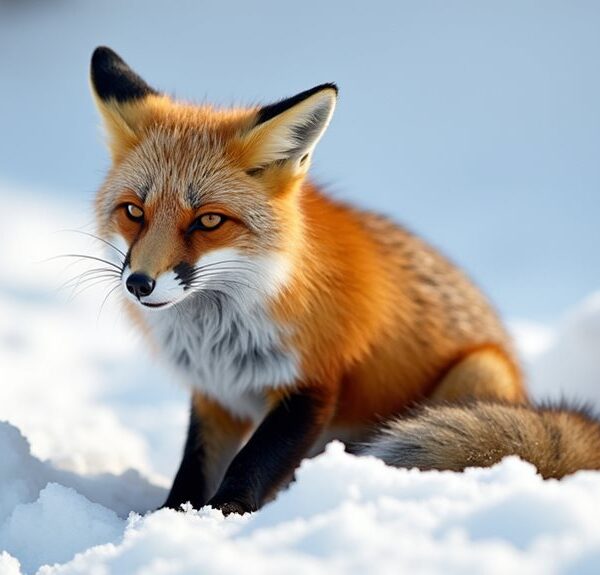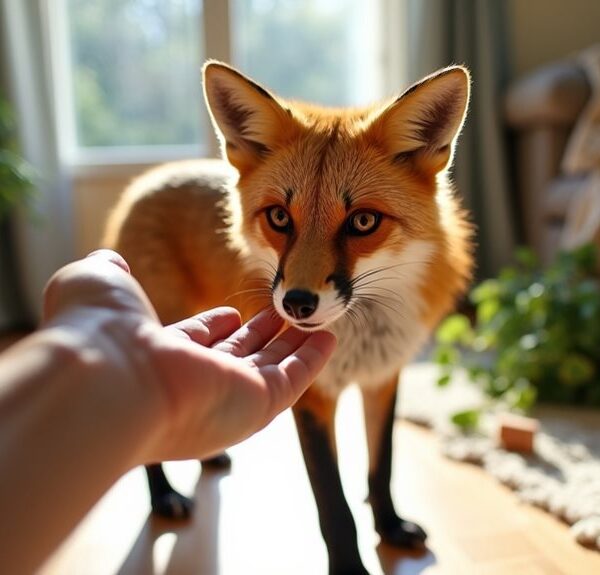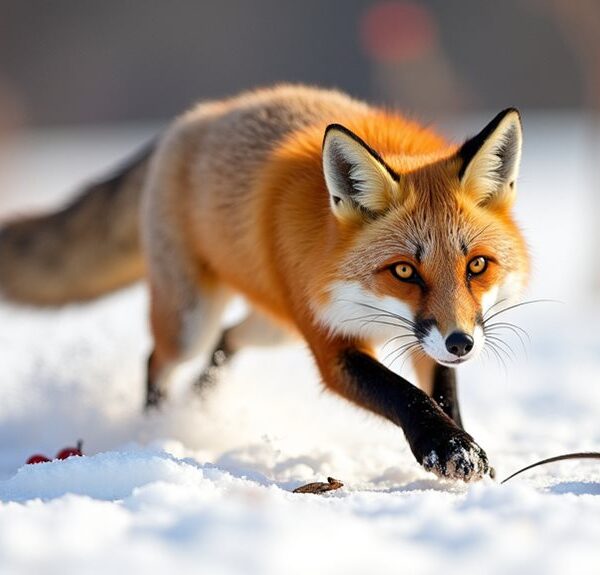
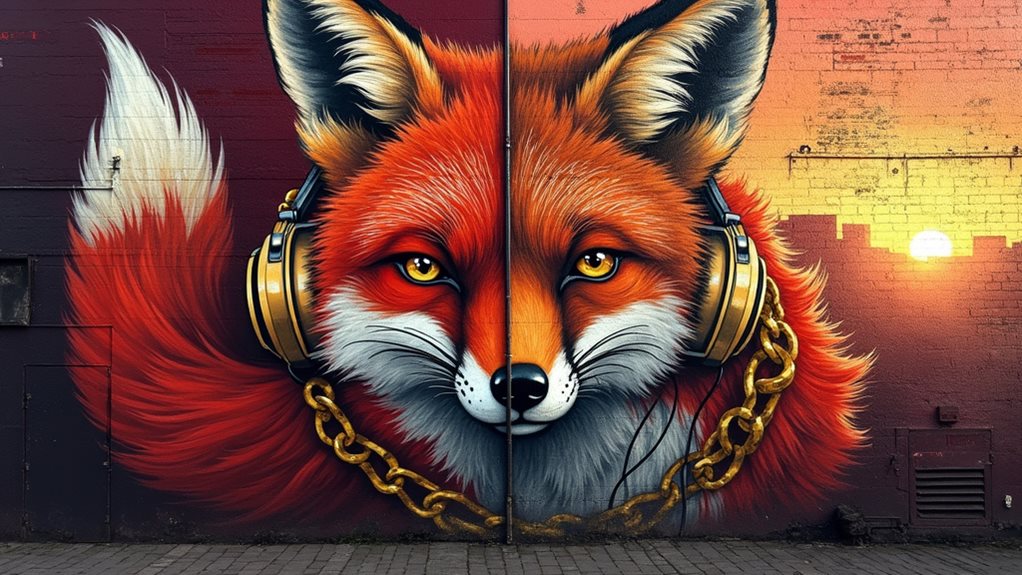
Foxes have captivated your imagination across cultures and media for centuries. You’ll find these clever creatures in Japanese kitsune legends, Aesop’s moral tales, and as Disney’s charming Robin Hood. They’ve slipped into your playlists through Fleet Foxes’ folk music and Ylvis’s viral hit “What Does the Fox Say?”. Their distinctive orange coats and mischievous reputation make them perfect symbols in art, fashion, and even corporate logos. The cunning fox’s odyssey through human creativity reveals our enduring fascination with wilderness and wit.
Contents
- 1 Ancient Mythology & Folklore: The Original Fox Tales
- 2 Literary Foxes: Aesop’s Fables to Modern Fiction
- 3 Animated Icons: From Disney’s Robin Hood to Japanese Anime
- 4 Digital Age Foxes: Memes, Logos, and Online Culture
- 5 Foxes in Music: From Classical References to Viral Hits
- 6 Fashion & Design: The Fox Aesthetic in Contemporary Style
- 7 Final Thoughts
Ancient Mythology & Folklore: The Original Fox Tales
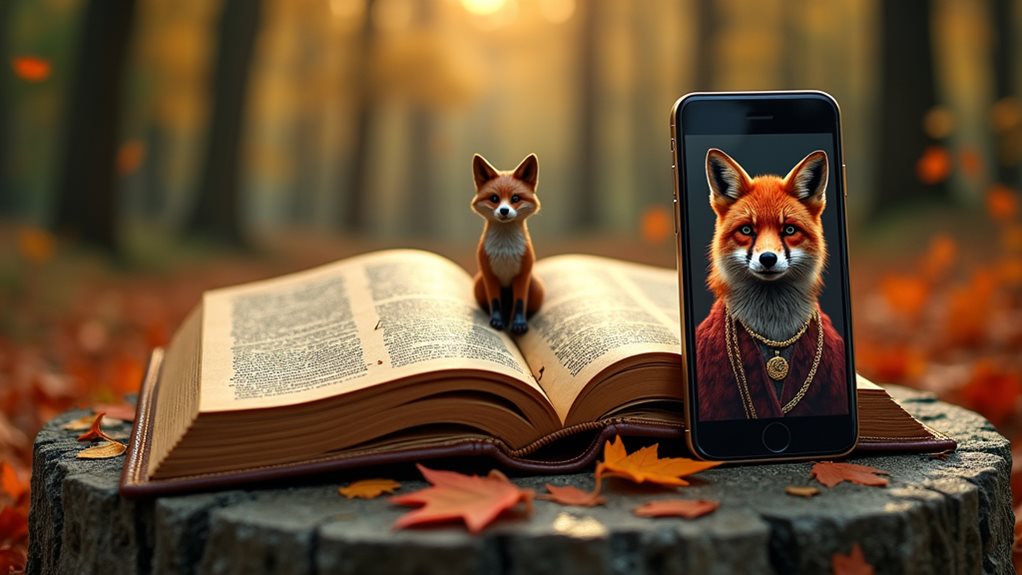
Across dozens of ancient civilizations, foxes have slinked their way into our collective storytelling, leaving paw prints on myths that still resonate today.
From sacred temples to fireside tales, the clever fox weaves through humanity’s oldest stories, eternally elusive yet unforgotten.
You’ll find fox symbolism deeply embedded in Japanese folklore, where kitsune (fox spirits) transform into humans, often beautiful women, wielding magical powers that grow with their age and wisdom.
In Western traditions, you’re probably familiar with the sly characteristics attributed to foxes—cunning tricksters outsmarting larger, stronger opponents.
The ancient Greeks featured the Teumessian fox in their legends, while Native American tribes portrayed foxes as both clever heroes and devious manipulators.
When you explore Chinese mythology, you’ll discover fox spirits called huli jing, believed to be either benevolent or mischievous depending on the tale.
These ancient stories shaped how we view foxes today, reflecting their role as spiritual guides that navigate between realms in various cultures.

Measures: L: 3.25" x W: 2.25" x H: 4.5"

Articulated Design: This 3D printed Kitsune figure boasts an articulating, movable and posable design for dynamic display and play.

This Maneki Kitsune Charm Sculpture is 4.5" tall, 3.5" wide and 2.25" deep approximately.
Literary Foxes: Aesop’s Fables to Modern Fiction
These ancient mythological fox characters didn’t remain in their cultural caves—they leaped onto the written page, evolving into some of literature’s most memorable characters.
You’ll find fox symbolism woven throughout centuries of storytelling, representing literary archetypes that continue to captivate readers of all ages.
Here’s how foxes have transformed in literature:
- Aesop’s cunning tricksters taught moral lessons through their clever schemes.
- Medieval European tales featured Reynard the Fox, outsmarting nobles and clergy alike.
- Children’s classics like Beatrix Potter’s “The Tale of Mr. Tod” showed foxes’ complex nature.
- Modern novels such as Roald Dahl’s “Fantastic Mr. Fox” reinvented the clever hero for new generations.
The rich history of foxes as cunning trickster spirits reflects their ability to embody both wisdom and deceit, mirroring our changing relationship with these fascinating creatures.
Animated Icons: From Disney’s Robin Hood to Japanese Anime
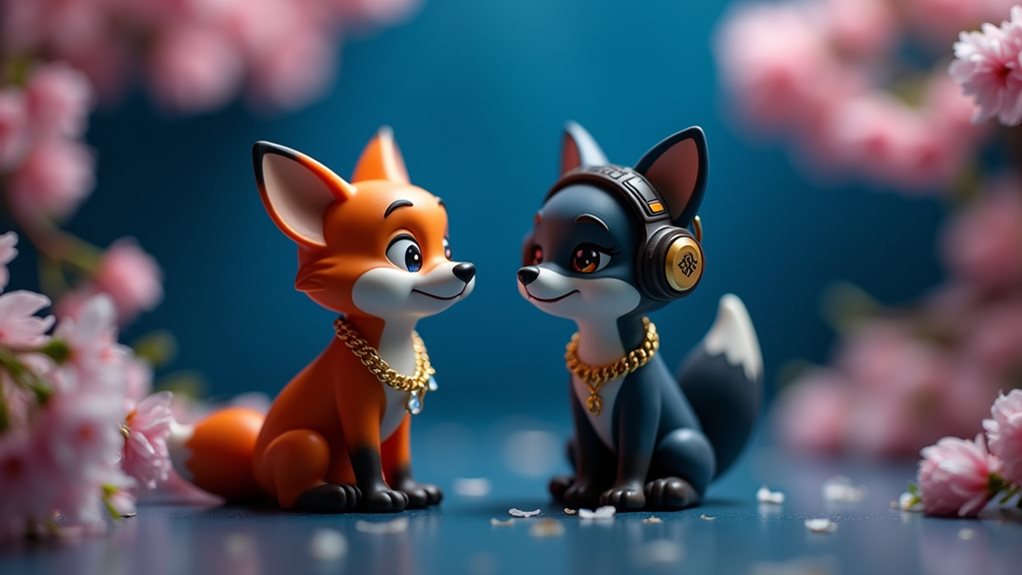
While literature gave foxes their clever voices, animation breathed vibrant life into these characters, transforming them into some of the most beloved icons on screen.
You’ve likely grown up watching animated fox characters that shaped your understanding of these crafty creatures. Disney’s Robin Hood, with his charming personality and heroic heart, reimagined the classic outlaw as a dashing fox.
Animation’s foxes teach us wisdom through charm, transforming ancient trickster archetypes into heroes we eagerly welcome into our homes.
In Japan, cultural fox representations take on mystical dimensions with kitsune spirits appearing in countless anime series. From Nick Wilde’s expedition in Zootopia to the nine-tailed fox in Naruto, these characters blend traditional fox traits with deeper storylines.
You’ll notice how animation studios worldwide have welcomed the fox’s natural charisma, creating characters that transcend cultural boundaries while maintaining that signature blend of cunning and charm that makes foxes so enchanting.
Digital Age Foxes: Memes, Logos, and Online Culture
As animation studios captured our hearts with fox characters on screen, the internet revolution brought foxes into our digital lives in entirely new ways.
You’ve likely encountered popular fox memes like “What Does the Fox Say?” or Firefox’s iconic browser logo that’s recognized worldwide. These digital foxes continue to shape our online experience.
Here’s why foxes dominate the digital domain:
- Fox logos represent speed and intelligence in tech companies.
- Fox memes spread rapidly due to their cute yet mischievous appeal.
- Social media platforms adopt fox imagery for engagement.
- Gaming communities embrace fox characters as avatars and mascots.
- Their adaptability to urban environments makes them relatable and admired in online culture.
Whether you’re browsing websites or scrolling through your social feeds, you’ll find these clever creatures have seamlessly adapted to digital environments, just as they’ve always adapted in nature.
Foxes in Music: From Classical References to Viral Hits

You’ll find foxes making their mark in the music world, from bands like Fleet Foxes and Foxygen taking their names from the clever creature to songwriters who use fox imagery to represent cunning or wildness in their lyrics.
The symbolic power of foxes appears across genres, with classical composers like Janáček creating “The Cunning Little Vixen” opera, while modern hits like Ylvis’s “What Does the Fox Say?” turned vulpine sounds into a global phenomenon.
These musical foxes connect us to ancient storytelling traditions while keeping the animal’s mystique alive in contemporary culture, whether through thoughtful folk ballads or catchy pop hooks.
Fox-Named Bands
Numerous musical acts throughout history have adopted the fox’s clever and elusive nature in their band names, creating a fascinating subset of vulpine-inspired music.
When you explore fox inspired artists, you’ll discover they span multiple genres and decades, bringing their own unique interpretations to this woodland motif.
Check out these notable fox-themed bands:
- Fleet Foxes – The indie-folk group whose harmonies evoke forest scenery
- Foxygen – A psychedelic rock duo known for their eccentric performances
- The Fox – A 1980s new wave band with several regional hits
- Silver Fox – A blues collective celebrating the wisdom of aging artists
Many fox themed albums feature artwork depicting these cunning creatures, embracing their symbolic connection to wisdom and adaptability.
You’ll notice how these artists cleverly incorporate vulpine imagery into their musical identities.
Vulpine Lyrical Symbolism
Foxes have trotted their way into musical lyrics across centuries, appearing as powerful symbols of cunning, mystery, and wilderness.
You’ll find vulpine archetypes in Fleet Foxes’ folk harmonies and Jimi Hendrix’s “Foxy Lady,” each tapping into different aspects of fox symbolism. When you listen to Ylvis’s viral hit “What Does the Fox Say?”, you’re experiencing a playful take on the fox’s voice, while Rihanna’s “Disturbia” draws on the fox’s nocturnal, elusive nature.
From classical compositions to modern pop, these clever creatures represent transformation and adaptability. Foxes symbolize cleverness as trickster figures that navigate complex narratives and embody both wisdom and deceit.
They’re the tricksters of the music world—sometimes representing sexual appeal, other times embodying freedom and wildness.
Next time you’re listening to your playlist, pay attention to how these furry metaphors might be hiding in plain sight!
Fashion & Design: The Fox Aesthetic in Contemporary Style
Over the past decade, the fox aesthetic has seeped into virtually every corner of contemporary fashion and design.
You’ll find fox inspired fashion everywhere from high-end runways to your local department store, with designers embracing the clever creature’s sleek silhouette and vibrant orange hues.
Contemporary fox art has exploded in popularity, appearing on everything from throw pillows to tattoo designs.
Why have foxes captured our collective imagination? Here’s what makes them so appealing:
- Their distinctive color palette translates beautifully to textiles
- Their playful, mischievous reputation adds character to designs
- They symbolize both wilderness and adaptability
- Their pointed features create striking, recognizable silhouettes
You can’t escape the fox’s influence in today’s design world—and why would you want to?
Final Thoughts
As you’ve seen, foxes have slyly woven themselves through our culture’s fabric, adapting like chameleons from ancient myths to today’s TikTok trends. You can’t teach an old fox new tricks, yet somehow these clever creatures continue reinventing their cultural significance. Whether you’re drawn to their cunning intelligence or their striking beauty, foxes remain powerful symbols that connect our past stories with our present expressions, proving their cultural pawprints won’t fade anytime soon.