

Contrary to popular belief, healthy foxes actually maintain impressive grooming habits and typically carry fewer parasites than domestic pets. While they can host both external parasites (like fleas, ticks, and mites) and internal ones (worms and protozoa), their parasite loads vary dramatically between urban and rural environments. Urban foxes generally have fewer intestinal worms but may carry more pet-associated parasites. Understanding these fascinating parasite relationships reveals much about fox adaptation and ecological health.
The Parasitic Ecosystem of Red Foxes
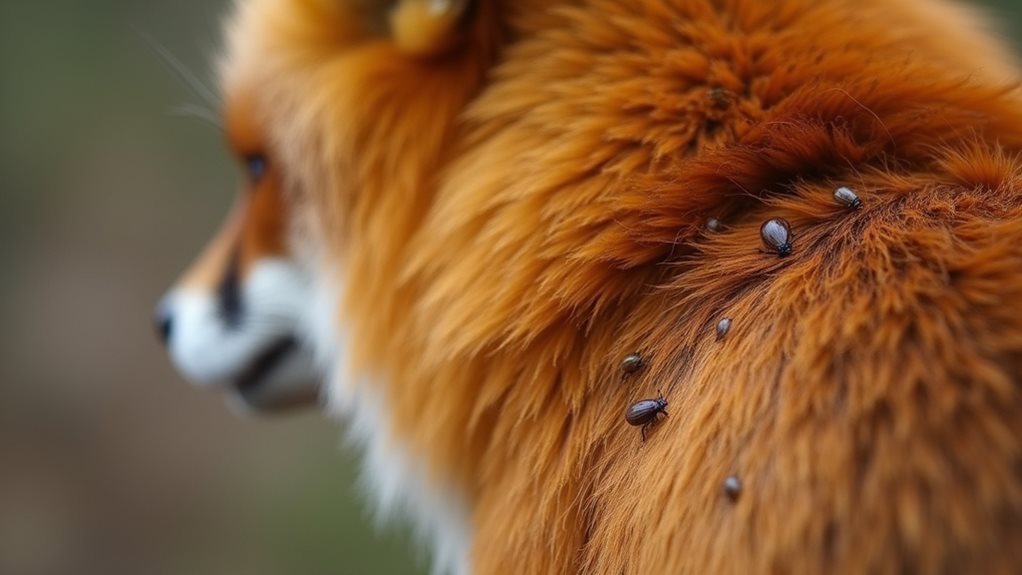
While many believe red foxes harbor countless parasites, this common misconception doesn’t reflect reality. These clever creatures actually maintain impressive grooming habits as part of their fox behavior, which helps limit parasite populations. You’ll find that foxes regularly clean their dense fur, reducing the chances of severe infestations.
Parasite evolution has created a balanced relationship with these woodland mammals. The parasites that do affect foxes have adapted to cause minimal harm to their hosts, guaranteeing their own survival without devastating fox populations.
You might be surprised to learn that healthy foxes typically carry fewer parasites than many domestic pets! Their natural diet also includes certain plants with mild antiparasitic properties, and their nomadic tendencies help them avoid heavily contaminated areas. Additionally, fox behavior explains how factors like genetics and environment contribute to their health and resilience against parasites.
This natural resilience makes foxes fascinating subjects in wildlife ecology.

NATURAL & NON-TOXIC FORMULA: Plant-based essential oil blend designed to help protect pets and homes from fleas, ticks, lice, mites, and mosquitoes. A safe alternative to...
External Parasites: Beyond Fleas and Ticks
What lurks in the fur beyond the common pests we typically associate with wildlife?
You’ll find a remarkable array of external parasites that have developed complex ecological interactions with their hosts. These creatures have evolved alongside mammals for millions of years, creating fascinating behavioral adaptations that guarantee their survival.
When examining wildlife, you’ll notice:
Wildlife examination reveals extraordinary parasitic relationships that have evolved over millennia, shaping animal behavior in remarkable ways.
- Fur mites that cause intense itching, leading animals to develop specialized scratching techniques.
- Botfly larvae that create breathing holes in the skin, causing distressing bumps you can actually see moving.
- Lice species that have co-evolved with specific host animals, becoming perfectly adapted to their unique fur types.
These parasites don’t just hitchhike—they’ve developed intricate relationships that shape how animals interact with their environment.
Internal Hitchhikers: Worms and Protozoa
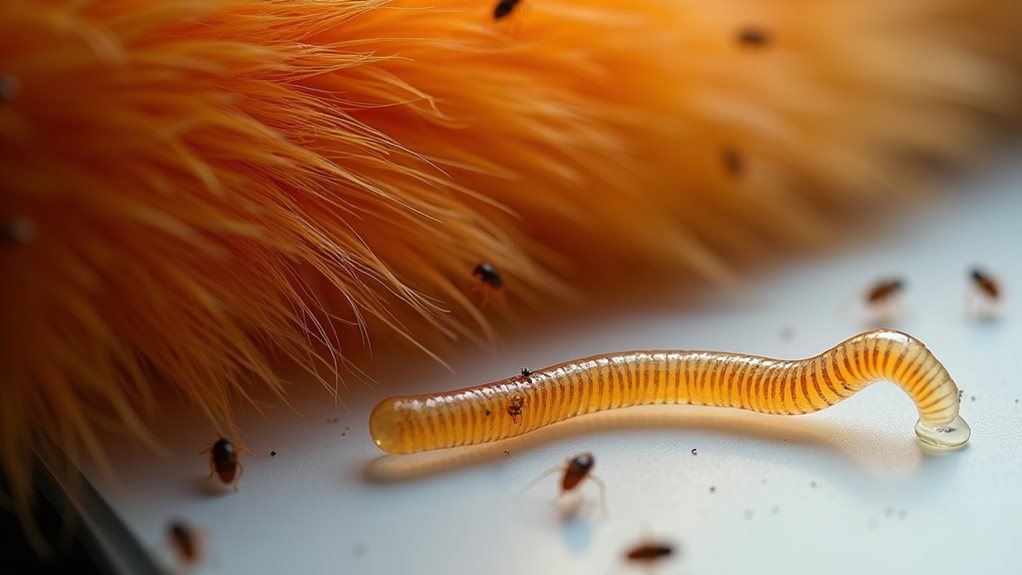
Beneath the skin and fur where external parasites thrive, a hidden world of internal hitchhikers creates even more complex relationships with their hosts.
These microscopic stowaways include various worms and single-celled protozoa that set up camp in the digestive tract, bloodstream, and organs.
You’ll find worm transmission often occurs through contaminated soil or food, with eggs or larvae making their sneaky entrance into an unsuspecting animal.
Once inside, these unwelcome guests multiply and migrate, causing everything from mild discomfort to serious illness.
Protozoan effects can be equally troublesome.
These tiny organisms reproduce rapidly, stealing nutrients and releasing toxins that can leave their hosts feeling exhausted and sick.
They’re masters of adaptation, often developing resistance to treatments while maintaining their grip on your pet’s internal systems.
Seasonal Variations in Parasite Loads
You’ll notice more parasites in the spring when warm weather triggers a population explosion after winter dormancy.
Your pets might bring home more uninvited guests during these seasonal shifts, as parasites emerge from their winter hiding spots with renewed vigor.
Winter’s cold temperatures force many parasites into a sleepy, inactive state, but they’re just waiting for the right conditions to become active again.
Spring Explosion Patterns
Why do parasites seem to multiply dramatically when spring arrives? It’s all part of the fascinating cycle we call spring awakening. As temperatures rise, dormant parasites become active again, kickstarting a period of intense parasite proliferation.
You’ll notice this pattern not only in wild animals, but potentially in your pets too.
Here’s why this spring explosion happens:
- Increasing temperatures trigger parasite eggs to hatch simultaneously, creating a sudden population boom that can feel overwhelming.
- Host animals become more active, providing parasites with greater mobility and feeding opportunities.
- Moist spring conditions create ideal breeding environments, especially for fleas and ticks that thrive in humidity.
You’re not imagining things when parasite problems seem to explode each spring—it’s a natural phenomenon with predictable patterns.
Winter Dormancy Cycles
While spring brings parasites out in full force, winter tells a completely different story in the parasite world. You’ll notice a dramatic decrease in flea and tick activity when temperatures drop below freezing. Many parasites adopt fascinating dormant strategies, entering a state similar to hibernation.
During these colder months, you won’t completely escape parasite concerns, though. Some clever pests simply relocate to warmer environments—like your home! That’s why your pets might still scratch occasionally despite the snow outside.
Understanding winter behavior of parasites can help you prepare appropriate preventative measures. You’d be surprised how quickly these seemingly “sleeping” organisms can spring back to life when conditions improve.
A brief warm spell in January can temporarily reawaken dormant parasites, catching unprepared pet owners off guard!
Urban vs. Rural Fox Parasite Profiles

You’ll notice striking differences between urban and rural foxes when you look at their parasite profiles, with city-dwelling foxes carrying fewer intestinal worms due to their garbage-based diet rather than hunting wild prey.
The different habitats also mean rural foxes typically host woodland flea species, while their urban cousins pick up domestic pet fleas in neighborhoods.
Living near humans has actually reduced overall parasite loads in urban foxes, though they’re more likely to carry zoonotic parasites that can potentially affect people.
Diet Impacts Parasite Exposure
The difference between what urban and rural foxes eat directly influences their parasite profiles, creating fascinating patterns for researchers to study.
You’ll notice urban foxes frequently dine on human food waste, leading to specific dietary preferences that can cause nutritional deficiencies and unique parasite exposures. Rural foxes, meanwhile, consume more natural prey and vegetation, encountering different parasites entirely.
Here’s what makes this relationship so compelling:
- Scavenging behaviors drastically change which parasites can infect foxes, with urban garbage-eaters facing more tapeworms.
- Prey selection directly determines intestinal parasite loads, as mice carry different parasites than birds.
- Seasonal availability of food sources creates fluctuating parasite populations that rise and fall throughout the year. Additionally, urban foxes’ reliance on scavenging human food waste significantly increases their exposure to specific parasites not typically seen in rural environments.
Habitat Influences Flea Species
Habitat distinctions between city and countryside dramatically shape the flea populations that plague foxes, creating distinct parasite profiles depending on where these adaptable canids make their home.
You’ll notice that urban foxes typically host fewer flea species compared to their rural cousins. This isn’t just a lucky break for city dwellers—it’s directly related to habitat diversity!
When you’re exploring fox territories, remember that rural environments offer a richer tapestry of environments where various flea species thrive. Urban foxes, meanwhile, traverse through concrete jungles with less biodiversity, reflecting their ability to adapt as urban fox populations increase.
Isn’t it fascinating how urbanization affects even the tiniest hitchhikers on wildlife? Next time you spot a fox scampering through your neighborhood or across a country field, consider the invisible passengers it’s carrying—each telling a story about where that fox calls home.
Human Proximity Effects
Living in close proximity to humans dramatically changes the parasite environment for foxes, creating distinct differences between urban and rural populations that go beyond mere flea counts.
You’ll notice urban wildlife carrying unique parasite loads compared to their countryside cousins, reflecting their adapted lifestyles.
When urban foxes interact with human environments, parasite transmission patterns shift in fascinating ways:
- Higher exposure to pet-associated parasites that you might recognize from your own dogs and cats.
- Reduced diversity of natural parasites, making the few remaining species more concentrated and concerning.
- Greater risk of zoonotic transfer, bringing wildlife diseases uncomfortably close to your backyard.
You’re witnessing evolution in action as these clever creatures adapt to city living, but their parasites are evolving right alongside them, creating new public health considerations. Interestingly, urban foxes’ diets are heavily impacted by human food waste, which may contribute to the changes in their parasite loads.
Zoonotic Concerns: When Fox Parasites Affect Humans
While foxes typically mind their own business in the wild, their parasites don’t always respect the boundaries between species.
When these uninvited guests make the jump to humans through zoonotic transmission, you might experience a range of unpleasant human symptoms without realizing foxes are the source.
You’re most at risk when handling fox scat or spending time in areas with high fox populations.
If you’ve recently developed an unexplained rash, persistent digestive issues, or flu-like symptoms after potential fox contact, don’t panic—but do consult your doctor.
Many fox-related parasitic infections are treatable when caught early.
Management and Treatment Approaches for Wild Populations
When conservation efforts meet veterinary science, managing parasites in wild fox populations becomes a delicate balancing act.
You’ll find wildlife management teams working closely with researchers to develop sustainable approaches that don’t disrupt natural ecosystems.
Parasite monitoring programs help track infection rates across different regions, allowing for targeted interventions when necessary.
If you’re curious about what makes these programs effective, consider these emotional drivers:
- The joy of watching healthy fox kits play freely without the burden of severe parasite loads
- The frustration of seeing beautiful creatures suffer from preventable conditions
- The hope that comes from successful, non-invasive treatment methods that respect wild animals’ dignity
You’re witnessing conservation at its most compassionate when these programs succeed—balancing nature’s ways with human intervention. Additionally, understanding the specific habitat loss affecting fox populations is crucial for effective parasite management strategies.
Final Thoughts
You’ve now seen how foxes and their parasites dance in a complex biological waltz. Whether they’re urban dwellers or country critters, these adaptable animals carry hitchhikers that affect their health and occasionally yours. Remember, maintaining a respectful distance isn’t just ye olde advice—it’s smart science! By understanding these parasitic relationships, you’re better equipped to protect both wildlife and your family from potential crossover infections. The fox’s burden is sometimes our concern too.