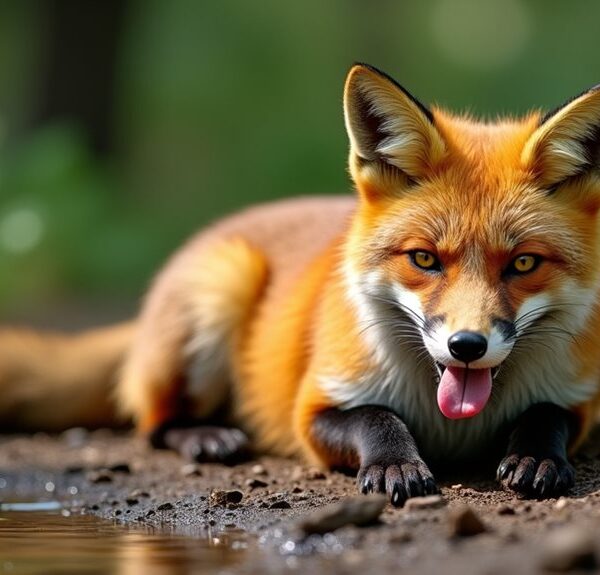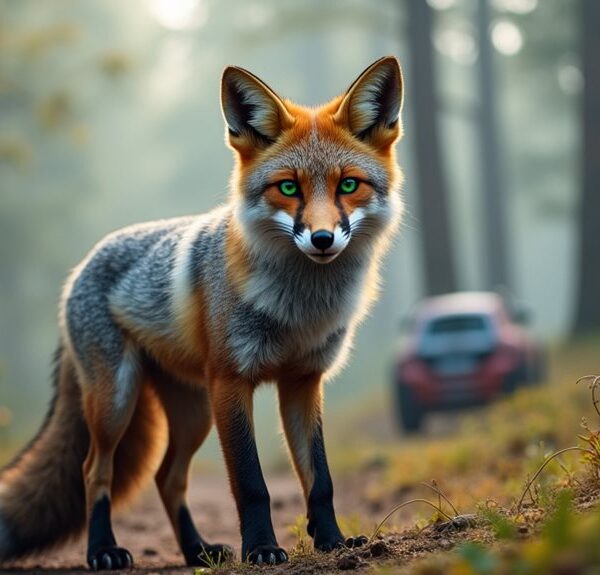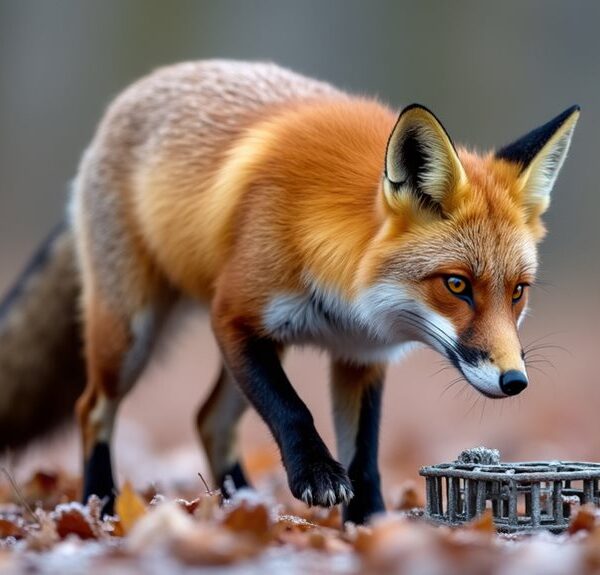
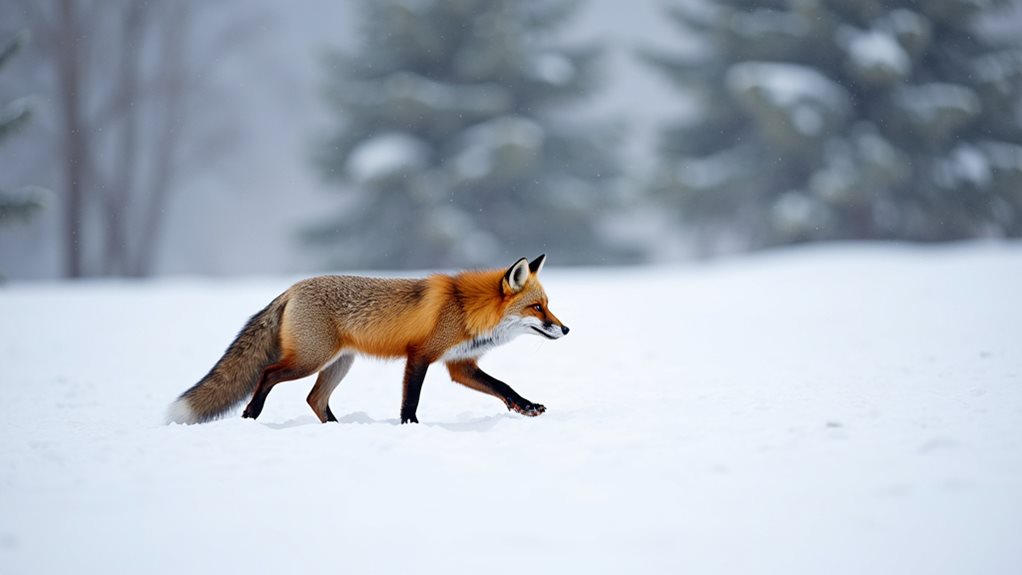
Foxes employ multiple survival strategies during winter. They’ll grow thicker coats with insulating fur between their toes for natural snowshoes. You’ll notice they reduce their metabolism, entering a torpor state to conserve energy. Their hunting becomes more strategic, using keen hearing to detect prey under snow with an impressive 75% success rate. They’ll also share dens with family members, creating complex tunnels with emergency exits and ventilation. These remarkable adaptations reveal nature’s ingenious winter blueprint.
The Remarkable Winter Coat: Nature’s Perfect Insulation
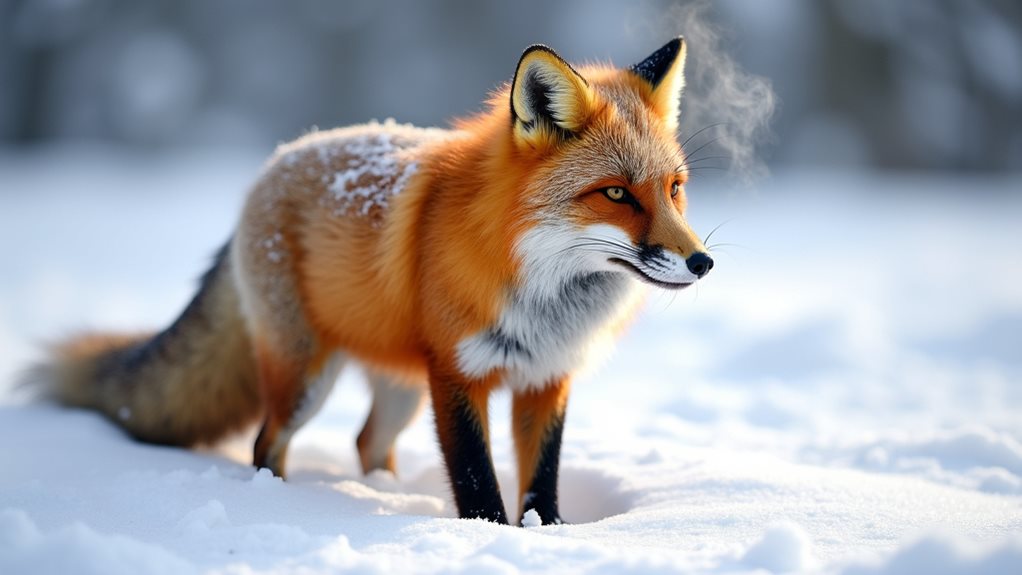
Fur-niture for survival, that’s what a fox’s winter coat represents in the harsh, frigid months.
You’ve probably noticed how these clever creatures don’t merely shiver through winter—they thrive! Their fur coloration shifts to a thicker, more insulated coat that blends perfectly with the snowy scenery. It’s not just about looking good; it’s strategic camouflage.
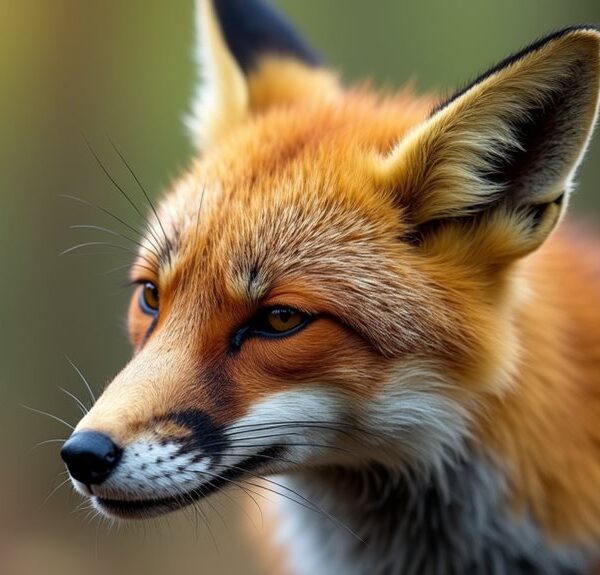
The insulation efficiency of a fox’s winter coat is truly remarkable. Think of it as nature’s down jacket—trapping warm air close to the body while the outer guard hairs repel moisture. You’d need several layers to match what they’re born with!
Nature’s perfect thermal technology – foxes wear what humans engineer, only better.
Their paws even grow extra fur between the toes, creating natural snowshoes. This adaptation, along with their unique circulatory system, enables them to navigate the icy terrain with ease. Next time you’re bundling up in your winter gear, remember the fox—already perfectly dressed for the occasion without a shopping trip!

HIGH QUALITY FABRIC: This men's fleece jacket shell is made of polyester yarn dyed flannel fleece, and lining is made of polyester sherpa lining including the sleeves. The men flannel jacket soft and skin-friendly, warm and comfortable, bring you warm enough in the cold winter days
Waterproof: Your toddler will stay warm and dry in our kids winter coat, thanks to a waterproof rating of 10,000mm, a Bionic-Finish coating, critical taped seams, and high-performing TPU coated waterproof material.

Warm Winter Coats for Girls – This must-have insulated long puffer jacket features thick down alternative padding, an ultra-soft fleece liner, and a stylish chevron quilted windproof recycled shell. Designed for temperatures from 15°F to 50°F, the girls winter coat delivers maximum warmth and comfort, making it perfect for outdoor winter activities like building snowmen, biking, and playing games. Keep your child cozy all season long.
Metabolic Adaptations: How Foxes Conserve Energy
When temperatures plummet and food becomes scarce, foxes don’t just rely on their magnificent coats—they completely rewrite their metabolic rulebook.
You’ll be amazed at how these clever creatures adjust their entire physiology to survive winter’s harshest moments.
A fox’s body becomes a master of energy conservation, slowing down non-essential functions to maintain only what’s necessary for survival.
They’ll lower their heart rates, reduce their activity during extremely cold periods, and enter a state of torpor—not quite hibernation, but definitely a metabolic downshift.
Their digestive systems also adapt, extracting maximum nutrients from whatever prey they can find. Additionally, their thicker undercoats and extra body fat aid in energy preservation, allowing them to endure prolonged periods between meals.
This metabolic efficiency allows them to go longer between meals while maintaining the energy reserves they’ll need until spring returns.
Hunting Tactics: Finding Food in Frozen Landscapes
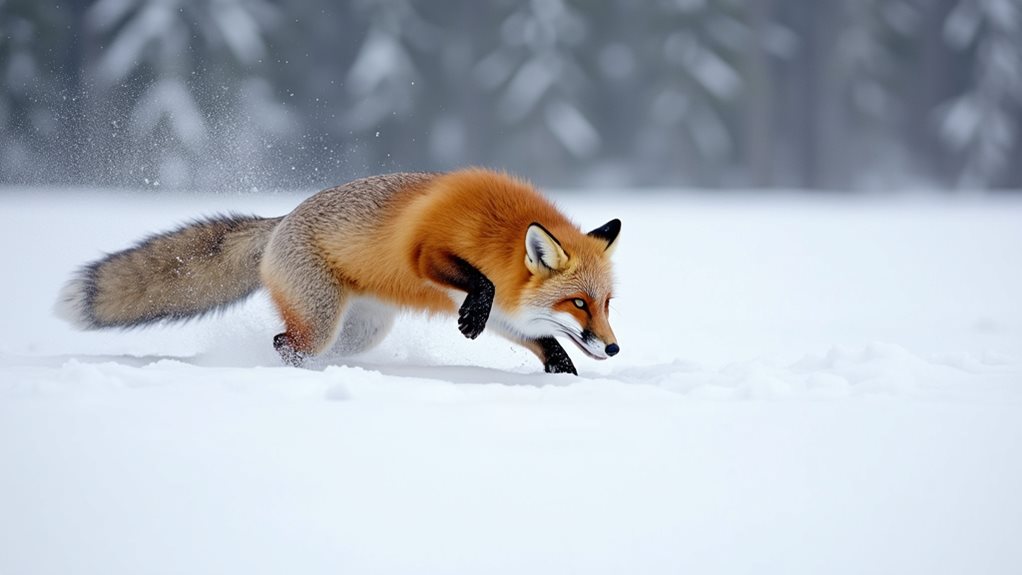
You’ll be amazed at how foxes hunt in winter’s harshest conditions, using their remarkable pouncing technique to break through snow and catch rodents hiding below.
Their keen hearing allows them to detect movement beneath thick layers of snow, resulting in their iconic vertical leap and precise strike.
When prey becomes scarce, these resourceful hunters don’t hesitate to scavenge beneath ice, using their sharp claws and clever problem-solving skills to access food sources other animals can’t reach. Their acute hearing and smell enable them to locate prey hidden beneath the snow with impressive efficiency.
Pouncing Through Snow
The red fox’s incredible hunting technique becomes a mesmerizing display of precision during winter months.
You’ll notice how they’ve perfected their snow pouncing techniques, tilting their head side to side, listening for the subtle movements of mice or voles beneath the snow. They’re using their acute hearing to pinpoint prey’s exact location up to 3 feet below the surface!
When they’ve locked onto their target, they’ll leap high into the air, nose pointed downward, and dive headfirst into the snow.
It’s like watching a furry missile in action! This method helps them overcome winter prey adaptations, as many small animals think they’re safe under that blanket of white.
You’d be amazed at their success rate—they catch their target nearly 75% of the time! Nature’s perfect hunters at work. Interestingly, Arctic foxes’ feeding strategies also showcase their adaptability to find food in challenging winter conditions.
Scavenging Beneath Ice
While pouncing through snow demonstrates one of the fox’s clever hunting strategies, their resourcefulness extends to frozen water bodies too.
You’ll find these adaptable creatures engaging in ice foraging during the harshest winter months, using their keen sense of smell to detect meals hidden beneath frozen surfaces.
When food competition intensifies with other predators, foxes don’t just give up—they get creative!
They’ll scratch and dig at thin ice to access fish, frogs, and other aquatic creatures that have slowed down due to the cold.
Isn’t it amazing how they can hear movement under solid ice? Their sensitive ears can detect the slightest splash or movement, guiding them to potential meals when other food sources are scarce.
This remarkable adaptation helps foxes survive when other animals might struggle to find nourishment in winter’s icy grip, showcasing their hunting techniques in the tundra that allow them to thrive even in extreme conditions.
Den Engineering: Creating Shelter From the Storm
As winter’s icy grip tightens across the terrain, foxes begin their remarkable work of den engineering—a critical survival skill that shelters them from harsh elements.
You’ll find these clever creatures digging complex tunnels beneath tree roots or expanding abandoned burrows, creating multi-chambered havens that block biting winds.
When it comes to den construction, foxes don’t just dig randomly. They’re strategic architects, incorporating emergency exits and ventilation systems into their designs.
For shelter materials, they’ll line their sleeping chambers with fallen leaves, grass, and even their own shed fur for extra insulation. During this process, the choice of den location often reflects their need for safe and undisturbed areas, which are essential for effective shelter against the cold and predators.
If you’re ever lucky enough to spot a fox den in winter, don’t disturb it! That cozy underground retreat might be keeping an entire family warm while the snow piles up outside—their own little fortress against winter’s worst.
Behavioral Changes: Winter Activity Patterns
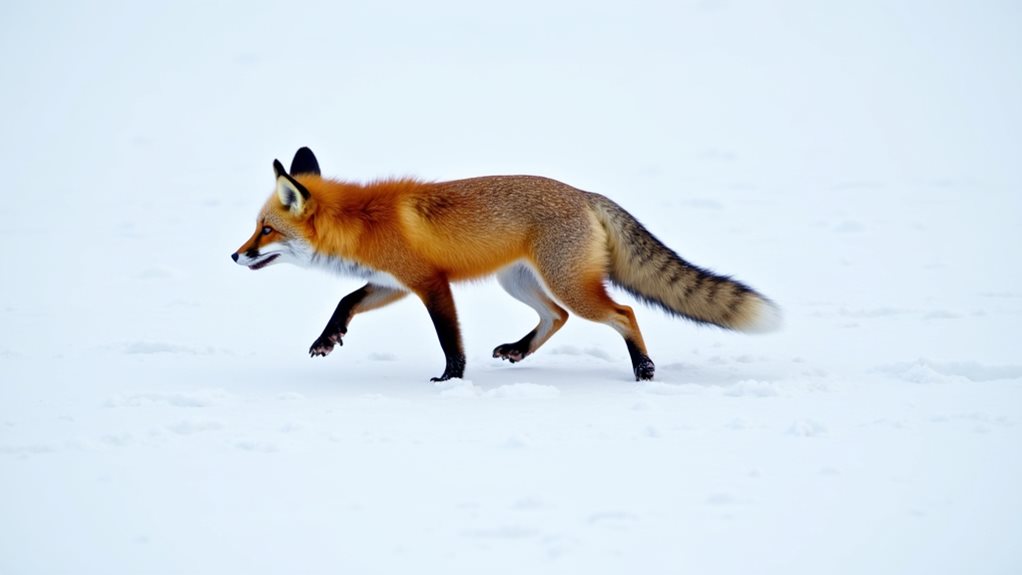
You’ll notice foxes dramatically change their behavior when winter arrives, with their hunting becoming more intensely nocturnal to maximize efficiency during scarce food periods.
Their territory size typically expands as they search wider areas for food, sometimes covering up to three times their summer range.
Notably, these normally solitary creatures often share dens during harsh weather, temporarily setting aside territorial instincts for the practical benefit of shared body warmth. This behavior enhances their chances of survival amidst extreme cold conditions experienced in the tundra.
Nocturnal Hunting Intensifies
During the coldest months of the year, red foxes dramatically shift their hunting routines to welcome the night. You’ll find these clever creatures embracing their nocturnal habits more intensely as winter deepens, adapting to changing prey availability in their environment.
As temperatures plummet, these resourceful animals spend up to 80% of their hunting time after sunset, when they’re less visible to both predators and prey. You might spot their distinctive tracks in fresh morning snow, evidence of their nighttime adventures.
They’re listening for mice tunneling beneath the snow, using their remarkable hearing to detect movement up to 40 yards away!
Their winter strategy is brilliantly practical: conserve energy during frigid daylight hours, then hunt when darkness provides cover and certain prey species become more active. This behavior draws on their acute hearing and smell, enabling them to locate hidden prey beneath the snow efficiently.
Territory Size Expands
Contrary to what many assume about winter wildlife behavior, red foxes actually reduce their territory size when the cold months arrive.
You’d expect to see territory expansion as food becomes scarce, but these clever canids take the opposite approach. They’ll concentrate their activities in smaller, resource-rich areas to conserve energy during harsh weather.
While you might think resource competition would force foxes to roam wider, they’ve evolved smarter strategies.
They’ll focus on familiar hunting grounds where they know exactly where to find prey, even under snow. This shrinking of territory lets them minimize dangerous travel through deep snow and freezing temperatures.
It’s like they’re creating their own winter sanctuary! By sticking closer to reliable food sources and shelter, these adaptable animals demonstrate why they’ve become such successful survivors in diverse climates. Their behaviors reflect their opportunistic feeding habits, showcasing how they thrive despite the challenges of the cold season.
Den Sharing Behaviors
As winter’s grip tightens on the terrain, foxes exhibit fascinating den sharing behaviors that contrast with their typically solitary nature. You’ll find these clever canids temporarily setting aside their territorial instincts to share underground dens with family members. This cooperative strategy helps them conserve body heat during the coldest months when survival trumps independence. Within these shared spaces, a clear social hierarchy emerges. The alpha pair typically claims the warmest, most protected section of the den, while subordinate foxes arrange themselves accordingly. Interestingly, this arrangement reflects the influence of social hierarchy, showcasing how dominant individuals manage their resources even in challenging conditions.
You might be surprised to learn that these arrangements aren’t permanent—they’re pragmatic winter adaptations that dissolve when spring arrives. The den sharing period creates unique social dynamics, with foxes developing temporary bonds that help the family unit weather the harshest conditions before returning to their more solitary ways.
Arctic vs. Temperate Adaptations: Regional Variations
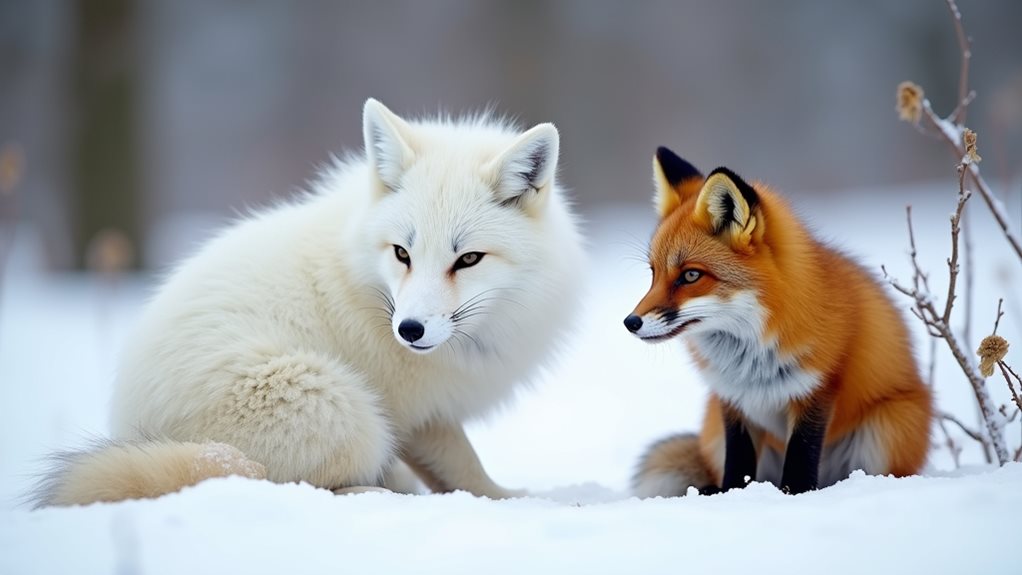
While all foxes share remarkable survival instincts, their adaptations vary dramatically between Arctic and temperate regions.
You’ll notice Arctic foxes have evolved incredible cold-weather defenses, including fur that changes color seasonally and compact bodies that minimize heat loss. Their round ears and short muzzles reduce frostbite risk—adaptations you won’t find in their temperate cousins.
In contrast, temperate strategies focus on flexibility. Red foxes don’t need the extreme insulation of Arctic adaptations but instead develop thicker winter coats they’ll shed come spring.
You might spot them hunting in daylight during winter, adjusting their schedules to match prey availability. Unlike Arctic foxes, who’ve mastered deep snow navigation, temperate foxes rely more on their adaptability to changing conditions than specialized physical traits.
Urban Winter Survival: Foxes in Human Environments
Despite their wild nature, foxes have become remarkably adept at traversing urban environments during winter’s harshest months.
You’ll often spot urban foxes scavenging near restaurants or rummaging through garbage bins when natural food sources dwindle. They’re clever opportunists!
Winter challenges don’t faze these adaptable creatures.
They’ll den under porches, in abandoned buildings, or even crawl into garden sheds to escape the cold. Unlike their rural cousins, city foxes benefit from the “heat island effect” – urban areas stay several degrees warmer than surrounding countryside.
You might notice they’ve adjusted their schedules too, becoming more active during quiet nighttime hours to avoid human interaction.
Their resilience is truly impressive – they’ve turned our neighborhoods into their survival playgrounds, finding warmth and food where we least expect it.
Social Dynamics: Winter’s Impact on Fox Communities
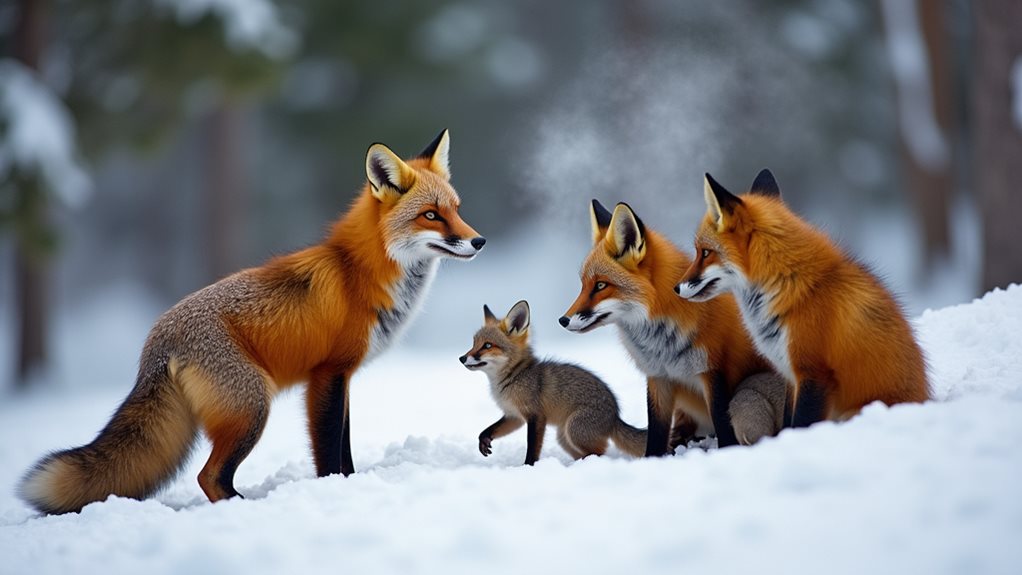
Beyond the solitary city fox scrounging through our neighborhoods, winter brings fascinating changes to fox social structures in the wild.
You’ll notice that as temperatures drop, foxes often strengthen their family bonds, with cubs from earlier seasons sometimes remaining with parents longer than usual.
The social hierarchy becomes more pronounced during these challenging months. Food scarcity can either strengthen group dynamics or create tension, depending on availability.
You might be surprised to learn that foxes will adjust their hunting patterns, sometimes working together to increase success rates when prey is limited.
Unlike their summer behavior, winter foxes often share dens for warmth, temporarily setting aside territorial disputes.
This seasonal shift in their community structure showcases their remarkable adaptability—they’re not only surviving winter’s harsh conditions, they’re strategically reorganizing their entire social world.
Winter Breeding: Preparing for Spring’s New Life
As winter’s deep freeze settles across the scenery, foxes enter their most romantic season of the year. You might find it surprising that while you’re bundling up against the cold, these clever creatures are actually engaging in courtship!
Their breeding behaviors typically begin in January when daylight starts increasing, triggering hormonal changes that prepare them for reproduction.
Female foxes experience unique reproductive cycles that last just 1-6 days annually. During this brief window, you’ll notice males becoming more territorial and vocal, sometimes traveling miles to find a mate.
They’ll leave scent markings throughout their territory, fundamentally advertising their availability to potential partners. This winter romance guarantees that when spring arrives, tiny kits will emerge, perfectly timed to take advantage of milder weather and abundant food resources.
Final Thoughts
You’ve now seen how foxes dance with winter’s challenges like skilled chess players, always thinking several moves ahead. Their adaptations remind us that resilience often means changing strategies when seasons shift. Next time you’re bundled against January’s chill, remember the fox who’s already prepared months in advance. In nature’s winter classroom, these clever creatures might just be the most brilliant teachers of survival we could ask for.