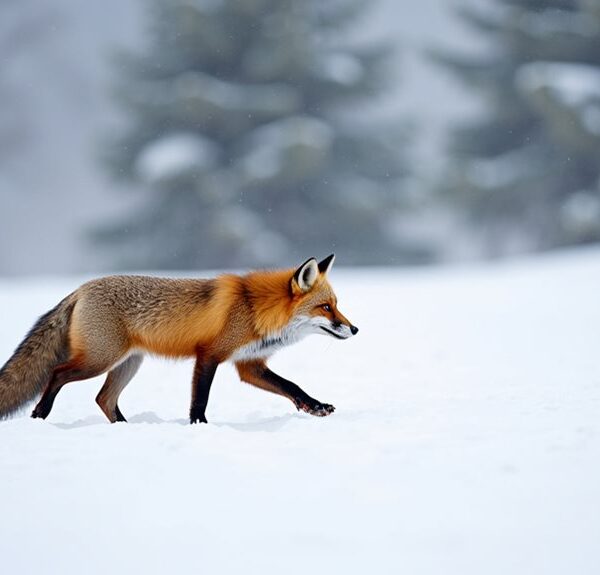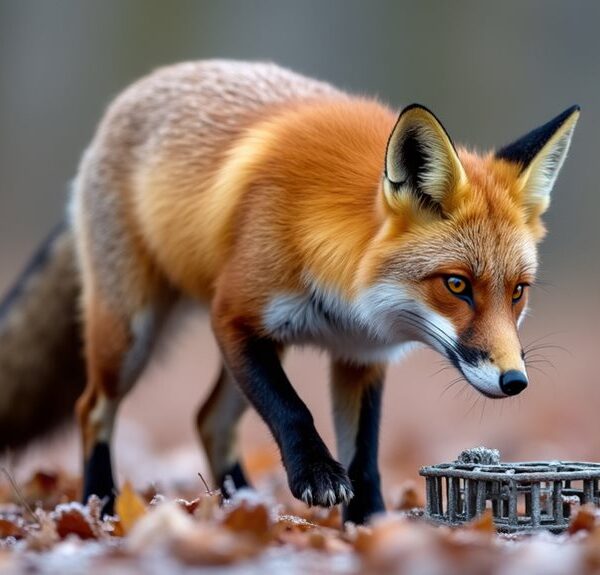
Foxes beat summer heat with smart adaptations you’d never imagine. They’ll switch to nighttime activity, shed their thick winter coats, and pant with tongues out to cool down. You’ll find them resting in shaded dens during hot days or seeking cool spots like dense forest understory and north-facing slopes. Different species have unique tricks—fennec foxes use their oversized ears as natural air conditioners, while red foxes might cool off under your car. Their clever survival hacks continue to evolve as temperatures rise.
Physiological Adaptations: Built-in Cooling Systems
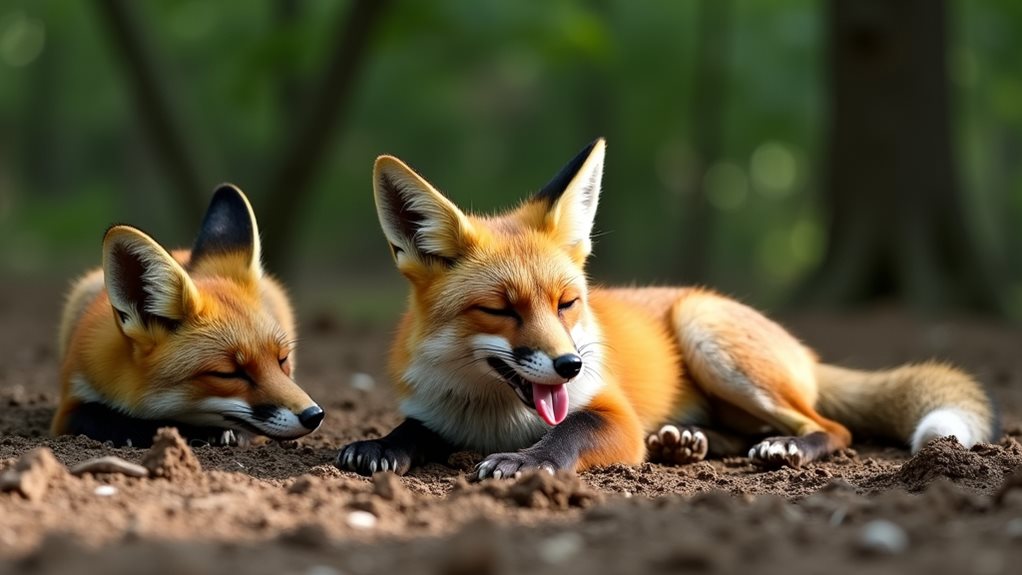
Foxes possess an impressive array of built-in cooling mechanisms that help them thrive in hot environments. Unlike humans, these clever creatures don’t need fans or air conditioning to beat the heat! Their specialized thermoregulatory mechanisms work around the clock to maintain ideal body temperature when temperatures soar.
You might think their thick fur would be a disadvantage in summer, but it’s quite the opposite. Their fur insulation actually provides protection from direct sunlight while allowing air circulation near the skin.
They’ll also shed their dense winter undercoat when warm weather arrives, leaving a lighter summer coat that helps with cooling.
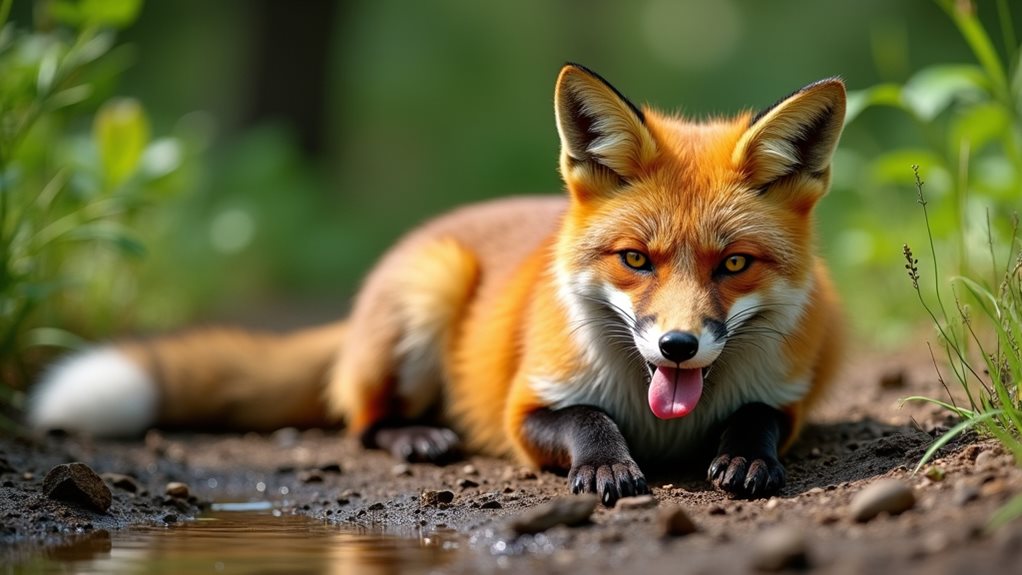
When it gets really hot, you’ll notice foxes panting with their tongues out—this evaporative cooling works just like your dog’s, releasing excess heat through moisture evaporation. Interestingly, foxes also utilize their unique circulatory system to help regulate their body temperature during extreme weather conditions.

Behavioral Strategies: Timing and Activity Shifts
When temperatures climb, clever canids don’t just rely on their physical adaptations—they completely transform their daily routines. You might notice foxes vanishing during the scorching midday hours, only to reappear when the sun sets. This isn’t coincidence—it’s survival!
Foxes shift to nocturnal activities during summer, hunting and exploring under the cooler night sky. Their foraging patterns adapt too, as they’ll travel farther for food and water during dawn and dusk.
You’ll catch them making calculated moves: resting in shaded dens during heat peaks and becoming active when temperatures drop. This behavior reflects their adaptation to scavenging as they creatively navigate urban landscapes in search of sustenance.
It’s like they’ve mastered nature’s timing game! By flipping their schedule upside down, these resourceful creatures maintain energy levels and avoid heat stress without breaking a sweat (well, almost!).
Habitat Selection: Finding Nature’s Air Conditioning
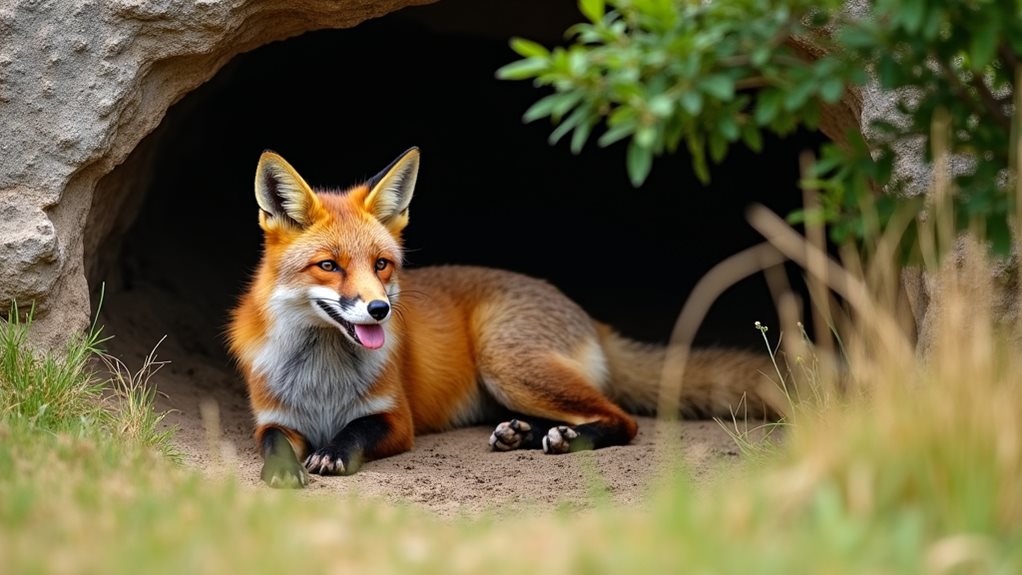
Despite the sweltering summer heat, clever foxes have mastered the art of finding nature’s coolest spots.
You’ll notice these resourceful creatures prioritizing habitat diversity as temperatures rise, moving between environments to regulate their body temperature throughout the day.
When you’re watching foxes in summer, you’ll see them seeking out these natural cooling stations:
- Dense forest understory where shade keeps ground temperatures 10-15°F cooler
- Underground dens and burrows that maintain constant, cool temperatures
- Waterside locations where evaporative cooling provides relief
- North-facing slopes that receive less direct sunlight
This strategic habitat selection isn’t just about beating the heat—it’s directly tied to resource availability, which is essential for their flexible feeding habits.
Species-Specific Cooling Techniques Across Ecosystems
Across the globe’s varied terrains, different fox species have evolved remarkably distinct strategies for staying cool when temperatures soar.
You’ll notice how Arctic foxes, with their compact ears and bodies, conserve heat in winter but shed their thick coats dramatically when summer arrives.
Compare this to the desert-dwelling fennec fox, whose oversized ears serve as natural cooling systems, radiating heat away from their bodies. This adaptation, along with their nocturnal behavior, allows them to thrive in extreme desert environments.
This species diversity isn’t just fascinating—it’s critical for survival as environmental impacts like climate change alter habitats worldwide.
Amazingly, red foxes have adapted to urban settings by seeking shade under parked cars or cooling off in sprinkler-dampened lawns.
Kit foxes dig elaborate burrows that maintain stable temperatures even when it’s scorching outside.
Each fox’s cooling technique perfectly matches its home ecosystem—nature’s brilliant design at work!
Climate Change Implications: How Foxes Are Adapting to Rising Temperatures

The planet’s warming climate presents one of the greatest challenges fox populations have faced in centuries.
You’ll notice foxes developing climate resilience strategies in real-time, adapting their behaviors to survive hotter summers. Urban fox behavior has shifted dramatically, with city-dwelling foxes increasingly active during cooler evening hours.
Foxes are adapting through:
- Digging deeper dens with better insulation
- Shifting hunting patterns to dawn and dusk
- Growing lighter summer coats in southern regions
- Seeking out artificial water sources in urban areas
These clever creatures aren’t just surviving—they’re innovating. Notably, warmer winters and altered precipitation patterns are impacting their nesting sites and food availability.
When you spot a fox napping under your garden shed or drinking from your bird bath, you’re witnessing climate adaptation in action. Their remarkable flexibility may help them weather our warming world, but they’ll need our help too.
Final Thoughts
You’ve seen how foxes beat the heat like master strategists planning their coolest summer ever. As climate change intensifies, these adaptations become increasingly essential for their survival. Next time you’re sweltering in summer heat, remember your foxy friends are using their own clever cooling techniques. By understanding these wild survivors, you’re connecting with nature’s incredible resilience and the ongoing adaptations happening right in your local ecosystem.