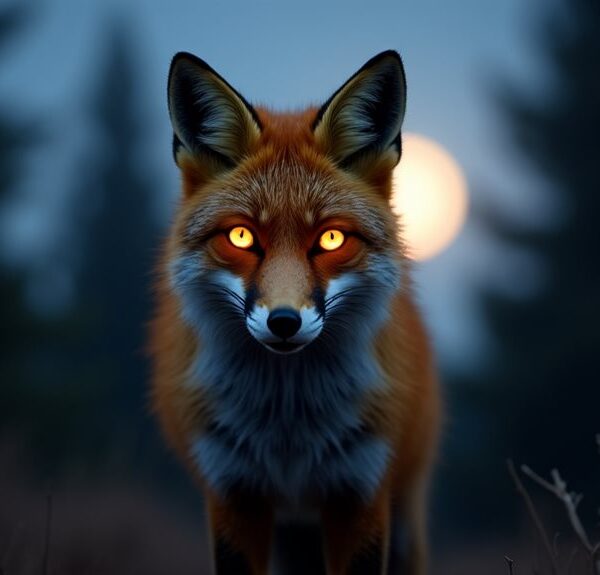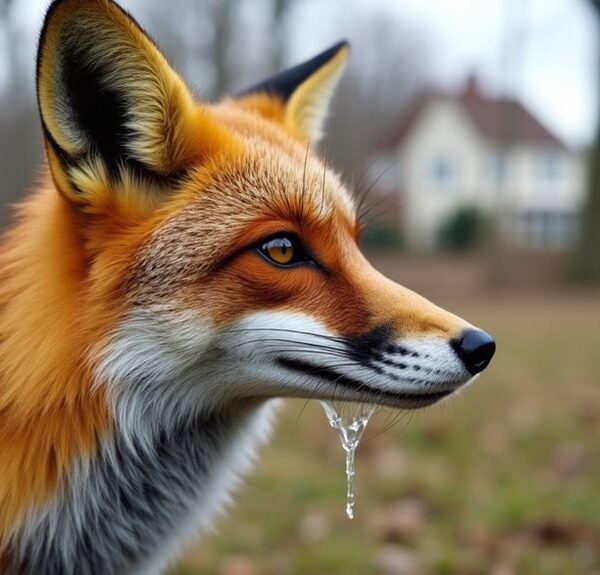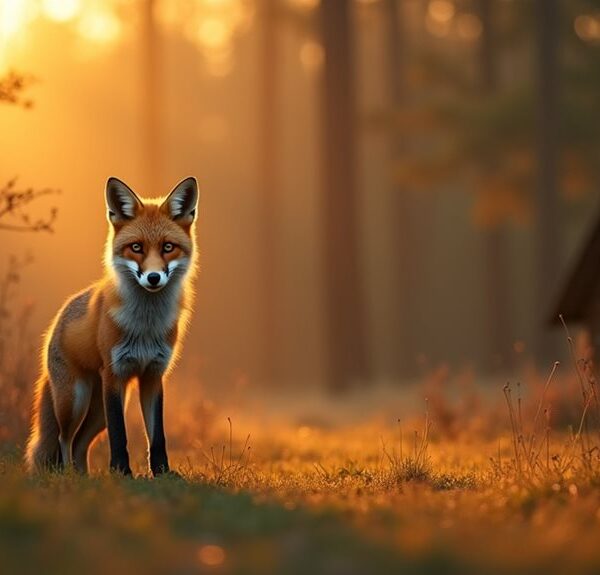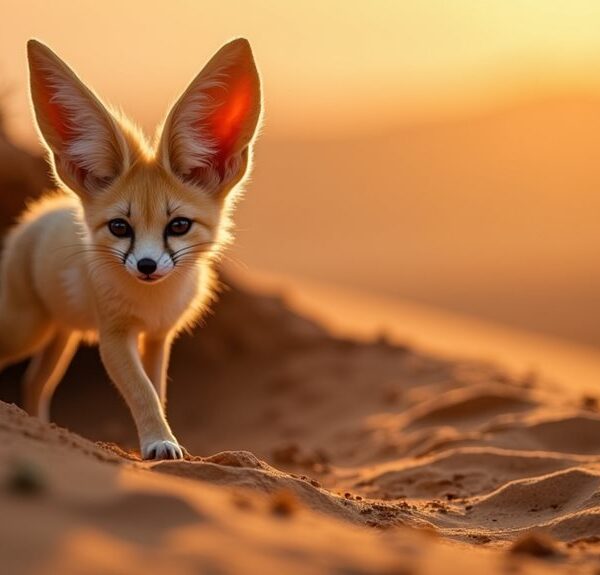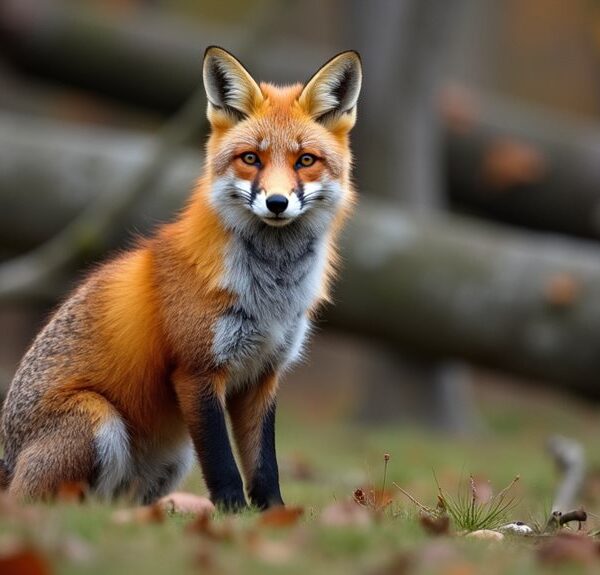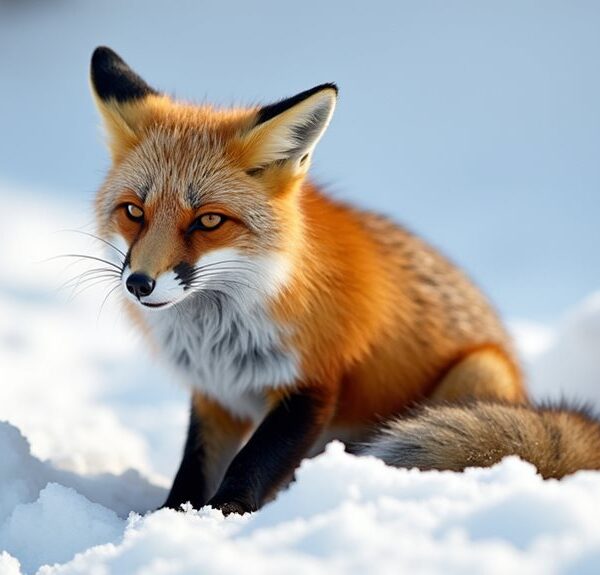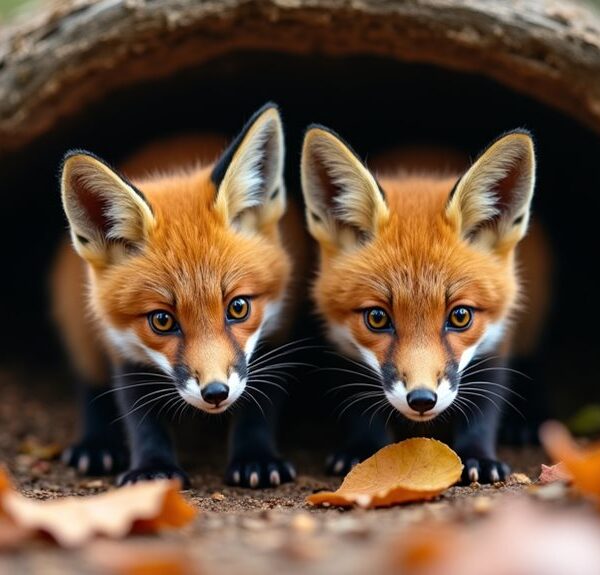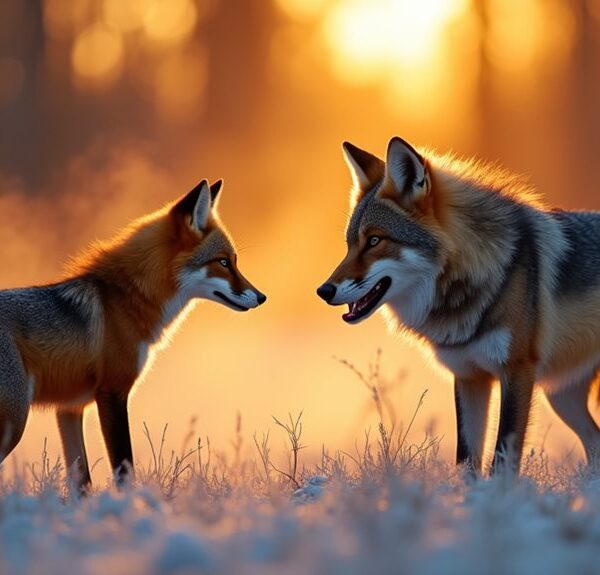

Fox mating rituals typically occur during winter, particularly January and February. You’ll notice foxes become more vocal during this time, with males using distinctive calls to attract females while females respond with high-pitched “wow-wow-wow” sounds indicating receptiveness. They engage in playful courtship behaviors like tail chasing and gentle touches, forming strong pair bonds. Scent marking increases as foxes expand their territories to find mates. The fascinating dance of fox romance reveals surprising complexity beneath their seemingly simple encounters.
Contents
- 1 The Timelines of Fox Romance: Seasonal Patterns
- 2 Vocal Serenades: The Night Calls of Courting Foxes
- 3 Scent Marking and Territory Expansion During Mating Season
- 4 The Courtship Dance: Physical Displays of Affection
- 5 Food Offerings as Symbols of Devotion
- 6 From Solitary to Paired: The Formation of Fox Couples
- 7 The Biology Behind Fox Attraction
- 8 Monogamy in the Wild: Fox Pair Bonds
- 9 Den Preparation and Family Planning
- 10 Regional Variations in Fox Courtship Behaviors
- 11 Final Thoughts
The Timelines of Fox Romance: Seasonal Patterns
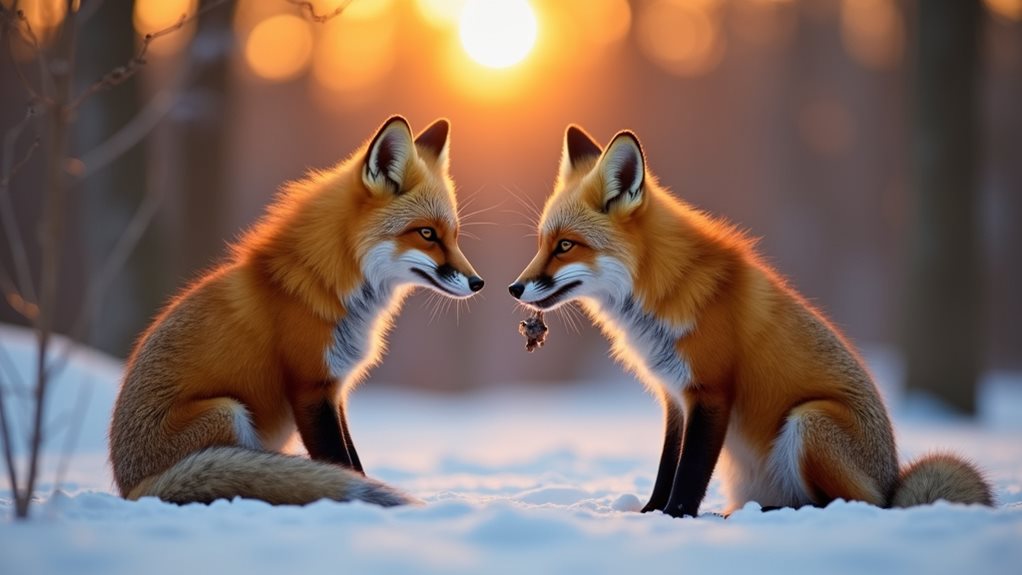
Unlike many mammals that follow strict seasonal patterns, foxes display remarkable adaptability in their mating behaviors throughout the year. You’ll find these clever creatures adjusting their reproductive cycles based on factors like food availability, climate, and habitat conditions.
While most fox species experience a primary mating season during winter months, they’re not strictly bound to this timeline. You’ve probably noticed foxes becoming more vocal during January and February—that’s when they’re typically searching for potential mates! Their distinctive barking calls echo through neighborhoods and forests alike.
The flexibility in their mating season helps foxes thrive in diverse environments, from urban settings to wilderness areas. Unlike rigid reproductive schedules, these adaptable animals can shift their breeding times when environmental conditions aren’t ideal, guaranteeing the best possible outcome for their future kits. This copulatory lock mechanism ensures heightened chances of successful fertilization, contributing to their reproductive success.


300 yard non-line-of-sight remote range with included GCX+ remote with day and night mode - Up to 100 yard Bluetooth range
Vocal Serenades: The Night Calls of Courting Foxes
You’ll know a fox courtship is underway when you hear their distinctive mating calls echoing through the night, with each yip and howl serving as both romantic overture and territorial boundary-setting.
These vocal patterns aren’t random—they’re carefully crafted communications that vary in intensity and frequency depending on the phase of courtship and the presence of competitors. During this time, males scream and bark to attract females and assert dominance, which increases the overall vocal communication among suitors.
Whether you’re in a bustling city or rural countryside, you’ll notice differences in how foxes adjust their nighttime serenades, with urban foxes often developing louder, more persistent calls to overcome the background noise of human activity.
Distinct Mating Calls
When darkness falls across the scenery, the haunting cries of foxes during mating season create nature’s most mysterious symphony.
You’ll hear these distinct vocalizations piercing through the night air, often mistaken for human screams by those unfamiliar with fox mating communication.
Female foxes produce high-pitched “wow-wow-wow” calls that sound almost playful, while males respond with shorter, bark-like sounds that grow more urgent as courtship progresses.
If you’re lucky enough to witness this vocal exchange, you’re experiencing a tradition that’s remained unchanged for thousands of years.
Each fox species has developed its own unique call patterns, allowing them to find compatible mates even in densely populated areas.
These sounds aren’t just random noise – they’re sophisticated messages conveying availability, location, and even genetic fitness. During the breeding season, these vocalizations play a critical role in helping male foxes attract females and deter rivals.
Territorial Vocalization Patterns
Territorial vocalization patterns of foxes reach their peak during the cold winter months, particularly from December through February, when these cunning canids are most actively seeking mates.
You’ll notice their vocal communication intensifies as they establish boundaries and advertise availability.
When you’re listening for fox courtship, you’ll hear these distinct sounds:
- Sharp, bark-like calls that carry across fields – males marking their territory
- High-pitched “wow-wow-wow” sequences – females signaling receptiveness
- Eerie, human-like screams – the dramatic finale of mating strategies
If you’ve ever been startled awake by what sounds like someone being murdered in your backyard, you’ve likely witnessed fox romance in action!
Their haunting serenades serve dual purposes: warning competitors to stay away while simultaneously inviting potential partners to come closer. Additionally, specific calls during this time reflect vocalizations for territory defense, showcasing their ability to communicate effectively with others in their environment.
Urban vs. Rural Howling
Fox courtship sounds dramatically different depending on whether you’re hearing it in bustling city neighborhoods or quiet countryside settings.
You’ll notice urban howling tends to be shorter and higher-pitched, as foxes adapt their love calls to compete with traffic noise and human activity. They’ve learned to project their vocalizations more efficiently between buildings, creating an echo effect that’s absent in rural areas.
Rural howling, by contrast, carries a more melodic, drawn-out quality. Without competing noise pollution, countryside foxes can express their full vocal range, often calling for longer periods throughout the night.
You might hear these distinctive “wow-wow-wow” sequences traveling across fields for over a mile, especially during the January-February mating season. Their rhythmic rural serenades serve as nature’s original love songs, unchanged for centuries. This adaptation in vocalizations for survival highlights the intricate communication skills of foxes as they navigate their environment.
Scent Marking and Territory Expansion During Mating Season
During the crisp winter months, as mating season approaches, scent marking becomes a crucial communication tool for foxes seeking potential mates.
You’ll notice foxes increase their scent communication dramatically, using urine and glandular secretions to advertise their availability and reproductive status. It’s their way of sending love letters through the forest!
Territory marking intensifies as foxes expand their hunting grounds, sometimes doubling their usual range. This expansion isn’t just about food—it’s about increasing chances of finding that special someone.
Here’s what happens during this romantic season:
- Males venture into neighboring territories, leaving scent markers as they travel.
- Females respond with their own scent signals, indicating receptiveness.
- Both sexes perform “scraping rituals,” where they drag their paws to distribute scent more effectively.
Dominant foxes use these scents to establish their territorial boundaries, ensuring they maintain control over resources and attract potential mates.
The Courtship Dance: Physical Displays of Affection

Once scent marking has established initial interest, the enchanting world of fox courtship truly comes alive.
Fox courtship awakens in a symphony of scents, each mark an invitation to nature’s most enchanting dance.
You’ll notice the male fox approaching his potential mate with a series of playful nudges, gently touching his nose to her flank or shoulder. This physical contact serves as both greeting and invitation.
As their courtship intensifies, you might spot the foxes engaging in animated tail chasing, creating a mesmerizing dance across the scenery.
They’ll circle each other, dart forward and retreat, testing their compatibility through these spirited interactions. The male may bring small gifts of food, presenting them with theatrical flourishes.
Don’t be surprised if you hear soft, melodic vocalizations accompanying these displays.
These gentle calls, unlike their typical screams, create the perfect soundtrack to their blossoming romance. The development of strong pair bonds during this time is crucial for ensuring successful reproduction and raising healthy kits.
Food Offerings as Symbols of Devotion
Although widely depicted in folklore and children’s stories, the idea that male foxes bring food gifts to potential mates is largely a romanticized myth.
You won’t find foxes engaging in gift exchanges like human courtship rituals. The reality of fox relationships is quite different from the food symbolism we’ve created in our stories.
When you observe foxes in the wild, here’s what actually happens during courtship:
- Foxes rely primarily on scent marking and vocalizations to attract mates.
- Physical proximity and playful behavior create bonds between potential pairs.
- Territory sharing becomes more important than material offerings, especially as territorial behavior plays a crucial role in their social dynamics.
You’ll notice that foxes’ actual mating rituals are fascinating without the human projection of gift-giving behaviors we often imagine.
Their connections form through shared experiences rather than material offerings.
From Solitary to Paired: The Formation of Fox Couples
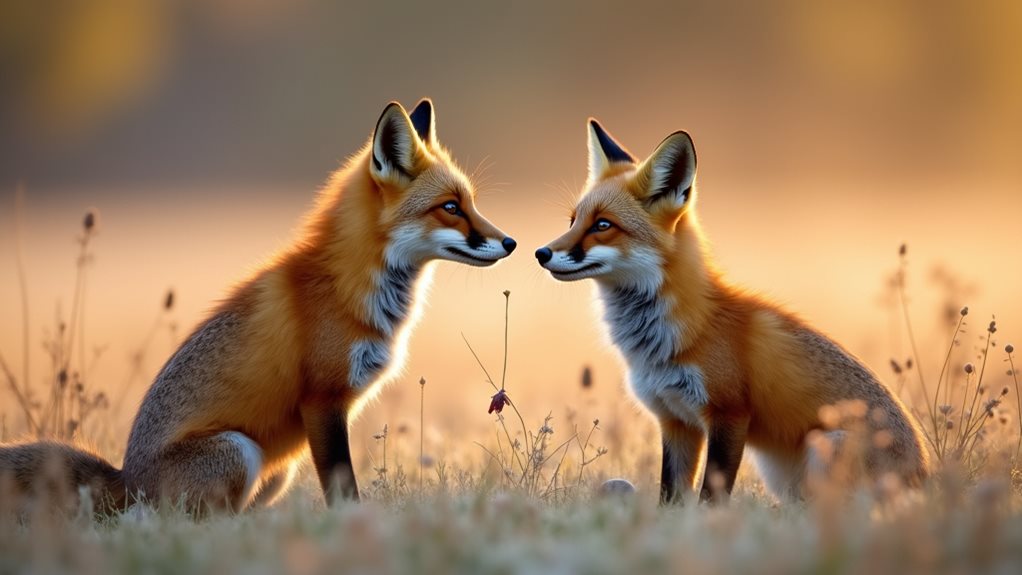
Despite their reputation as solitary hunters, foxes undergo a remarkable change when mating season arrives. You’ll notice their behavior shift dramatically as they begin seeking companions rather than prey.
Their typical lone-wolf tendencies give way to complex pair dynamics that showcase nature’s romantic side.
Foxes employ fascinating mating strategies during this period. They’ll vocalize more frequently, using distinctive calls that carry across their territory to attract potential mates.
You might be surprised to learn that some fox species remain monogamous for life, while others form seasonal partnerships.
As winter shifts to spring, you can observe these typically independent creatures walking side by side, grooming each other, and sharing hunting grounds.
It’s like watching nature’s own dating scene unfold, complete with courtship rituals that transform solitary wanderers into devoted partners. Notably, mating strategies can vary depending on resource availability, influencing whether they form monogamous or polygamous relationships.
The Biology Behind Fox Attraction
When you look beneath the surface of fox courtship, you’ll find a fascinating biological symphony orchestrating their attraction. These clever creatures rely on a complex blend of scent, sound, and behavior to find their perfect match during mating season.
Fox courtship rituals involve three primary biological mechanisms:
- Scent communication through specialized glands that signal reproductive readiness
- Vocalizations unique to breeding season, including the famous “vixen scream”
- Visual displays where males demonstrate their fitness through playful chasing and hunting prowess
You’ll notice their reproductive strategies vary based on environment and food availability. In resource-rich areas, foxes form stronger pairs, while in harsher conditions, they’ll adapt their approach. During mating, the male’s ability to produce peak sperm production is crucial for successful fertilization, ensuring the continuation of their lineage.
It’s nature’s way of guaranteeing fox populations thrive, even when the odds seem stacked against them.
Monogamy in the Wild: Fox Pair Bonds

Unlike many romantic tales you might hear, foxes aren’t actually true romantics when it comes to monogamy. While they do form pair bonds during breeding season, these aren’t necessarily lifetime commitments.
Fox partnerships are seasonal arrangements—practical collaborations rather than lifelong romantic bonds.
You’ll often see foxes engaging in various courtship behaviors that might look like devotion, but they’re actually practical mating strategies for survival.
During breeding season, a male and female fox will stay together to raise their kits, sharing hunting duties and den protection.
However, once the young are independent, these pairs may separate and find new partners next season. It’s less about romance and more about successful reproduction!
Some fox species show stronger pair bonding than others, but even the most “committed” foxes might’ve wandering eyes when opportunity knocks.
Den Preparation and Family Planning
You’ll find fox couples working tirelessly together to create the perfect underground den, an essential step in their family planning process.
As they dig and shape their future nursery, they’re strengthening their pair bond through shared labor and mutual support.
Their careful preparation of this safe haven shows their commitment to nurturing the next generation of fox kits, a responsibility they’ll share equally in the coming months.
Digging the Perfect Home
Before mating season begins in earnest, foxes devote considerable energy to finding or creating the perfect den for their future family.
You’ll notice their denning habits vary widely depending on their habitat preferences. Foxes are resourceful architects, often expanding abandoned burrows or creating new ones in secluded areas where they can raise their kits safely.
When building their homes, foxes consider:
- Location – preferably on a slope with good drainage and visibility
- Security – multiple entrance points for quick escapes from predators
- Privacy – away from human activity but close enough to food sources
Their clever engineering guarantees the den stays dry during rainy seasons and maintains a consistent temperature.
The main chamber is typically lined with soft materials—grasses, leaves, and even fur—creating a cozy nursery for their upcoming litter.
Pair Bonding Behaviors
While the perfect den provides vital shelter, the social dynamics between fox pairs truly define their mating success.
You’ll notice that foxes develop strong social bonding rituals that strengthen their connection before breeding season begins. They’ll playfully chase each other through forest clearings, engage in gentle nuzzling, and even hunt cooperatively to establish trust.
Unlike some animals, foxes aren’t just looking for a quick fling! Their mating strategies involve careful partner selection and relationship building that can last several seasons.
You might spot a fox pair grooming each other or sharing food—sweet gestures that reinforce their partnership. These behaviors aren’t just cute; they’re fundamental for successful reproduction and kit-raising.
The stronger their bond, the better they’ll coordinate the demanding responsibilities of parenthood when those adorable cubs finally arrive.
Nurturing Future Generations
Once strong pair bonds have formed, foxes turn their attention to the crucial task of preparing for their future family. You’ll notice their nurturing instincts kick into high gear as they scout for the perfect den location. The parents-to-be become real estate experts, evaluating soil quality, shelter potential, and proximity to food sources.
The parental investment begins well before kits arrive, with both partners contributing to family planning:
- Den excavation – digging multiple chambers for safety and temperature control
- Soft bedding collection – gathering grasses, leaves, and fur for comfort
- Territorial marking – establishing a protective buffer zone around the nursery
You’d be amazed at how methodically these clever creatures prepare! Their teamwork creates a cozy, secure environment where their precious offspring will grow, learn, and eventually continue the cycle of fox family life.
Regional Variations in Fox Courtship Behaviors
Throughout different regions of the world, fox courtship behaviors display fascinating variations that reflect both environmental adaptations and evolutionary divergence.
You’ll notice that Arctic foxes employ different courtship signals than their desert-dwelling cousins, with vocalization patterns that carry farther across snowy terrains.
Environmental influences shape these romantic rituals in remarkable ways. In dense forests, red foxes rely more on scent marking and close-range displays, while foxes in open grasslands incorporate more visible, dramatic movements to attract mates from a distance.
These regional differences aren’t random—they’re clever adaptations to local conditions that maximize mating success.
If you’ve ever watched foxes in different habitats, you’ve witnessed evolution’s ingenious solutions to the universal challenge of finding love, customized perfectly to each unique ecological niche.
Final Thoughts
You’ve now witnessed the intricate dance of fox courtship, where love unfolds like a moonlit sonata in the wilderness. As you venture into nature, you’ll appreciate these clever creatures and their devoted rituals. From their haunting calls to their playful romps, foxes remind us that finding a mate isn’t so different across species. Their annual cycle of courtship, partnership, and family-raising continues, keeping the magic of wild romance alive.