Fennec foxes have mastered desert survival with impressive adaptations. You’ll notice their giant ears work as natural air conditioners, while their sandy-colored fur provides perfect camouflage. They’ve engineered elaborate underground burrow systems reaching 20 feet deep to escape extreme temperatures. These nocturnal hunters form tight family units, working together to raise young and find scarce resources. Unfortunately, human activities threaten their habitats through development and illegal pet trade. Discover how these remarkable creatures thrive in Earth’s most unforgiving environments.
Contents
- 1 Physical Adaptations for Extreme Desert Conditions
- 2 Burrow Engineering: Underground Life in the Sahara
- 3 Nighttime Hunters: Nocturnal Behavior Patterns
- 4 Social Structure and Family Dynamics in Resource-Scarce Environments
- 5 Human Impact and Conservation Status of Desert Fox Populations
- 6 Final Thoughts
Physical Adaptations for Extreme Desert Conditions

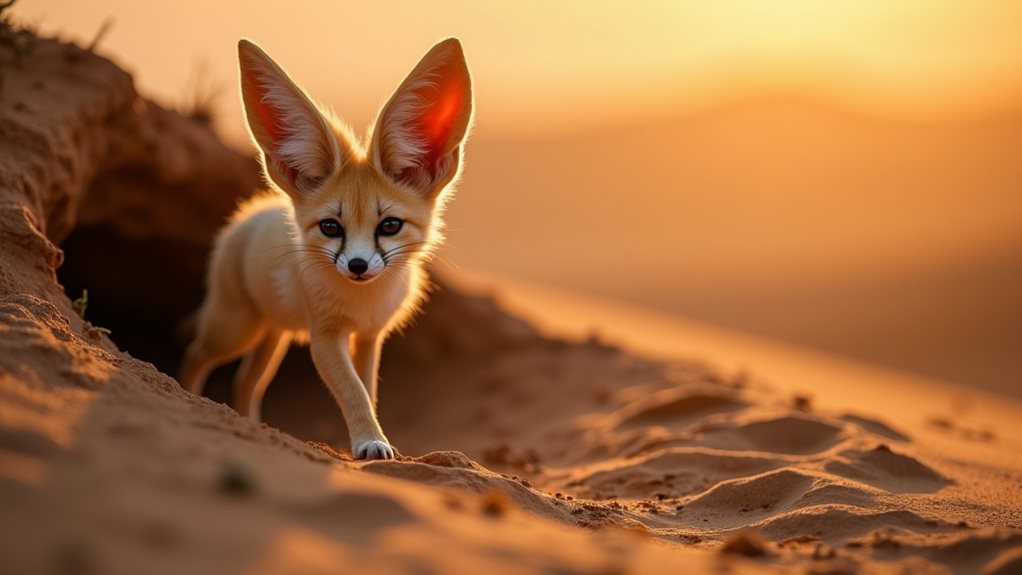
While you might imagine desert animals struggling under the harsh sun, fennec foxes have evolved remarkable adaptations that make them desert survival specialists. Their oversized ears aren’t just adorable—they’re natural cooling systems! These heat-radiating organs help with temperature regulation by dissipating excess body heat.
You’ll notice their sandy-colored fur serves as perfect camouflage techniques against the desert backdrop, helping them hide from predators and sneak up on prey. Their thick fur insulates against cold desert nights, while reflecting sunlight during scorching days.
Don’t you wish you’d their specialized kidney function? These little foxes can survive with minimal water intake. They’ve also developed furry foot pads that protect against burning sand—like built-in desert boots! Their ability to thrive without free water sources showcases their remarkable adaptation to arid environments.
Their entire body is a masterpiece of desert engineering that you can’t help but admire.

This cute Fennec Fox design is a perfect gift for any Fennec Fox Lover.


Detailed Representation: The lifelike features of this fennec fox figurine mirror its real-life counterpart in the wild. It showcases the fox’s most notable feature – its enormous ears that aid in their survival in the harsh desert environments
Burrow Engineering: Underground Life in the Sahara
The remarkable physical adaptations of fennec foxes extend beyond their bodies to their impressive homes. You’d be amazed at their burrow construction skills, creating underground sanctuaries that can reach depths of 20 feet!
These elaborate tunnel systems aren’t just simple holes—they’re engineering marvels with multiple entrances, chambers, and emergency exits.
When you’re battling Sahara temperatures that swing from scorching days to freezing nights, these burrows become crucial for desert survival. The insulated underground chambers maintain stable temperatures year-round, protecting these clever foxes from extreme weather.
Desert-defying dens shield these resourceful foxes from the Sahara’s brutal temperature extremes
They’ll often dig their homes near vegetation where soil is more stable for tunneling. What’s truly impressive is how these social creatures sometimes create interconnected burrow systems, allowing extended family groups to live together while staying cool in their subterranean paradise. Additionally, these burrows provide excellent shelter from predators, ensuring the safety of the fennec foxes as they thrive in harsh desert conditions.
Nighttime Hunters: Nocturnal Behavior Patterns

Stepping into the desert night, you’ll find fennec foxes at their most active, emerging from their burrows to begin their nightly adventures.
These adorable desert dwellers rely on incredible sensory adaptations to maneuver through the darkness, with those massive ears capable of detecting prey moving underground!
You’d be amazed at their hunting techniques, which combine stealth and precision. Fennec foxes pounce on insects, rodents, and small birds with remarkable accuracy, using their acute hearing to pinpoint exact locations.
They’ll stalk their prey silently, then leap with surprising speed to secure their midnight snack.
When you’re observing these nocturnal hunters, you’re witnessing millions of years of desert adaptation in action.
Their nocturnal behavior also helps them avoid the scorching daytime temperatures that make the Sahara so challenging.
Social Structure and Family Dynamics in Resource-Scarce Environments
Beyond their fascinating nighttime prowling, fennec foxes maintain complex social lives that highlight their remarkable resilience. Unlike many desert creatures, these foxes form tight-knit family groups where a clear social hierarchy develops naturally.
While other creatures flee desert hardships, fennec foxes embrace them together, forming structured families that thrive where solitude fails.
You’ll find mated pairs staying together for life, working as teams to raise their young in harsh conditions where resources are scarce.
- A cozy underground den filled with playful kits tumbling over each other while parents stand guard
- Excited youngsters learning hunting techniques through mock chases across moonlit dunes
- Family members grooming each other’s distinctive large ears during peaceful evening gatherings
- Alert parents taking turns providing parental care, with one foraging while another protects vulnerable offspring
Their cooperative approach to survival demonstrates how even in the world’s most challenging environments, family bonds make life possible.
Human Impact and Conservation Status of Desert Fox Populations

While fennec foxes have thrived in harsh desert environments for millennia, human activities now threaten their once-stable populations across North Africa and parts of the Middle East.
You’ll find these adorable creatures facing increasing pressure from habitat destruction as urban development encroaches on their desert homes. Oil exploration, off-road vehicles, and agriculture have fragmented their territories, making survival more challenging.
Conservation efforts are underway, though they’re still in early stages. You might be surprised to learn that fennec foxes aren’t listed as endangered yet, but they’re considered “near threatened” in many regions.
Local conservation groups are working with communities to establish protected areas and reduce illegal pet trade. If you’re traveling to these regions, you can help by supporting eco-tourism ventures that prioritize wildlife protection rather than exploitation.
Final Thoughts
As you’ve traveled through the fennec fox’s world, you’ve witnessed how these desert diamonds have mastered survival in Earth’s harshest terrains. They’re nature’s engineers, creating underground sanctuaries that shield them from scorching days. You’ve seen their keen adaptations, family bonds, and nighttime prowess. Remember, your actions impact their future. These resilient creatures don’t just survive the desert—they’ve transformed it into their kingdom.