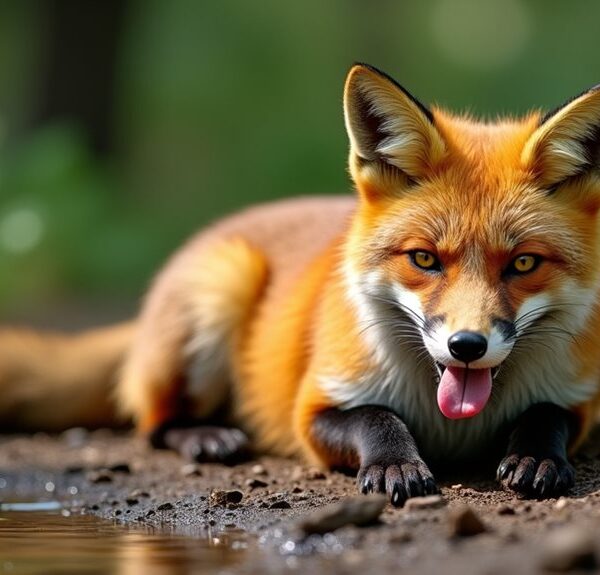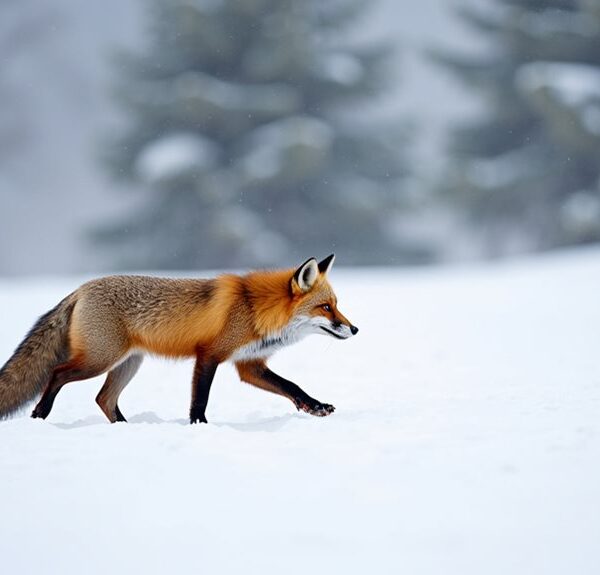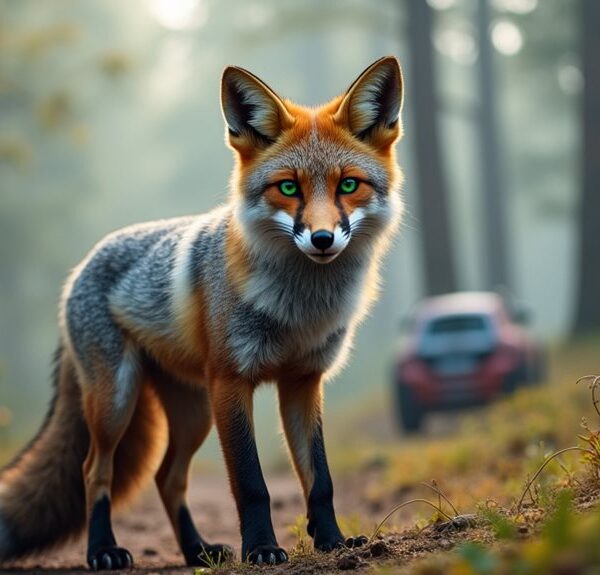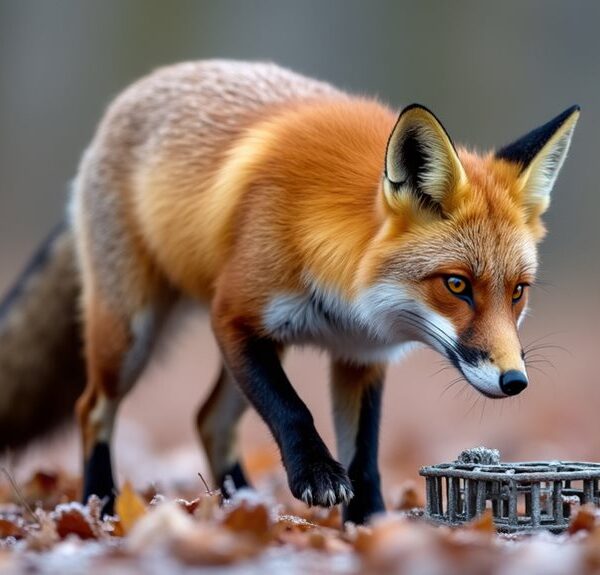

Silver foxes aren’t a separate species but red foxes with a special genetic trait. Their stunning silver coat comes from a recessive gene that changes how melanin forms in their fur. You’ll notice these beautiful creatures have unique patterns, like nature’s fingerprints. Through selective breeding, scientists have created domesticated silver foxes with surprising changes in both appearance and behavior. Learn how these enchanting animals connect genetics, conservation, and ethical ownership considerations.
The Silver Fox: Not a Separate Species
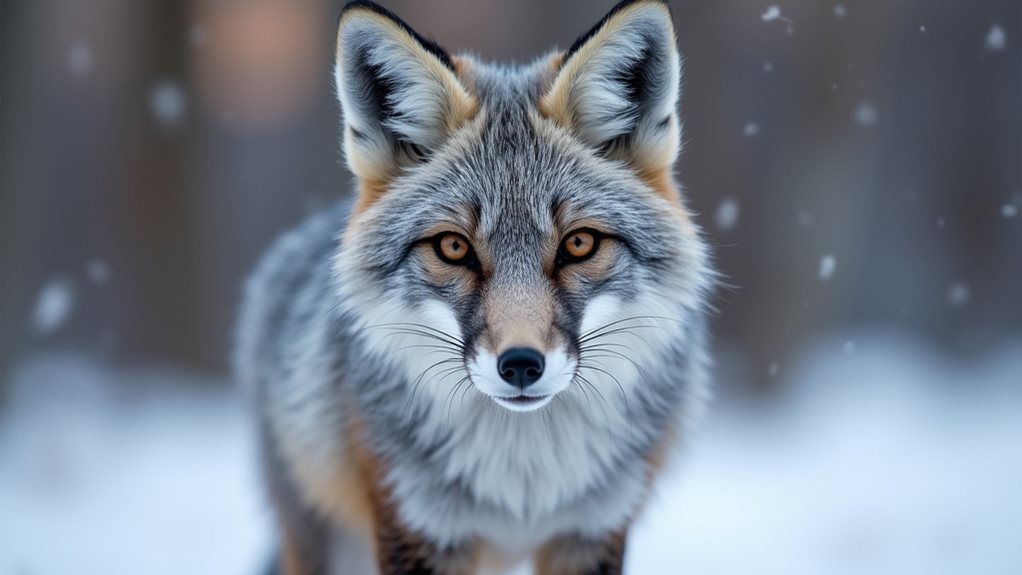
While walking through a wildlife exhibit, you’ve probably marveled at the striking beauty of silver foxes, with their shimmering coats that seem almost otherworldly.
Despite their distinctive appearance, these stunning creatures aren’t actually a separate species from their red counterparts.
When you’re examining silver fox origins, you’ll discover they’re simply red foxes (Vulpes vulpes) with a genetic variation that affects their coloration. This melanistic trait creates that gorgeous silver-black fur that catches your eye.
In silver fox taxonomy, scientists classify them identical to red foxes – they’re just wearing different coats!
You might be surprised to learn that this color variation occurs naturally in the wild, though it’s more commonly seen in captive foxes.
Breeders have improved this trait through selective breeding, giving you those picture-perfect silver foxes you can’t help but admire. Additionally, this variation in coat color is influenced by genetic factors that contribute to a variety of appearances within the species.


Genetic Mechanisms Behind the Silver Coat
You’ve probably noticed how silver foxes get their distinctive coat through fascinating genetic mechanisms that alter melanin production.
As the fox ages, you’ll observe these pathways gradually shifting, causing once-dark fur to develop those striking silver tips and patterns.
Whether you’re admiring a young fox with just a hint of silver or an older one with a full silver mantle, you’re witnessing genetics and time working together to create nature’s living artwork.
Melanin Production Pathways
Although silver foxes appear to have a magical shimmer to their coats, the science behind their unique coloration is rooted in specific genetic mechanisms controlling melanin production.
When you look at these beautiful creatures, you’re witnessing the result of complex melanin pathways that differ from their red counterparts. The pigmentation processes occur in specialized cells that don’t produce the typical amount or type of melanin.
Here are three fascinating aspects of this process:
- Silver foxes have a genetic mutation that interrupts normal melanin synthesis.
- Their hair follicles contain modified melanocytes that produce altered pigment ratios.
- The silver appearance results from a unique distribution of melanin throughout the hair shaft.
You’ll notice this gives their fur that distinctive salt-and-pepper look that makes silver foxes so enchanting and sought-after.
Age-Related Pigment Changes
Unlike many animals that gradually turn silver with advancing age, silver foxes display their distinctive coat coloration due to specific genetic factors rather than the passage of time.
You’d be surprised to learn that their signature silver appearance isn’t related to aging at all! The genetic mutation affecting melanin distribution creates this stunning coat pattern from early development.
This fascinating quirk affects age perception of these animals. When you spot a silver fox, you might assume it’s elderly, but you’re actually seeing a genetic trait that’s present throughout the fox’s life.
Their aesthetic appeal remains consistent from youth to maturity, unlike the graying process humans experience. The silvering effect that makes these foxes so visually striking is a reflection of nature’s creative genetic variations, not the march of time.
The Russian Fox Experiment: Domestication in Action
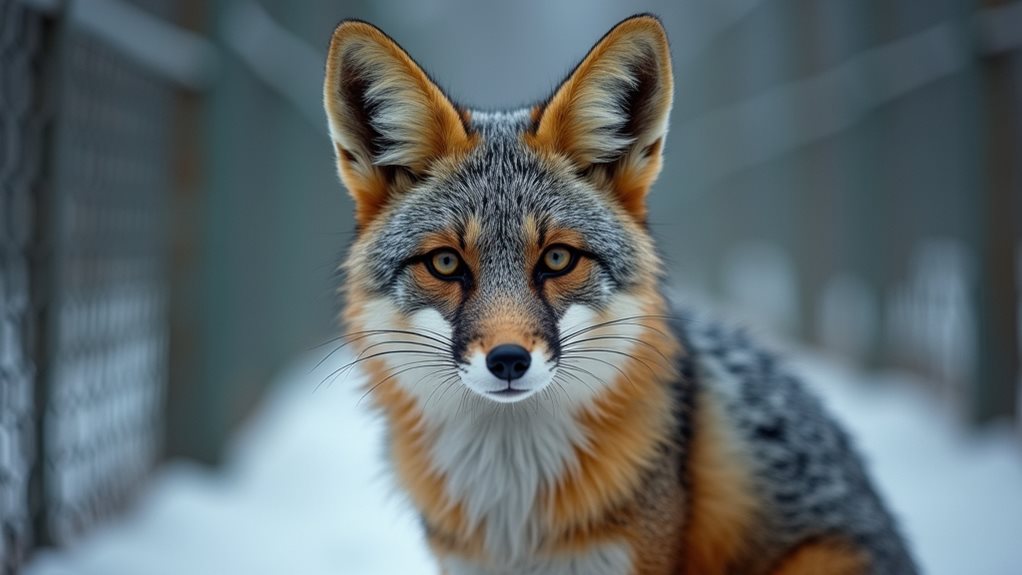
When Soviet geneticist Dmitry Belyaev began his revolutionary experiment in 1959, few could have predicted the profound impact it would have on our understanding of domestication.
By selectively breeding only the tamest wild silver foxes, he witnessed remarkable changes in their behavioral traits and physical characteristics in just a few generations.
You’ll be fascinated to learn that these foxes didn’t just become friendlier—their entire biology transformed through domestication processes that mirrored what happened with wolves becoming dogs thousands of years ago.
Three key findings from this experiment:
- Tame foxes developed floppy ears and curled tails
- Their fear response diminished dramatically
- They began producing different hormones, affecting their coat patterns
Isn’t it amazing how quickly wild animals can change when we select for friendliness?
Physical Characteristics and Variations in Silver Morphs
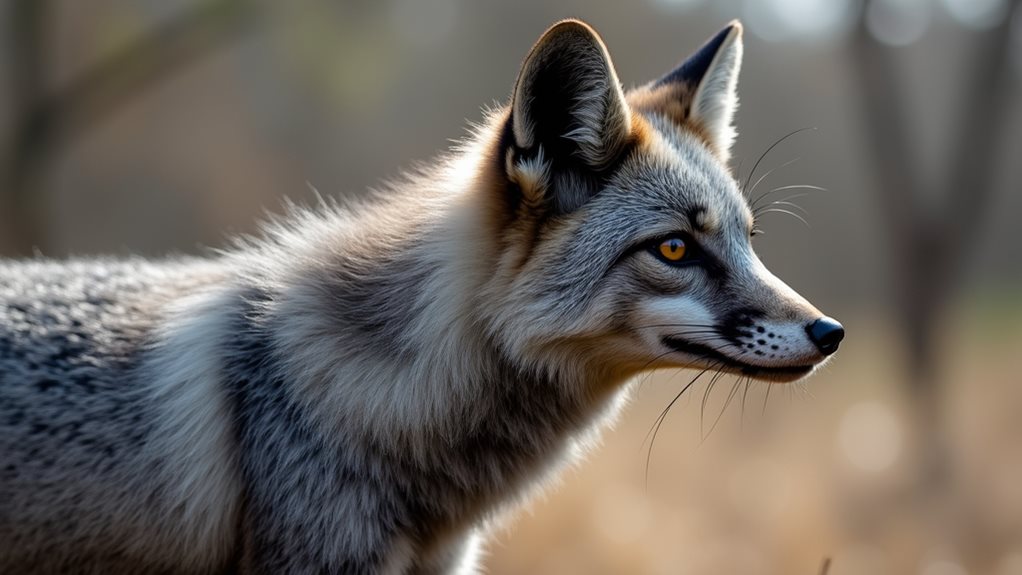
You’ll notice that silver foxes display remarkable coat patterns, from full silver to various cross-phase combinations, each determined by specific genetic interactions.
Their facial features, particularly those expressive eyes and pointed ears, develop differently in domesticated silver morphs compared to their wild counterparts.
When you compare these foxes side by side, you’ll see how their physical characteristics tell a fascinating story about genetic selection and adaptability in these beautiful creatures.
Coat Patterns Analysis
The fascinating world of silver fox coat patterns reveals a stunning array of variations that captivate both researchers and fox enthusiasts alike.
When you examine a silver fox’s coat, you’ll notice how the pattern inheritance creates unique combinations that distinguish each animal. Their coat color shifts from dark guard hairs to silvery undercoats, creating that trademark shimmering effect you’ve likely admired in photographs.
To understand silver fox coat patterns better, consider these key factors:
- Genetic markers determine the placement of silver-tipped hairs across the body.
- Environmental factors like seasonal changes can affect the intensity of silver coloration.
- Age-related changes cause coat patterns to evolve throughout the fox’s lifetime.
You’ll find that no two silver foxes share identical patterns, making each animal’s coat a beautiful fingerprint of nature’s artistry.
Facial Feature Development
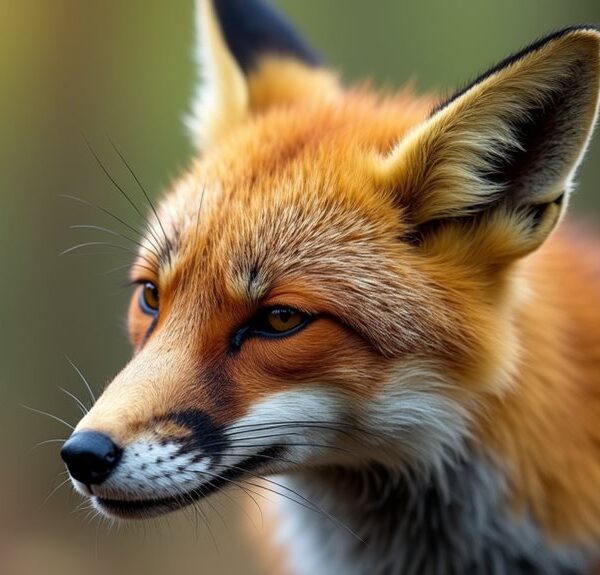
Beyond the enchanting coat patterns, facial features form one of the most striking aspects of silver fox morphology. You’ll notice remarkable facial symmetry in these beautiful creatures, with each fox displaying unique characteristics that set it apart from others in the population.
Their almond-shaped eyes, positioned perfectly on either side of their pointed muzzles, create an expression that’s both alert and intelligent.
What’s fascinating is the feature diversity you’ll observe among silver morphs. Some foxes develop broader snouts while others maintain narrower facial profiles. Their ear shapes also vary considerably, from slightly rounded to sharply pointed.
These variations aren’t random—they’re linked to genetic factors that influence facial development during the first weeks of life. You can often identify family lines by tracking these distinctive facial traits through generations.
Breeding Patterns and Inheritance of the Silver Trait
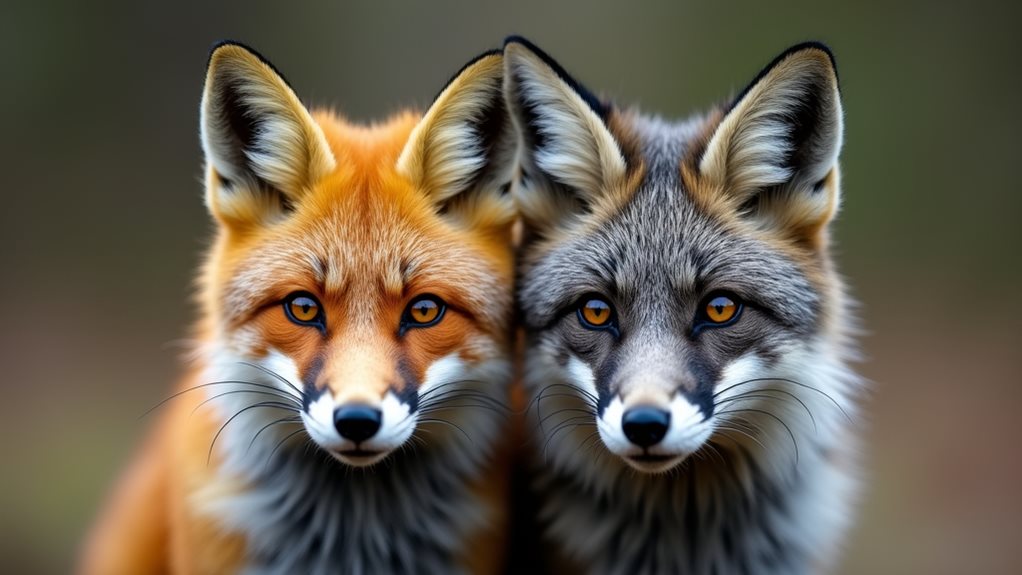
While investigating the silver fox trait‘s inheritance patterns, geneticists have discovered a fascinating genetic story that unfolds with each generation.
You’ll find that this distinctive coat color isn’t just beautiful—it’s a complex genetic puzzle that reveals how breeding selection factors influence offspring.
When you’re examining silver trait inheritance, remember these key points:
- The silver coat is caused by a recessive gene, meaning both parents must carry it for offspring to display the trait.
- Selective breeding programs can increase the prevalence of silver foxes by pairing carriers together.
- Environmental factors can influence how strongly the silver trait expresses, creating variations in shade and pattern.
You’ll notice that breeders often select for temperament alongside color, as the genes for behavior and appearance sometimes travel together through generations.
Silver Foxes in Wildlife Conservation Efforts
Silver foxes play a surprisingly complex role in modern conservation biology, connecting the genetic insights we’ve explored with broader environmental protection strategies.
When you’re walking through a wildlife reserve that’s home to these stunning creatures, you’re witnessing conservation in action. These foxes, with their distinctive silver coats, serve as ambassador species that help scientists track genetic diversity in wild canid populations.
You’ll find that conservation groups often highlight silver foxes in their educational programs to spark public interest in wildlife protection.
What’s fascinating is how researchers use the silver fox’s unique genetic makeup to study adaptation and resilience in changing environments. By protecting these beautiful animals and their habitats, you’re supporting not only a single species but entire ecosystems.
Their presence indicates healthy, functioning wilderness areas worth preserving for future generations.
The Ethics of Silver Fox Ownership and Breeding
As the popularity of exotic pets continues to rise, ethical questions surrounding silver fox ownership have become increasingly important to address.
You’ll want to take into account the responsibility that comes with caring for these beautiful but demanding creatures. Ethical considerations should guide your decision before bringing a silver fox into your home.
Ethical ownership requires understanding these magnificent animals’ needs before committing to their demanding care.
Here are three key aspects of responsible ownership:
- Silver foxes require specialized care, including proper diet, enrichment, and veterinary attention.
- Breeding practices should prioritize health and genetic diversity, not only coat color.
- Always check local laws, as owning silver foxes is illegal in many regions.
Final Thoughts
You’ve now seen how silver foxes aren’t separate species but genetic marvels, both wild beauties and domesticated companions. Their striking silver coats result from complex genetics, while their personalities reflect decades of careful breeding. As you consider these elegant creatures, remember they’re living examples of evolution in action—deserving both our scientific curiosity and ethical consideration. Whether in conservation efforts or responsible ownership, silver foxes challenge us to balance appreciation with respect.