

While foxes rarely carry rabies, you’ll need to watch for warning signs like unusual boldness, excessive drooling, or disorientation. Keep your pets vaccinated, secure your property boundaries, and remove food sources that attract wildlife. If you or your pet encounters a fox behaving strangely, wash any wounds immediately and contact your doctor or vet. Understanding fox behavior helps create a safer environment for both your family and local wildlife. The following guidance will equip you with crucial prevention strategies.
Contents
Understanding Fox Behavior and Rabies Transmission

When you spot a fox wandering through your neighborhood during daylight hours, it’s natural to wonder if it might be rabid. However, foxes are actually crepuscular animals, meaning they’re most active at dawn and dusk, but it’s not unusual to see healthy foxes out during the day.
Understanding fox habitats can help ease your concerns. These adaptable creatures often live alongside humans in urban and suburban areas where food and shelter are plentiful. A fox that appears healthy—alert, with a fluffy tail and clear eyes—is likely just passing through.
In fact, about 70% of urban foxes thrive in cities, showcasing their adaptability to human environments.
For effective rabies prevention, keep your distance from wild animals, secure garbage cans, and remove food sources that might attract them to your property.

【Upgraded Predator Deterrent】: Designed with two flashing red LED lights, this solar nocturnal animal repeller mimics the glowing eyes and fire-like warning signals of large predators. The rapid strobe effect creates a strong visual deterrent that keeps intruding animals alert and away from your property all night long.

ANIMAL REPELLENT OUTDOOR - Intruder-scaring defense. Our device's performance is based on the double effect. Firstly, Dual red LED lights mimic the active presence of another nocturnal predator. Secondly, the rapid 4Hz flashing resembles the fearful for intruders glow of fire. These ensure scaring away any unwelcome visitors.

【Motion-Activated Detect】Our advanced PIR motion sensor detects animal movement and instantly emits variable-frequency ultrasonic waves paired with a flashing LED strobe to create an unwelcoming environment for deer, raccoons, dogs, and other intruders
Recognizing Signs of Rabies in Foxes
When you’re out hiking or camping in fox territory, you’ll want to know the telltale signs of a rabid fox for your safety.
You might notice physical symptoms like excessive drooling, partial paralysis, or a generally disheveled appearance that differs from a healthy fox’s well-groomed look.
Pay special attention to unusual behaviors, particularly foxes active during daylight hours, since these normally nocturnal animals rarely venture out when the sun’s up unless they’re sick or rabid.
Physical Symptoms
Although foxes typically avoid human contact, those infected with rabies often exhibit unmistakable behavioral changes that you’ll want to recognize immediately.
When examining fox physiology, rabid individuals display several distinct physical symptoms. You’ll notice excessive drooling or foaming at the mouth, as the virus affects their ability to swallow. Contrary to popular rabies myths, not all infected foxes become aggressive—some appear unusually docile or disoriented.
Watch for partial paralysis, particularly in the hindquarters, causing an unsteady gait or difficulty walking. Their eyes may appear glazed or unfocused, and they might make unusual vocalizations.
You might also observe self-mutilation as the fox bites at imaginary objects or its own body parts. If you spot these symptoms in a fox near your home, keep your distance and contact animal control right away. Additionally, rabies can cause aggressive behavior in some infected foxes, which may pose a heightened risk to humans.
Behavioral Warning Signs
Beyond physical symptoms, behavioral changes in foxes can serve as your first warning of rabies infection. A typically shy fox that suddenly approaches humans or pets without fear is displaying a concerning red flag. This uncharacteristic boldness contradicts normal fox behavior and shouldn’t be dismissed.
Contrary to popular rabies myths, not all infected foxes become aggressive. Some exhibit unusual lethargy or confusion, appearing disoriented or wandering aimlessly during daylight hours when they’d normally be inactive.
You might notice excessive drooling, difficulty walking, or unpredictable aggression followed by calm periods.
If you spot a fox showing these behavioral changes, don’t attempt to approach or help it yourself. Even a fox that seems docile could turn aggressive without warning.
Instead, contact your local animal control immediately to handle the situation safely.
Unusual Daytime Activity
Seeing a fox during daylight hours doesn’t automatically signal rabies, despite common misconceptions. Healthy foxes often engage in daytime foraging, especially in spring and summer when they’re feeding young kits.
Urban encounters with foxes during daylight have increased as these adaptable creatures adjust to human schedules and environments.
When distinguishing between normal and concerning behavior, consider these factors:
- A fox that appears calm, aware of surroundings, and maintains distance is likely healthy.
- Daytime activity near reliable food sources (like your garden or compost) is typically normal behavior.
- A fox that seems disoriented, aggressive without provocation, or shows physical symptoms (excessive drooling, partial paralysis) warrants caution.
Additionally, understanding that red foxes are generally non-aggressive can help alleviate fears when encountering them. Trust your instincts—if something seems “off” about the fox’s behavior, it’s best to keep your distance.
Protecting Your Pets From Fox Encounters
To protect your pets from potentially rabid fox encounters, you’ll need to take proactive steps around your property.
Creating secure boundaries, like mending fence holes and removing food sources that attract wildlife, can greatly reduce the risk of unwanted fox visitors.
You’ll also want to make sure your pets are up-to-date on their rabies vaccinations, as this remains your pet’s most crucial defense should an unfortunate encounter occur. Additionally, securing trash and compost bins can help avoid attracting foxes to your property.
Secure Your Property
Although foxes rarely carry rabies in most regions, securing your property is essential to protect your pets from potentially dangerous encounters.
Implementing effective fox proofing strategies can greatly reduce the risk of unwanted wildlife visiting your yard. You’ll want to regularly inspect your property boundaries for any gaps or holes that clever foxes might exploit.
Here’s how to keep your property secure:
- Install fencing that extends at least 6 inches underground to prevent foxes from digging underneath
- Remove potential food sources like unsecured garbage cans, pet food left outdoors, or fallen fruit
- Clear dense vegetation and debris piles where foxes might den or hide
These simple steps don’t just protect against foxes—they’ll help keep your pets safe from various wildlife encounters while maintaining a harmonious neighborhood ecosystem. Additionally, understanding that foxes are typically non-aggressive creatures can help alleviate concerns about their presence in urban environments.
Vaccination Requirements
While foxes themselves rarely pose a direct threat to your pets, keeping up with vaccination requirements remains your first line of defense against potential wildlife encounters.
Most states legally require rabies vaccinations for dogs, cats, and ferrets—and for good reason! These shots provide essential rabies prevention that could save your furry friend’s life.
Don’t skip your pet’s regular vaccination appointments. The benefits extend beyond just rabies protection; many combination vaccines shield against multiple diseases your pet might encounter outdoors.
Remember, vaccinations aren’t just paperwork—they’re peace of mind. Additionally, understanding the legal considerations for fox ownership can help ensure you’re prepared for potential wildlife interactions.
If you’re unsure about your pet’s vaccination status, call your vet today. They’ll help you create a schedule that keeps your companions protected year-round.
Your pets rely on you to make these important health decisions!
Vaccination Protocols and Legal Requirements
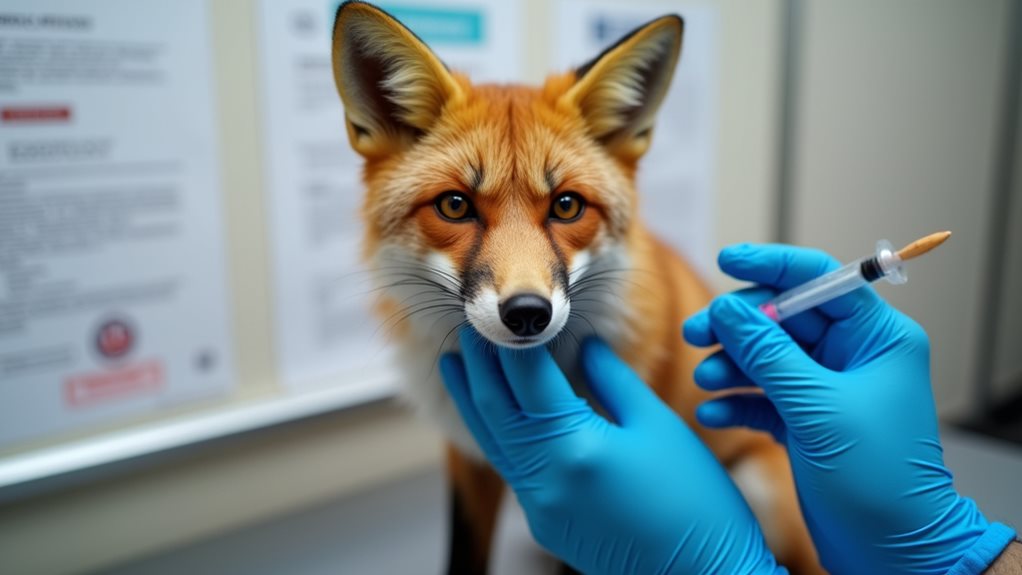
Since foxes remain a primary vector for rabies in many regions, understanding vaccination protocols and legal requirements is essential for wildlife management.
When dealing with vaccination guidelines, you’ll need to consult with a wildlife veterinarian who specializes in exotic pets. Most states don’t recognize standard rabies vaccines as effective for foxes, creating complex legal implications if your fox were to bite someone.
- You’re required to check your local and state regulations, as keeping foxes is illegal in many jurisdictions without proper permits.
- Wildlife rehabilitation centers can provide guidance on the latest vaccination protocols specifically designed for foxes.
- Your fox may need specialized documentation and regular health certificates for legal compliance.
Steps to Take After a Potential Exposure
When you encounter a potential rabies exposure involving a fox, immediate action is crucial to prevent this deadly disease from developing.
Don’t panic, but don’t delay either! Your first priority should be thoroughly washing any bite or scratch with soap and water for at least 15 minutes—this simple step can greatly reduce infection risk.
Stay calm yet swift—immediate wound washing with soap and water for 15 minutes significantly decreases rabies transmission risk.
Next, conduct a quick exposure assessment: Was there direct contact with the fox’s saliva? Did a bite break your skin? Document everything, including the fox’s behavior and appearance, for your healthcare provider.
Call your doctor immediately, even if the wound seems minor. They’ll determine if you need rabies post-exposure prophylaxis.
If possible, contact animal control to locate the fox for testing, but never attempt to capture it yourself!
Managing Fox Populations in Residential Areas

As foxes increasingly adapt to urban environments, residents must learn to coexist with these clever creatures through humane and effective management strategies.
You’ll find that proper urban fox management starts with understanding their behavior and needs. When communities work together, you can create a balanced relationship with local wildlife.
- Secure your trash bins with animal-proof lids and never leave pet food outside overnight, reducing what attracts foxes to your property.
- Participate in community awareness programs to learn about fox behavior and share prevention tips with neighbors.
- Consider humane deterrents like motion-activated sprinklers or lights that discourage foxes without causing harm. Additionally, creating green spaces can provide essential habitats for urban fox populations.
Final Thoughts
By staying savvy about safety and securing suitable vaccination for your pets, you’ll foster a future where fox encounters don’t create fear. Remember, responsible residents respect wildlife while protecting their precious pets. Your vigilance, vaccination compliance, and community cooperation create vital barriers against rabies. When you’re well-informed, you’ll worry less and enjoy your outdoor experiences more, creating harmony between humans and the wild world around us.