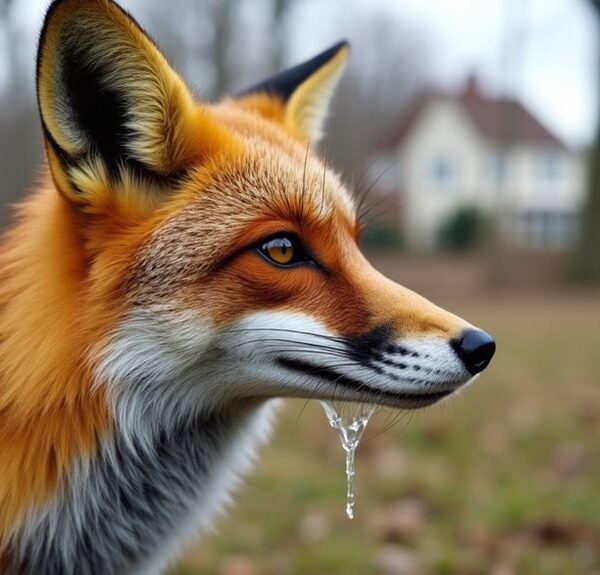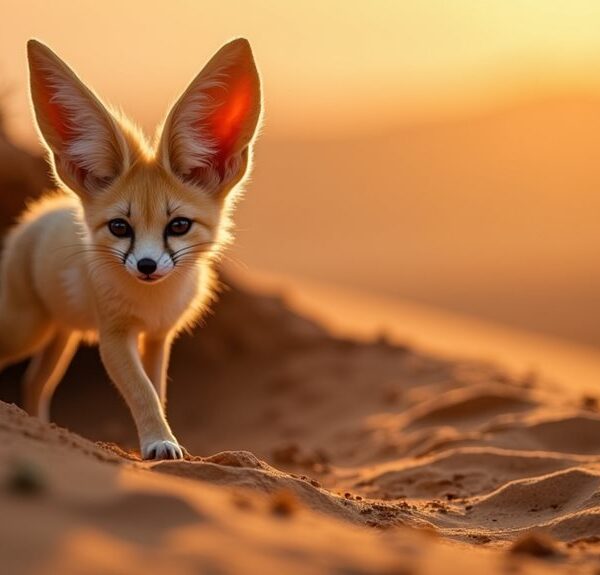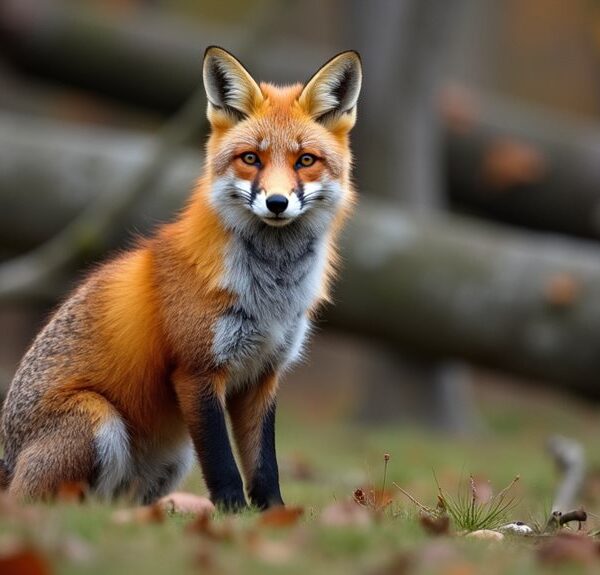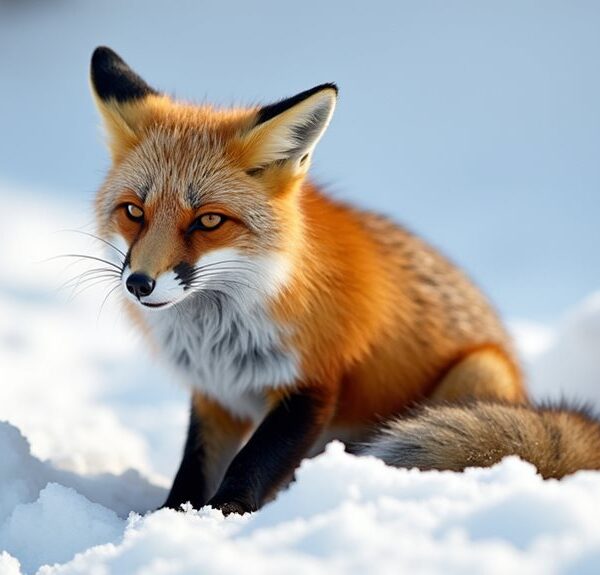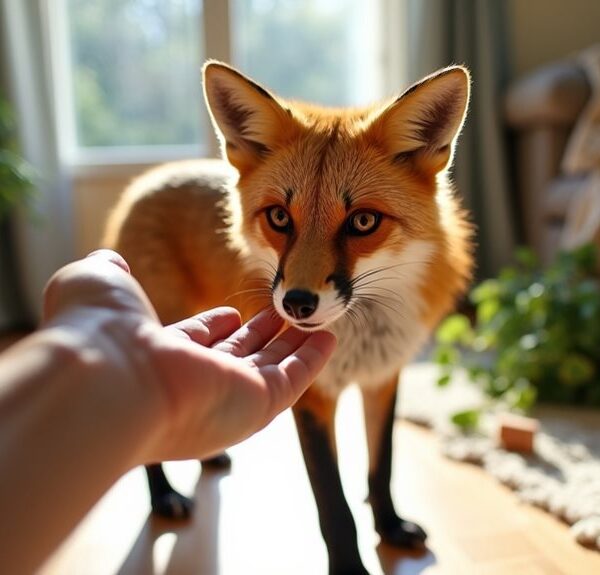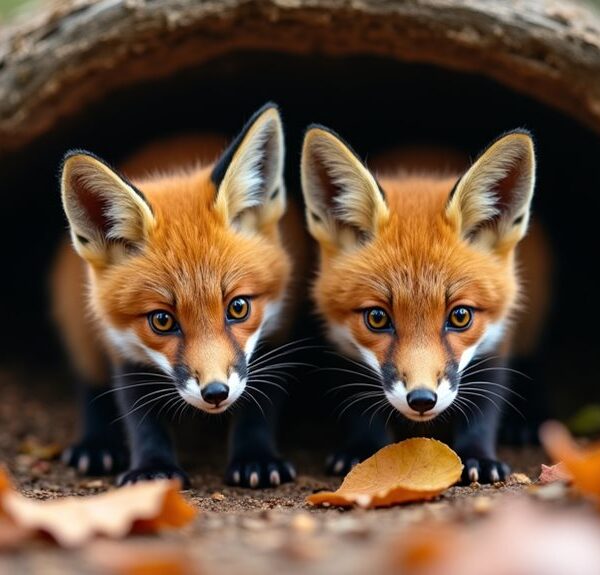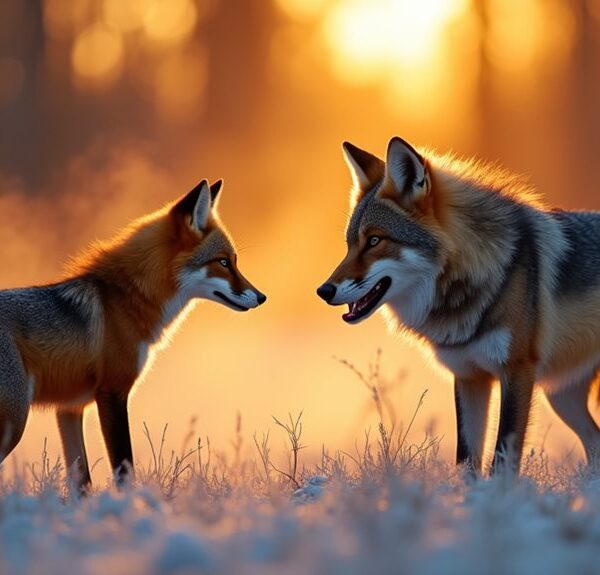
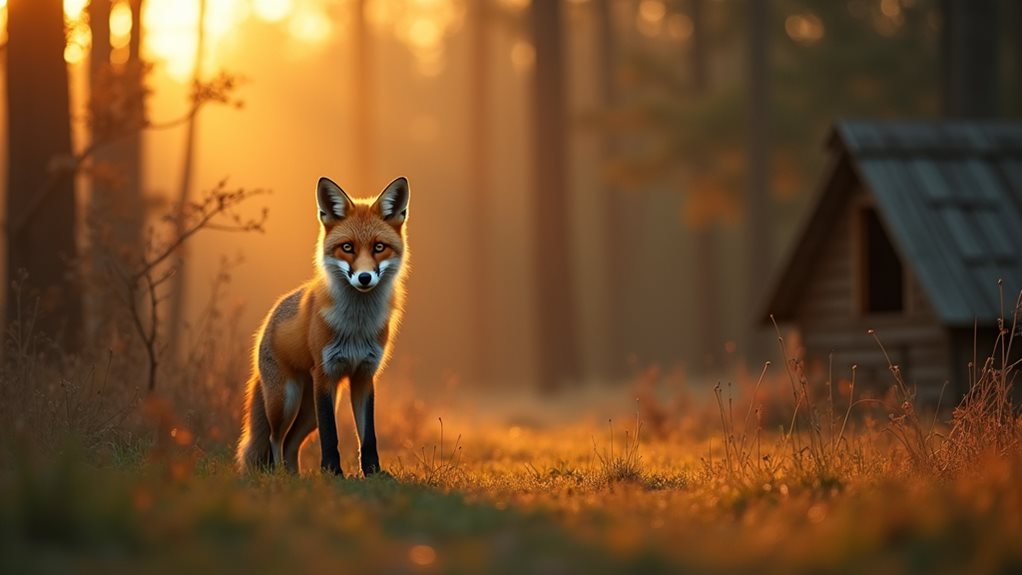
Contrary to popular belief, foxes aren’t solitary chicken thieves. They maintain complex family structures and primarily eat berries, insects, and small mammals. While Arctic foxes change coat colors seasonally, most fox species don’t. They’re not purely nocturnal either—they’re most active at dawn and dusk. That eerie scream? It’s just normal communication, not something sinister. The real lives of these adaptable creatures prove far more fascinating than their trickster folklore portrayal suggests.
Contents
- 1 The Solitary Hunter: Debunking Myths About Fox Social Behavior
- 2 Fox Diet Beyond the Henhouse: What These Canids Really Eat
- 3 Color Changes: Do Foxes Really Switch Coat Colors Seasonally?
- 4 Urban Adapters: How Foxes Thrive in Human Environments
- 5 Vocalizations: The Truth Behind the Fox’s “Scream”
- 6 Fox Intelligence: Separating Scientific Facts From Exaggeration
- 7 The Relationship Between Foxes and Dogs: Closer Than You Think?
- 8 Nocturnal by Nature? Examining Fox Activity Patterns
- 9 Fox Conservation Status: Are They Really as Common as We Believe?
- 10 Cultural Portrayals: How Folklore Has Shaped Our Perception of Foxes
- 11 Final Thoughts
The Solitary Hunter: Debunking Myths About Fox Social Behavior
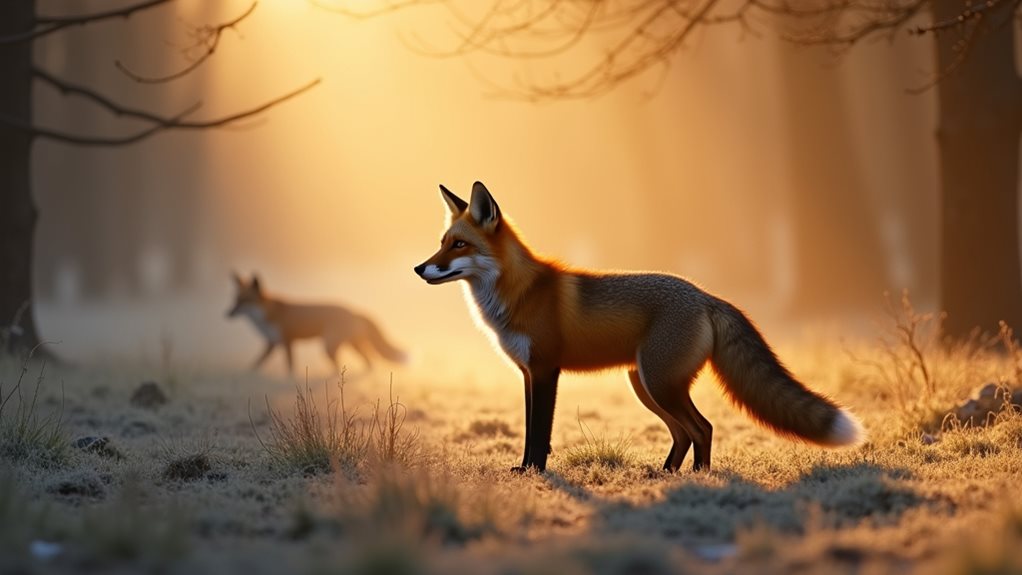
While many people picture foxes as lone hunters stalking prey in the moonlight, this solitary image isn’t quite accurate.
You’ve probably heard that foxes are loners, but they actually maintain complex social structures that might surprise you. Unlike wolves with their rigid pack dynamics, foxes create flexible family groups centered around breeding pairs.
These clever creatures don’t follow the solitary hunter stereotype at all! During pup-rearing season, both parents and sometimes older siblings (called helpers) work together to feed and protect the young.
You’ll find that these family bonds strengthen during winter months when resources are scarce. Even though foxes often hunt alone, they return to their shared dens to socialize, play, and groom each other—behaviors that reflect their need for companionship rather than complete independence. The breeding female’s vital role in communication with her pups ensures strong family bonds are maintained throughout their development.


We search for any book you like In Chinese, Russian and Spanish Service for Businesses, Individuals, Governments, Universities Any medium you choose, that is available Read, Learn, Research and Enjoy

Fox Diet Beyond the Henhouse: What These Canids Really Eat
Despite popular belief that foxes primarily raid chicken coops, their actual diet might surprise you.
These adaptable canids display remarkable diet diversity, consuming a wide range of foods throughout the seasons. You’ll find foxes feasting on berries, insects, earthworms, and small mammals like mice and voles—items that make up the bulk of their natural menu.
Their hunting techniques are fascinating to observe! When pursuing mice, foxes perform what’s called a “mouse pounce,” using their keen hearing to locate prey beneath snow or vegetation before leaping and striking with precision. This ability highlights their exceptional hunting skills in various environments.
They’re opportunistic omnivores, not the chicken-obsessed villains of folklore. While they might occasionally visit a poorly secured henhouse, wild foods comprise about 95% of their diet. Chicken dinners are rare exceptions, not the rule.
Color Changes: Do Foxes Really Switch Coat Colors Seasonally?
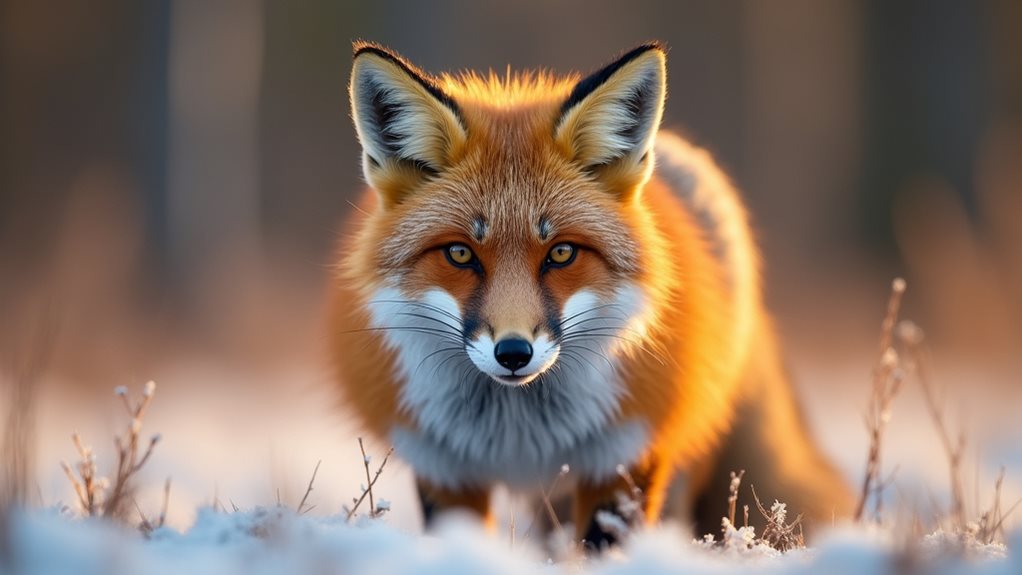
You’ve probably wondered if foxes change their coats with the seasons, like a fashion-conscious shopper switching wardrobes.
While most fox species maintain their signature colors year-round with only slight variations in thickness and shade, the Arctic fox puts on a remarkable show, transforming from pure white in winter to brown-gray in summer.
This dramatic seasonal change evolved as a survival adaptation, helping these northern foxes blend perfectly with their environment whether it’s snow-covered or tundra-exposed. The seasonal fur color change not only aids in camouflage but also plays a role in regulating their body temperature in extreme conditions.
Seasonal Fur Transformations
Many people believe foxes dramatically change their coat colors with the seasons, similar to how Arctic hares turn white in winter. However, this common misconception doesn’t align with reality.
While foxes don’t undergo complete color transformations, they do experience changes in fur thickness as temperatures drop.
Unlike the seasonal camouflage of some animals, a red fox stays red year-round, and a gray fox maintains its distinctive coloration throughout the seasons.
What you might notice is that winter coats appear fuller and sometimes slightly lighter due to the growth of dense undercoat hairs. This adaptation helps foxes survive harsh winters rather than providing camouflage benefits. Additionally, red foxes are often found in diverse habitats, illustrating their remarkable adaptability to different environments which further aids in their survival during seasonal changes.
Arctic Fox Evolution
While most fox species maintain their distinctive coat colors throughout the year, Arctic foxes are the fascinating exception to this rule.
These remarkable creatures have developed unique evolutionary traits that help them thrive in harsh polar environments.
Arctic adaptations have evolved over thousands of years, enabling these foxes to survive in some of Earth’s most challenging conditions.
You’ll be amazed by how these adaptations work:
- Their winter white coats aren’t just for show—they provide essential camouflage against snowy terrains.
- Their compact bodies and short ears minimize heat loss during frigid winters.
- Their seasonal color changes are triggered by daylight hours, not temperature.
- They also possess insulated foot pads that allow for silent movement on icy terrain, enhancing their hunting efficiency.
When you understand these specialized features, you’ll appreciate why Arctic foxes are considered marvels of evolutionary adaptation.
Their ability to transform between summer brown and winter white represents one of nature’s most impressive survival strategies.
Urban Adapters: How Foxes Thrive in Human Environments
You’ll often spot urban foxes scavenging through trash bins, compost piles, and pet food bowls, using their clever instincts to find meals in our cities.
They’ve adapted to city life by creating dens under decks, in culverts, or within abandoned buildings, showing remarkable flexibility in their housing choices.
While you’re sleeping, these resourceful creatures are most active, hunting and exploring during nighttime hours to avoid human interaction and take advantage of the quiet urban environment. Urban foxes exhibit bolder behavior compared to their rural counterparts, allowing them to thrive amid human activity.
Resourceful Food Foragers
Despite the common belief that foxes struggle to find food in cities, these clever creatures have actually become masterful urban foragers.
You’ll find them adapting their hunting strategies to take advantage of our bustling environments, showing remarkable intelligence and flexibility.
Here’s how foxes have perfected food foraging in urban areas:
- They’ll rummage through your trash cans and compost heaps, finding discarded food that humans have thrown away.
- They’ve learned to hunt smaller urban creatures like mice, voles, and rats that thrive in city settings.
- They’ve become opportunistic fruit eaters, snacking on fallen berries, apples, and other plants growing in yards and parks.
In fact, urban foxes derive about 45% of their diet from human food, showcasing their adaptability in changing environments.
You’ve got to admire their resilience—foxes don’t just survive in our cities, they thrive by adapting their natural skills.
Urban Den Locations
Contrary to popular belief, foxes don’t need remote wilderness to establish their homes. These clever creatures have mastered urban denning, often setting up residence right under your nose!
You’ll find fox dens in parks, beneath sheds, alongside railway embankments, and even in overgrown gardens. Their adaptability to suburban habitats is truly remarkable.
When you’re walking through your neighborhood, that bushy-tailed visitor you occasionally spot likely lives nearby. Foxes prefer quiet, undisturbed areas with good cover, but they’re not shy about choosing locations with human activity nearby.
They’ve learned that humans often inadvertently provide food sources and protection from larger predators. This balance of proximity and privacy makes urban environments surprisingly ideal for these resourceful animals. Urban foxes have also developed exceptional adaptability to thrive in these human-dominated landscapes.
Next time you spot a fox, remember—it’s not lost, it’s home!
Nocturnal Activity Patterns
When was the last time you spotted a fox during daylight hours? While many believe foxes are strictly nocturnal, this is actually a myth.
Foxes are crepuscular, meaning they’re most active at dawn and dusk, but they’ll readily venture out during daylight when it’s beneficial.
Their nighttime behavior has evolved to balance survival with hunting strategies in urban environments.
You’ll notice these patterns if you observe them closely:
- Morning activity – Foxes often hunt at sunrise when small prey begins to stir.
- Daytime opportunism – They’ll adjust schedules to access food sources like garbage collection days.
- Evening hunting – Dusk provides ideal conditions for their exceptional hearing and night vision.
Unlike strictly nocturnal animals, foxes have adapted their schedules to human rhythms, making them highly successful urban adapters. Urban foxes can thrive due to their flexible diet, which allows them to make the most of available food sources in cities.
Vocalizations: The Truth Behind the Fox’s “Scream”
Have you ever been startled awake by what sounds like a woman screaming in the night? That spine-chilling noise might actually be fox vocal communication, not a horror movie scenario unfolding in your neighborhood!
Contrary to popular belief, foxes don’t just bark. Their vocal repertoire includes at least 12 different sounds ranging from gentle chittering to their infamous scream. This blood-curdling call, often heard during winter mating season, serves as both a territorial warning and a way to attract mates.
You’ll notice that fox sounds vary greatly by context. A vixen might use high-pitched calls to summon her kits, while males emit short, sharp barks when defending territory. Additionally, these vocalizations are crucial for territory defense and survival, showcasing the complexity of their social structures.
Next time you hear that eerie night scream, you can rest easier knowing it’s just your local fox sending messages, not something more sinister!
Fox Intelligence: Separating Scientific Facts From Exaggeration
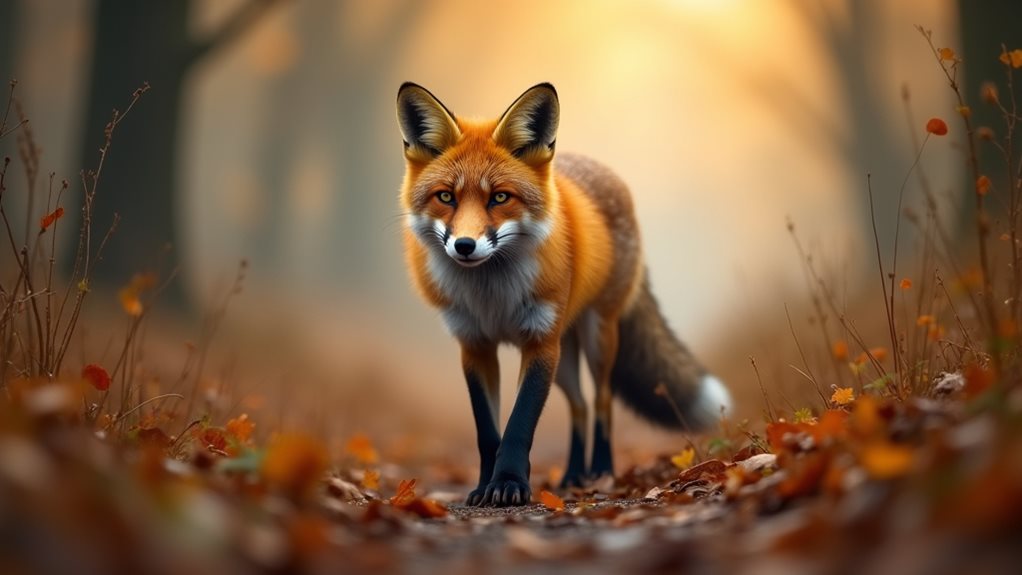
Many people believe foxes are as clever as they appear in fables and children’s stories, but the real story of fox intelligence isn’t quite so straightforward.
While these adaptable creatures do possess remarkable cognitive abilities, science doesn’t support the notion that they’re cunning masterminds.
Research on fox intelligence reveals three key insights:
- Their problem solving skills primarily revolve around food acquisition and survival, not complex reasoning.
- Foxes demonstrate spatial memory similar to dogs, helping them remember food cache locations.
- Their intelligence appears specialized for their ecological niche rather than being broadly advanced.
You’ll notice foxes are certainly smart enough to thrive in diverse environments—from forests to urban areas—but their cleverness is more about practical adaptation than the scheming genius often portrayed in stories.
The Relationship Between Foxes and Dogs: Closer Than You Think?
You’ve probably noticed similarities between foxes and dogs, and that’s because they share common ancestry within the canid family.
While they communicate differently – foxes using a variety of vocalizations compared to dogs’ barks and howls – researchers have explored whether foxes could be domesticated like their canine cousins.
The famous Russian fox experiment has shown that, with selective breeding for tameness, foxes can develop dog-like traits such as wagging tails and seeking human attention, suggesting the gap between these animals isn’t as wide as you might think.
While foxes and dogs both belong to the Canidae family, they’re not as closely related as many people believe. Their shared ancestry dates back millions of years, but they’ve evolved along separate branches of the canid family tree.
When you look at their genetic similarities, you’ll find they’re more like distant cousins than siblings. Their evolutionary paths diverged approximately 7-10 million years ago.
Here are the key differences in their lineage:
- Dogs evolved from wolves approximately 15,000 years ago.
- Foxes belong to the tribe Vulpini, while dogs are part of Canini.
- Foxes have 34 chromosomes, while dogs possess 78.
You might notice some behavioral similarities between your pet dog and wild foxes, but these are primarily due to their distant shared ancestry rather than close genetic relations.
Communication Style Differences
Although foxes and dogs may share some facial expressions, their communication styles are markedly different, contradicting the notion that they’re close relatives.
You’ll notice foxes rely on subtle body language cues that dogs simply don’t understand. While your pet pooch might wag its tail to show happiness, a fox’s tail movements communicate entirely different messages to other foxes.
Their social interactions reveal even more distinctions.
Dogs are pack animals that thrive on hierarchy and group dynamics, but foxes prefer solitary living with only seasonal pair bonding. You won’t see foxes forming the tight-knit social structures that dogs naturally create.
When you observe a fox in the wild, you’re watching an animal that communicates through a unique “vocabulary” of postures and vocalizations that evolved separately from domestic canines.
Domestication Possibilities Explored
The widespread belief that foxes can be domesticated like dogs misrepresents their fundamental nature.
While you might see adorable videos of fox pets online, these animals face considerable domestication challenges that make them unsuitable companions for most people.
Fox behavior differs fundamentally from dogs in several important ways:
- Foxes retain strong instinctual behaviors even when raised from birth by humans.
- They mark territory with strong-smelling urine that’s nearly impossible to eliminate from homes.
- Their temperament remains unpredictable, with many becoming aggressive or destructive at maturity.
You’ll find that even the Russian fox domestication experiment, often cited as proof foxes can become dog-like, has produced animals that aren’t truly domesticated but merely somewhat tamer.
They’re still wild at heart, requiring specialized care few can provide.
Nocturnal by Nature? Examining Fox Activity Patterns
Many people assume foxes only come out at night, but this common belief isn’t entirely accurate. While foxes do hunt during nighttime hours, they display surprising diurnal activity patterns that vary by season, food availability, and human presence.
Foxes aren’t strictly nocturnal—they adapt their schedules based on seasons, food sources, and human activity patterns.
You might spot a fox trotting through your neighborhood at dawn or dusk—these are their prime hunting periods. Their flexible schedule allows them to adapt to different environments, whether rural or urban.
Their hunting behavior isn’t strictly confined to darkness; they’ll happily pursue mice or voles during daylight hours if they’re hungry enough!
This adaptability helps foxes thrive in diverse habitats. So next time someone tells you foxes only venture out under moonlight, you’ll know there’s more to these clever creatures than nighttime prowling.
Fox Conservation Status: Are They Really as Common as We Believe?
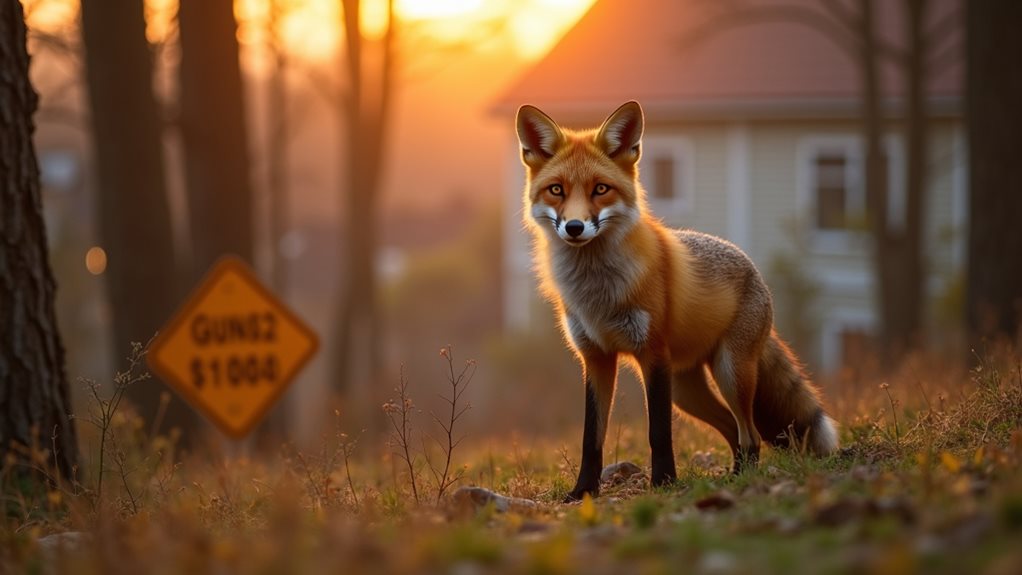
Where exactly do foxes stand regarding conservation status? You might think these adaptable creatures are thriving everywhere, but fox population dynamics tell a more complex story.
Despite their reputation as common backyard visitors, several fox species face considerable conservation challenges worldwide.
Consider these important factors:
- Habitat loss from urban expansion has forced foxes into smaller territories, creating unnatural population densities.
- Climate change affects prey availability, disrupting traditional fox hunting patterns.
- Human-wildlife conflicts often result in lethal control measures that impact local populations.
While red foxes remain relatively abundant in many regions, other species like the Darwin’s fox and island fox have experienced alarming declines.
Next time you spot a fox in your neighborhood, remember they’re not only resilient survivors but also indicators of our changing environment.
Cultural Portrayals: How Folklore Has Shaped Our Perception of Foxes
Throughout human history, foxes have played enchanting roles in folklore and mythology across cultures, shaping how we perceive these cunning creatures today. You’ve likely heard stories portraying foxes as tricksters or shape-shifters, a cultural significance that stems from their elusive nature and nocturnal habits.
These folklore origins aren’t consistent worldwide, though. In Japanese tales, foxes (kitsune) are magical beings with shape-shifting abilities and divine connections.
European traditions often cast them as clever tricksters outsmarting farmers, while Native American stories frequently depict them as both wise and mischievous. In Korean mythology, foxes possess nine tails and supernatural powers.
These colorful portrayals have influenced how you might view real foxes, sometimes unfairly labeling them as deceitful or cunning when they’re simply intelligent animals adapting to survive in their environments.
Final Thoughts
As you’ve traveled through these fox myths, you’ve discovered that the truth is often more fascinating than fiction. Where folklore paints foxes as cunning tricksters, reality shows intelligent, adaptable survivors. You can’t judge a fox by its cover—their complex social lives and remarkable urban adaptability reveal creatures far more nuanced than stories suggest. Next time you glimpse that russet flash, you’ll see beyond the myths to the remarkable animal beneath.