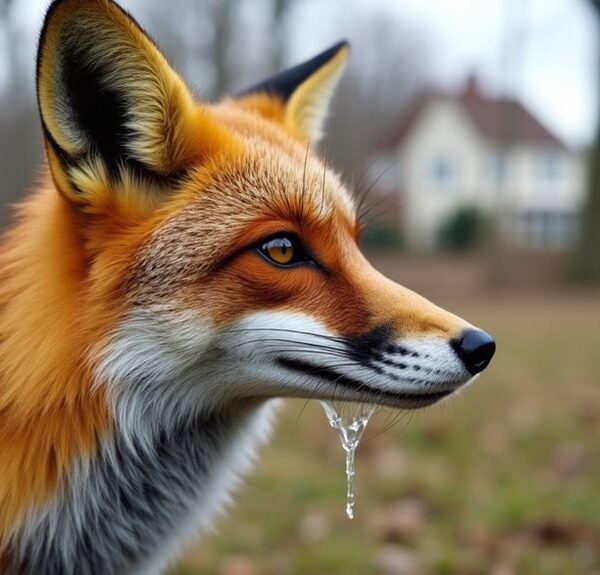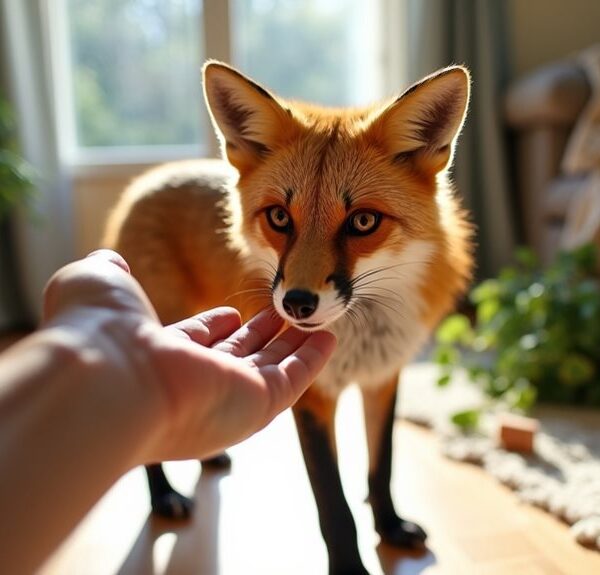

Foxes are surprisingly intelligent, with problem-solving skills that rival raccoons and some primates. They’ll adapt to both wilderness and urban settings, remembering food cache locations for months while recognizing individual humans they’ve encountered before. You’ll find they use magnetic fields to detect prey under snow and can master complex garbage bin mechanisms in cities. Their impressive brain-to-body ratio explains their quick learning and cunning tactics that help them outsmart hunters season after season. Discover what makes these clever canids nature’s ultimate survivors.
Contents
- 1 The Cognitive Abilities of Foxes: Beyond Instinct
- 2 Problem-Solving Skills in Wild and Urban Environments
- 3 Fox Memory and Learning Capacity
- 4 Comparing Fox Intelligence to Other Canids and Mammals
- 5 Adaptability: The Ultimate Sign of Fox Smarts
- 6 Tool Use and Resourcefulness in Fox Behavior
- 7 How Foxes Outsmart Human Hunters and Traps
- 8 The Science Behind Fox Brain Structure and Function
- 9 Final Thoughts
The Cognitive Abilities of Foxes: Beyond Instinct

While most people think of foxes as merely clever tricksters from folklore, these fascinating animals possess remarkable cognitive abilities that go far beyond basic instinct.
You’ll be amazed at their cognitive flexibility, which allows them to solve complex problems and adapt to changing environments with impressive ease.
Foxes aren’t just solo thinkers, either. They’ve demonstrated social learning capabilities, picking up new skills by observing others in their group.
Foxes excel at collaborative intelligence, learning from their peers and refining survival skills through careful observation.
You might spot a young fox watching an elder dig for food, then perfectly mimicking those techniques later. This ability to learn from others isn’t common in all wildlife.
When you consider how foxes traverse human-altered terrains and develop unique hunting strategies, it’s clear they’re much more than cute, furry creatures—they’re brilliant survivors with sophisticated minds. Their keen senses enhance their hunting efficiency and adaptability in diverse environments.

Magnetic Field Display: Brown magnetic nanoparticles film is used to show magnetic field, clearly showing the patterns of magnetic field lines of magnets. Different colors represent different magnetic field intensity


Magnetic Field Display: Brown magnetic nanoparticles film is used to show magnetic field, clearly showing the patterns of magnetic field lines of magnets. Different colors represent different magnetic field intensity
Problem-Solving Skills in Wild and Urban Environments
Although foxes thrive in the wilderness, they’ve proven equally adept at traversing human-dominated environments, showcasing their remarkable problem-solving abilities.
You’ll find these clever creatures demonstrating wild intelligence when they solve the puzzle of catching prey beneath snow using magnetic field detection to pinpoint their target’s location.
Their urban adaptability is equally impressive. Foxes have mastered city living by figuring out complex garbage bin mechanisms, remembering trash collection schedules, and creating efficient hunting routes through neighborhoods.
They’ll even use human structures as shelter during harsh weather.
What’s fascinating is how quickly foxes transfer their problem-solving skills between contexts. A fox that’s learned to access food in the wild will apply similar strategic thinking to urban challenges, showing their cognitive flexibility isn’t just instinct—it’s genuine intelligence adapting to whatever environment they encounter. Moreover, their role as urban cleanup crew reflects their ability to thrive on human leftovers while balancing their natural behaviors in city habitats.
Fox Memory and Learning Capacity

Despite their relatively small brain size, foxes possess remarkable memory and learning capabilities that’ll surprise you.
These clever canids demonstrate exceptional memory retention, remembering food cache locations for months—even under snow! You’d be amazed at how quickly they adapt their learning strategies when facing new challenges.
Foxes can recognize individual humans and animals they’ve encountered before, remembering who’s friendly and who’s not.
They’ll even adjust their hunting techniques based on past successes and failures. When you watch a fox maneuver through a complex urban environment, you’re witnessing their impressive spatial memory in action.
Their ability to learn from observation is equally impressive—they can solve problems by watching others first. This combination of sharp memory and adaptive learning helps foxes thrive in our ever-changing world, showcasing their influence of environment on behavior and intelligence.
Comparing Fox Intelligence to Other Canids and Mammals
How does fox intelligence stack up when compared to their canine relatives and other mammals? While not as socially complex as wolves or as trainable as dogs, foxes possess their own unique cognitive strengths.
Their problem-solving abilities often rival those of raccoons and some primates, particularly when it comes to finding food. Fox communication involves a sophisticated repertoire of vocalizations and body language that helps them traverse their environments. Unlike pack-oriented wolves, foxes display more independent social behavior, though they maintain complex family structures during kit-rearing seasons.
You’ll find that foxes fall somewhere between solitary cats and social dogs on the intelligence spectrum—they’re adaptable opportunists who can thrive in diverse environments from wilderness to urban settings. Interestingly, their intelligence is also reflected in their ability to adapt behaviors based on environmental factors, such as their dietary habits, which showcases their resourcefulness.
Their blend of cunning, memory, and flexibility makes them remarkably successful survivors in a changing world.
Adaptability: The Ultimate Sign of Fox Smarts
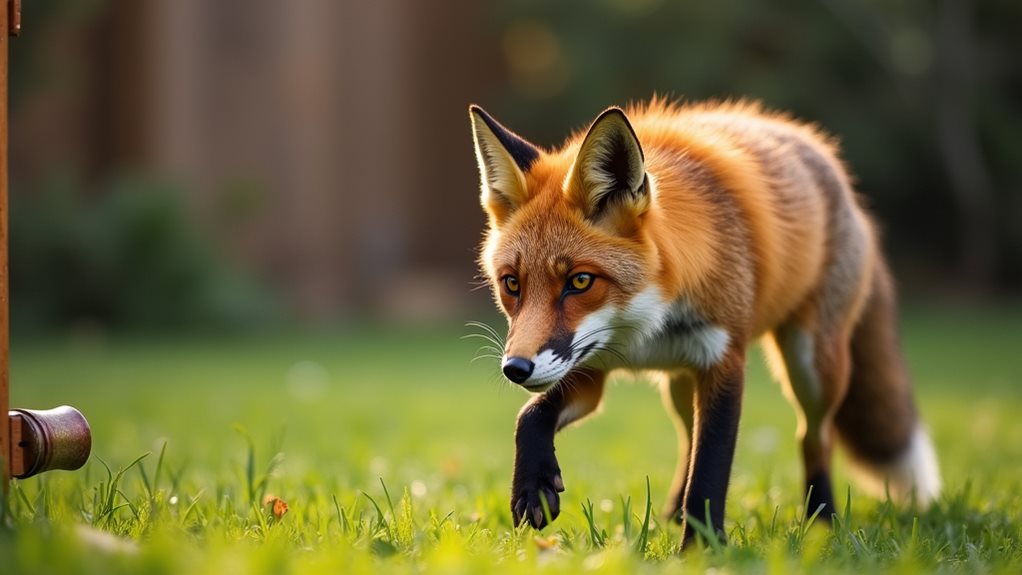
When foxes encounter new challenges in their environment, they showcase perhaps their most impressive cognitive trait—remarkable adaptability.
You’ll notice how quickly they adjust to changing surroundings, whether it’s an urban neighborhood or a shifting rural habitat. Their environmental adaptability isn’t only physical—it’s cognitive too.
Unlike some wildlife that struggles with human encroachment, foxes have flourished alongside us.
They’ve learned to traverse our complicated world, finding food sources and shelter in surprising places. This flexibility extends to their social behavior as well.
Foxes can operate as solitary hunters or work within family groups depending on what serves them best.
You’re witnessing evolution in action when you see a fox problem-solving its way through modern challenges—it’s this adaptability, not only raw intelligence, that makes them such successful survivors. In urban settings, for example, diet changes have allowed red foxes to thrive amid human populations by utilizing discarded food sources.
Tool Use and Resourcefulness in Fox Behavior
You’ll be amazed by the problem-solving ingenuity foxes display when they manipulate objects in their environment to access food or create shelter.
These clever creatures have been observed using sticks to test if traps are safe and piling up snow to reach prey hidden in higher locations. Their resourcefulness extends beyond mere survival tactics, as foxes can create elaborate systems for storing food during times of plenty, demonstrating a level of planning that rivals many other wild animals.
Problem-Solving Skills
Despite their relatively small brain size compared to some predators, foxes demonstrate remarkable problem-solving abilities that have helped them thrive in diverse environments worldwide. You’ll find these clever canids using spatial reasoning to traverse complex terrains and remember food cache locations with impressive precision. When faced with obstacles, foxes don’t give up easily. They’ll assess situations, try different approaches, and even employ social learning by watching other foxes succeed. In urban areas, you might spot a fox figuring out complicated garbage bin latches or finding creative entry points to chicken coops. Their adaptability stems from quick thinking and persistence rather than brute strength. While not as studied as wolves or primates, research continues to reveal just how resourceful these orange opportunists truly are when confronted with challenges in their ever-changing habitats. Additionally, their ability to thrive on human food waste further showcases their adaptability in urban environments.
Creative Resource Manipulation
Fox problem-solving extends beyond mere thinking into active manipulation of their environment. You’ll be amazed at how these clever canids use found objects as tools, showcasing their resourcefulness in surprising ways.
When food is out of reach, foxes might stack items to climb higher or use sticks to extract treats from tight spaces—skills they develop through social learning from their pack members.
Their sensory perception guides this creativity, as they assess which materials might serve their purposes best. A fox might use leaves to line a den or stones to mark territory boundaries.
Unlike some animals that rely on instinct alone, foxes adapt their tool use to changing circumstances, learning from both success and failure. This flexible thinking helps them thrive in diverse environments, from remote wilderness to urban neighborhoods. Additionally, their remarkable sense of olfactory communication allows them to evaluate potential resources based on the scents they encounter.
How Foxes Outsmart Human Hunters and Traps

You’ll be amazed at how foxes use their impressive memory and pattern recognition to avoid hunters season after season. They quickly learn to associate certain human behaviors, scents, and equipment with danger, often remembering these threats for years. Their adaptive problem-solving skills let them figure out complex trap mechanisms, with many hunters reporting foxes who’ll trigger traps using sticks or rocks rather than risking their own safety. In urban environments, food scarcity can increase territorial aggression, prompting foxes to use their wits to evade both hunters and competing foxes.
Memory and Pattern Recognition
When it comes to outsmarting humans, a red fox’s remarkable memory and pattern recognition abilities give these cunning canids a considerable edge.
You’d be amazed at how their social memory allows them to remember human behaviors for years, recognizing which humans pose threats and which don’t. They’ll avoid areas where they’ve previously encountered danger, displaying impressive spatial awareness that helps them steer through complex territories.
Ever notice how foxes seem to disappear when hunting season begins? That’s not coincidence! They quickly learn the patterns of human activity, recognizing the sound of truck engines during hunting season or the scent of metal traps.
They’ll even memorize the exact locations where traps were previously set and deliberately avoid those spots during future foraging expeditions. Additionally, urban foxes demonstrate dietary flexibility by adapting their scavenging behavior, enabling them to thrive in various environments.
Adaptive Problem-Solving Skills
Foxes demonstrate impressive adaptive problem-solving skills that might leave you amazed. You’ll find that foxes excel at environmental adaptation, adjusting their behavior based on human patterns and threats.
Have you noticed how fox populations thrive despite our best efforts to control them? That’s because they’re masters of social learning, passing knowledge about avoiding traps and hunters from generation to generation.
When hunters change tactics, foxes quickly develop countermeasures. They’ll even pretend to be caught in traps only to escape when the hunter approaches!
This remarkable ability to outthink human strategies isn’t just lucky—it’s evidence of their sophisticated reasoning abilities. In fact, their flexible feeding habits allow them to capitalize on diverse food sources alongside human activities. No wonder foxes continue to flourish alongside us, always one clever step ahead.
The Science Behind Fox Brain Structure and Function
Despite their relatively small size, foxes possess remarkably complex brain structures that enable their renowned cunning and adaptability. When you look at their neural pathways, you’ll find fascinating evidence of cognitive evolution that’s helped these animals thrive in diverse environments.
Scientists have discovered that foxes process information similarly to dogs, but with unique specializations for their lifestyle.
Fox brains show impressive features that explain their intelligent behaviors:
- Improved prefrontal cortex regions responsible for planning and decision-making
- Highly developed sensory processing areas that integrate sight, sound, and smell
- Specialized hippocampal structures that support their exceptional spatial memory
You’ll be amazed to learn that a fox’s brain-to-body ratio is comparable to some primates! This explains why they’re such quick learners and can outsmart predators and prey alike with their clever tactics.
Final Thoughts
You’ve discovered that foxes aren’t just clever tricksters from fables—they’re genuine animal intellectuals. When you see a fox carefully uncovering hidden food it buried months ago, you’re witnessing remarkable memory at work. Their problem-solving abilities, adaptability to urban environments, and capacity to learn from experience all point to an intelligence that rivals many mammals. Next time you spot a fox, remember: you’re looking at one of nature’s most brilliant survivors.