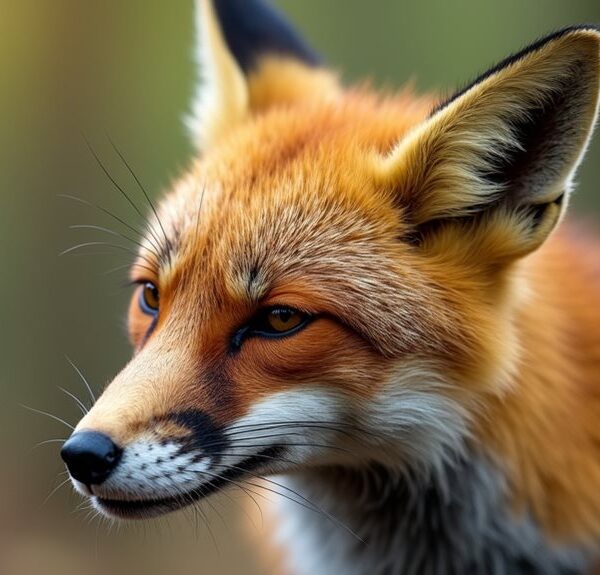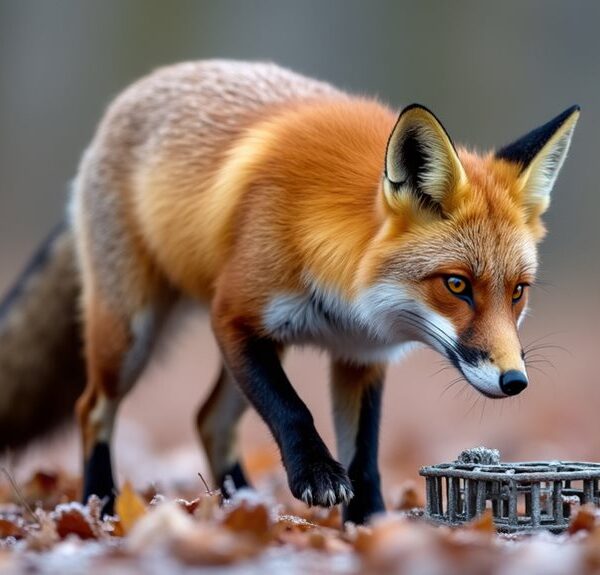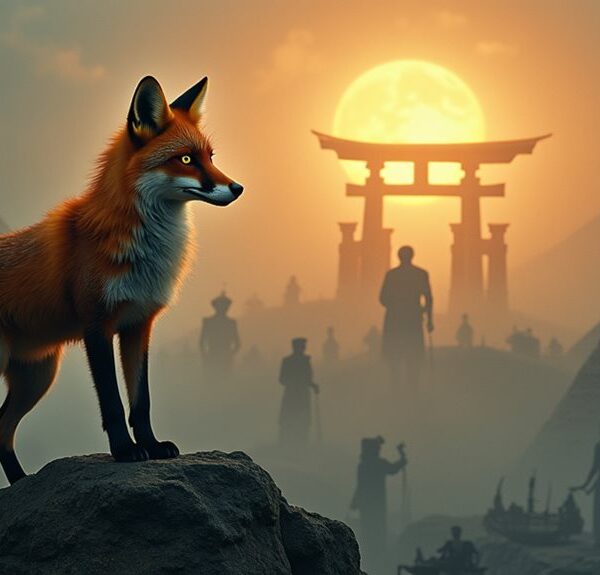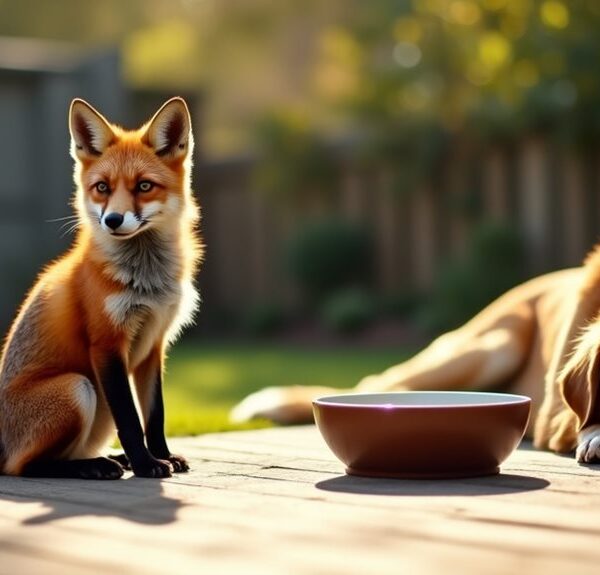
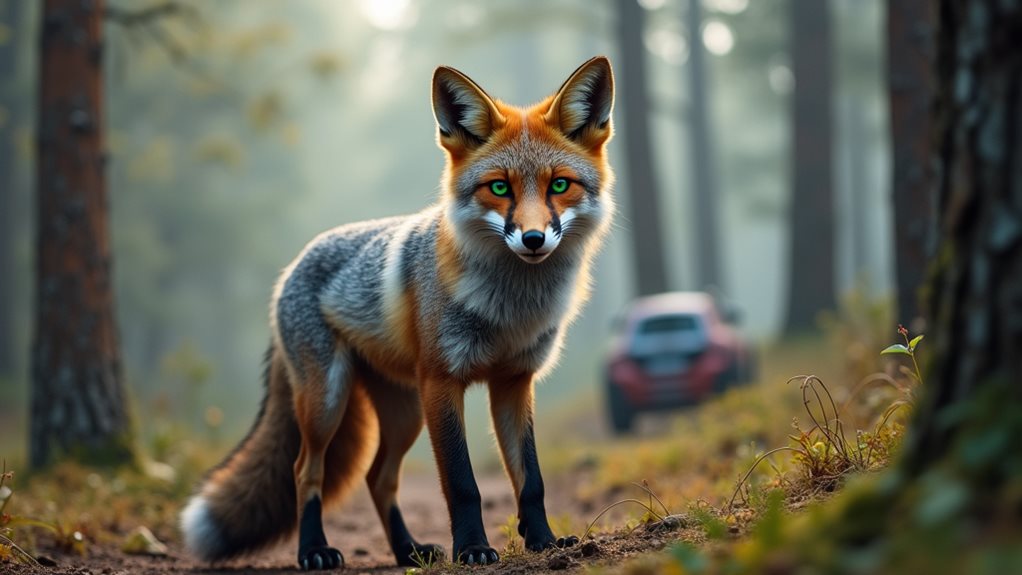
True fox-dog hybrids don’t exist in nature due to genetic barriers that developed over 7-10 million years of evolutionary divergence. While folklore across cultures features magical fox-dog creatures with both cunning and loyalty, science tells a different story. The famous Belyaev experiment showed foxes can develop dog-like traits through selective breeding for tameness—without any hybridization. What looks like a hybrid is usually just an unusual purebred fox with distinctive markings. The truth behind these fascinating creatures goes deeper than appearances suggest.
The Evolutionary Divergence Between Foxes and Dogs
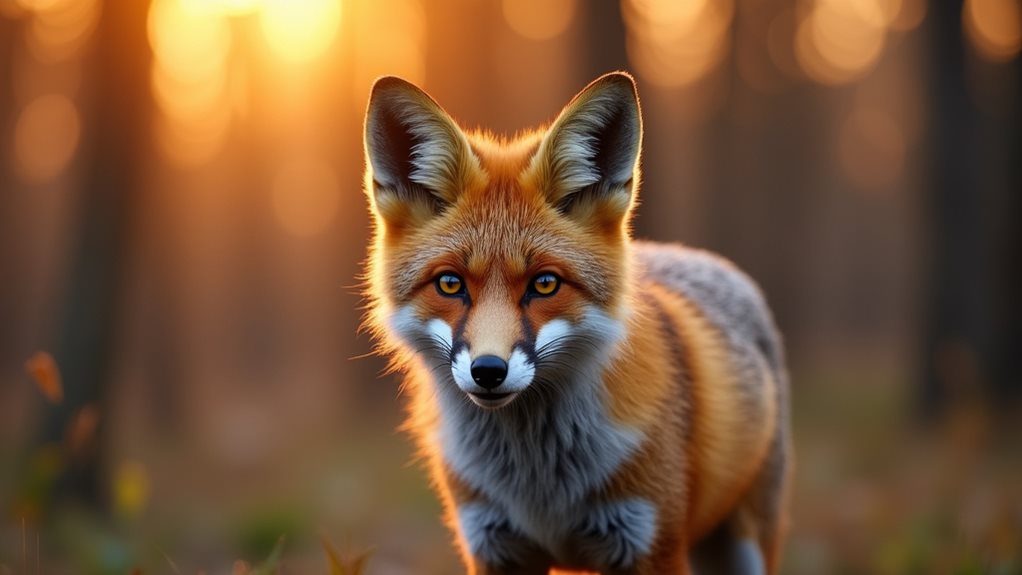
While you might think foxes and dogs are closely related because they look similar, their evolutionary paths actually diverged millions of years ago.
They’re both members of the Canidae family, but that’s where most of their genetic similarities end.
The divergence timelines between these animals stretch back approximately 7-10 million years! That’s even before humans evolved from our primate ancestors.
When canines parted ways 7-10 million years ago, our own ancestors hadn’t yet stepped onto the evolutionary stage.
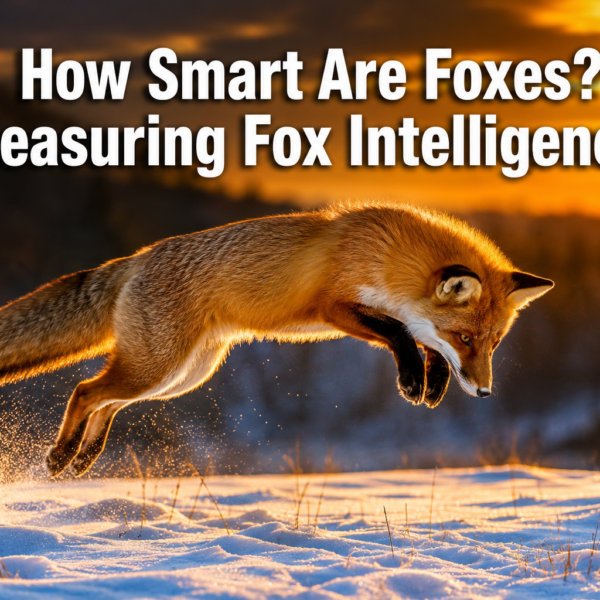
During this lengthy separation, foxes developed unique adaptive behaviors that you won’t see in your pet dog—like their distinctive pouncing technique for hunting in snow and their remarkable ability to hear prey moving underground.
You’re looking at creatures that evolved completely different survival strategies.
Dogs became pack hunters with social hierarchies, while foxes developed into solitary, adaptable omnivores.
Interestingly, the diverse habitats that foxes can thrive in play a significant role in their adaptability and evolutionary success.
It’s fascinating how two seemingly similar animals took such different evolutionary roads!

Mythological Representations of Fox-Dog Hybrids
Throughout human history, you’ll find fascinating tales of fox-dog hybrids woven into the tapestry of ancient fox spirit lore across countless cultures.
You might recognize these creatures in cross-species folklore tales where they often represent boundary-crossers who traverse between the natural and supernatural worlds.
These mythical hybrids typically embody the trickster symbolism that combines the fox’s cunning with the dog’s loyalty, creating powerful figures that challenge our understanding of both animals’ spiritual significance.
Ancient Fox Spirit Lore
Despite scientific evidence disproving their existence, fox-dog hybrids have captured human imagination for centuries in mythology and folklore.
You’ll find these fascinating creatures woven into ancient symbolism across numerous cultures, particularly in East Asian traditions.
In Japanese fox mythology, the kitsune could shapeshift between fox and human forms, often taking a partner and producing offspring with special powers.
Similarly, Chinese tales speak of the húli jīng, fox spirits who’d live for centuries, gaining wisdom and supernatural abilities.
You might recognize Korea’s kumiho stories too, where nine-tailed foxes sometimes merged with canine traits in folklore.
These myths weren’t just entertaining—they helped explain the uncanny intelligence of foxes and their mysterious behaviors that seemed to bridge the gap between wild and domesticated animals. This shape-shifting ability plays a significant role in illustrating the complexities of fox symbolism across cultures.
Cross-Species Folklore Tales
As folklore traditions evolved across cultures, specific tales of fox-dog hybrids emerged that you’ll find particularly enchanting.
These cross cultural tales often depict creatures with the cunning of foxes and the loyalty of dogs, creating mythical creatures that embody both wild and domestic qualities.
You might recognize the Japanese stories of kitsune who sometimes mate with dogs, producing offspring with unusual powers that serve as messengers between worlds.
In European traditions, you’ll discover tales of fox spirits who disguise themselves as domestic dogs to infiltrate human settlements.
These stories weren’t just entertainment—they helped explain unusual animal behaviors and appearances in pre-scientific times.
When you explore these narratives more deeply, you’ll notice how they reflect human fascination with boundary-crossing beings that challenge our neat categorization of the natural world.
Trickster Hybrid Symbolism
When exploring mythological systems around the world, you’ll find that fox-dog hybrids often embody the trickster archetype in powerful ways. These creatures straddle the boundary between domesticated and wild, making them perfect vessels for trickster symbolism in diverse cultures.
You might recognize these hybrid tricksters in Native American tales, where they outsmart larger predators through cunning rather than strength. In Japanese folklore, the kitsune sometimes takes dog-like forms while maintaining its fox-spirit essence, blending loyalty with mischief.
Hybrid folklore often portrays these beings as shape-shifters who understand both human and animal worlds.
What’s fascinating is how these fox-dog tricksters typically aren’t purely malevolent—they’re complex figures that teach valuable lessons about adaptability and survival through their dual nature and clever antics.
The Science of Species Compatibility
When you look at why some species can interbreed while others can’t, you’ll find that genetic barriers often determine compatibility between foxes and related canids.
You might be surprised to learn that certain fox species can successfully hybridize when environmental conditions, reproductive timing, and genetic similarities align favorably.
The patterns of interfertility among fox species follow evolutionary relationships, with closer relatives like red foxes and Arctic foxes showing more potential for successful crossbreeding than more distant fox cousins. However, hybridization in captivity typically leads to sterile offspring, illustrating the challenges of species compatibility.
Genetic Barriers Explained
Despite their similar appearances, foxes of different species face considerable genetic hurdles that typically prevent successful crossbreeding in the wild.
When you look at two fox species, you’re actually seeing animals that have developed genetic isolation over thousands of years of separate evolution.
These reproductive barriers include:
- Chromosome incompatibility that prevents viable embryo formation
- Differences in breeding seasons that keep potential mates from meeting
- Behavioral cues that don’t trigger mating responses across species
- Physiological barriers that prevent sperm from fertilizing eggs
You’ve probably noticed that nature has built-in safeguards to maintain species boundaries.
These mechanisms aren’t perfect—occasional hybridization does occur in captivity under controlled conditions—but they’re remarkably effective at keeping fox species distinct in their natural habitats.
Hybridization Success Factors
Although most fox species remain genetically distinct in the wild, certain factors can occasionally bridge these natural barriers and allow successful hybridization.
You’ll find that geographical proximity plays a vital role—foxes that share overlapping territories have more opportunities to encounter each other during mating seasons.
Environmental pressures can also weaken reproductive isolation mechanisms. When habitats change rapidly, foxes might adapt by breeding outside their species.
Curiously, some hybrids display “hybrid vigor,” showing improved traits like disease resistance or adaptability to changing conditions.
The timing must be just right too. Synchronized breeding cycles between different fox species create rare windows when cross-breeding becomes possible.
While these hybrids exist, they’re often the exception rather than the rule—nature’s experiment with genetic possibilities in our ever-changing world.
Fox Interfertility Patterns
Since fox species evolved along separate genetic pathways, their ability to interbreed follows fascinating scientific patterns you’ll rarely observe in the wild.
When you study fox behavior across different regions, you’ll notice that compatibility isn’t guaranteed despite similar appearances.
Here’s what affects interfertility between fox species:
- Chromosome count differences can create barriers, even between seemingly related foxes
- Mating seasons must align perfectly for hybridization to even be possible
- Geographic isolation has led to unique genetic diversity that complicates cross-breeding
- Behavioral courtship rituals vary remarkably between species, creating social obstacles
You might be surprised to learn that most attempted fox hybridizations fail naturally, reinforcing nature’s preference for species-specific reproduction.
These reproductive barriers help maintain the distinctive characteristics that make each fox species unique. Furthermore, the habitat preservation of different species is crucial in preventing genetic dilution and ensuring the survival of each distinct population.
The Belyaev Fox Experiment: Domestication vs. Hybridization
When we talk about hybrid foxes, it’s important to address one of the most famous scientific studies in animal behavior history: the Belyaev fox experiment.
You’ve probably heard claims that these foxes were hybrids, but that’s not actually true! The experiment, led by Russian scientist Dmitry Belyaev in the 1950s, focused purely on domestic behavior through selective breeding of silver foxes.
What makes this study fascinating is how it demonstrated genetic influences on temperament without any hybridization. Belyaev’s team selected foxes solely for tameness, and within just a few generations, the foxes began showing dog-like traits—floppy ears, curled tails, and friendly dispositions.
They weren’t mixed with dogs or other species; the changes came entirely from selecting for behavioral traits already present in the fox population. It’s a remarkable example of how domestication works!
Physical Characteristics of Selectively Bred Foxes
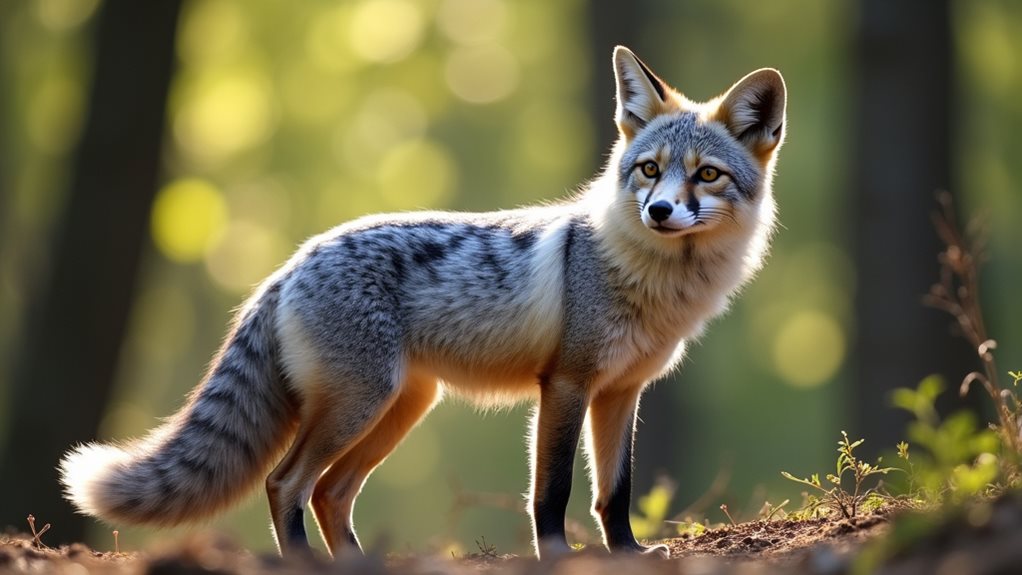
The physical transformations that occurred in Belyaev’s foxes represent one of the most fascinating aspects of his domestication experiment.
The profound physical changes in Belyaev’s foxes highlight the unexpected power of selective breeding for behavioral traits.
You’ll notice these foxes developed selective traits remarkably different from their wild ancestors, all through careful breeding practices rather than hybridization.
The most striking changes included:
- Floppy ears instead of the typical erect, alert ears of wild foxes
- Curly or wagging tails, unlike the straight brushes of their wild counterparts
- Piebald coat patterns with white patches appearing where wild foxes have solid coloring
- Shorter snouts and more rounded faces, giving them a more “puppy-like” appearance
These changes weren’t planned specifically but emerged naturally as the scientists selected for tameness. The study highlights how genetic variations in behavior can lead to unintended physical characteristics as a byproduct of selective breeding.
Isn’t it amazing how breeding for behavior accidentally created such dramatic physical differences?
Documented Cases of Alleged Hybrids
Despite widespread claims on the internet, documented cases of fox hybrids across different species remain largely unsubstantiated by scientific evidence.
You’ll often hear stories about unusual foxes that supposedly blend traits from red and gray foxes, but these claims rarely hold up under scientific scrutiny.
When you examine the documented sightings more closely, what people identify as hybrid characteristics are usually just normal variations within a single fox species.
Colors, markings, and size can vary naturally, giving the impression of hybridization where none exists.
While foxes within the same genus might occasionally interbreed in captivity, wild hybrids are exceedingly rare, if they occur at all.
Scientists who’ve investigated these claims typically find that the animals are simply unusual-looking purebreds rather than genuine hybrids. Additionally, the genetic differences between foxes and dogs prevent them from mating and producing hybrids entirely.
Ethical Considerations in Fox Breeding Programs
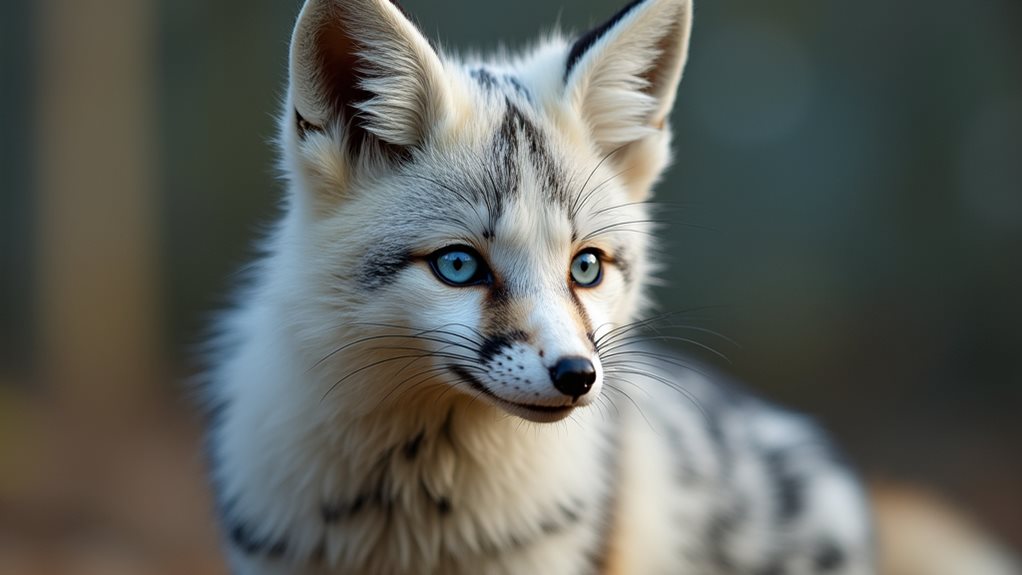
Moving beyond tales of alleged hybrids, ethical questions swirl around intentional fox breeding programs worldwide.
You’ll find that researchers and conservationists grapple with serious ethical dilemmas when foxes are bred for domestication or specific traits.
Consider these key concerns:
Ethical fox breeding raises profound questions at the intersection of scientific advancement and our moral obligations to wildlife.
- Animal welfare impacts when wild species are selectively bred for human preferences
- Habitat implications when captive-bred foxes escape into native ecosystems
- Lack of consistent breeding regulations across different countries
- Psychological effects on foxes bred for tameness or specific physical traits
When you look at famous programs like the Russian fox experiment, you’re witnessing fascinating science, but at what cost?
The debate continues to evolve as our understanding of animal cognition deepens. You might wonder if we’ve struck the right balance between scientific curiosity and ethical responsibility, especially considering the care requirements essential for a good pet fox.
The Future of Fox Domestication Research
As scientists continue exploring fox domestication, you’ll notice research shifting toward more ethical and sustainable approaches.
The field is evolving beyond the controversial breeding programs of the past, with researchers now focusing on understanding hybrid behaviors without creating new captive populations.
You might soon see technological advances like non-invasive monitoring and genetic analysis replacing outdated methods that stressed animals.
Future breeding research will likely prioritize welfare while investigating how domestication affects fox cognition, social bonds, and adaptation capabilities.
The coming decade could bring fascinating discoveries about fox intelligence and emotional capacity without compromising animal welfare. Understanding fox behavior will be crucial in ensuring that hybrid populations thrive in harmonious environments.
By studying existing domestic-wild hybrid populations in their natural environments, scientists can gather valuable data while respecting these fascinating creatures.
This balanced approach represents the thoughtful direction fox domestication research is headed.
Final Thoughts
You’ve now explored the fascinating world of fox-dog relationships, from ancient myths to cutting-edge science. Did you know that Belyaev’s domesticated foxes showed dog-like traits after just 40 generations? That’s incredibly fast in evolutionary terms! Whether you’re intrigued by the science or captivated by the legends, it’s clear that our relationship with foxes continues to evolve, raising important questions about where domestication ends and wild nature begins.