Foxes in British folklore evolved from simple predators in early texts to crafty tricksters by the 15th century. While not originally associated with supernatural abilities, foxes later gained mystical reputations through cultural exchanges. In Welsh mythology, they symbolize cunning and wisdom, often bridging the human world and Otherworld. Rural communities developed rich superstitions about fox encounters, many of which persist in modern British culture. You’ll discover how these clever creatures continue to weave their way through Britain’s cultural tapestry.
Contents
The Trickster Fox in Medieval British Literature
While many believe the fox has always been a central trickster figure in British literature, you’ll find that this clever creature actually didn’t feature prominently in medieval British texts.
Unlike continental Europe, where foxes starred in popular medieval fables, British storytellers often favored other cunning creatures like ravens and hares to deliver moral lessons.
You won’t discover many fox characters in early British manuscripts, as they gained popularity much later.
When foxes did appear, they weren’t portrayed with the complex trickster personality we recognize today. Instead, they were typically simple predators or background characters.
It wasn’t until the 15th century that fox characters began evolving into the crafty, quick-witted figures we now associate with British folklore, borrowing traits from European traditions that gradually seeped into British storytelling.

Supernatural Associations: Foxes as Omens and Shape-shifters
Despite widespread beliefs about foxes having supernatural powers in British folklore, you’d be surprised to learn that foxes weren’t traditionally associated with mystical abilities in early British traditions.
Unlike Asian cultures where fox spirits featured prominently, British foxes gained supernatural associations much later, primarily through cultural exchanges during the colonial era.
While Asia had mystical fox spirits for centuries, British foxes only acquired supernatural status during colonial exchanges.
You won’t find ancient British tales of foxes transforming into humans or possessing magical powers. The concept of shape shifting foxes became incorporated into British folklore around the 18th century, when travelers brought Eastern stories back home.
These foreign narratives gradually blended with local fox tales, creating new traditions that weren’t authentically British in origin. Today’s popular image of the mystical fox owes more to global influences than to Britain’s indigenous folklore, where foxes were primarily known for cunning rather than supernatural abilities.
The Fox in Welsh Mythology and Celtic Traditions
Unlike the recent supernatural associations, foxes actually played important roles in authentic Welsh mythology and broader Celtic traditions.
You’ll find these clever creatures woven throughout Welsh legends, often symbolizing cunning, adaptability, and wisdom.
In Celtic symbolism, the fox wasn’t just another woodland animal—it represented a bridge between our world and the Otherworld.
When you explore ancient Welsh tales, you’ll discover foxes appearing as guides, messengers, and even tricksters who could outsmart heroes and villains alike.
Some stories tell of foxes leading lost travelers to safety, while others warn of their deceptive nature.
In many cultures, including Japanese mythology, the fox also embodies shape-shifting abilities, further emphasizing its connection to mystery and transformation.
You might recognize elements of these traditional fox stories in modern Welsh culture, where the animal’s reputation for intelligence and resourcefulness continues to captivate our imagination.
Rural Superstitions and Agricultural Lore
Throughout the centuries, rural communities across Britain developed rich tapestries of fox-related superstitions and agricultural folklore.
You’ll find these beliefs deeply embedded in the countryside, where farmers and villagers lived alongside these clever creatures, viewing them with both respect and suspicion.
Rural folklore surrounding foxes often included these widely-held beliefs:
- A fox crossing your path from right to left brought misfortune to your household
- Foxes howling near a home foretold illness or death for someone inside
- Carrying a fox’s tooth would protect you from evil spirits and disease
Before organized fox hunting became formalized, many communities conducted their own rituals to ward off these crafty predators.
You’d often hear farmers sharing tales of foxes outsmarting humans, contributing to their mysterious reputation in British rural culture.
Modern Echoes: How Fox Mythology Persists in Contemporary British Culture
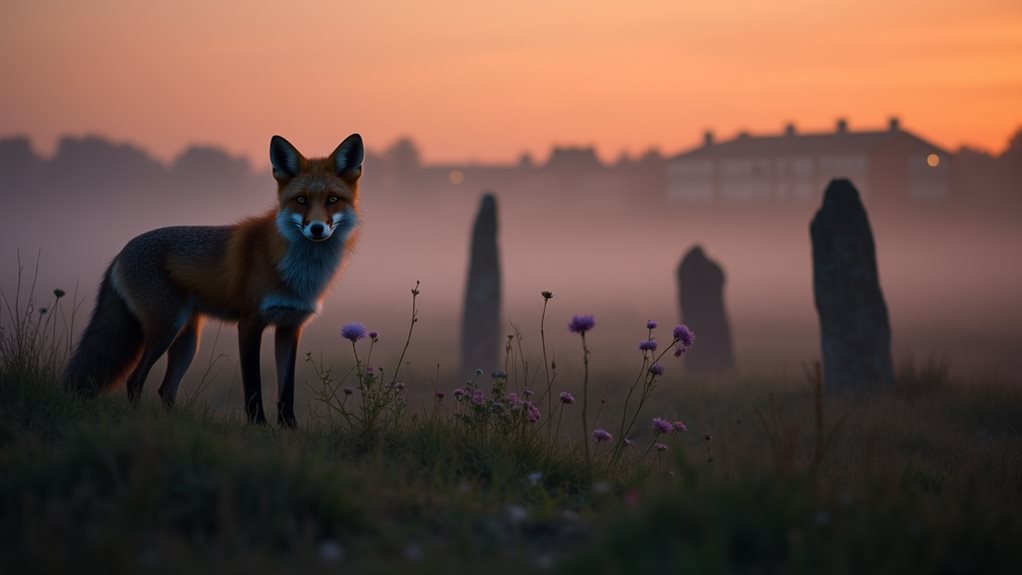
While ancient fox beliefs took root in Britain’s countryside, you’ll find these mythological echoes resonating clearly in today’s British culture.
You’ve likely encountered urban legends about foxes lurking in city parks after midnight, supposedly bringing messages from the spirit world. These stories spread rapidly through social media, creating modern folklore that blends ancient superstitions with contemporary symbolism.
You’ll notice foxes appearing prominently in British literature, fashion, and home décor, symbolizing both cleverness and untamed wildness. Their role as cunning trickster spirits reflects a deep-rooted cultural fascination that transcends generations.
The red fox remains an ambiguous figure – both celebrated and feared. When you hear neighbors discussing a fox sighting in suburban London with a mix of excitement and unease, you’re witnessing the continuation of centuries-old cultural attitudes, now adapted to our modern urban environment.
Final Thoughts
You’ve now traversed through Britain’s misty terrains where foxes dart between worlds of myth and reality. From medieval tricksters to Welsh shape-shifters, these flame-coated creatures continue to weave through our stories and imaginations. Next time you glimpse that russet flash against a green field, you’ll see more than just an animal—you’ll witness centuries of folklore bounding through the hedgerows of modern Britain, carrying ancient wisdom in its bushy tail.