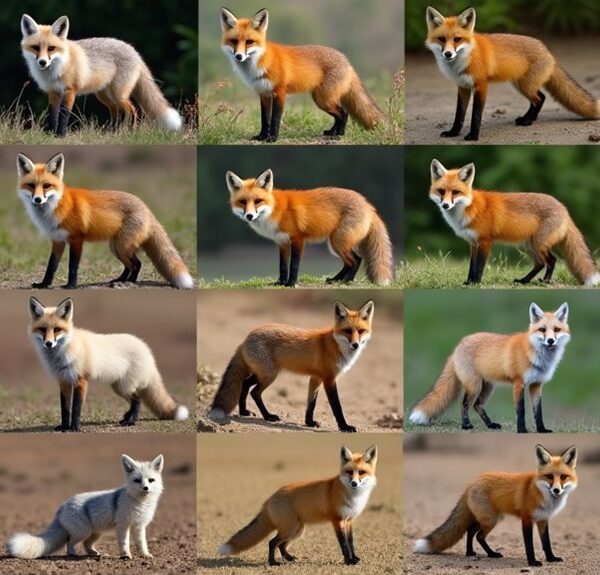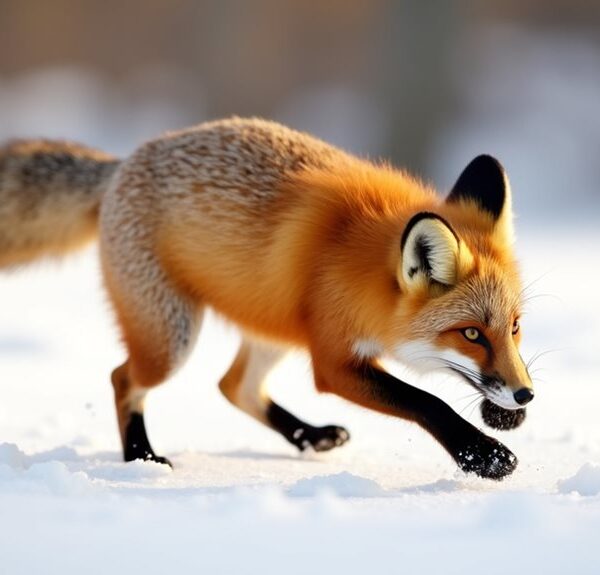
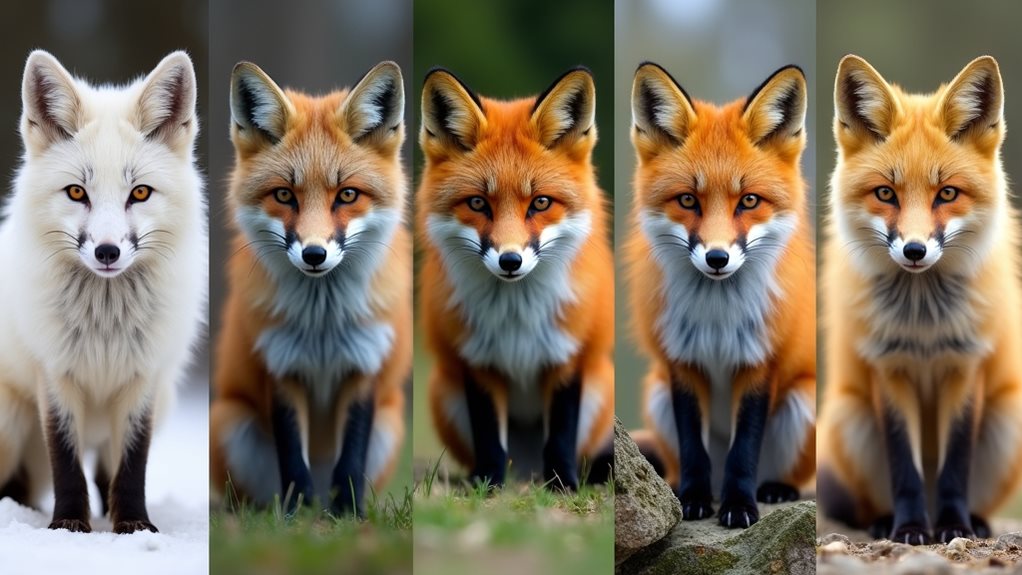
To identify fox species in the wild, you’ll need to focus on five key features. Look at facial structure and ear shape—red foxes have pointed snouts while arctic foxes sport shorter ears. Check tail characteristics, as white-tipped tails indicate red foxes. Examine paw prints, which form straighter lines than dogs. Listen for distinctive vocalizations like the red fox’s scream. Finally, note habitat preferences, as each species favors specific environments. These clues will reveal the fascinating world of fox diversity.
Contents
Facial Structure and Ear Shape
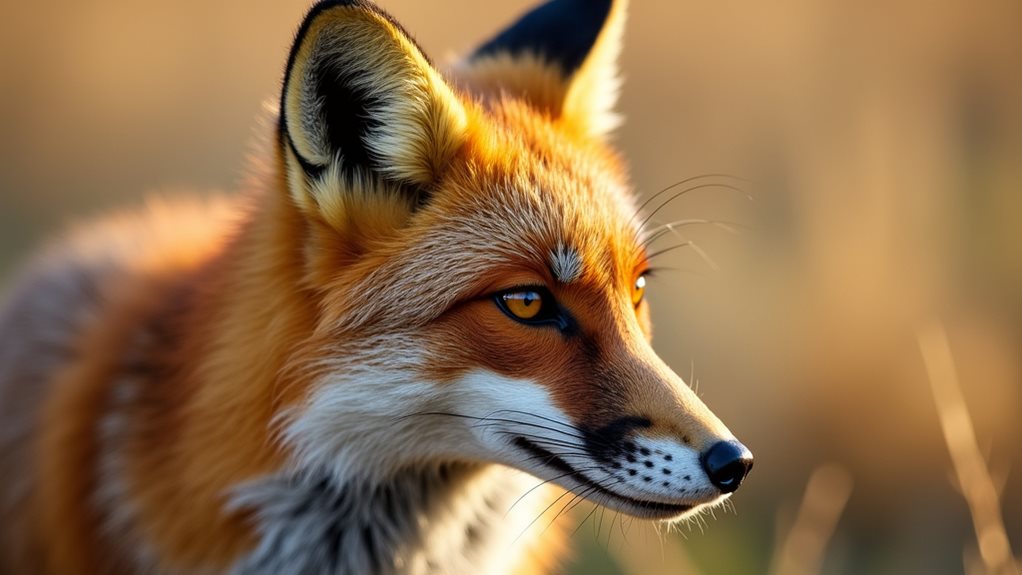
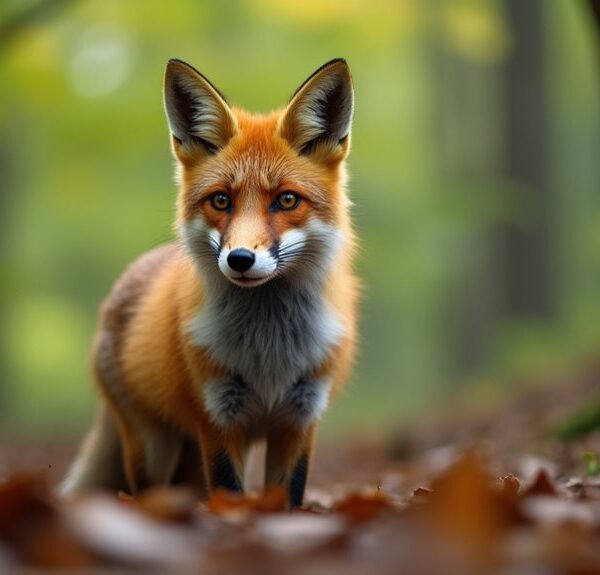
When identifying fox species in the wild, facial structure and ear shape are among the most distinctive features you’ll notice. Red foxes have long, pointed snouts with triangular ears that stand erect, while Arctic foxes display a more rounded face with shorter ears – an adaptation that minimizes heat loss in cold climates.
Facial features tell the fox’s story—pointed snouts on red foxes, rounded faces on Arctic foxes, each adapted to their environment.
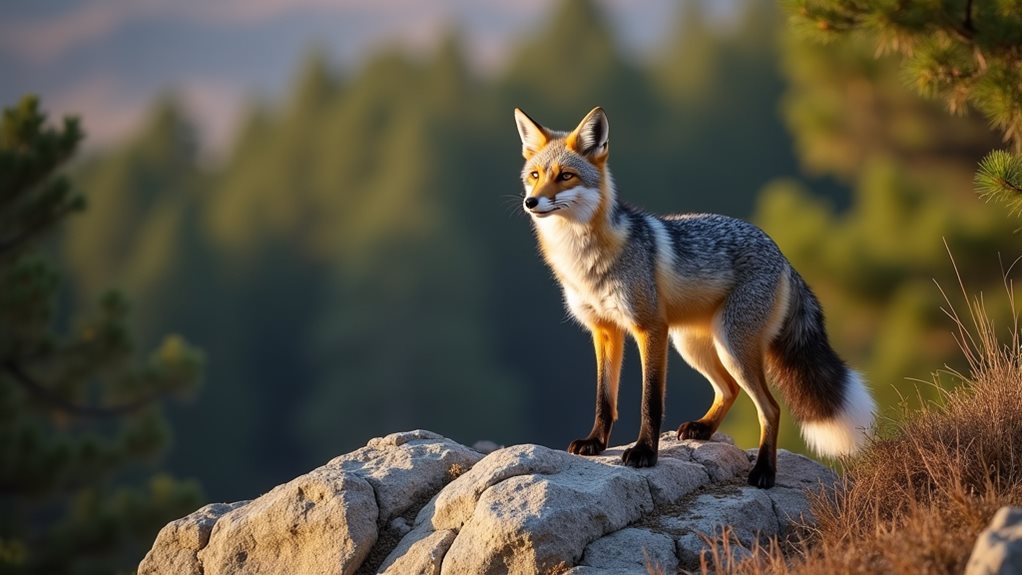
You’ll find that fur coloration often complements facial features; gray foxes have distinct black-tipped muzzles that contrast with their silver-gray coats. Additionally, many foxes have varying ear shapes that provide clues to their specific habitats and hunting techniques.
Don’t let body size fool you, though! Fennec foxes may be tiny, but their enormous ears (proportionally the largest of any fox) make them unmistakable.
When you’re out tracking, pay attention to how the fox’s muzzle tapers and the position of their eyes. These subtle differences, combined with ear shape, will help you become a fox-identifying pro in no time!
Tail Characteristics and Markings
Just as facial features provide important clues, a fox’s tail often tells the most revealing story about its species identity.
You’ll want to pay close attention to both tail length and tail color when trying to identify which fox you’ve spotted in the wild.
Red foxes sport that classic bushy tail with a distinctive white tip, while Arctic foxes have extremely fluffy tails that they’ll wrap around themselves when sleeping—nature’s perfect blanket!
Gray foxes stand out with their black-tipped tails, and kit foxes have significantly long tails relative to their small bodies.
When observing tail color, look for unique patterns.
Swift foxes display dark patches near the tail base, while fennec foxes have tails tipped with black. Additionally, the unique color variations of red foxes can provide further insight into their identification.
These tail characteristics aren’t just beautiful—they’re your best field guide when fox-watching!
Paw Print Patterns and Size
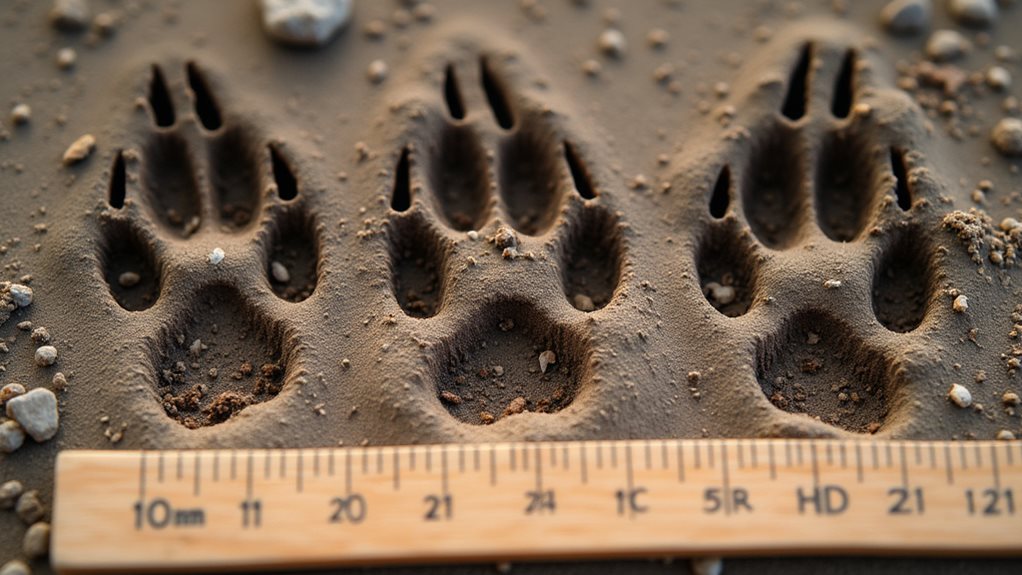
Beyond what you see in the fox itself, the story continues on the ground through their distinctive paw prints.
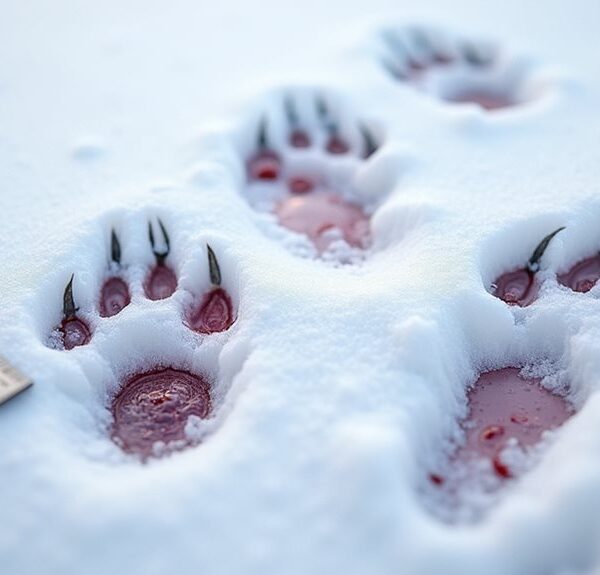
You’ll notice that fox tracks reveal fascinating details about these elusive creatures if you know what to look for. Their paw size varies considerably between species, with red foxes leaving medium-sized prints around 2 inches long, while arctic foxes create smaller, more compact impressions.
The print shape also provides valuable clues. Unlike dog prints, fox tracks show a more oval pattern with closer-set toes.
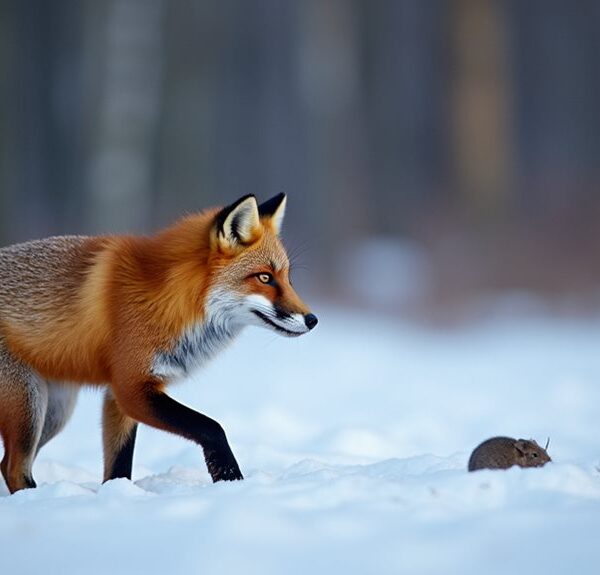
You’ll often find that the prints form a nearly straight line when the fox is walking—they’re nature’s tightrope walkers! If you’re lucky enough to spot tracks in snow or mud, check whether claw marks are visible, as this can help distinguish fox prints from those of similar-sized animals. Additionally, fox prints often indicate the diverse habitat they thrive in, giving a glimpse into their adaptability.
Vocalizations and Communication Signals
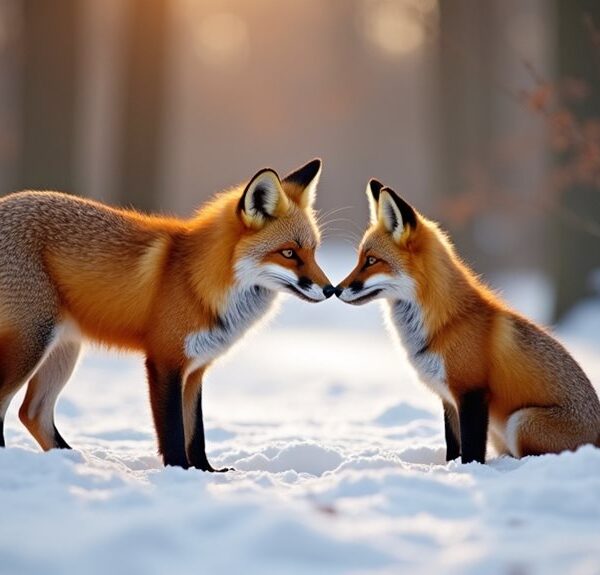
Unlike their silent paw prints in the snow, a fox’s voice carries remarkable complexity through the forest. You’ll discover that each fox species has distinctive vocal patterns, from the red fox’s haunting scream to the gray fox’s raspy bark. When you’re tracking these clever creatures, listen for their unique calls during mating season, when they’re most vocal.
Beyond sounds, foxes use sophisticated communication methods involving body language. You’ll notice they signal intentions through tail positions, ear movements, and facial expressions. Additionally, vocalizations play a crucial role in social structures, helping foxes interact and establish relationships within their packs.
They’ll mark territory with scent glands and urine, creating invisible boundaries you can’t detect but other foxes certainly can. These communication strategies help them establish territories, find mates, and warn of dangers.
Next time you’re in fox country, remember—they’re speaking all around you, even when you can’t hear them!
Habitat Preferences and Territorial Behavior
These silent communicators also create clear boundaries in the wild, establishing their homes with remarkable precision.
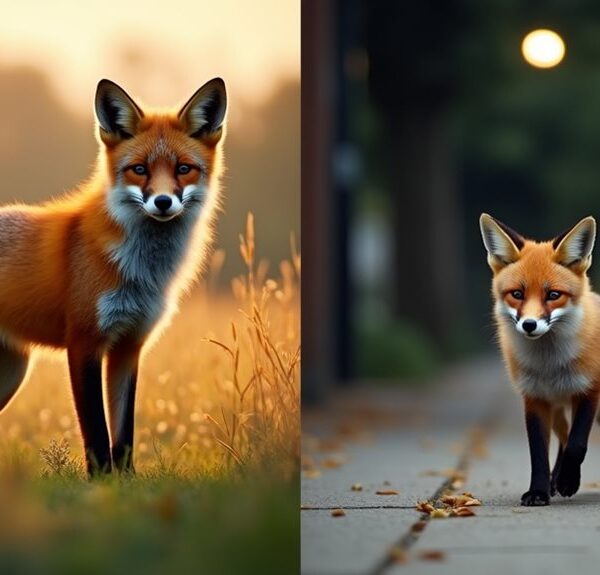
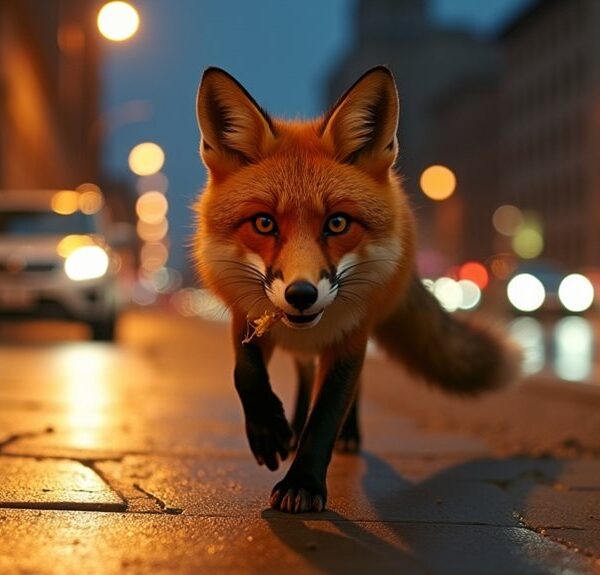
You’ll find foxes adapting to a surprising variety of habitat types – from dense forests and open grasslands to urban neighborhoods where they’ve learned to thrive alongside humans. They’re not picky roommates!
When it comes to territorial disputes, foxes don’t mess around. They’ll mark boundaries with urine and scat, creating invisible “No Trespassing” signs that other foxes can clearly understand.
Their territories typically range from 1-10 square miles, depending on resource availability and population density.
If you’re hoping to spot a fox, visit the edges where habitats meet – these boundary zones often serve as prime real estate in the fox world.
Dawn and dusk offer your best chances of catching these territorial masters in action. Urban red foxes demonstrate adaptability to human-altered landscapes, showcasing their ability to thrive in various environments.
Final Thoughts
You’re now equipped to identify fox species with confidence! Isn’t it fascinating that just as you’ve learned these identification techniques, fox sightings often increase? Whether you’re spotting distinctive facial features or listening for unique calls, you’ve got the skills to recognize these clever creatures. Remember, each species leaves its own special signature in nature. Next time you’re outdoors, you’ll surprise yourself with how quickly you can identify your foxy neighbors!