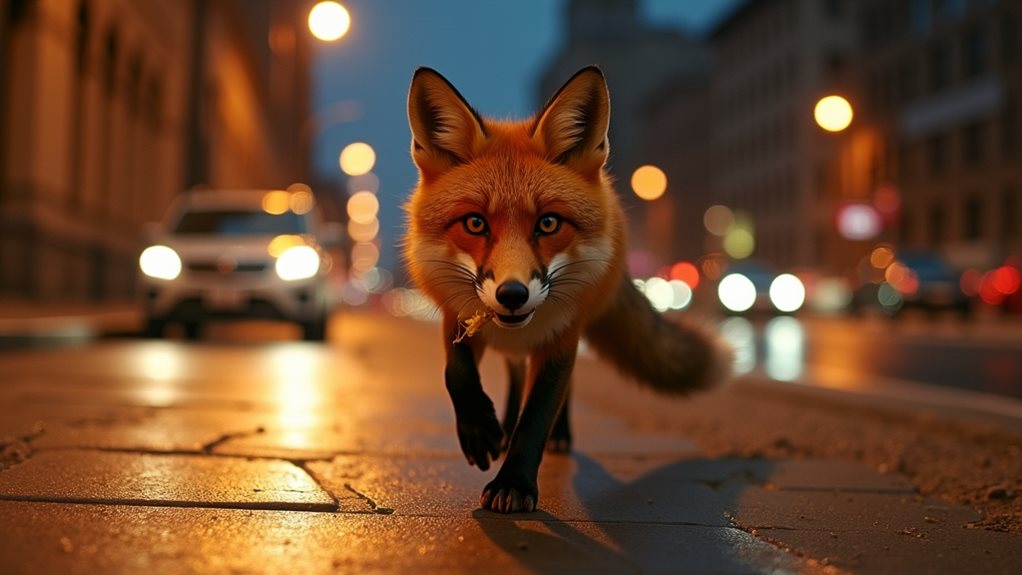
City foxes thrive by cleverly adapting to your urban environment. They’ve shrunk their territories to just a few blocks, mastering the art of dumpster dining and timing their visits to restaurants after closing. You’ll find them repurposing parking garages and building cavities as cozy dens, communicating with higher-pitched calls to overcome city noise. Their problem-solving skills help them crack open garbage containers and remember where you’ve left pet food. Their remarkable urban evolution continues right outside your window.
Contents
- 1 The Evolution of Urban Fox Territories
- 2 Diet Adaptations: From Forest to Fast Food
- 3 Shelter Innovations in the Concrete Jungle
- 4 Population Dynamics: Why Cities Support More Foxes
- 5 Urban Fox Behavior Changes and Social Structures
- 6 Problem-Solving Skills Unique to City Foxes
- 7 Human-Fox Relationships: Coexistence Challenges
- 8 The Future of Urban Foxes in Expanding Metropolises
- 9 Final Thoughts
The Evolution of Urban Fox Territories
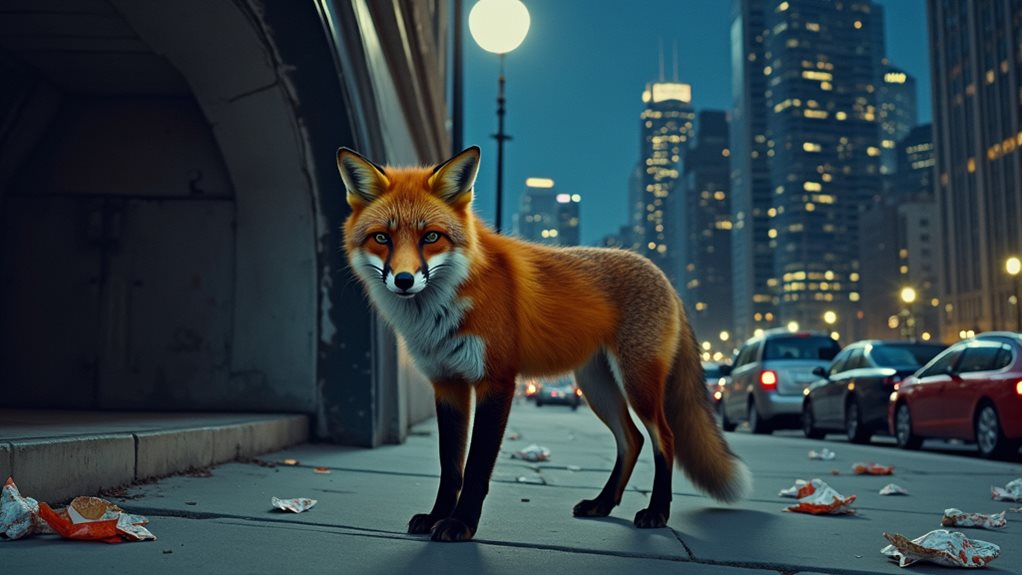
While rural foxes typically need large hunting areas to survive, urban foxes have completely rewritten the rulebook. You’ll find these clever creatures adapting to city life by claiming territories just a fraction of the size their country cousins require.
They’re masters of urban adaptability, turning small parks, residential gardens, and even industrial areas into their personal kingdoms.
What’s fascinating is how their territorial expansion happens right under our noses! A single family of foxes might control just a few blocks in a densely populated neighborhood, compared to several miles in the countryside.
They’ve learned to maneuver through our human infrastructure, using storm drains as highways and abandoned buildings as dens. This behavioral adaptability allows them to thrive despite the challenges of urban living.
Next time you spot a fox trotting confidently down your street, remember—you’re witnessing an evolutionary success story in real-time!
Diet Adaptations: From Forest to Fast Food
Urban foxes don’t just adapt their living spaces—they’ve completely transformed their eating habits too!
If you’ve ever spotted a fox darting through city streets, you’re witnessing a master of dietary flexibility in action.
These clever creatures have developed unique scavenging techniques that help them thrive where their rural cousins might struggle. You’ll find them expertly timing their visits to restaurant dumpsters after closing hours or snatching discarded fast food from park bins.
They’ve learned to recognize the sound of packaging that might contain food scraps!
While their woodland relatives hunt mice and rabbits, city foxes supplement their diets with pizza crusts, chicken bones, and even pet food left in gardens.
Urban environments provide diverse food options for foxes, which further enhances their adaptability.
Their adaptable appetites are key to their urban success story.
Shelter Innovations in the Concrete Jungle
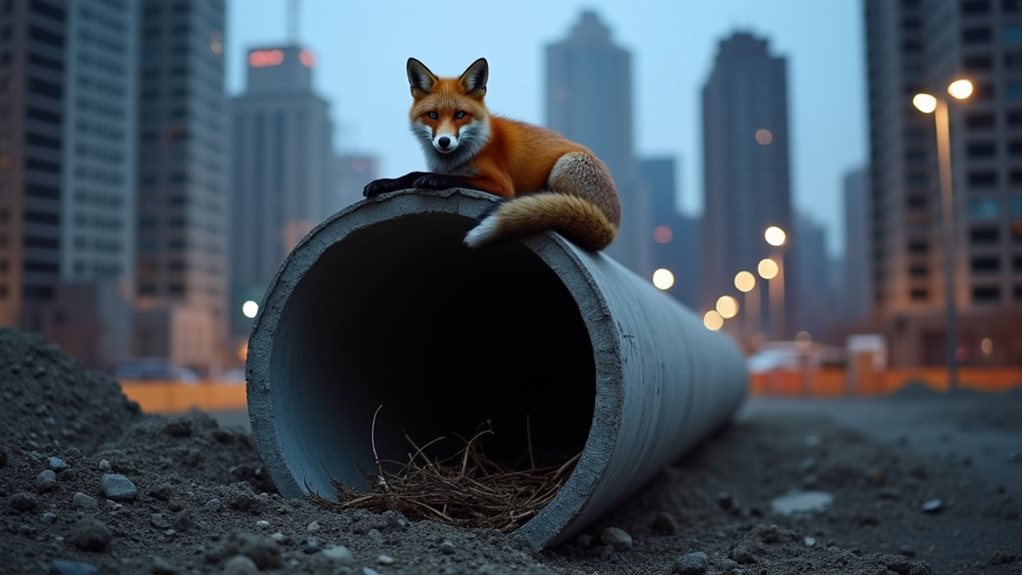
You’ll be amazed at how foxes have reimagined urban structures as their personal real estate market. These clever creatures transform parking garage corners into cozy dens, complete with hidden entrances and emergency exits for quick getaways. They’ve also mastered the art of converting building cavities—spaces between walls, under porches, or abandoned utility boxes—into snug homes where they can raise their kits away from human disturbances. This adaptability is crucial as it allows them to thrive in urban ecosystems, reflecting their resilience as strong urban survivors.
Parking Garage Dens
Concrete mazes of multi-level parking garages have become surprising sanctuaries for city foxes seeking shelter from the urban bustle. You mightn’t notice them, but these clever creatures have mastered den construction in these man-made structures.
They’ll often choose abandoned corners or rarely accessed maintenance areas, where your car probably hasn’t ventured in years.
These parking garage hideaways offer foxes consistent temperatures year-round and protection from rain, snow, and predators. They’ve adapted brilliantly, using discarded materials like cardboard and fabric scraps to line their dens.
What’s fascinating is how they’ll strategically select levels that balance safety with easy access to exit routes. Urban foxes, like red foxes, have developed exceptional strategies to thrive in diverse urban environments.
Next time you’re parking downtown, listen carefully—you might hear the pitter-patter of fox kits playing just beyond that concrete pillar!
Building Cavity Homes
While humans create towering skyscrapers for business and living, foxes have discovered their own real estate opportunities in the forgotten spaces between walls, beneath foundations, and inside building cavities.
You might be surprised to find that urban foxes are quite the architects, fashioning cozy urban dens in the narrow cavities between buildings or in the gaps of crumbling infrastructure.
They’ll drag nesting materials—like discarded clothing, paper, and even your garden mulch—into these unlikely homes. Unlike their rural cousins, city foxes don’t need to dig extensive burrows when our buildings provide ready-made shelter.
These clever creatures have adapted to use our architectural oversights as their advantage, demonstrating their impressive adaptability to urban environments.
Next time you hear scratching in your walls, it mightn’t be mice—you could be hosting a family of resourceful urban foxes!
Population Dynamics: Why Cities Support More Foxes
You’ll find more foxes in cities than rural areas, thanks to several key advantages urban environments offer these clever canines.
Year-round access to garbage, discarded food, and small urban wildlife provides them with a constant buffet, while the absence of their natural predators lets fox populations flourish without traditional threats.
City foxes have also adapted their breeding patterns to urban rhythms, often producing larger litters when conditions are favorable and raising their young in surprisingly small territories compared to their country cousins. Moreover, urban foxes exhibit behavioral flexibility that allows them to thrive in changing environments.
Food Abundance Year-Round
Urban foxes have adapted to city life largely thanks to the constant availability of food throughout the year. Unlike their rural cousins who face seasonal scarcity, city foxes enjoy a buffet of options no matter the season.
You’ll often spot them exploring garbage bins, restaurant dumpsters, and garden compost piles with their clever scavenging habits.
These resourceful creatures have developed quite the palate for human leftovers! They’ll happily munch on discarded fast food, pet food left outdoors, and even fallen fruit from backyard trees.
Their diverse food sources include everything from rodents (which thrive around human settlements) to bird feeders that well-meaning residents keep stocked.
This constant food supply means urban foxes typically maintain healthier weights and can support larger families than their country relatives. In fact, urban foxes derive about 45% of their diet from human food, showcasing their adaptability to city living.
Reduced Predator Pressures
This abundant food supply isn’t the only factor helping fox populations flourish in cities—they also face markedly fewer natural predators compared to their countryside cousins.
In their natural habitats, foxes must constantly watch for wolves, coyotes, and eagles, but these threats are largely absent in urban settings. You’ll rarely spot a wolf prowling downtown!
This predator avoidance advantage creates a safer urban habitat where foxes can focus less on survival and more on reproduction.
They’ve mastered the art of living alongside humans, who generally pose little direct threat. While country foxes might lose up to 70% of their young to predation, city fox kits have much higher survival rates.
It’s no wonder you’re spotting more bushy tails around your neighborhood—cities have accidentally created predator-free sanctuaries where these clever creatures can thrive. Additionally, the remarkable adaptability of urban fox species allows them to successfully inhabit diverse environments and secure food sources.
Adaptive Breeding Patterns
While traditional wildlife may struggle to adapt to human development, city foxes have evolved remarkable breeding patterns that capitalize on urban advantages.
You’ll notice these clever creatures adjust their mating strategies to thrive where other animals falter. Their reproductive cycles have shifted to align with urban rhythms, often producing larger litters than their rural cousins.
Have you ever spotted fox cubs playing near abandoned lots or quiet parks? Urban foxes cleverly choose den sites near reliable food sources like restaurant districts or residential areas with regular garbage collection.
They’ve learned that city living means more consistent resources year-round, allowing them to focus more energy on raising their young. This adaptive approach to breeding guarantees their population remains stable despite the challenges of city life, proving nature’s incredible resilience. The abundance of food sources from human leftovers has played a crucial role in their reproductive success, allowing them to thrive in urban landscapes.
Urban Fox Behavior Changes and Social Structures
As foxes adapt to city life, their behavior undergoes fascinating transformations that you’ll notice if you’re lucky enough to observe them.
Urban fox socialization differs dramatically from their rural cousins—they’ve become bolder around humans and less territorial overall. You might spot them traveling in smaller family groups, efficiently maneuvering through your neighborhood’s unique layout.
Their communication has evolved too. City foxes use higher-pitched calls to be heard above traffic noise, and they’ve developed more complex barking patterns to maintain contact in fragmented urban territories.
They’re incredibly adaptable, often shifting to nocturnal schedules to avoid human activity while developing remarkable tolerance for our presence. This behavioral plasticity explains why these clever creatures continue to thrive right under your nose in bustling metropolitan areas. Additionally, their territorial dynamics lead neighboring groups to avoid conflicts, which helps sustain their populations in urban settings.
Problem-Solving Skills Unique to City Foxes
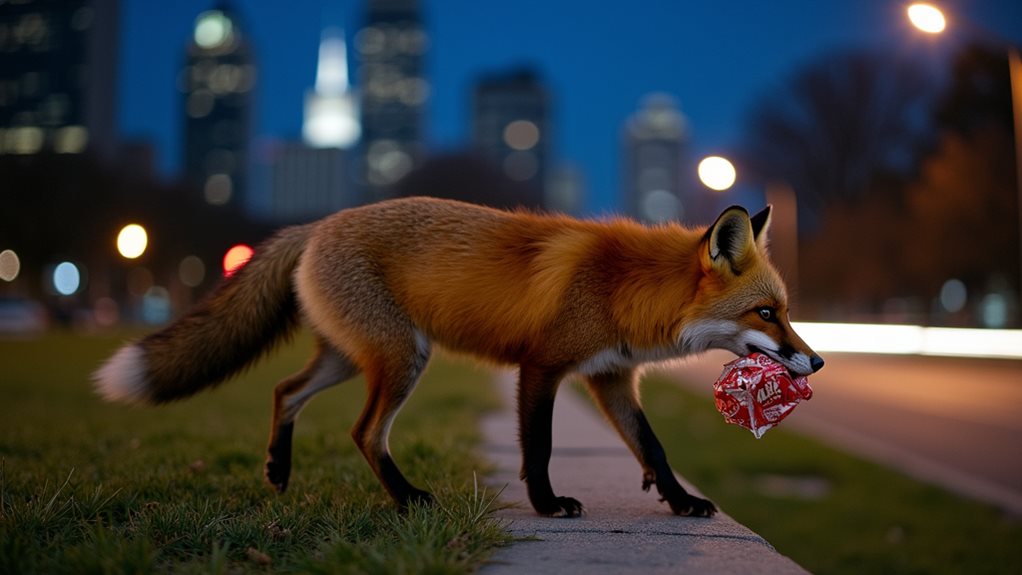
Urban fox intelligence emerges most vividly in their remarkable problem-solving abilities, which you’ll find nowhere in their rural counterparts.
They’ve mastered the art of opening complex garbage containers, maneuvering through busy traffic patterns, and creating hidden dens in unlikely urban spaces. Their scavenging strategies reveal sophisticated urban intelligence, as they time their foraging to match restaurant closing hours and garbage collection schedules.
You might notice a city fox remembering exactly which houses leave pet food outdoors or which yards have fruit trees.
They’ve even been observed watching humans enter keypad codes, later attempting to mimic these actions! Unlike their woodland relatives, urban foxes quickly learn which humans might offer food and which to avoid, adapting their behavior accordingly in this complex human-fox relationship.
Human-Fox Relationships: Coexistence Challenges
Despite the increasing presence of foxes in our neighborhoods, human-fox relationships remain complex and often challenging.
You’ve likely spotted these clever creatures darting across your street at dusk or heard their distinctive calls at night. Urban wildlife experts suggest that most negative encounters stem from misunderstandings about fox behavior.
When you leave pet food outside or don’t secure your garbage bins, you’re inadvertently inviting foxes into your space. This human interaction can create dependency issues that aren’t healthy for either party.
Remember, foxes aren’t pets—they’re wild animals adapting to our concrete jungle. With some simple adjustments to your habits, like proper waste management and keeping a respectful distance, you can contribute to a healthier coexistence.
After all, these russet neighbors were here long before our cities expanded!
The Future of Urban Foxes in Expanding Metropolises
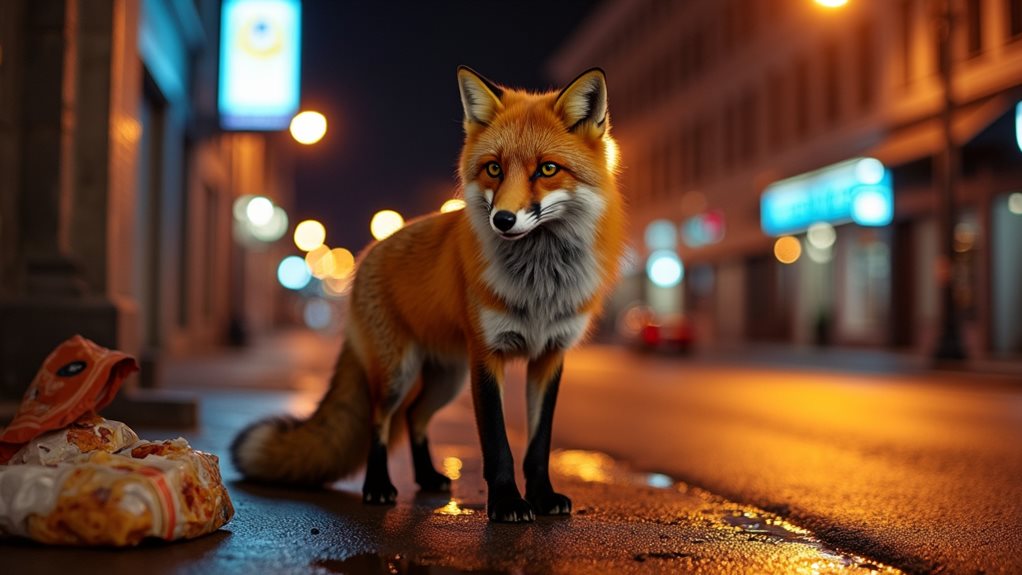
Looking ahead, the future for our city-dwelling foxes appears both promising and precarious as metropolises continue to expand.
You’ll notice these adaptable creatures evolving alongside our changing urban environments, but they’ll face notable future challenges.
What’s in store for these clever animals? Consider these key factors:
- Habitat fragmentation – As cities grow, green spaces become smaller and more isolated, forcing foxes to traverse increasingly complex territories.
- Human-wildlife conflicts – More interactions mean we’ll need better education and management strategies.
- Climate adaptation – Rising temperatures and extreme weather events will test foxes’ remarkable adaptability.
You’re witnessing an extraordinary evolutionary experiment in real-time.
The resilience of urban foxes reminds us that with thoughtful urban planning and compassion, wildlife can thrive alongside humans in our shared spaces.
Final Thoughts
You’ve seen how city foxes have evolved from forest dwellers to urban masterminds. Like chess players adapting to a new board, they’ve reshaped their hunting, housing, and social skills to thrive among us. While challenges remain, these adaptable creatures aren’t just surviving—they’re flourishing. As our cities grow, so will these clever neighbors, reminding us that wildlife doesn’t just endure human expansion—it learns to call it home too.