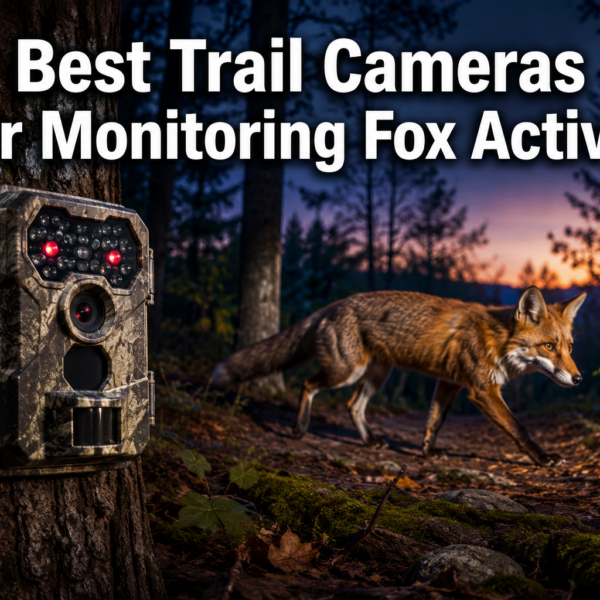

Scientists track urban foxes using several advanced technologies that have replaced traditional observation. You’ll find researchers utilizing GPS collars that transmit location updates every 15 minutes, lightweight radio collars weighing as little as 30 grams, and noninvasive hair traps for DNA collection. They also analyze scat to understand dietary habits and territory boundaries, while engaging communities to report fox sightings. These methods reveal how foxes adapt to city life, maintaining smaller territories than their rural cousins.
The Evolution of Urban Fox Tracking Methods

While foxes have wandered city streets for centuries, our methods for tracking these clever creatures have dramatically evolved over time.
You’ll find today’s urban ecologists using sophisticated GPS collars instead of the simple observation techniques of the past. These modern tools help researchers understand how foxes maneuver through our concrete jungles.
The study of behavioral adaptation has revealed fascinating insights into how these auburn opportunists have modified their habits to thrive alongside humans.
Urban foxes aren’t just surviving—they’re strategically adapting their behaviors to capitalize on human presence.
You’ve probably noticed foxes becoming bolder, perhaps even raiding your garbage bins at dusk! This isn’t just random behavior – it’s a calculated adjustment to urban rhythms. As researchers analyze urban fox populations, they uncover how these animals adapt their lifestyles to succeed in human-dominated environments.
When you spot a fox with a collar next time, remember there’s a dedicated scientist tracking its movements, piecing together the complex puzzle of urban wildlife survival in our shared spaces.

Smart GPS Tracking Cat Collar with Secure Tracker Integration Our premium collar combines GPS technology with Bluetooth tracker compatibility, creating the ultimate feline safety solution. The built-in tracker holder transforms this into a fully functional smart collar that works seamlessly for iOS Findmy app. Featuring an adjustable 7.5-12.6" stretchable nylon band, it comfortably fits small cats while keeping their tracking device securely in place.

ANDROID ONLY – GOOGLE FIND HUB: Designed exclusively for compatible Android phones. Add and manage the cat tracker through Google Find Hub / Find My Device. Not compatible with iPhone or Apple Find My.

NEW CAT 6 MINI: Our most cat-friendly tracker yet, integrated collar with safety release and LEDs. Built to last with battery life up to 7 days, for cats weighing 3-18 lbs
Radio Collars: The Foundation of Fox Monitoring
You’ll find radio collars at the heart of urban fox research, where scientists carefully balance signal range with the collar’s weight to avoid hampering the animal’s movement.
These tracking devices transmit location data that can reveal fascinating insights into fox territories, hunting patterns, and social behaviors.
The battery life of these collars presents a constant challenge, as researchers must maximize monitoring duration while minimizing the need to recapture these clever, often elusive creatures.
Signal Transmission Range
When tracking urban foxes with radio collars, the signal transmission range becomes a crucial factor in research success. You’ll typically get between 0.5 to 2 miles of range in urban environments, though this varies dramatically based on local conditions. Buildings, power lines, and even weather can create signal interference that limits your tracking capabilities. Urban environments present unique transmission obstacles that you won’t find in wilderness studies. That concrete parking garage? It might completely block your signal. The downtown area with tall buildings? Your range could drop to just a few hundred feet. You’ll need to position multiple receivers throughout the city to maintain consistent monitoring. Scientists often develop creative workarounds, like mounting receivers on rooftops or vehicles to improve coverage. With proper planning, you can still collect valuable data despite urban challenges. Moreover, the adaptation strategies of urban foxes underscore the necessity for effective tracking methods to understand their behavior in changing environments.
Battery Life Considerations
Battery life represents one of the most critical factors in urban fox tracking programs, as even the most sophisticated collar becomes useless once its power depletes.
You’ll find researchers constantly balancing data collection needs with power management strategies to extend monitoring periods.
Modern fox tracking collars incorporate several battery efficiency innovations:
- Solar panels that supplement main batteries, capturing energy even under urban tree canopies
- Motion-activated transmission systems that conserve power when foxes are resting
- Programmable duty cycles allowing researchers to customize when collars actively transmit
When you’re tracking urban foxes, these power management features mean the difference between a six-month study and a multi-year observation period. Scientists can now follow individual foxes through multiple seasons, giving you unprecedented insights into how these clever animals adapt to city living, ultimately contributing to understanding their dietary adjustments in urban environments.
Collar Weight Limitations
Although technological advances continue to impress wildlife researchers, the weight of tracking collars remains a critical concern when monitoring urban foxes.
You’ll find that modern collar materials like lightweight polymers and miniaturized electronics have revolutionized tracking capabilities while prioritizing animal welfare. Scientists now follow the “3% rule” – guaranteeing the collar weighs less than 3% of the fox’s body mass to prevent mobility issues or neck strain.
You might be surprised to learn that today’s tracking collars weigh as little as 30 grams, about the same as five quarters! This dramatic weight reduction wasn’t always possible.
Early collars from the 1980s could tip the scales at over 200 grams, often causing discomfort for the animals. By keeping collars light, researchers can collect reliable data while guaranteeing foxes maintain their natural behaviors. As urban populations face health risks from pollutants, these lightweight collars allow for more consistent monitoring of their well-being.
GPS Technology: Following Fox Movements in Real-Time
Since the early 2000s, GPS tracking collars have revolutionized how researchers monitor urban foxes, allowing scientists to collect unprecedented data about their secret lives.
You’d be amazed at how these tiny devices have transformed urban wildlife conservation efforts! Modern GPS collars weigh less than 3% of an adult fox’s body weight, guaranteeing the animal’s movements aren’t restricted.
The technology offers incredible insights into fox behavior:
Cutting-edge GPS collar technology reveals the hidden world of urban foxes in unprecedented detail.
- Real-time location updates sent to researchers’ computers every 15 minutes
- Battery life extending up to 18 months, providing long-term movement patterns
- Temperature and activity sensors that indicate when foxes are hunting or resting
You can now visualize a fox’s nightly trek through your neighborhood, revealing how these adaptable creatures traverse our urban environment while most of us sleep. This research not only aids in understanding urban fox behavior but also enhances public perception and coexistence strategies.
Camera Traps: Capturing Fox Behavior Unnoticed
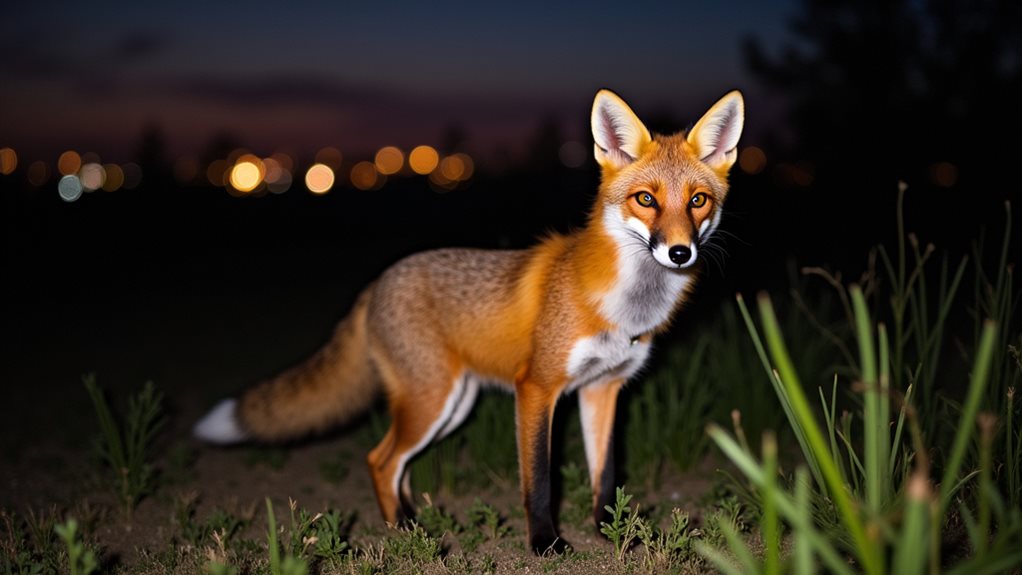
While GPS tracking shows us where foxes go, camera traps reveal what they actually do when they think no one’s watching. You’d be amazed at how these hidden cameras have transformed urban ecology research!
Scientists place motion-activated cameras in strategic locations—near garbage bins, garden sheds, or park edges—to capture foxes’ natural behaviors without human interference.
These cameras have documented fascinating behavioral adaptations: foxes playing with discarded toys, using pedestrian crossings, and even developing unique hunting techniques for city environments.
Sometimes, you’ll spot a fox staring directly into the lens, seemingly caught red-handed in its nightly adventures!
The footage helps researchers understand how these clever animals adapt to urban challenges, from maneuvering through traffic to finding new food sources.
In fact, the abundance of food sources from human leftovers plays a significant role in their thriving populations.
It’s like having a secret window into the private lives of your wild neighbors.
Genetic Sampling and DNA Analysis Techniques
You’ll be amazed at how scientists collect fox DNA without ever touching the animals, using specially designed hair traps that gently snag fur samples when foxes pass by.
These noninvasive techniques allow researchers to identify individual foxes, track family relationships, and monitor population health through simple hair samples.
Fecal DNA profiling takes this a step further, as scientists can analyze droppings found throughout urban areas to map territories, determine diet patterns, and even identify which foxes are thriving in different city neighborhoods.
Noninvasive Hair Collection
Modern wildlife researchers have revolutionized fox tracking through noninvasive hair collection methods that don’t require capturing or disturbing the animals.
You’ll find these hair sampling techniques particularly valuable in urban environments where foxes have adapted to human presence. When you’re studying urban ecosystem impacts, getting DNA samples without stressing the animals provides more accurate behavioral data.
Researchers use three primary collection methods:
- Hair snares with scent lures that entice foxes to rub against collection surfaces
- Modified feeding stations designed to gently collect hair while foxes eat
- Strategic placement of adhesive strips in known fox pathways or den entrances
You’d be amazed how much information scientists can gather from just a few strands of fur! These techniques have transformed our understanding of how urban foxes traverse city terrains while minimizing human interference in their daily lives. Additionally, the adaptability of fox species, such as the Red fox, highlights their resilience in urban settings.
Fecal DNA Profiling
Fecal DNA profiling stands at the forefront of urban fox research, complementing hair collection methods with even less intrusive sampling opportunities.
You’ll find researchers enthusiastic about collecting fox droppings around cities, carefully preserving these samples for lab analysis. It’s not the most glamorous job, but it’s incredibly effective!
When scientists extract DNA from these samples, they’re uncovering fascinating details about fox populations without ever disturbing the animals.
This approach to urban ecology reveals family relationships, population size, and even dietary habits—all from what foxes leave behind on their nightly rounds. Additionally, studying these fecal samples provides insights into their foraging behavior in urban environments, further enhancing our understanding of their adaptability.
You might wrinkle your nose at the thought, but fecal analysis has revolutionized how we perceive these adaptable creatures living among us.
Next time you spot fox scat in your neighborhood, remember it’s a goldmine of information for dedicated researchers!
Citizen Science: How Public Observations Enhance Research

While professional researchers form the backbone of urban fox studies, everyday citizens have become crucial partners in tracking these elusive creatures throughout cities worldwide.
You’ll find community involvement has revolutionized how scientists gather data, especially in densely populated areas where foxes have adapted to human presence. Public engagement platforms now allow you to contribute valuable observations through user-friendly apps and websites.
- You can submit fox sightings with photos, recording time and location data that researchers couldn’t possibly collect alone.
- Your neighborhood knowledge helps identify den locations and territory boundaries that might otherwise go unnoticed.
- By participating in seasonal counting events, you’re helping track population changes over time.
This collaborative approach bridges the gap between scientific research and public interest, creating a more thorough understanding of urban fox behavior and movement patterns. Additionally, your contributions can assist in recognizing the effects of habitat fragmentation on urban fox populations, aiding in conservation efforts.
Dietary Analysis and Scat Collection Studies
One of the most revealing methods in urban fox research involves examining what these adaptable creatures eat throughout the city environment.
When you’re walking through your local park, you might actually be stepping near valuable scientific evidence! Researchers collect fox scat (that’s poop, if we’re being casual) to analyze their dietary preferences and urban survival strategies.
You’d be surprised what scientists can learn from proper scat identification. Fox droppings contain undigested fur, feathers, bones, and even artificial materials that tell a fascinating story about how these clever animals adapt to city living. Urban foxes’ diets, which include a significant portion of human food waste, reflect their remarkable ability to thrive in human-altered landscapes.
Urban Fox Territories and Human Interaction Patterns

Urban fox territories tell us just as much about these adaptable creatures as their dining habits do.
You’ll find that foxes in cities maintain smaller territories than their rural cousins—a fascinating example of urban adaptation. Researchers use territory mapping techniques to track how foxes traverse our concrete jungles, revealing they’re quite comfortable living alongside us!
When scientists study fox territories, they typically discover:
- Territories ranging from 25-40 acres in urban areas, compared to 500+ acres in rural settings
- Boundary markings using urine and feces that create invisible “fox maps” across neighborhoods
- Den locations strategically placed near reliable food sources like restaurant districts
You’ll be amazed how these clever animals have rewritten their territorial rules to thrive in our bustling cities, often without most residents even noticing their presence.
Final Thoughts
As you walk your neighborhood streets at dusk, a russet shadow might dart across your path. Thanks to today’s tracking methods, that urban fox isn’t just a fleeting mystery anymore. Scientists now follow these adaptable creatures through your concrete jungle with tools from GPS collars to DNA tests. Next time you spot those glowing eyes in your garden, remember: you’re witnessing wildlife that’s no longer invisible to science, but carefully mapped and understood.