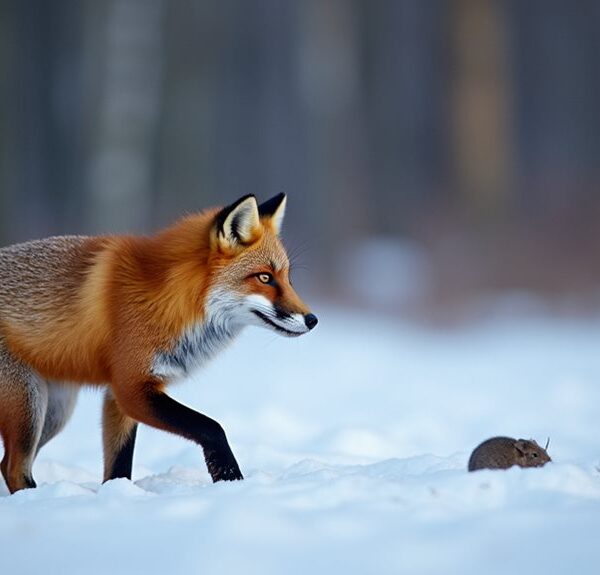
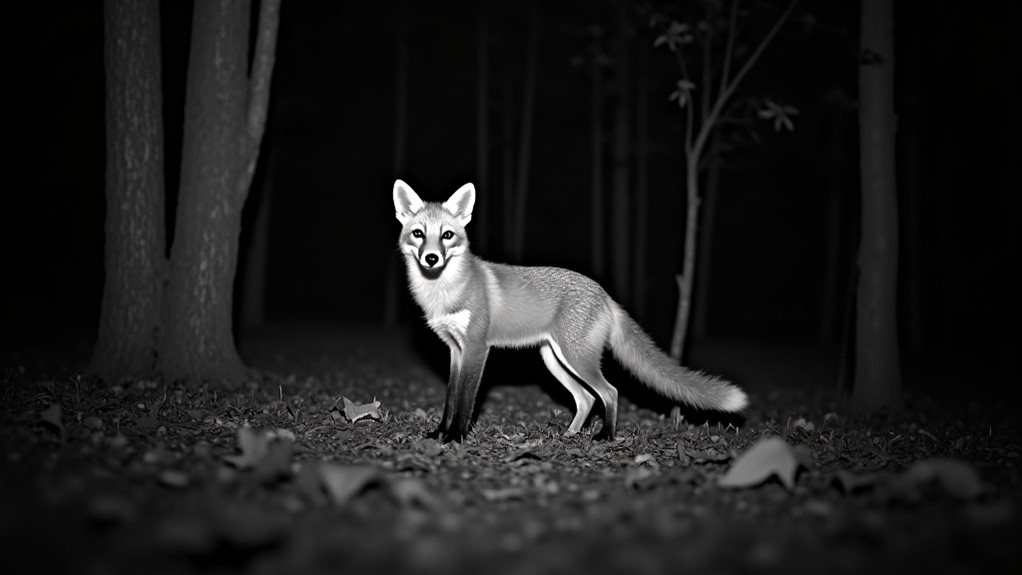
Camera traps have revolutionized fox population research by providing non-invasive 24/7 monitoring without disturbing natural behaviors. You’ll get authentic footage of territorial patterns, social interactions, and behavioral adaptations while respecting wildlife ethics. These cost-effective devices have driven conservation success stories like California’s island fox recovery from just 15 to over 2,000 individuals. With emerging AI technology identifying individual foxes by facial patterns, the future of wildlife surveillance holds even more promising developments.
Contents
- 1 The Evolution of Wildlife Monitoring Technology
- 2 Key Benefits of Camera Traps for Fox Research
- 3 Setting Up Effective Camera Trap Networks
- 4 Analyzing and Interpreting Fox Behavior Data
- 5 Conservation Applications and Success Stories
- 6 Future Directions in Digital Wildlife Surveillance
- 7 Final Thoughts
The Evolution of Wildlife Monitoring Technology
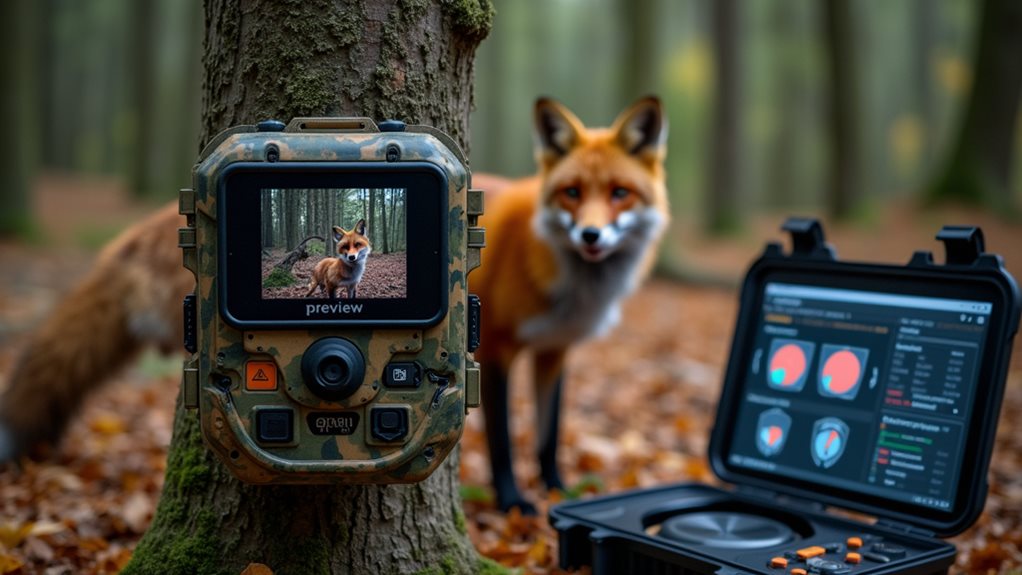
While humans have tracked animals for thousands of years, the methods we’ve used have changed dramatically. You’d barely recognize today’s wildlife monitoring compared to the footprint tracking of our ancestors!
Modern technology advancements have revolutionized how you can observe foxes and other wildlife without disturbing their natural behaviors. Camera traps now let you peek into their world remotely, capturing moments that were once impossible to document.
Technology has gifted us a window into wild fox lives without disturbing their natural rhythms or behaviors.
These devices have transformed our understanding while prioritizing wildlife ethics. For instance, researchers can now monitor the distribution and habitat of fox species without causing stress to the animals.
You’re living in an exciting time when researchers can collect data without stressing animals or altering their habits. The shift from invasive methods to digital observation means you’re getting more authentic insights into fox populations than ever before.
Isn’t it amazing how far we’ve come?
Key Benefits of Camera Traps for Fox Research
You’ll find camera traps offer remarkable benefits for fox population studies, starting with their minimally invasive nature that doesn’t disturb natural behaviors.
These versatile devices work tirelessly, capturing 24/7 documentation of fox activities that researchers could never observe manually.
Perhaps most importantly, camera traps provide a cost-effective solution for tracking multiple fox species across diverse habitats, giving researchers more data for their limited conservation budgets.
Minimally Invasive Monitoring
As wildlife researchers seek better ways to study fox populations, camera traps have emerged as one of the most valuable tools in our fieldwork arsenal.
Unlike traditional tracking methods that might disturb natural behaviors, camera traps let you observe foxes without human presence affecting their activities.
You’ll appreciate how these devices respect ethical considerations by eliminating the need for capture or handling. They’re silent sentinels in the forest, collecting data 24/7 without stressing the animals.
Plus, they’ve opened doors for community involvement—you don’t need a biology degree to help monitor local fox populations!
When you’re trying to understand elusive creatures like foxes, the less you interfere with their daily lives, the more authentic your data becomes.
That’s the beauty of camera traps—they let foxes be foxes. Additionally, urban red foxes benefit from these observations, as researchers can better understand their adaptation to neighborhoods.
24/7 Behavior Documentation
Camera traps have revolutionized our understanding of fox behavior by capturing moments that researchers might never witness in person.
You’ll find these unobtrusive devices recording fox behavioral adaptations 24/7, from hunting techniques to den maintenance and pup-rearing practices.
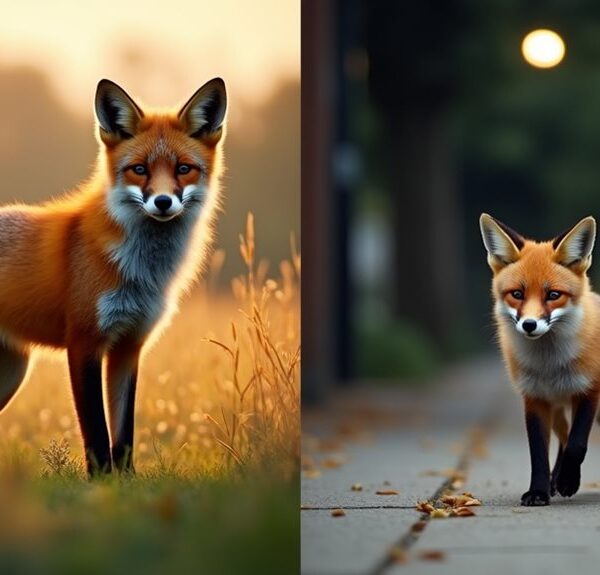
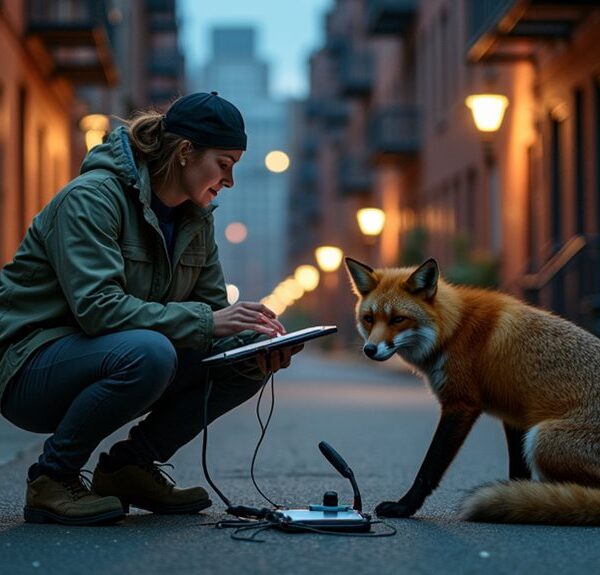
When you’re studying urban fox interactions, camera traps reveal fascinating details about how these clever animals traverse human environments.
They’ll show you foxes using pedestrian crossings, raiding gardens at specific times, and even developing relationships with certain household pets!
Unlike direct observation, which can alter natural behaviors, these cameras don’t disturb the animals you’re studying.
You can document seasonal changes in activity patterns, social structures, and feeding habits without bias.
The footage you’ll collect provides an authentic window into fox society, capturing their personalities and problem-solving abilities in their natural context. Urban foxes display bolder behavior as they adapt to living close to humans, which is often evident in the footage collected from these cameras.
Cost-Effective Species Tracking
When compared to traditional tracking methods, camera traps offer remarkably cost-effective solutions for monitoring fox populations across diverse habitats.
You’ll find these unobtrusive devices can gather thousands of hours of data without constant researcher presence, dramatically reducing fieldwork expenses while providing 24/7 monitoring capabilities.
By strategically placing cameras in locations where foxes typically travel, you’re able to collect essential information about their habitat preferences without disturbing their natural behaviors.
This hands-off approach lets you observe how foxes utilize different environments throughout changing seasons, giving you unprecedented insights into population dynamics.
The initial investment in quality equipment pays dividends through years of reliable data collection.
You’ll capture those fleeting moments that reveal significant ecological relationships, all while spending a fraction of what traditional radio-tracking or direct observation methods would cost.
Additionally, insights gained can enhance our understanding of habitat preferences essential for effective conservation strategies.
Setting Up Effective Camera Trap Networks
To successfully monitor fox populations in the wild, you’ll need a well-designed camera trap network that captures reliable data while minimizing false triggers.
Camera placement is vital—aim for locations where foxes frequently travel, like game trails, water sources, or natural funnels in the environment. You’ll get the best results when you consider species density in your study area.
Don’t just scatter cameras randomly! Place them strategically at fox height (about 12-18 inches from the ground) and angle them away from direct sunlight to avoid glare and false triggers.
Remember, you’re fundamentally creating a wildlife paparazzi network, so make it count! Check your cameras regularly, every 2-3 weeks, to replace batteries and memory cards.
With a thoughtful setup, you’ll soon have fantastic fox footage that tells a meaningful scientific story. Additionally, understanding the preferred den sites of foxes can help you identify key locations for camera placement.
Analyzing and Interpreting Fox Behavior Data
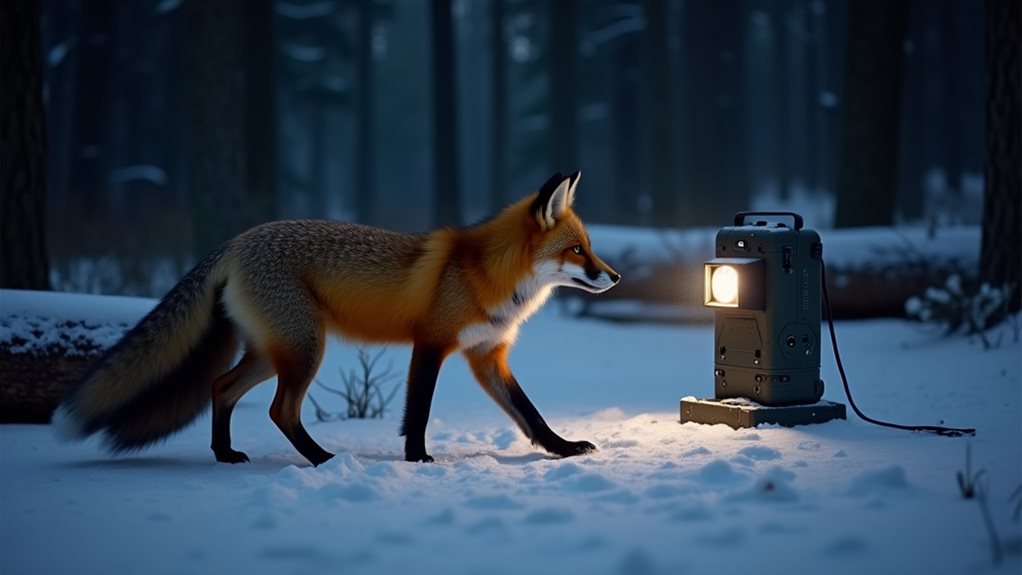
When examining your fox behavior data, you’ll want to focus first on territorial patterns that reveal how these adaptable creatures claim and defend their space.
You can track social interaction metrics, such as den sharing and group hunting behaviors, to understand family dynamics and hierarchical structures. Additionally, observing territorial disputes can provide insight into the challenges these animals face in resource management.
These behavioral insights, when combined with your camera trap footage, will help you build a detailed picture of how fox populations function in different environmental conditions.
Territorial Patterns Analysis
Although researchers have studied fox behavior for decades, the territorial patterns of these cunning creatures continue to surprise us with their complexity.
You’ll notice that foxes establish clear boundaries through territorial marking, using scent glands and urine to communicate ownership to other foxes. It’s fascinating how these markings create an invisible map that only they can fully interpret!
Their habitat preferences play an essential role in determining territory size. Urban foxes maintain smaller territories—sometimes just a few blocks—while their rural cousins might roam several square miles.
When you’re tracking these clever animals, you’ll find they’re creatures of habit, often using the same paths and den sites for generations.
The way they adapt their territorial behaviors to human development shows just how resilient they truly are, with territorial dynamics leading to neighboring groups often avoiding each other.
Social Interaction Metrics
Moving beyond territorial boundaries, the social lives of foxes reveal equally fascinating patterns through careful data analysis.
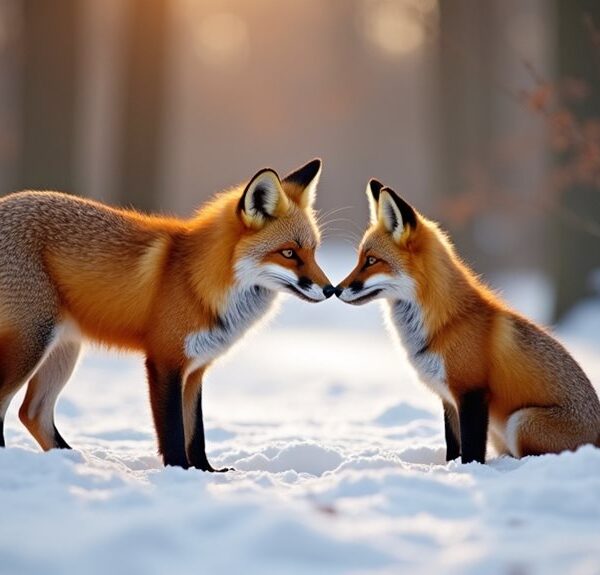
You’ll notice how our camera traps capture subtle interactions that help us map social hierarchy within fox communities. When you review our footage, you’ll see greeting behaviors, grooming rituals, and conflict resolution that paint a vivid picture of their complex relationships.
The group dynamics of fox families aren’t that different from human ones! Parents teach their kits crucial survival skills, while siblings engage in play that strengthens bonds and develops hunting abilities.
You can easily identify the alpha pair, who coordinate defense and resource distribution. Our team has documented surprising cooperation during harsh winters, when territories sometimes overlap without the typical aggressive encounters. This cooperation reflects the importance of social grooming, which serves to strengthen bonds and confirm social standing.
These social patterns help us understand how fox populations adapt and thrive despite environmental challenges.
Conservation Applications and Success Stories
The remarkable successes of fox population tracking have transformed conservation efforts worldwide.
You’ll find that camera traps have revolutionized how we protect fox habitat by providing real-time data that shapes conservation strategies. In California’s Channel Islands, these monitoring techniques helped recover the island fox from the brink of extinction, with populations rebounding from merely 15 to over 2,000 individuals.
You’ve probably heard about the red fox recovery in the UK’s woodlands, where camera tracking identified key corridors needed for their survival.
When you understand a species’ movements, you’re better equipped to design protected areas that work. It’s not only about counting foxes—it’s about creating success stories that ripple through entire ecosystems. Each flash of a camera trap brings us closer to sustainable wildlife management. Additionally, habitat loss from urbanization threatens various fox species, underscoring the importance of these monitoring efforts for holistic conservation.
Future Directions in Digital Wildlife Surveillance
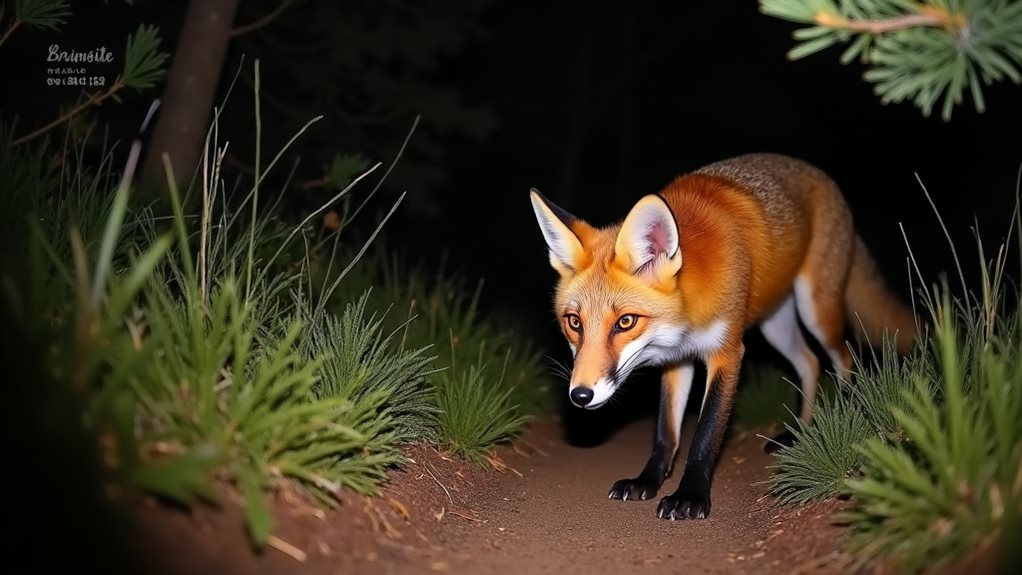
As technology evolves rapidly, wildlife surveillance methods are transforming in ways you couldn’t have imagined just a decade ago.
Machine learning algorithms now analyze thousands of fox images in minutes, not days, freeing researchers to focus on conservation rather than data sorting.
You’ll soon see these exciting developments in fox tracking:
- AI systems that can identify individual foxes by their unique facial patterns
- Real-time tracking apps that notify you when target species appear
- Cross-platform data integration combining weather, habitat, and movement patterns
- Miniaturized cameras with extended battery life for year-round monitoring
- Citizen science portals where your trail cam photos contribute to global research
These innovations aren’t just cool tech—they’re revolutionizing how we perceive and protect fox populations across diverse ecosystems. Additionally, understanding the impact of climate change on habitats is crucial for developing effective conservation strategies.
Final Thoughts
You’re now at the cutting edge of fox research, armed with camera trap knowledge that’s transforming conservation. But what lies ahead? As technology evolves, you’ll witness even more remarkable discoveries about these elusive creatures. Will you join the growing community of citizen scientists helping to protect fox populations? The mystery of what we’ll learn next is thrilling—and you can be part of unraveling it.