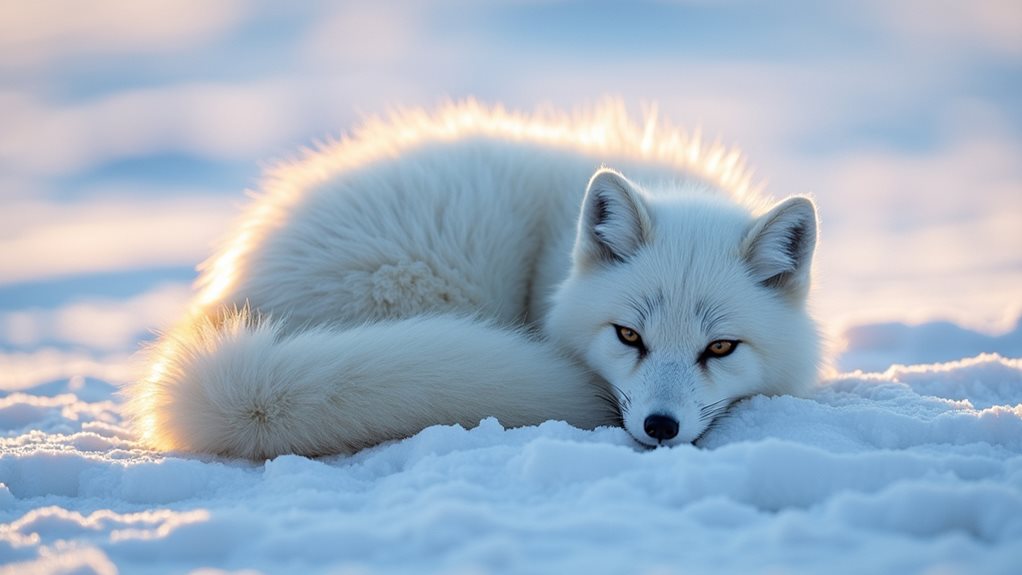
Arctic foxes survive extreme cold with incredible adaptations you’ll find fascinating. Their fur contains over 3,000 hairs per square inch, creating natural insulation that traps body heat. They’ve mastered specialized circulation that keeps their paws frost-free, while their remarkable hearing detects prey scurrying beneath snow. These clever creatures change fur color seasonally for camouflage and build complex underground dens with multiple chambers. Discover how these resilient animals have perfected survival in Earth’s harshest environments.
Contents
- 1 Earth’s Warmest Natural Insulation: The Secret of Arctic Fox Fur
- 2 Specialized Circulation: How Their Paws Stay Frost-Free
- 3 The Remarkable Hearing That Detects Prey Under Snow
- 4 Seasonal Color Changes: Nature’s Ultimate Camouflage System
- 5 Nomadic Journeys: Tracking the Arctic Fox’s Incredible Migrations
- 6 Underground Labyrinths: The Engineering Behind Fox Dens
- 7 Dietary Flexibility: From Lemmings to Leftovers
- 8 Social Adaptations: Family Life in the Frozen North
- 9 Evolutionary Advantages in a Changing Arctic Climate
- 10 Final Thoughts
Earth’s Warmest Natural Insulation: The Secret of Arctic Fox Fur
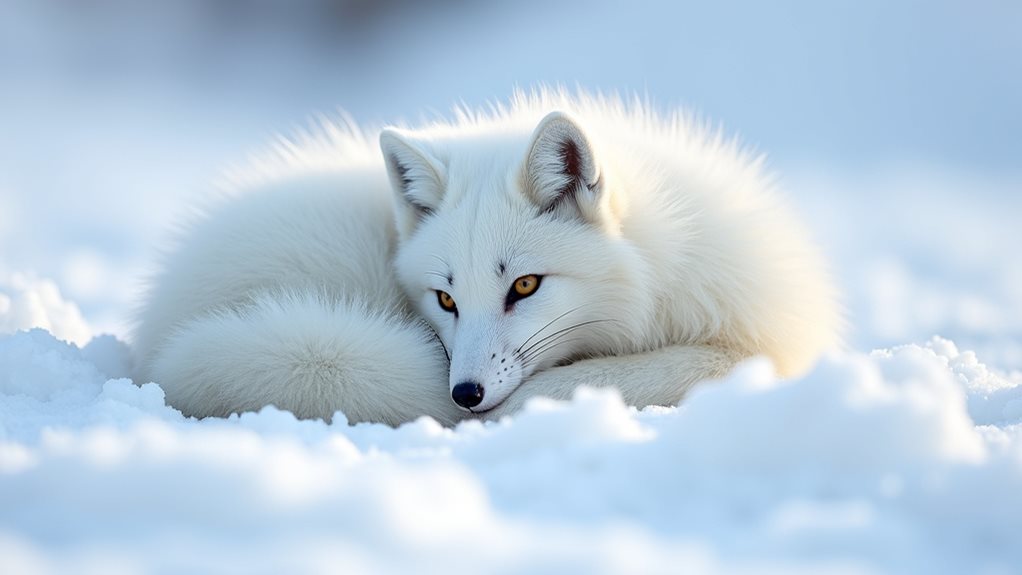
While many animals struggle to survive in the Arctic’s brutal cold, the Arctic fox possesses what might be nature’s most remarkable insulation system.
You’d be amazed at how this clever creature stays toasty when temperatures plummet below -50°F!
The secret lies in the fox’s incredible fur density. Each square inch contains over 3,000 hairs—that’s nearly four times denser than wolf fur! This plush coat creates multiple air pockets that trap body heat with astonishing thermal efficiency.
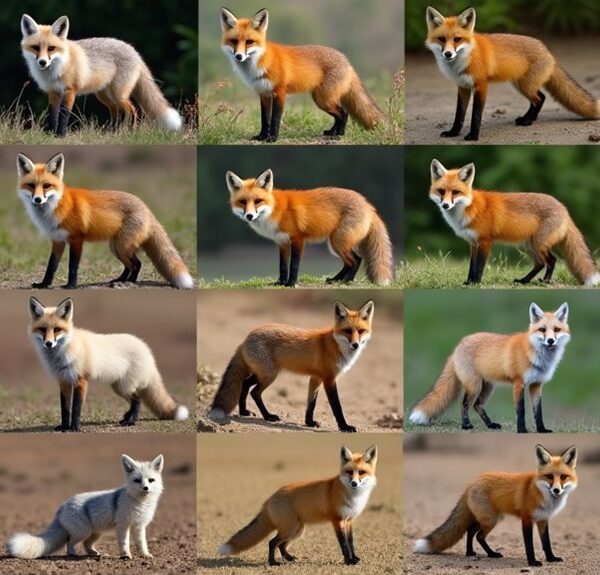
What’s more, Arctic foxes don’t just have one winter wardrobe strategy. Their fur changes seasonally from brown in summer to pristine white in winter, providing both insulation and camouflage.
It’s like having a built-in thermostat and invisibility cloak all in one! Nature’s engineering at its finest, wouldn’t you agree? These adaptations are crucial for their survival in an environment facing growing habitat challenges.
Specialized Circulation: How Their Paws Stay Frost-Free
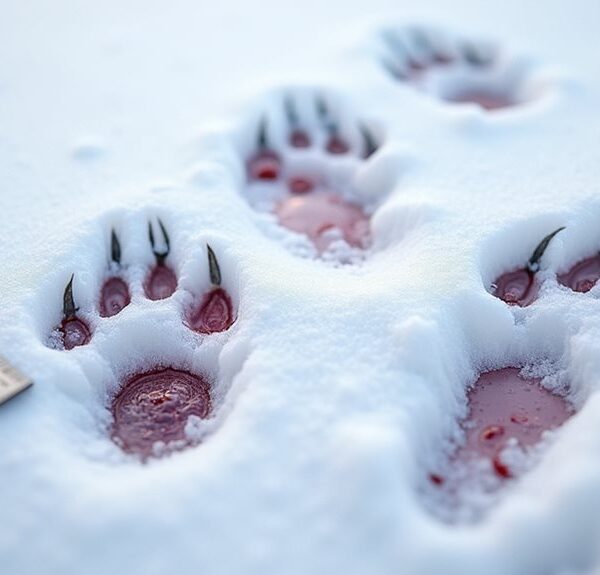
You’ll be amazed at how Arctic foxes keep their paws warm in sub-zero temperatures through countercurrent heat exchange, where warm arterial blood transfers heat to cold venous blood returning from the paws. Their remarkable ability to regulate blood flow helps maintain just enough warmth to prevent freezing while avoiding excessive heat loss. The specialized paw pads with thick insulation create an additional barrier against the ice, completing their impressive cold-weather survival toolkit that lets them trot comfortably across snow that would freeze your toes in minutes. This adaptation allows them to effectively hunt for prey hidden under the snow, showcasing their keen senses of smell and hearing.
Countercurrent Heat Exchange
Contrary to what you might expect, arctic foxes don’t actually use countercurrent heat exchange to keep their paws frost-free. This common misconception overlooks their true adaptation for heat retention.
When you’re walking barefoot in snow, your blood temperature would drop dramatically, but arctic foxes have evolved differently.
Their remarkable survival strategy includes:
- A specialized vascular structure that minimizes heat loss
- Blood vessels that constrict in extreme cold
- Fat deposits that act as natural insulation
- Fur between toe pads providing additional protection
You’d think they’d need complex countercurrent systems like some marine mammals, but they’ve developed simpler, equally effective methods. Their paws maintain just enough warmth to prevent freezing while still allowing them to walk comfortably on ice. It’s nature’s elegant solution to an extreme problem! Additionally, thick fur coats are crucial in providing insulation against icy winds, showcasing how these adaptations work together for survival.
Blood Flow Regulation
Although the previous section mentioned a misconception, the arctic fox actually does use countercurrent heat exchange in its paws to survive extreme Arctic temperatures.
You’ll be amazed at how these clever creatures regulate their blood circulation to keep their feet just warm enough!
When you’re walking barefoot in snow, your feet would quickly freeze. Not the arctic fox’s! Its specialized blood vessels position warm arteries next to cooler veins, warming returning blood while cooling outgoing blood.
This remarkable temperature regulation system keeps their core warm while preventing their paws from freezing to the ice. Interestingly, this adaptation helps them thrive in treeless tundra regions, which are their primary habitat.
You’d think their paws would be frigid, but they’re maintained at just above freezing—cold enough to minimize heat loss but warm enough to remain functional and frost-free.
It’s nature’s perfect thermostat!
Paw Pad Insulation
Beyond their remarkable blood circulation system, arctic foxes have another frost-fighting secret: specially adapted paw pads.
These incredible paw pad adaptations help with thermal regulation, keeping their feet warm even in the harshest Arctic conditions. You’ll be amazed at how these furry survivors traverse icy terrain without getting frostbite!
Their specialized paw pads feature:
- A thick layer of fatty tissue that acts as natural insulation
- Special fur growth between toe pads that prevents snow buildup
- Specialized blood vessels that limit heat loss to the frozen ground
- A rough, textured surface that improves grip on slippery ice
Interestingly, this paw pad insulation is just one example of how arctic foxes have evolved to master the cold and thrive in their frigid environment!
You might think your winter boots are impressive, but these natural adaptations put our human technology to shame!
These clever paw protections allow arctic foxes to trot comfortably at temperatures that would freeze our toes solid.
The Remarkable Hearing That Detects Prey Under Snow
Acute hearing serves as the arctic fox‘s secret weapon during harsh winter hunts. You might wonder how these clever creatures find food beneath several feet of snow—it’s all about their incredible hearing adaptation.
When you’re watching an arctic fox tilt its head and suddenly pounce on seemingly nothing, you’re witnessing one of nature’s most impressive prey detection systems in action.
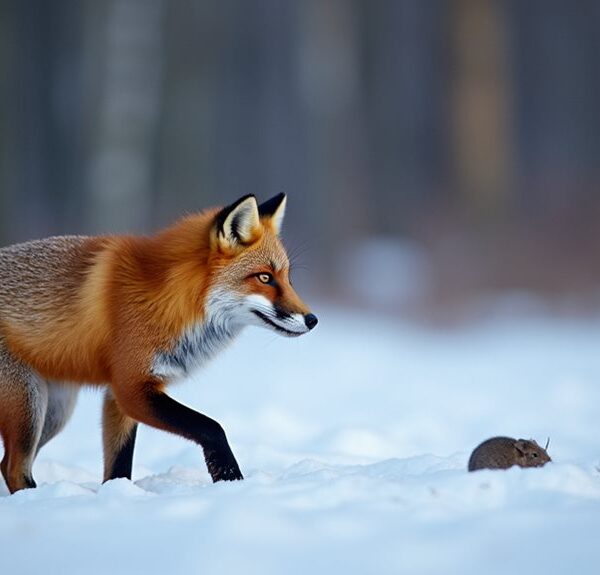
Unlike what you might assume, these foxes don’t just randomly dig in the snow. They’re actually pinpointing the exact location of lemmings and voles moving beneath the surface.
Their ears can detect the faintest rustling, and they’ve evolved to triangulate sound with remarkable precision. It’s like having built-in sonar that works perfectly even during howling blizzards. Additionally, their hunting techniques, including snow-diving, are crucial for successful prey detection in the tundra.
Wouldn’t it be amazing to hear what they hear?
Seasonal Color Changes: Nature’s Ultimate Camouflage System
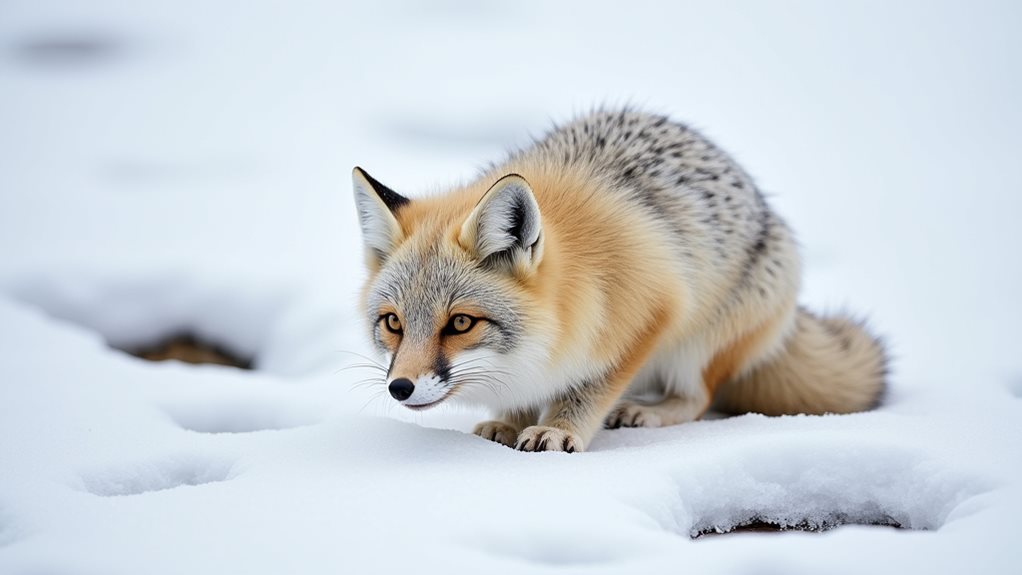
While the arctic fox‘s incredible hearing helps it survive the harsh winter, its fur plays an equally impressive role in keeping it alive year-round.
You’d be amazed by the seasonal transformation these clever creatures undergo. Their adaptive camouflage is nature’s perfect disguise system, changing completely with the seasons to keep them hidden from predators.
Imagine watching this transformation unfold:
- In winter, their fur turns pure white, blending perfectly with the snow.
- As spring arrives, patchy brown spots begin to appear.
- Summer brings a complete change to brown or gray coloration.
- Fall triggers another shift as white hairs slowly replace the darker coat.
In addition to this remarkable transformation, their seasonal fur coloration changes enhance stealth for hunting by offering camouflage in varying environments. You’re witnessing one of nature’s most remarkable costume changes—a life-saving strategy that’s evolved over thousands of years!
Nomadic Journeys: Tracking the Arctic Fox’s Incredible Migrations
You’ll be amazed at how Arctic foxes commence on incredible expeditions, following seasonal movement patterns that can span hundreds of miles across frozen terrains.
With modern tracking technology, scientists now monitor these nomads in real-time, revealing previously unknown migration routes and survival strategies.
Their travels are often driven by food-following behaviors, as they track lemming populations or search for coastal areas rich in bird eggs and marine resources. Notably, their migrations coincide with shifts in prey availability, a crucial factor for their survival in the Arctic ecosystem.
Seasonal Movement Patterns
Unlike many creatures that migrate along predictable routes, Arctic foxes set out on some of the most remarkable and unpredictable expeditions in the animal kingdom.
You’d be amazed by their ability to adapt their migratory routes based on food availability and weather conditions. These clever creatures don’t follow fixed seasonal habitats but instead respond to changing Arctic terrains.
When tracking their travels, you’ll notice four distinct movement patterns:
- Coastal wanderings during summer salmon runs
- Tundra treks following lemming population booms
- Sea ice expeditions hunting for seal afterbirth in spring
- Forest-edge foraging when deep winter forces them southward
You’re witnessing nature’s ultimate opportunists—animals that won’t hesitate to travel hundreds of miles if that’s where survival leads them, their white coats disappearing into the vast Arctic expanse. Their adaptability is further enhanced by advanced hunting skills, utilizing keen hearing to detect prey beneath the snow.
Tracking Technology Advances
As researchers developed sophisticated tracking technologies, our understanding of Arctic fox migrations transformed dramatically.
You might be surprised to learn how GPS innovations have revolutionized wildlife monitoring, allowing scientists to follow these remarkable creatures across vast Arctic terrains without disturbing them.
With satellite monitoring systems, you can now virtually “tag along” as foxes traverse hundreds of miles across sea ice and tundra.
These tiny tracking devices, weighing just a few grams, transmit location data that reveals previously unknown migration routes and timing.
Remember when tracking meant following footprints in the snow? Those days are long gone!
The technology has revealed astonishing expeditions, including record-breaking treks that would make marathon runners jealous.
Every ping from these trackers helps unravel the mysteries of how these resilient animals maneuver through their harsh environment.
Food-Following Behaviors
Arctic foxes follow their stomachs quite literally when starting on their epic migrations across the frozen north.
You’ll find these clever creatures adapting their hunting strategies based on seasonal food sources, traveling incredible distances when necessary.
When tracking an arctic fox’s expedition, you’ll notice four distinct behaviors:
- Following lemming population booms across vast tundra regions
- Trailing behind polar bears to scavenge leftover seal carcasses
- Migrating to coastal areas during bird nesting season
- Storing surplus food in dozens of hidden caches across their territory
These resourceful hunters don’t just wander aimlessly—they’re calculating travelers with mental maps of where their next meal might be found.
Their food-following instincts guide treks that can span hundreds of miles, a remarkable adaptation that keeps them alive in one of Earth’s harshest environments.
Underground Labyrinths: The Engineering Behind Fox Dens
The remarkable underground homes of Arctic foxes showcase nature’s brilliant architectural design. You’ll be amazed to learn how these clever creatures engineer their dens with multiple entrances and chambers, creating a complex burrow structure that protects them from harsh Arctic conditions.
The den design isn’t random—it’s carefully crafted with up to 100 different entrances and exits, allowing foxes to escape from predators in a pinch. You’re looking at nature’s own emergency escape system!
These underground labyrinths feature separate areas for sleeping, food storage, and raising young, much like rooms in your own home.
What’s truly fascinating is how foxes maintain a steady temperature inside their dens, creating a cozy refuge when outside temperatures plummet to deadly levels. In addition, the thick fur coat of an Arctic fox helps to insulate the den, further enhancing their ability to survive in extreme weather conditions.
Dietary Flexibility: From Lemmings to Leftovers
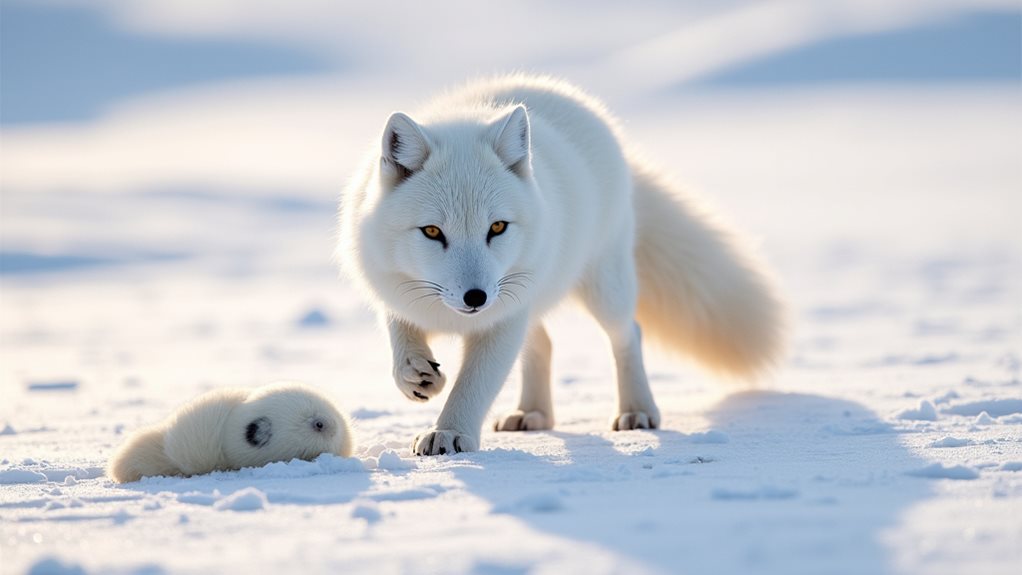
While freezing Arctic winds howl across the tundra, these resourceful foxes display remarkable culinary adaptability that helps them survive where other animals can’t.
You’ll be amazed by their foraging strategies, which change with the seasons and available food sources.
When you observe Arctic foxes in their natural habitat, you’ll notice their scavenging habits include:
- Hunting lemmings by listening for movement under the snow, then pouncing with precision
- Following polar bears to feast on the remains of seal carcasses
- Storing excess food by burying it in the permafrost for leaner times
- Raiding bird nests for eggs and chicks during the brief summer months
They’re nature’s ultimate opportunists, eating practically anything they can find when their preferred prey isn’t available.
Social Adaptations: Family Life in the Frozen North
During the harshest winter months, fox families band together in complex social structures that you’d find surprisingly similar to human communities.
You’ll notice that arctic foxes don’t just survive—they thrive through tight-knit family dynamics that keep everyone warm, fed, and protected.
Within each den, there’s a clear social hierarchy, with breeding pairs leading the group and making critical decisions about hunting territories and migration timing.
You can often spot younger foxes playing specific roles too, from babysitting duties to serving as lookouts.
What’s fascinating is how these families communicate—through a series of yips, barks, and body language that’s almost as complex as your family dinner conversations!
Their cooperative hunting techniques and den-sharing practices demonstrate that in the brutal Arctic, survival isn’t just about physical adaptation—it’s about sticking together.
Evolutionary Advantages in a Changing Arctic Climate
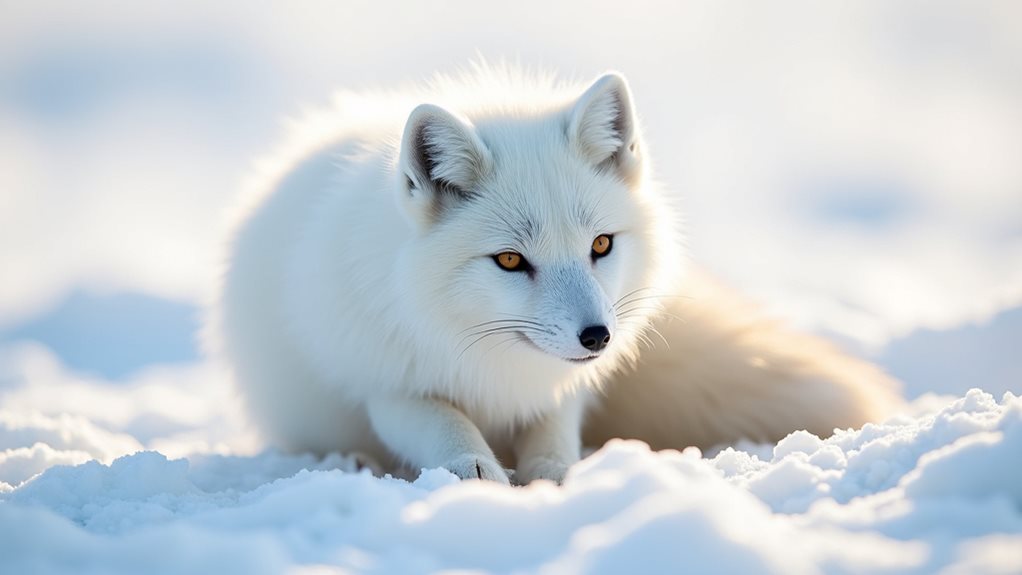
As climate change rapidly transforms the Arctic terrain, you’ll find that arctic foxes have evolved remarkable advantages that position them uniquely among polar species.
Their climate resilience isn’t just luck—it’s the result of thousands of years of adaptation!
When you’re exploring the fox’s evolutionary story, you’ll notice four key advantages:
- Fur that changes color seasonally, providing year-round camouflage
- Compact body shape that minimizes heat loss in freezing temperatures
- Specialized hearing that detects prey moving under deep snow
- Nomadic behaviors that respond to shifting food availability
These adaptations directly impact population dynamics, allowing fox communities to persist where other species struggle.
You’re witnessing nature’s brilliant design at work—these small creatures have become masters of survival in one of Earth’s most challenging environments.
Final Thoughts
You’ve just learned how the arctic fox thrives in one of Earth’s harshest environments, and isn’t it remarkable that these same adaptations might help us develop better cold-weather gear? From their incredible fur to their frost-resistant paws, these resilient creatures show us what’s possible in extreme conditions. Next time you’re bundling up for winter, you’ll appreciate that you don’t need to change color or dig complex dens—unlike your distant arctic neighbors!