Fox tracks provide valuable forensic evidence in wildlife crime investigations. You’ll find their distinctive diamond-shaped prints (1.5-2 inches long) help investigators determine timing of incidents through weathering patterns, establish direction of travel for access routes, and analyze population dynamics. Track aging reveals when poaching occurred, while movement patterns indicate hunting behaviors. Digital imaging now captures subtle details invisible to the naked eye, dramatically improving species identification accuracy. Explore these tracking techniques to reveal nature’s hidden crime scene clues.
Contents
- 1 Distinguishing Fox Tracks From Other Canids: Key Identification Features
- 2 The Science of Track Aging: Determining Time Since Impression
- 3 Movement Patterns and Behavioral Analysis Through Track Sequences
- 4 Environmental Factors Affecting Track Preservation and Analysis
- 5 Track Measurements as Indicators of Fox Size, Age, and Health
- 6 Territorial Mapping Through Systematic Track Documentation
- 7 Forensic Applications in Wildlife Crime Investigations
- 8 Digital Track Analysis: Modern Technologies Enhancing Field Evidence
- 9 Final Thoughts
Distinguishing Fox Tracks From Other Canids: Key Identification Features
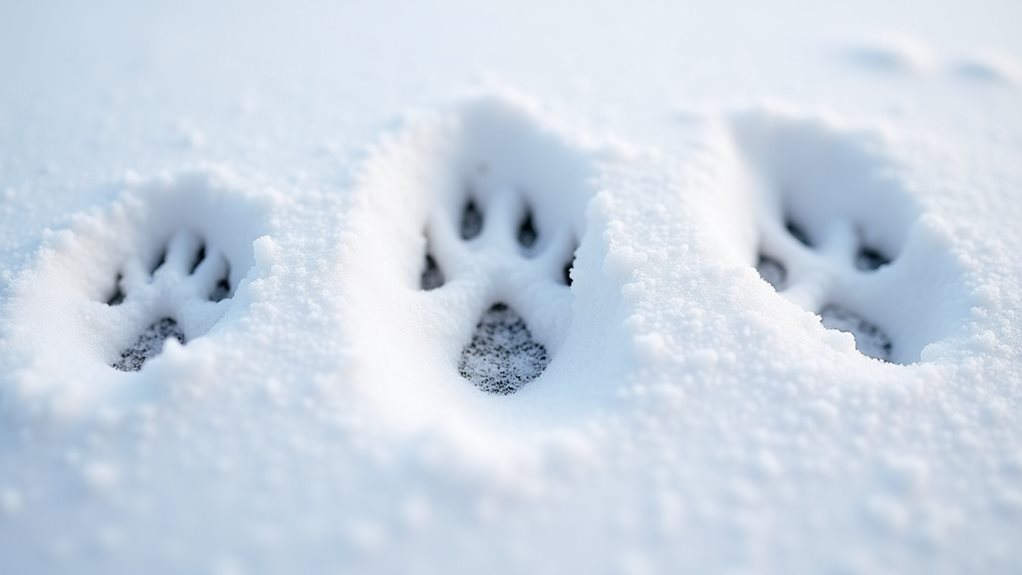
When examining a crime scene in wooded areas, you’ll often encounter animal tracks that can either lead you astray or provide valuable evidence.
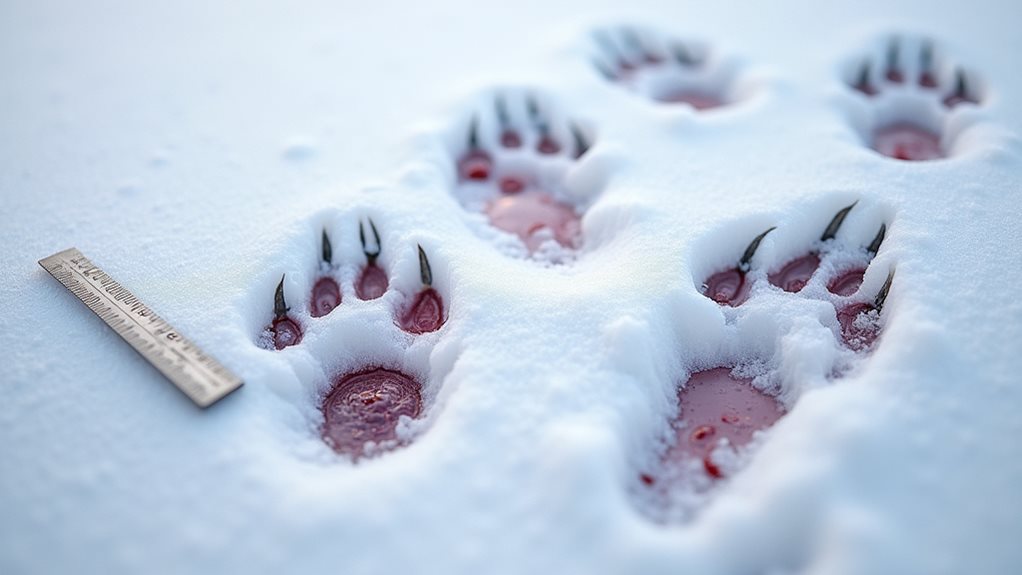
Fox tracks require careful attention to distinguish from other canids like coyotes or domestic dogs. You’ll notice fox anatomy creates a distinctive diamond-shaped paw print, typically measuring 1.5 to 2 inches long—significantly smaller than wolf or large dog tracks.
The track morphology offers clear clues: fox prints show perfect symmetry with the two middle toes sitting slightly ahead of the outer toes.
Unlike dogs, fox tracks follow a straight, direct line—they’re efficient travelers who place their hind feet in the prints of their front feet, creating a nearly single-file pattern.
You’ll also spot less prominent claw marks, as foxes have semi-retractable claws that don’t dig as deeply into substrate.
The Science of Track Aging: Determining Time Since Impression
When you’re tracking foxes for forensic purposes, you’ll need to take into account how weather affects track preservation, with rain, wind, and temperature changes quickly altering essential details.
You can learn to estimate a track’s age by examining how the substrate (soil, sand, or snow) degrades over time, showing telltale signs like crumbling edges or color changes.
These aging indicators aren’t just interesting—they’re potentially vital evidence that can help establish timelines in wildlife investigations, placing animals at specific locations during particular timeframes.
Weather Impact Factors
As track impressions age in the field, understanding weather’s profound influence becomes vital for accurate forensic interpretation.
You’ll notice that rainfall can quickly destroy delicate paw prints, while a light mist might actually improve track visibility by darkening the soil around impressions. Wind poses its own challenges, potentially filling tracks with debris or eroding their edges over time.
Temperature fluctuations also play a significant role—freeze-thaw cycles can dramatically alter impressions, sometimes preserving them in frozen mud or completely obliterating their details.
You should document current weather conditions when discovering tracks, and if possible, gather local weather data from the estimated time of track creation. This historical weather information might be the key difference between solving a case and losing valuable evidence to the elements.
Substrate Degradation Progression
The precise determination of a fox track’s age relies heavily on understanding how different substrates degrade over time.
You’ll find that sand, mud, and snow each tell their own temporal story through distinct degradation rates. When you’re examining tracks in sandy soil, you’ll notice edges crumble within hours, while clay-based substrates might preserve impressions for days or even weeks.
Weather accelerates these substrate degradation patterns in fascinating ways. A fox print pressed into damp soil will initially show crisp details, but as the substrate dries, those same marks develop characteristic cracks and shrinkage patterns.
You can actually “read” these changes like a timeline! By comparing fresh tracks to those undergoing degradation, you’ll develop an intuitive sense for aging impressions—a skill that transforms simple paw prints into valuable forensic evidence with remarkable accuracy.
Movement Patterns and Behavioral Analysis Through Track Sequences
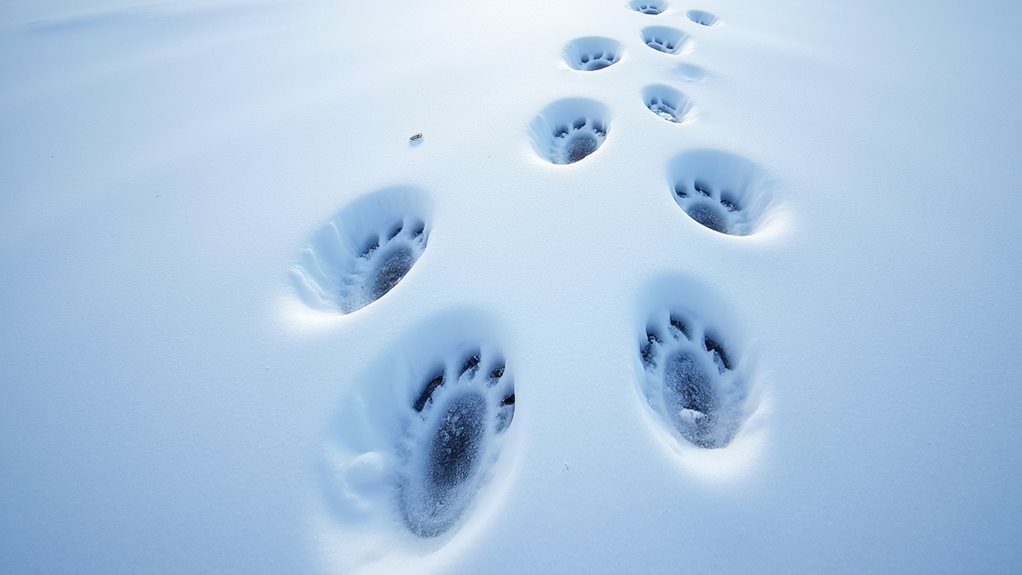
Following a fox’s track sequence reveals far more than merely where the animal has been—it tells a story about what the fox was doing, thinking, and experiencing.
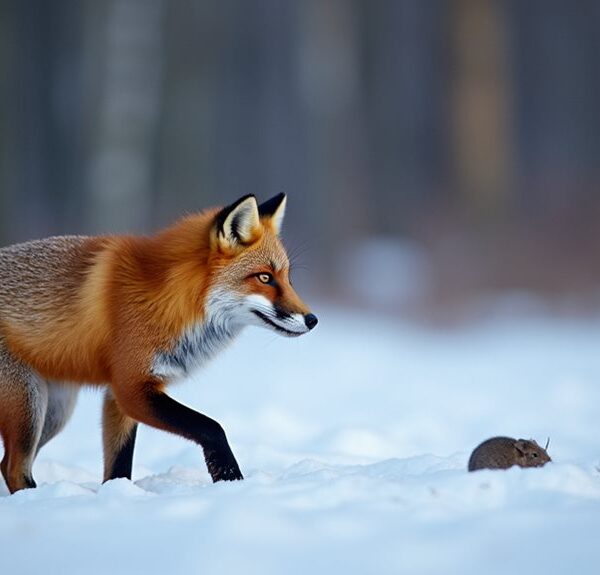
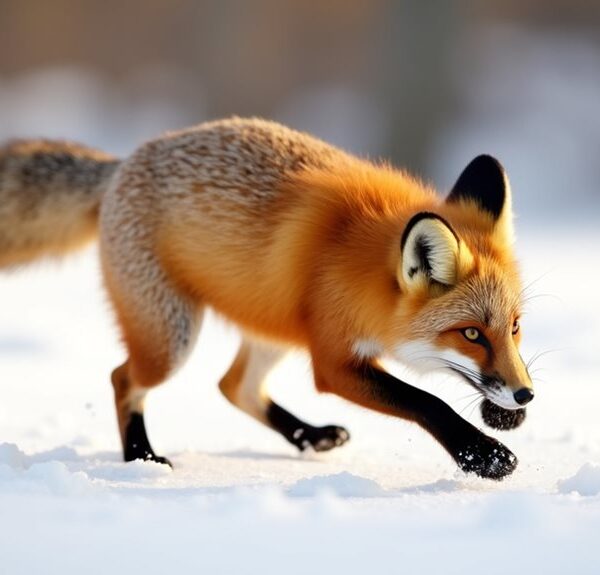
When you study these tracks carefully, you’ll notice distinct patterns that indicate specific behaviors. Is the fox traveling in a straight line? It’s likely moving purposefully between destinations. Zigzagging tracks often suggest hunting activity, as the fox follows scent trails.
Track behavior analysis can reveal if a fox was startled, hunting, playing, or marking territory. You’ll see acceleration marks when it spotted prey, paired tracks when it paused to listen, and scattered patterns during social interactions.
Environmental Factors Affecting Track Preservation and Analysis
Various environmental factors dramatically influence how well fox tracks preserve and what forensic information you can extract from them.
Soil moisture plays a fundamental role—too wet, and tracks become distorted; too dry, and they mightn’t form at all. You’ll find that temperature affects track morphology, with freezing conditions sometimes preserving impressions for weeks while hot weather can bake them away in hours.
When tracking foxes, nature’s moisture balance makes or breaks your evidence—freezing preserves while heat erases their telltale signs.
Wind and rain are track detectives’ worst enemies, often erasing critical evidence before it’s documented. That’s why understanding preservation techniques is important in forensic fieldwork.
You might use plaster casts in stable conditions or photogrammetry when time is short. Remember, the surrounding vegetation and terrain tell their own story too—they provide context about how the fox maneuvered the environment, potentially revealing abnormal behaviors that could be forensically noteworthy.
Track Measurements as Indicators of Fox Size, Age, and Health
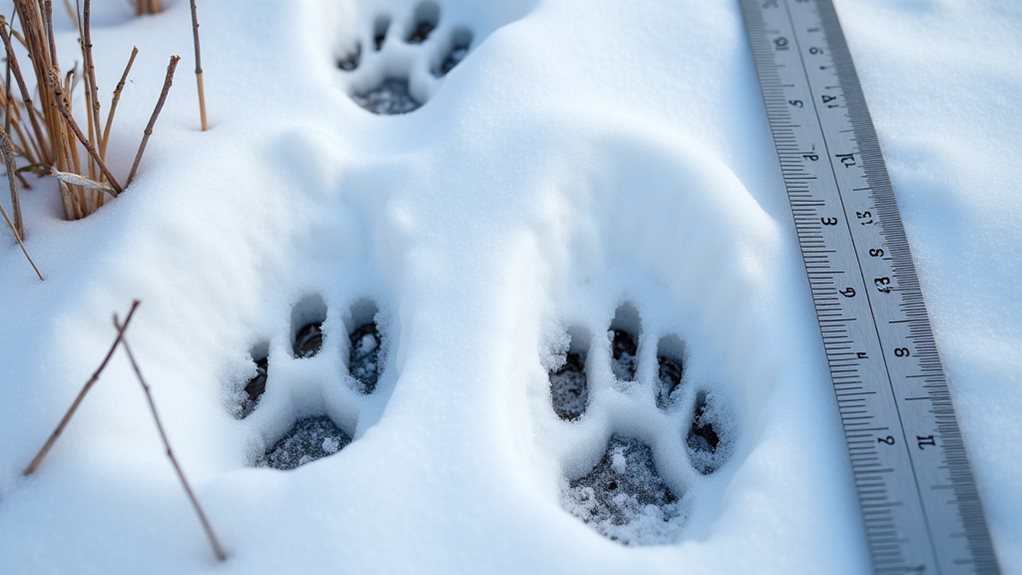
Beyond preservation concerns, accurate track measurements open a window into a fox’s life story.
You’ll find that track size directly correlates with the animal’s age and overall dimensions. A juvenile fox leaves noticeably smaller impressions than an adult, while sex differences become apparent in mature foxes, with males typically producing larger tracks.
Pay attention to the pressure distribution within prints, as it reveals fascinating health indicators. Uneven weight bearing might signal an injury or lameness that the fox is compensating for.
Dragging marks between steps often indicate fatigue or illness, while unusually shallow prints can suggest underweight conditions. When tracks show irregular spacing or unusual patterns, you’re likely observing a fox with mobility issues or physical challenges.
These subtle clues transform simple measurements into a thorough health assessment of the animal that left them behind.
Territorial Mapping Through Systematic Track Documentation
You’ll discover fascinating insights when you track fox territories throughout the year, noting how their boundaries shift with changing seasons and food availability.
By systematically documenting tracks across an area, you’re actually creating a valuable map of population density, revealing where foxes concentrate their activities and how many might inhabit a region.
These track patterns also tell compelling stories about how resident foxes respond to intruders, with distinctive changes in track frequency, depth, and arrangement often indicating territorial disputes or defensive behaviors. Additionally, understanding the ecological role of red foxes reveals how these patterns can inform us about their interactions with local wildlife and human activity.
Seasonal Boundary Shifts
While foxes maintain fairly consistent territories throughout most of the year, tracking their footprints reveals fascinating shifts in boundary lines as seasons change.
You’ll notice these clever creatures expand their territories during autumn and winter when food becomes scarcer, leaving tracks that venture into previously unused areas. Their seasonal behavior adapts to survival needs—pawprints often lead toward human settlements during harsh winters.
In spring, you can track how foxes contract their boundaries, focusing activity around den sites where they’re raising kits.
The habitat changes from season to season directly influence these territorial adjustments. Additionally, climate change is expanding their population distribution into new areas, which can further alter their range. By documenting tracks systematically through different seasons, you’re fundamentally creating a dynamic map of fox behavior that forensic investigators can use to establish normal movement patterns versus unusual activity that might coincide with crime scenes.
Population Density Indicators
Fox tracks can reveal remarkable insights into population density when collected systematically across defined geographical areas.
You’ll discover that analyzing track patterns helps wildlife researchers understand complex population dynamics without expensive tracking equipment. By mapping where tracks appear most frequently, you’re fundamentally creating a window into fox habitat preferences.
When documenting fox tracks for population assessment, focus on:
- Track clustering in specific zones, which often indicates family group territories
- Seasonal variations in track density, revealing how population concentrations shift with food availability
- Boundary markings (often accompanied by scat) that highlight territorial borders between competing groups
You’ll find this tracking method particularly valuable in urban-wildlife interfaces, where traditional population counting methods might disturb the animals. This non-invasive approach gives you accurate data while respecting the foxes’ natural behaviors, particularly in urban areas where red fox populations tend to be denser than in rural settings.
Intruder Response Patterns
Tracking the systematic patterns left in soil and snow allows researchers to document how territorial foxes respond to intruders in their domain.
You’ll notice that foxes don’t react randomly—their response strategies follow predictable sequences when they detect unfamiliar scents. When you’re examining track patterns, look for sudden changes in direction, which often indicate a fox has detected an intruder. These tracks typically show aggressive posturing behaviors, with deeper impressions suggesting heightened alertness.
Foxes employ fascinating intruder behavior countermeasures, including false trails and doubling back on their paths. Interestingly, the dynamics of social hierarchy can also play a role in how different foxes respond to threats, with dominant individuals often taking the lead in group defense strategies.
You can identify these defensive tactics by spotting circular patterns around den sites or food caches. Isn’t it remarkable how these clever creatures adapt their movements based on perceived threats? Their tracks tell a complete story of territorial defense that you can’t observe through direct wildlife monitoring alone.
Forensic Applications in Wildlife Crime Investigations
When authorities investigate poaching incidents or wildlife trafficking, they’ll often turn to animal track analysis as an essential forensic tool.
Fox tracks, with their distinctive track morphology, can provide valuable forensic implications about illegal hunting activities, habitat disturbance, or protected species interference. You’d be surprised how much these paw prints reveal about wildlife crimes!
When examining fox tracks in crime scenes, investigators look for:
- Timing of the incident based on track weathering and degradation
- Direction of travel showing access and escape routes used by poachers
- Interaction patterns between domestic animals and wildlife, indicating potential illegal hunting with dogs
Understanding these subtle track details helps wildlife officers build solid cases against poachers.
Next time you’re hiking and spot fox prints, you’re actually looking at what could be essential evidence in solving wildlife crimes!
Digital Track Analysis: Modern Technologies Enhancing Field Evidence
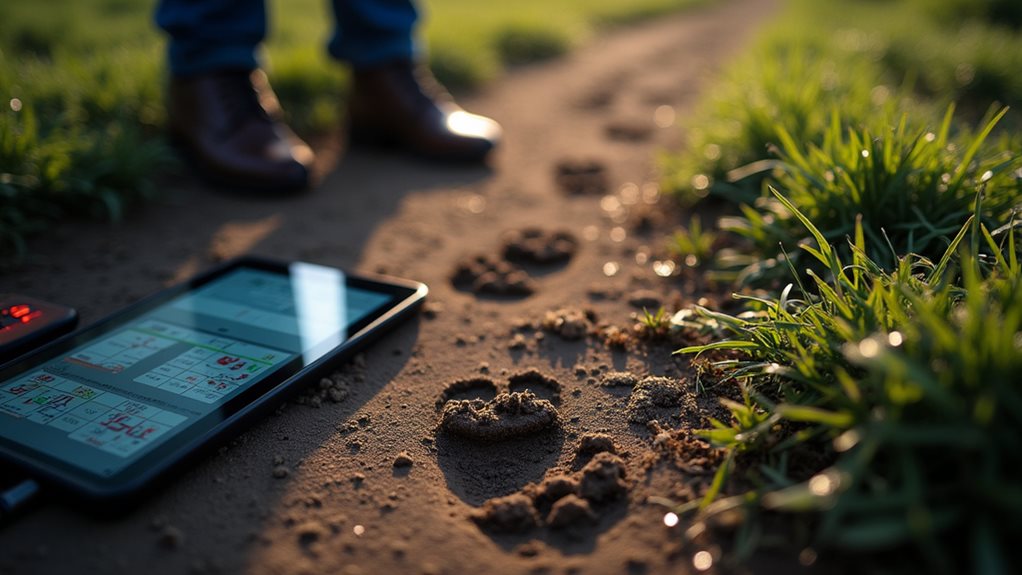
Today’s wildlife forensics has gone high-tech, bringing incredible digital tools into the field of track identification. You’ll find investigators using digital imaging to capture fox prints with unprecedented clarity, allowing for meticulous examination without disturbing crime scenes.
These high-resolution images help experts detect subtle details that might otherwise be missed by the naked eye. Track comparison software now enables forensic teams to match prints against extensive databases, greatly enhancing identification accuracy.
You can see how these technologies help distinguish fox tracks from similar species, like small dogs or coyotes. The digital revolution means evidence doesn’t disappear with the next rainfall; instead, it’s preserved permanently for court proceedings.
These advancements have transformed how wildlife crime investigators approach their work, making fox tracks more valuable than ever in solving poaching cases and habitat disturbance incidents.
Final Thoughts
You’ve now discovered how fox tracks serve both wildlife enthusiasts and crime investigators. While they reveal intimate details of fox behavior in natural settings, they simultaneously provide essential evidence in poaching cases. By mastering track identification, you’re connecting to ancient tracking wisdom while utilizing modern forensic techniques. Whether you’re protecting wildlife or solving crimes, fox tracks tell stories that would otherwise remain hidden in the forest floor’s silent testimony.