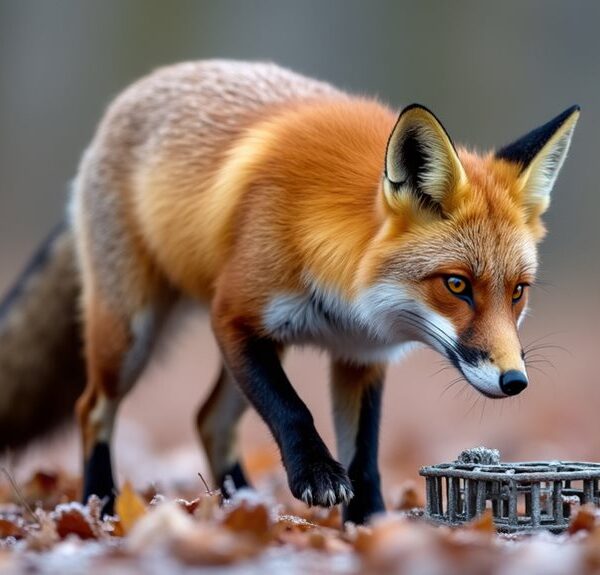

Fox calls often sound like eerie, high-pitched screams that you might mistake for birds or even crying children. They produce over 20 distinct vocalizations, including barks, whimpers, and growls that vary based on the situation. Urban foxes tend to call at higher pitches to cut through city noise, while rural foxes use lower, more melodic tones. These sounds peak during mating season (December-February) and are most common at dawn and dusk. Listen closely next time you’re outside after dark!
Common Fox Vocalizations and Their Meanings
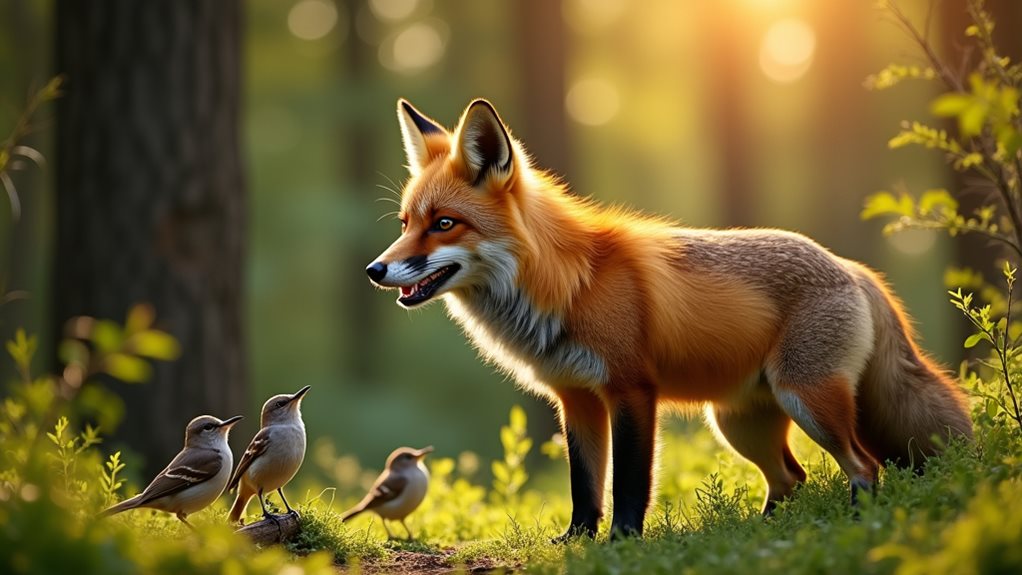
While you might expect an article about fox bird calls, we need to clear up a common misconception first: foxes and birds are entirely different animals with distinct vocalization patterns. Foxes aren’t feathered friends who chirp—they’re canids with their own unique sound repertoire!
When it comes to fox communication, you’ll hear various calls serving different purposes. The most recognizable is their eerie, high-pitched scream that often startles nighttime walkers.
Foxes also bark, whimper, and growl to express everything from warnings to courtship intentions. What’s fascinating is their capacity for vocal mimicry—some foxes can actually imitate other animals or sounds in their environment! This talent helps them adapt to different situations and sometimes even confuse potential predators. You’ll find their vocal abilities are just as clever as their reputation suggests, especially during mating season when vocalizations amplify to signal attraction and competition.
The Science Behind Fox Screams
You might wonder how foxes produce their distinctive screams, which involve special vocal cords that can create frequencies between 400 Hz and 4 kHz.
The sound travels differently in urban environments compared to forests, with city foxes often producing sharper, more echo-prone screams due to hard surfaces bouncing the sound waves.
When you hear these calls at night, you’re experiencing a vocalization that evolved primarily for territorial marking and mate attraction, though urban foxes have adapted their communication patterns to steer through human-dominated terrains. Additionally, these screams are often used by males to scare off rivals or attract mates.
Fox Vocalization Mechanics
Despite what many believe, foxes don’t actually make bird-like calls at all. Their vocalizations are uniquely mammalian, produced through their larynx and vocal cords—not a syrinx like birds use. When you hear those eerie screams at night, you’re experiencing fox communication in its rawest form.
Fox vocalization patterns vary widely depending on the message they’re trying to convey. They’ll use short, sharp barks for warnings, while those famous screams often signal mating season or territorial disputes.
You might be surprised to learn that foxes have over 20 different sounds in their vocal repertoire! Their larynx contracts and expands to create these distinct sounds, much like how you adjust your voice when whispering or shouting. This intricate communication method is essential for establishing social bonds and conveying important messages.
It’s a complex system that’s evolved to help these clever creatures survive in diverse environments.
Urban vs. Wild Screams
As urban environments continue to expand, researchers have discovered fascinating differences between fox vocalizations in cities versus rural settings.
You might notice that urban foxes tend to call at higher pitches than their countryside cousins, an adaptation that helps their voices carry over the constant hum of city noise.
Wild foxes typically vocalize during dawn and dusk, while urban foxes have adjusted their calling schedule to late night hours when human activity diminishes.
You’ll find that city-dwelling foxes also vocalize more frequently but for shorter durations—they’re fundamentally shouting quick messages to avoid drawing unwanted attention!
Interestingly, about 70% of urban foxes thrive in cities, showcasing their remarkable adaptability to urban life.
Next time you hear that distinctive scream piercing through the night, you can probably tell whether it’s coming from a stressed-out city fox or its more relaxed rural relative.
Distinguishing Fox Calls From Actual Birds
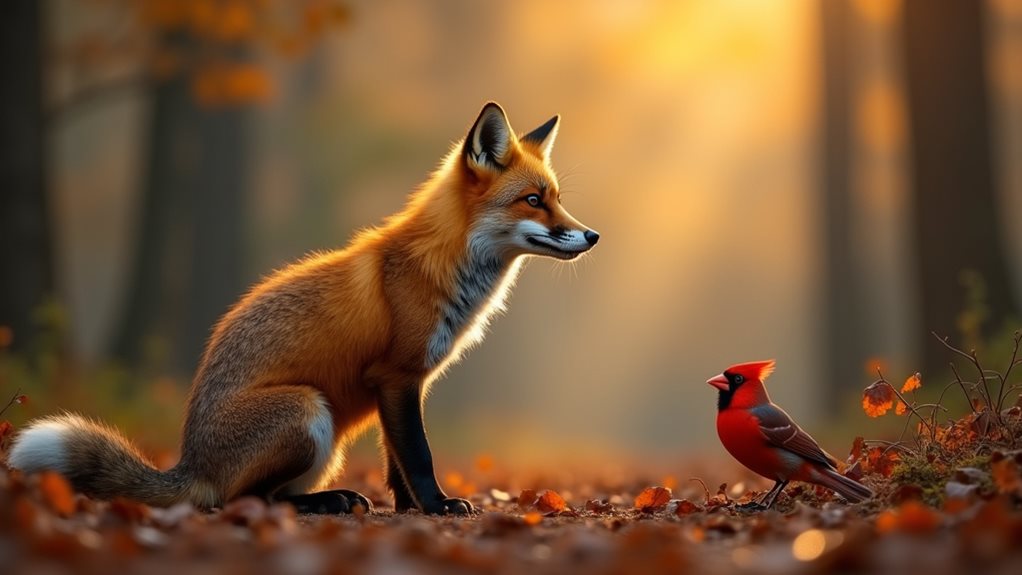
Why do so many outdoor enthusiasts find themselves fooled by the clever vocalizations of foxes?
It’s because fox mimicry techniques are remarkably sophisticated, creating bird call confusion even among experienced wildlife listeners. You’ll often mistake a fox’s high-pitched yap for an exotic bird’s song, especially at dawn or dusk when both are active.
To tell them apart, listen for consistency. Real birds typically repeat patterns with precision, while foxes vary their calls slightly each time.
You’ll also notice foxes produce a distinctive raspy quality that birds don’t have. Location provides clues too—if you’re hearing “bird calls” from ground level rather than trees, you’re likely experiencing a fox’s deception.
Next time you’re outdoors, challenge yourself to identify whether that unusual sound comes from feathers or fur!
Seasonal Variation in Fox Sounds
When the seasons change, a fox’s vocal repertoire transforms dramatically, creating a constantly evolving soundscape throughout the year.
You’ll notice the most striking difference during breeding season, typically from December through February, when foxes become particularly vocal. Males produce sharp, high-pitched barks to attract mates, while females respond with distinctive screaming calls that often startle unsuspecting hikers. During this time, vocalizations peak in January and February, marking heightened mating activity.
During summer months, foxes adopt quieter communication methods as they raise their kits, shifting to softer whines and gentle contact calls.
These seasonal adaptations help them maneuver different environmental challenges. In autumn, you might hear increased territorial vocalizations as young foxes disperse and establish new territories.
Regional Differences in Fox Vocal Patterns
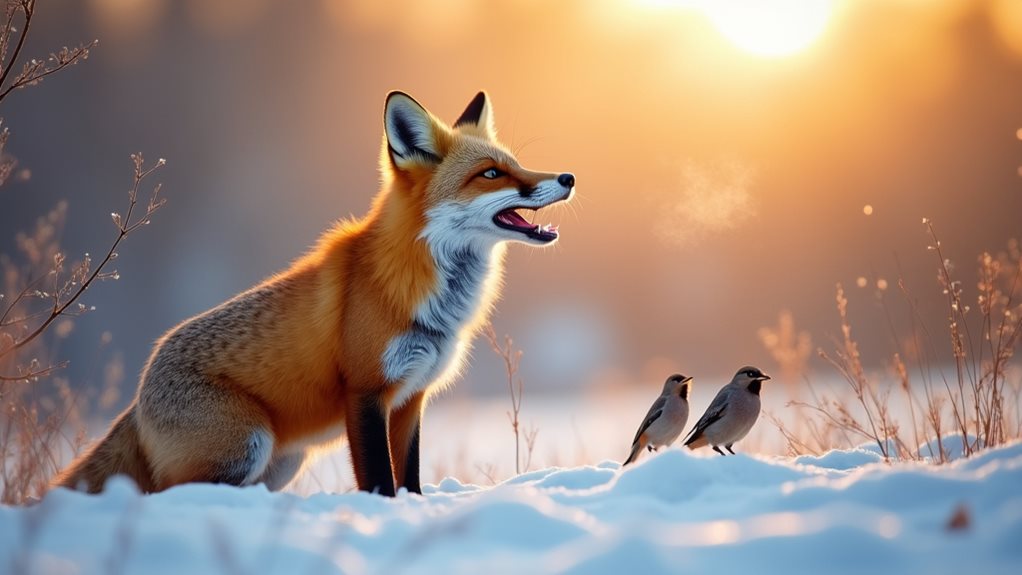
Fox vocalizations exhibit fascinating geographical variations that you’ll quickly notice when traveling between different regions. Just like human accents, foxes develop regional dialects that reflect their local environments and populations.
In mountainous areas, you’ll hear sharper, more echoing calls that carry across valleys, while coastal foxes often have softer, more fluid vocalizations.
These vocal nuances aren’t random—they’re adaptations to different habitats and social structures. Northern red foxes typically produce deeper, more sustained calls compared to their southern cousins, who favor shorter, higher-pitched sounds.
Fox calls reflect their environment—northern species use deep, sustained vocalizations while southern foxes prefer brief, high-pitched communication.
If you’re attentive, you can even identify where a fox might come from just by listening carefully to its distinctive voice!
Urban foxes have developed their own unique dialects too, often incorporating more versatile sounds that cut through city noise. Interestingly, these vocal variations also reflect the habitat types inhabited by different fox species, further showcasing their adaptability.
Recording and Identifying Fox Sounds in the Wild
Many enthusiasts begin their fox-calling expedition with nothing more than a smartphone and a healthy dose of patience.
You’ll soon discover, however, that specialized recording techniques can dramatically improve your results. Consider investing in a directional microphone that filters out background noise, giving you cleaner recordings for later sound analysis.
When you’re in the field, remember that foxes are most vocal at dawn and dusk. Position yourself downwind, stay still, and dress in natural colors.
You’ll know you’ve captured a fox call when you hear distinctive barks, screams, or those eerie, child-like wails that make your hair stand on end! Vocal cues play a crucial role in resolving conflicts among foxes and communicating emotions.
Don’t get discouraged if your first attempts aren’t perfect. Even experienced wildlife recordists sometimes wait weeks for that perfect, crisp recording worth sharing.
Urban Fox Calls vs. Rural Fox Communication
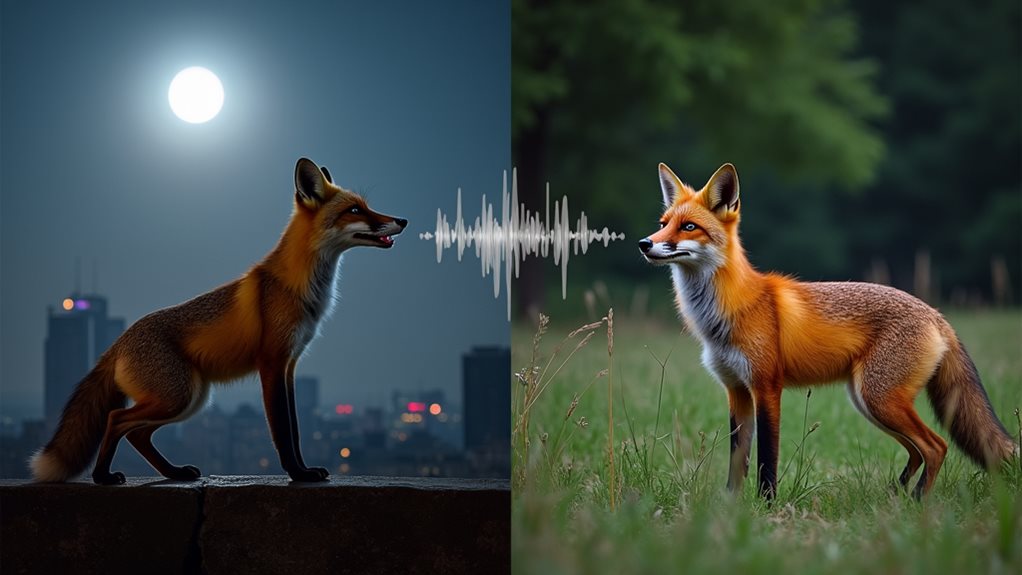
Urban foxes have adapted their calls to higher frequencies, cutting through city noise more effectively than their rural cousins’ lower-pitched vocalizations. When marking territories, city foxes rely more on scent glands and strategic urine placement, while country foxes can use both vocal and scent markers across their larger ranges. Environmental factors like ambient noise levels, human activity patterns, and available den sites directly shape these communication differences, creating distinct “dialects” between fox populations that have evolved just miles apart. This adaptability is essential for urban foxes in navigating the challenges of city life while maintaining genetic diversity.
Sound Frequency Differences
When comparing urban and rural fox calls, you’ll notice striking differences in sound frequency that reflect their adaptations to different environments.
Urban foxes typically vocalize at higher frequencies, cutting through the city’s constant background noise. You’ve probably heard these sharper, more staccato calls if you’ve ever been in a city park at dusk.
Rural foxes, on the other hand, communicate with lower, more melodic frequencies that travel farther across open countryside. This distinction in animal communication isn’t random—it’s a fascinating example of behavioral adaptation.
The countryside’s quieter setting allows for more nuanced sound patterns, while city foxes must compete with traffic and human activity. This adaptation in vocalization is part of the broader behavioral flexibility that urban foxes demonstrate in response to their environment.
Next time you hear a fox call, listen carefully to its pitch and rhythm—you might just be able to tell if it’s a city dweller or country resident!
Territory Marking Methods
Beyond their distinctive calls, foxes employ remarkable territory marking methods that vary considerably between urban and rural populations.
You’ll notice that rural foxes maintain larger territories, using scent marking and vocal communication to establish boundaries that can span several miles. Their territorial behaviors include strategically placed urine deposits and distinctive barking sequences that carry across open environments.
In contrast, urban foxes adapt to smaller territories, often just a few blocks wide. They’ve developed more frequent, higher-pitched calls that cut through city noise.
You might hear them using short, sharp barks rather than the prolonged howls of their country cousins. These city-dwelling foxes also rely heavily on scent marking at pathway intersections, cleverly maximizing the efficiency of their territorial claims in confined spaces. Notably, these urban foxes’ facultative social structures allow them to thrive in both solitary and group settings, enhancing their communication and territorial defense strategies.
Environmental Impact Factors
Environmental factors considerably shape the communication patterns of foxes, creating distinct differences between urban and rural populations.
You’ll notice that urban foxes often call more frequently and at higher pitches to overcome noise pollution from traffic and city sounds. As urban development continues, these clever creatures adapt their communication styles to survive.
In contrast, rural foxes maintain traditional calling patterns, though habitat loss and climate change are forcing adaptations. When food scarcity strikes, their calls become more urgent and frequent.
These changes reflect the delicate ecosystem balance these animals maneuver daily.
Wildlife conservation efforts now focus on understanding how predator-prey dynamics shift with environmental changes.
You’re witnessing evolution in real-time as foxes modify their ancient language to thrive in our rapidly changing world.
Fox Vocalizations in Folklore and Cultural Significance
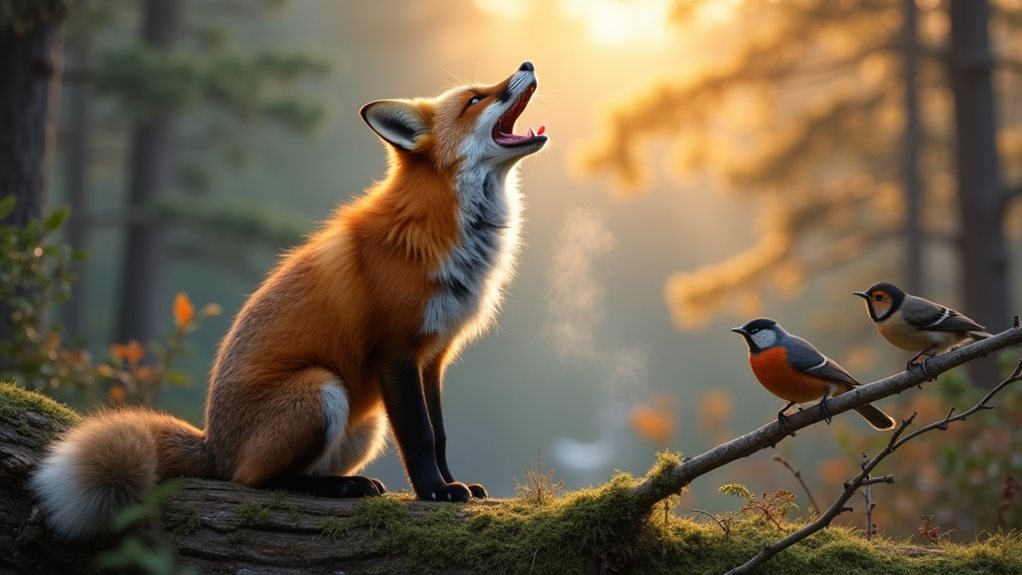
Throughout history, the haunting cries of foxes have sparked human imagination and woven themselves into the fabric of folklore worldwide.
The ethereal voices of foxes echo through time, threading mysterious narratives into humanity’s collective storytelling heritage.
You’ll find fox myths across diverse cultures, from Japan’s kitsune spirits with their supernatural abilities to Native American tales where foxes act as tricksters or wise messengers. When you’re exploring cultural symbolism, you’ll notice these vocalizations often represent mystery and transformation.
In European traditions, you might’ve heard that a fox’s scream portends bad luck or death—a belief that persisted for centuries in rural communities.
Celtic legends suggest that hearing these calls means the veil between worlds is thinning.
Next time you’re startled by that eerie, human-like scream in the night, remember you’re experiencing a sound that has captivated and frightened people for thousands of years.
Final Thoughts
You’ve now traversed through the mysterious world of fox vocalizations, from their haunting screams to their bird-like chatter. Like orchestra conductors directing a symphony of sounds, foxes communicate with purpose and precision. Whether you’re listening in city parks or forest paths, you’ll hear these clever creatures differently. Next time you catch an unusual call in the twilight hours, you might just recognize the signature voice of your neighborhood fox.