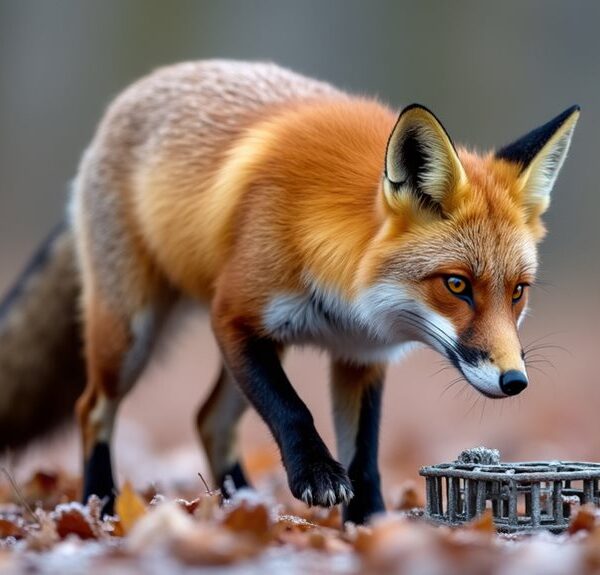

When teaching elementary students about foxes, you’ll find three engaging science topics: fox anatomy and adaptations (those rotating ears and bushy tails serve specific purposes), their impressive geographic distribution (from Arctic to desert environments), and their fascinating family structures. These clever mammals demonstrate remarkable survival skills through their hunting techniques, sensory abilities, and social cooperation. Your students will connect science concepts to real-world examples as they discover how foxes’ physical and behavioral traits help them thrive in diverse ecosystems.
Fox Anatomy and Adaptations: Nature’s Perfect Design
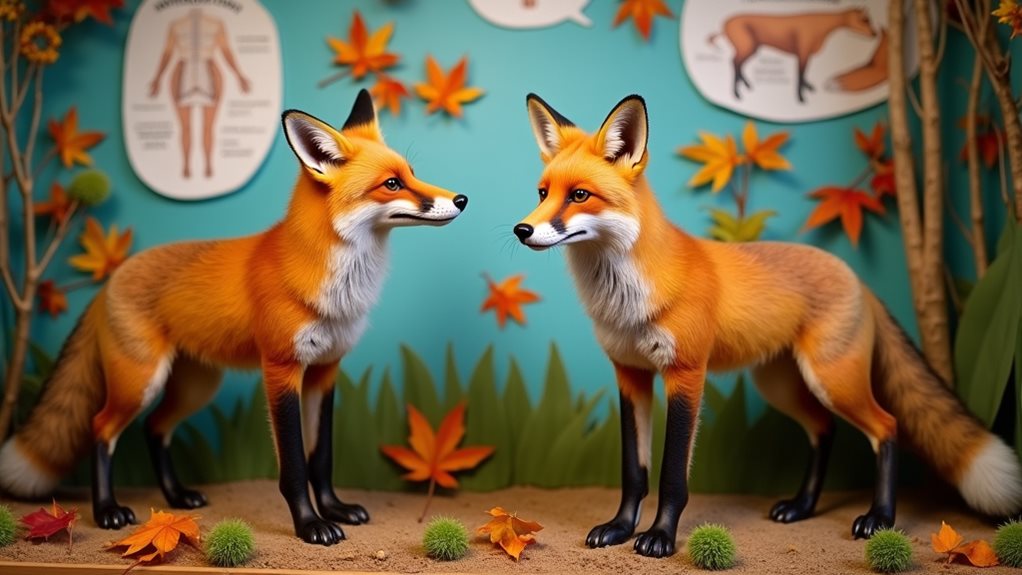
When you look at a fox, you’re seeing one of nature’s most cleverly designed animals. These nimble creatures possess remarkable adaptations that help them thrive in diverse environments.
Their keen fox senses include incredible hearing that can detect a mouse squeaking from 100 feet away! Those distinctive pointed ears can rotate like satellite dishes to pinpoint sounds with amazing accuracy.
A fox’s varied fox diet reflects its adaptability. They’re opportunistic omnivores, happily munching on berries and fruits when available, but they’re skilled hunters too. You’ll find them catching mice, rabbits, and other small animals with their quick reflexes and sharp teeth.
Their bushy tail serves multiple purposes: balance while running, warm cover during cold nights, and even communication with other foxes. Isn’t nature’s engineering impressive? Their acute sense of smell is vital for hunting and communicating with other foxes, showcasing their remarkable adaptability in the wild.


HIND TRACK SET — Kit includes life-size hind track replicas for 17 species.
Foxes Across Ecosystems: Habitat and Geographic Distribution
Foxes don’t just adapt to their surroundings—they’ve mastered the art of thriving almost everywhere! From frozen Arctic tundra to scorching deserts, these clever creatures have established fox habitats in nearly every corner of our planet.
Did you know that red foxes have the largest geographic range of any carnivore? You’ll find them across North America, Europe, Asia, and even parts of North Africa!
Arctic foxes brave temperatures as low as -70°F in the northernmost regions, while fennec foxes stay cool in the Sahara Desert with their oversized ears.
Each fox species has developed unique traits for their specific environment. Gray foxes can climb trees to escape predators, while kit foxes dig deep burrows to escape the desert heat. These adaptations highlight how foxes play a vital role in regulating animal populations within their ecosystems.
Isn’t it amazing how these adaptable animals make themselves at home?
Fox Family Life: Social Structure and Survival Strategies
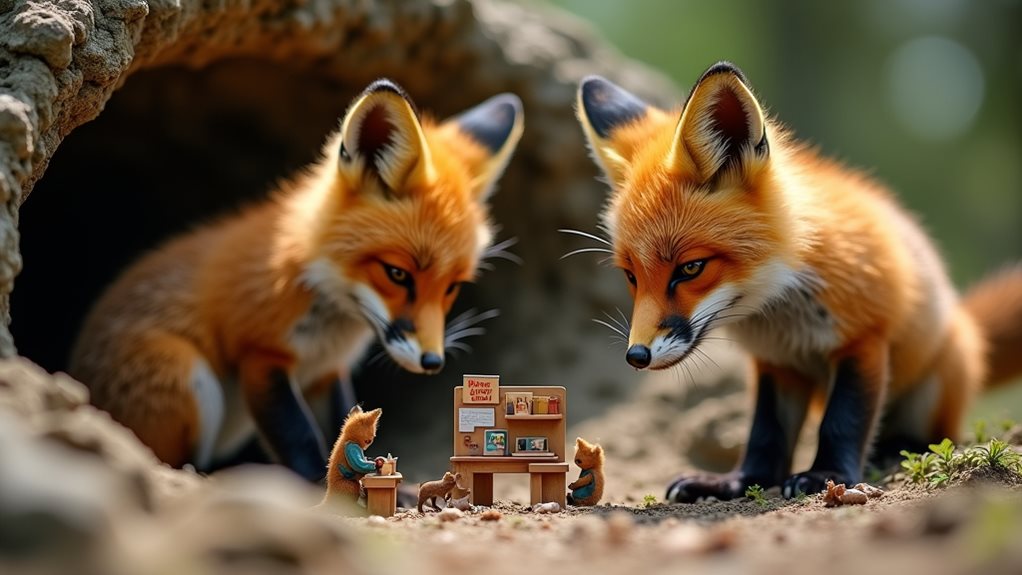
Although they’re often portrayed as solitary hunters, most fox species actually maintain complex family structures that help them survive in challenging environments.
You’ll find that foxes establish a clear social hierarchy within their family groups, typically led by a breeding pair who make decisions for the group.
When you observe foxes in the wild, you’ll notice their impressive survival tactics. They’ll work together to protect their young, with adult foxes taking turns watching over playful kits while others gather food.
You might be surprised to learn that fox families communicate through a variety of vocalizations and body language! These interactions help reinforce their social hierarchy, ensuring cooperation and harmony within the family unit.
During harsh winters or food shortages, this family teamwork becomes crucial, allowing foxes to share resources and defend their territory against threats.
Final Thoughts
You’ve just explored the fascinating world of foxes, perfect for sparking curiosity in your classroom! Isn’t it amazing how these clever creatures adapt to environments from arctic tundras to urban neighborhoods? As you’re preparing tomorrow’s science lesson, you might spot a fox darting across your school yard—nature’s coincidental reminder of why these topics captivate young minds. Your students will carry these fox facts into their future scientific discoveries!